Artwork
The Death of Procris
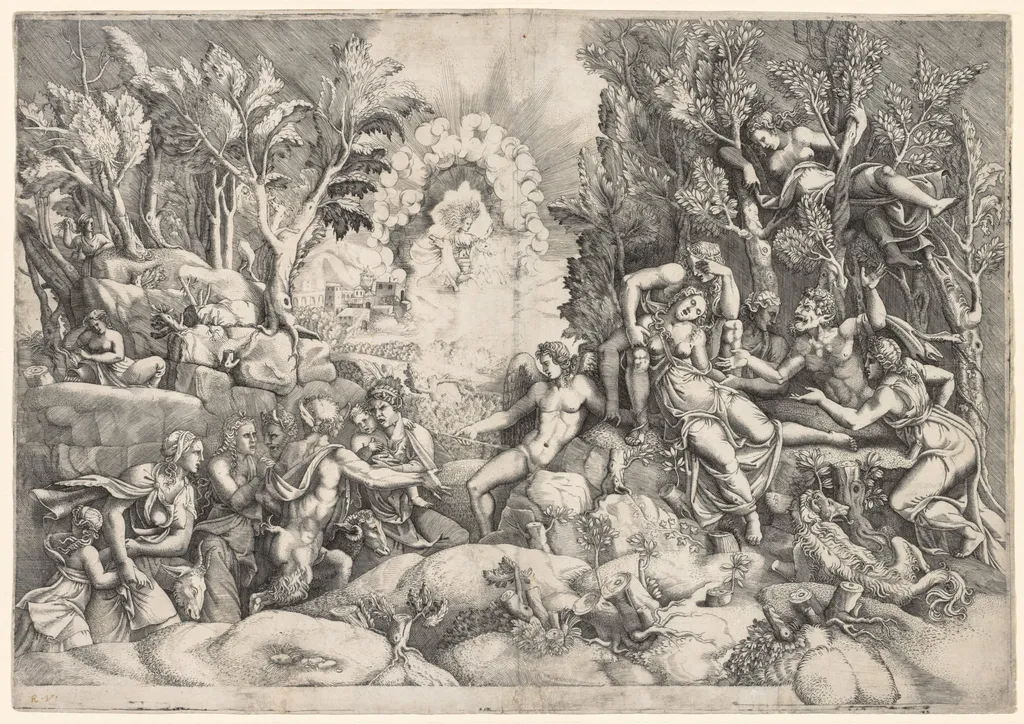
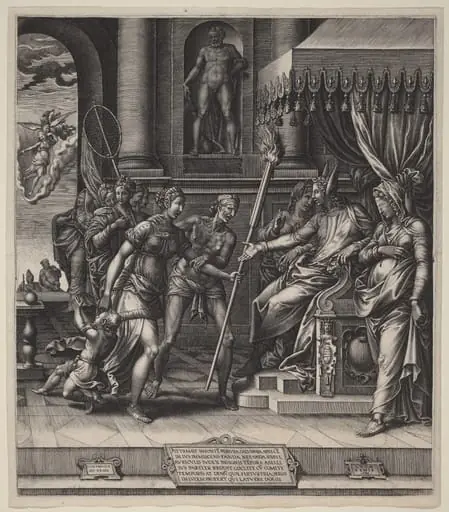
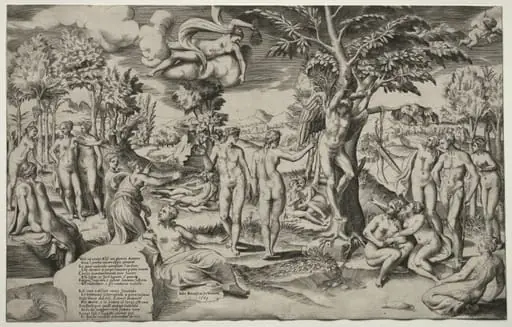
The Death of Procris is a print by the Renaissance artist Giorgio Ghisi. It dates from 1540 and is held in the collection of the Cleveland Museum of Art.
About this work
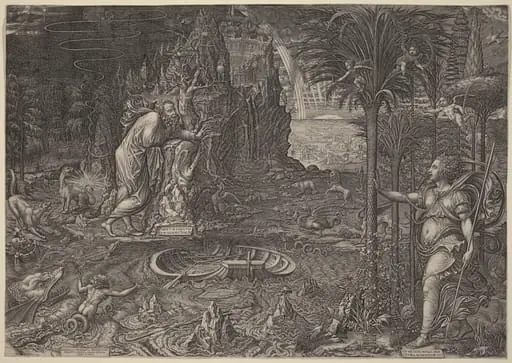
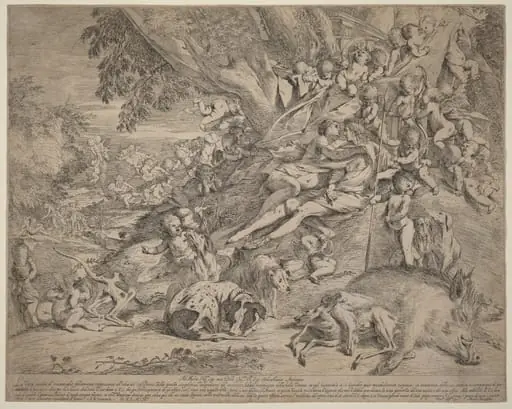
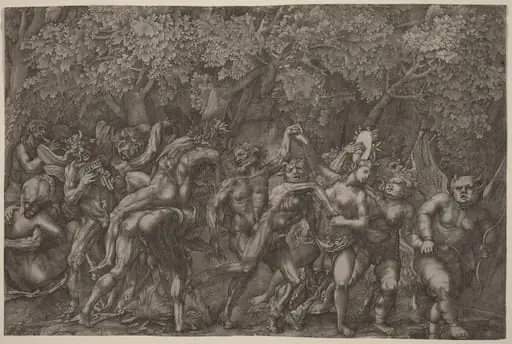
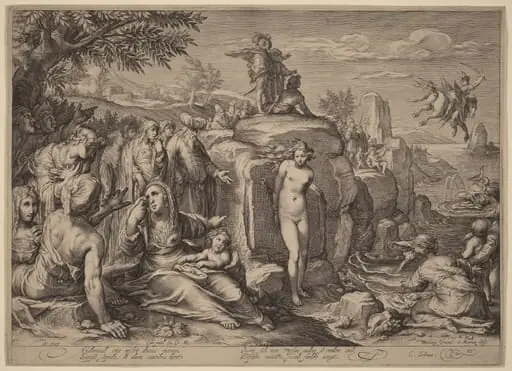
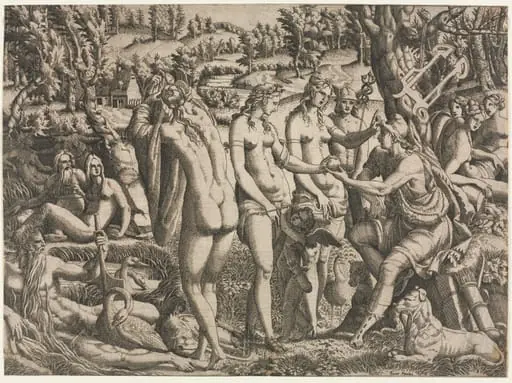
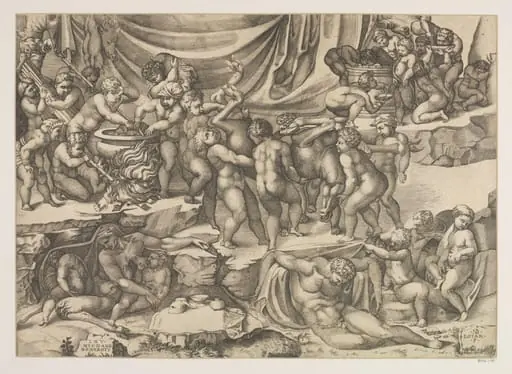
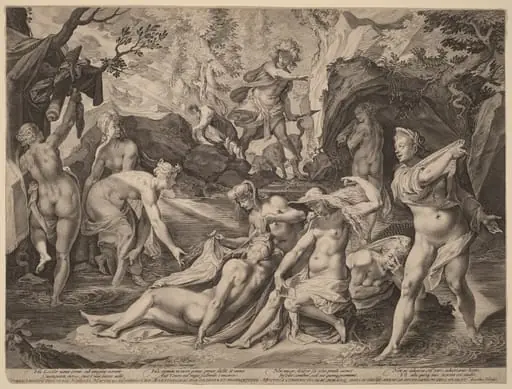
This painting shows a dramatic scene with Procris lying on the ground.
The story behind it is from the poet Ovid.
It's interesting because the artist chose to focus on the emotions of the satyrs and nymphs, who are mourning Procris' death.
This adds a layer of sadness to the scene.
You can learn more about this style by looking at the work of artist: Giorgio Ghisi (Italian, 1520–1582).
Overview
This print by Giorgio Ghisi depicts the tragic death of Procris, a figure from Ovid’s Metamorphoses. The scene captures the moment after Cephalus, misled by a rustling in the woods, fatally strikes her with his unerring spear. Surrounding figures—satyrs and nymphs—express grief, amplifying the emotional weight of the incident. Dawn rises in the background, symbolizing the inevitability of fate.
Subject & Meaning
The inclusion of mourning attendants underscores the universality of loss, transforming a personal tragedy into a communal lament.
The narrative centers on betrayal and miscommunication within a marriage. Procris, driven by doubt, spies on her husband, only to become the victim of his mistaken aggression. The inclusion of mourning attendants underscores the universality of loss, transforming a personal tragedy into a communal lament. Aurora’s presence hints at the passage of time and the futility of human efforts to control destiny.
Technique & Style
Ghisi employs fine, precise engraving lines to render textures and movement, characteristic of Northern Mannerist printmaking. The figures are arranged in a dynamic, almost theatrical composition, with expressive gestures drawing attention to Procris’s still form. Distant architecture and celestial elements are rendered with delicate detail, balancing narrative clarity with atmospheric depth.
History & Provenance
Created in the mid-16th century, the print reflects Ghisi’s engagement with Italian Renaissance themes and classical literature. It likely circulated among collectors and scholars interested in mythological subjects. As a reproductive engraving, it may have been based on a now-lost painting by Romano, demonstrating Ghisi’s role in disseminating visual narratives across Europe.
Context
During the Renaissance, Ovid’s tales were widely studied and reinterpreted in visual art. Ghisi’s work aligns with a broader trend of using myth to explore human emotion and moral ambiguity. The inclusion of mythological attendants and celestial figures reflects contemporary interest in integrating classical cosmology with narrative drama, reinforcing the story’s philosophical undertones.
Legacy
Ghisi’s print contributed to the visual vocabulary of Ovidian themes in Northern Europe. Its emphasis on emotional response over heroic action influenced later interpretations of mythological tragedy. Though less known than major paintings, such engravings helped sustain classical narratives in private collections and academic circles throughout the 16th and 17th centuries.
Artist & collection
Artist
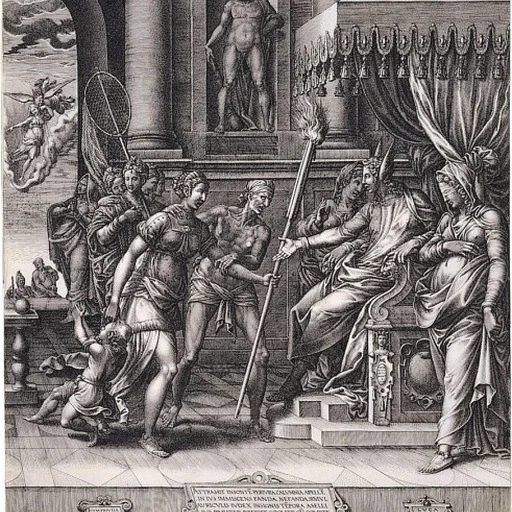
Giorgio Ghisi (1520 — 15 December 1582) was an Italian engraver from Mantua who also worked in Antwerp and in France.