Artwork
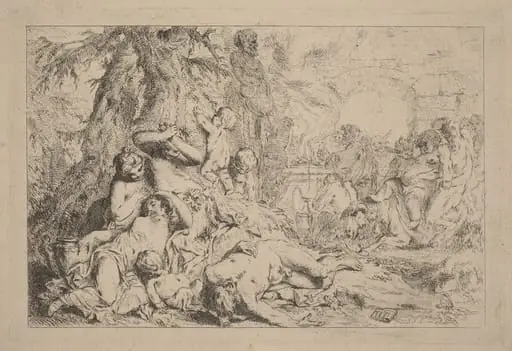
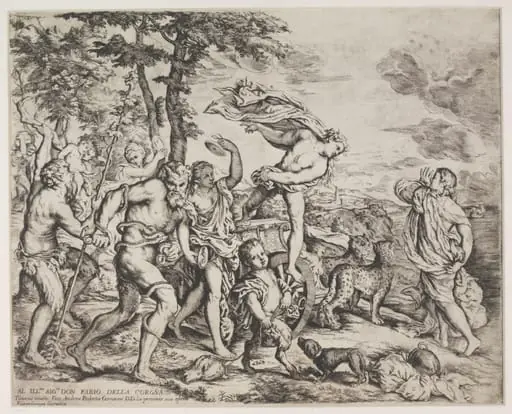
Bacchanal with Altar, Faun, and Silenus
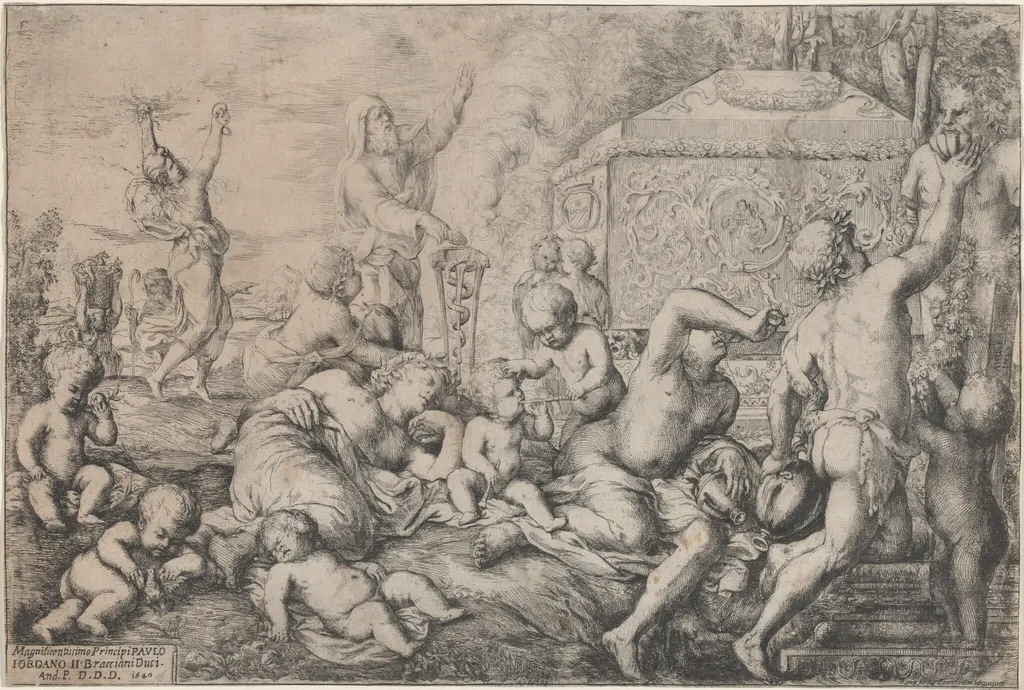
Bacchanal with Altar, Faun, and Silenus is an ink print by the Baroque artist Giovanni Andrea Podestà. It dates from 1640 and is held in the collection of the National Gallery of Art.
About this work
Overview
Bacchanal with Altar, Faun, and Silenus is an etching on laid paper created by Giovanni Andrea Podestà in 1640. The work is characteristic of Podestà's oeuvre, which often featured children in classical settings.
Subject & Meaning
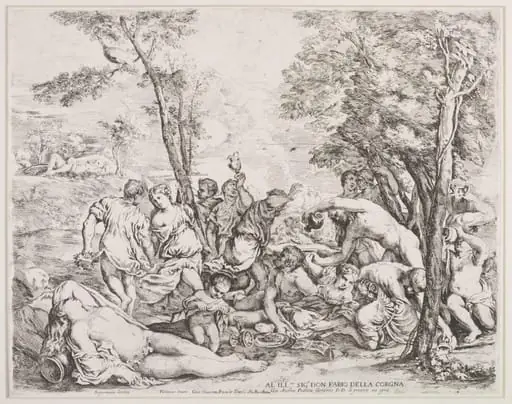
The etching depicts a chaotic scene of naked figures, with cherubs gathered around an altar and a faun playing a flute. A winged figure floats above, holding a staff entwined with a serpent. The imagery suggests a celebratory or worshipful atmosphere, possibly inspired by mythological revelry.
Technique & Style
Podestà employed swirling lines to convey a sense of movement and chaos in the composition. The etching's dense, dynamic arrangement of figures is reminiscent of Baroque art, characterized by dramatic and intricate scenes.
Context
Podestà's work was influenced by Nicolas Poussin's Arcadian scenes and bacchanals, which in turn drew on Titian's depictions of mythological revelry. This artistic lineage is evident in the classical landscape and figures in Bacchanal with Altar, Faun, and Silenus.
Artist & collection

Artist
Giovanni Andrea Podestà or Giovanni Andrea Podesta (1608 – c. 1674) was an Italian painter and engraver who was active primarily in Rome. His principal subject matter is children playing in landscapes with classical…

![Temporalis Aeternitas [Second Version], by Giovanni Benedetto Castiglione](https://artifactworldgallery.com/img/giovanni-benedetto-castiglione--temporalis-aeternitas-second-version--d9ecb26010022a5a-w320.webp)