Artwork
Ιδανικοί αρχαιολόγοι - τοπίο (Idealle Archäologen- Landshaft)
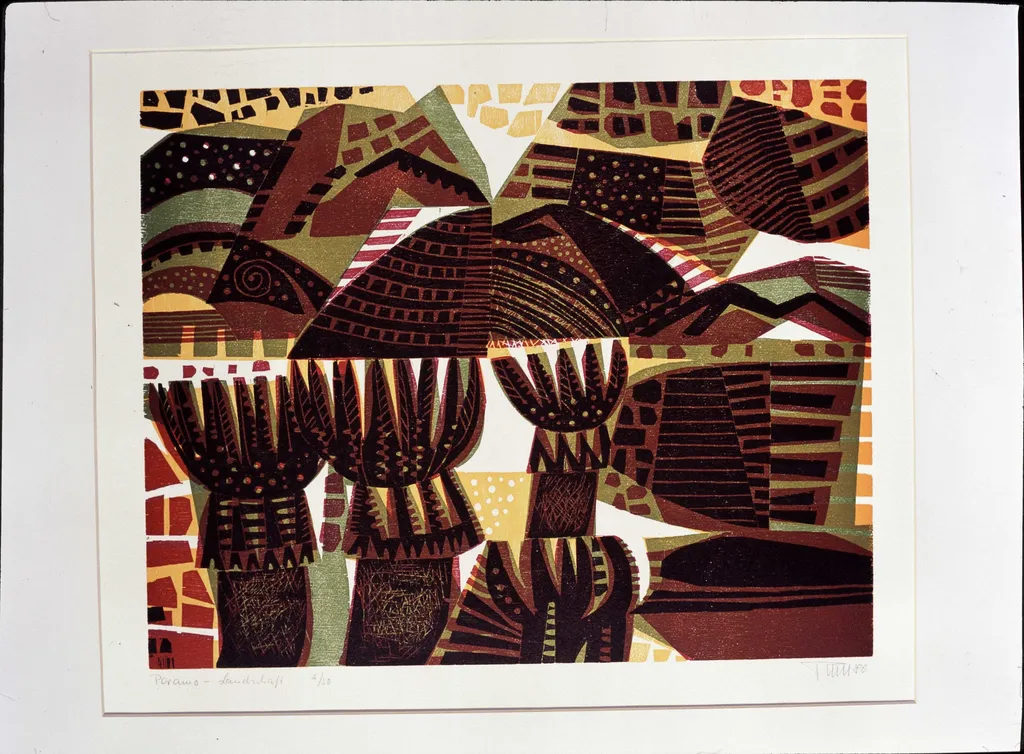
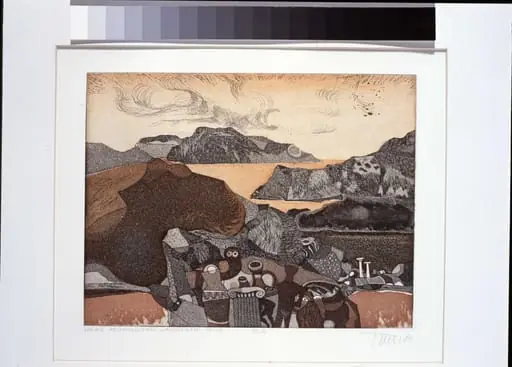
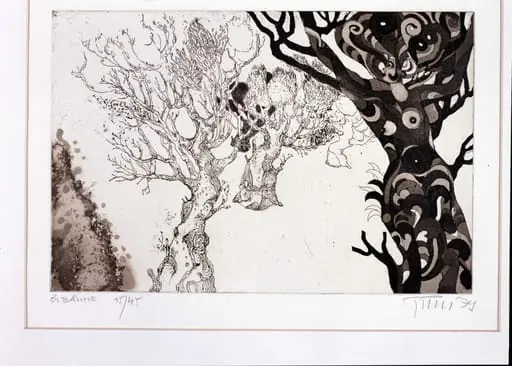
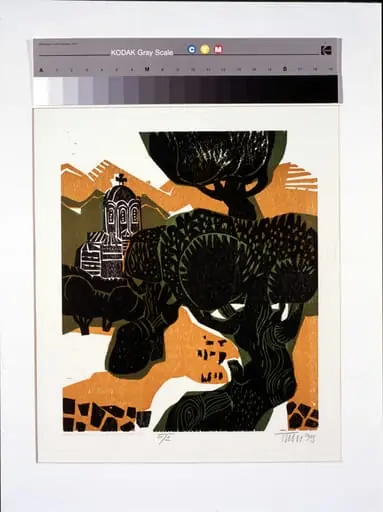
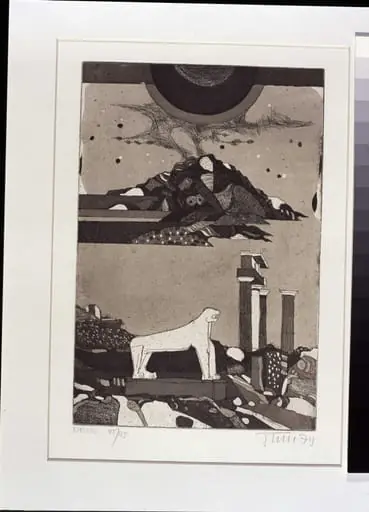
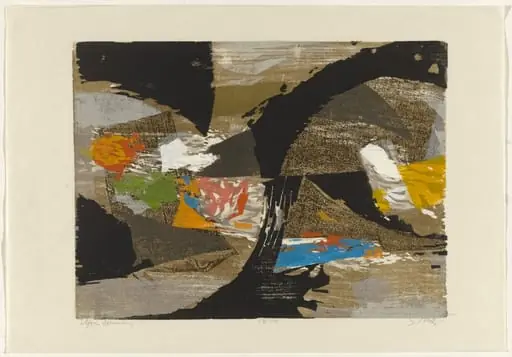
Ιδανικοί αρχαιολόγοι - τοπίο (Idealle Archäologen- Landshaft) is a print by Alfred Pohl. It dates from 1980 and is held in the collection of the Metropolitan Organisation of Museums of Visual Arts of Thessaloniki – MOMus.
About this work
Here’s the rewrite: Alfred Pohl’s 1980 print shows a Greek landscape with soft light and warm colors.
Here’s the rewrite:
Alfred Pohl’s 1980 print shows a Greek landscape with soft light and warm colors. The trees and hills blend into the distance, almost like a dream. Pohl lived in Peru and Colombia, and this print mixes Mediterranean tones with his own style.
The colors don’t just sit there—they push and pull, making the scene feel alive. You can almost feel the dry air and bright sun. It’s not just a place; it’s a mood.
Check out more of Pohl, Alfred (1928-2019) next.
Overview
Alfred Pohl’s 1980 woodcut, titled 'Idealle Archäologen - Landschaft,' presents a contemplative Greek landscape rendered in muted, warm tones. Though created decades after his time in South America, the work reflects a synthesis of his experiences abroad. The composition avoids sharp detail, favoring atmospheric gradations that suggest terrain rather than define it, inviting a quiet, introspective engagement from the viewer.
Subject & Meaning
The scene evokes an imagined archaeological landscape—not a specific site, but a generalized Mediterranean setting shaped by memory and cultural resonance. Pohl does not depict ruins or artifacts; instead, he conveys the emotional weight of ancient spaces through light and color. The absence of human figures amplifies a sense of solitude, as if the land itself holds the echoes of past civilizations.
Technique & Style
Pohl employed color woodcut techniques to layer subtle hues—ochres, soft greens, and pale blues—creating a luminous, almost ethereal atmosphere. The blocks were carved with deliberate simplicity, allowing the grain and ink transparency to contribute to the texture. Rather than outlining forms, he relied on tonal transitions to suggest hills, trees, and distance, giving the image a fluid, dreamlike quality.
History & Provenance
Pohl spent significant time in Peru and Colombia during the 1950s and 60s, where he studied indigenous art and craft traditions. Though this print depicts a Greek landscape, its visual language bears traces of his exposure to Andean aesthetics—particularly in its flattened perspective and emphasis on color harmony. The work was produced in 1980, toward the end of his career, reflecting a mature synthesis of his cross-cultural influences.
Context
In the late 20th century, European artists increasingly turned to non-Western visual traditions to reframe classical subjects. Pohl’s work aligns with this trend, blending Mediterranean themes with techniques and sensibilities absorbed during his years in Latin America. His approach diverged from academic archaeology, favoring emotional and sensory interpretation over historical reconstruction.
Legacy
Pohl’s woodcuts, including this one, remain understudied outside specialized circles. His unique fusion of South American and Mediterranean visual vocabularies offers a quiet counterpoint to dominant postwar European styles. The work endures as a meditation on place, memory, and the subtle ways cultural experiences reshape artistic vision over time.
Artist & collection

Museum
Metropolitan Organisation of Museums of Visual Arts of Thessaloniki – MOMus
Continue through works from the same source collection.