Artwork
Untitled
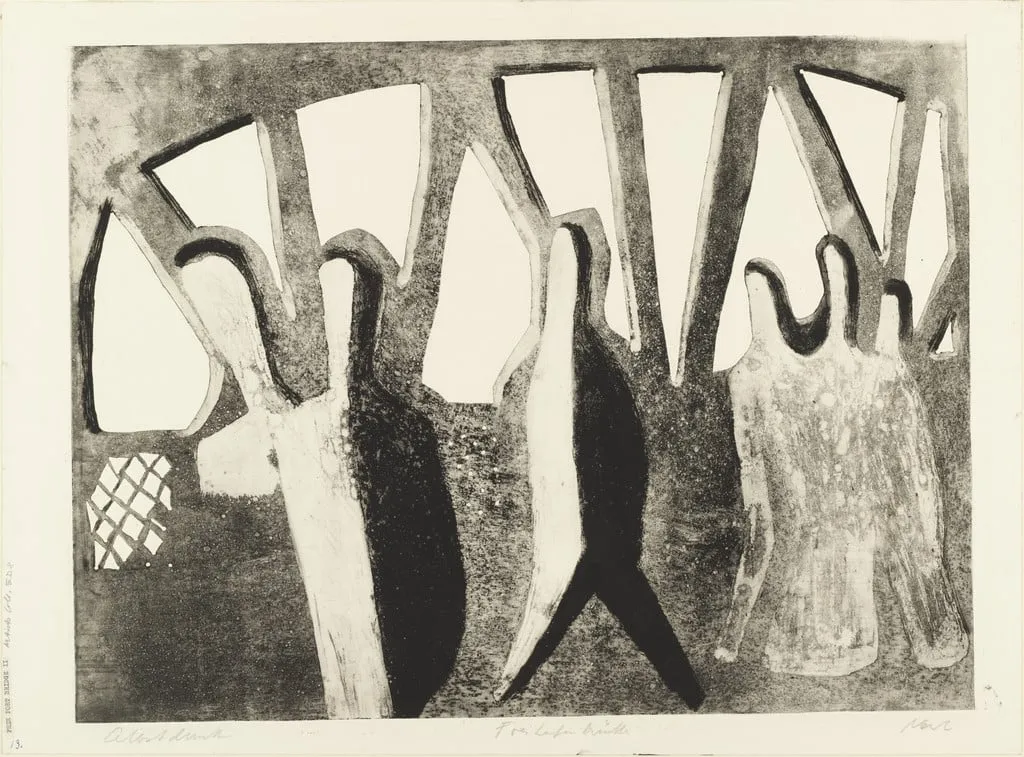
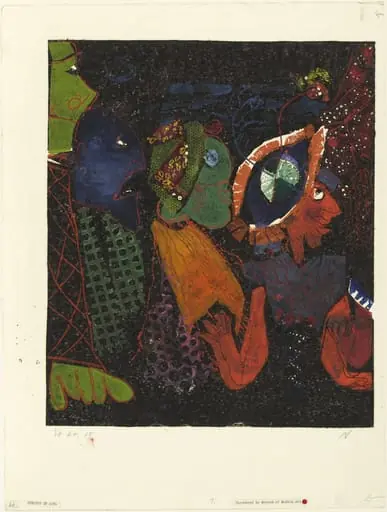
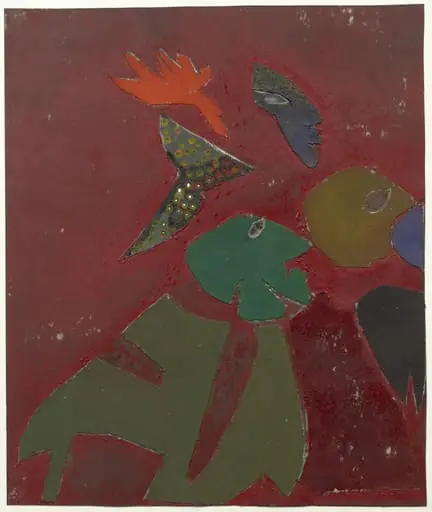
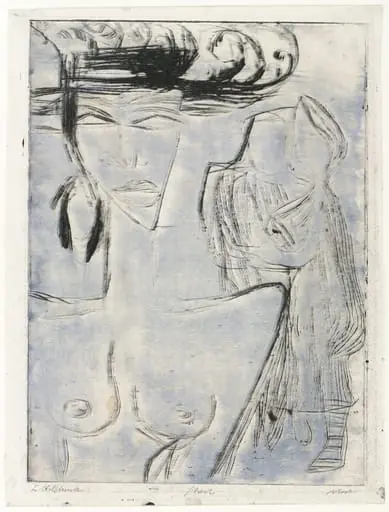
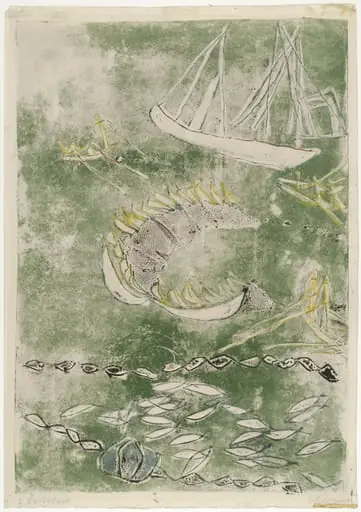
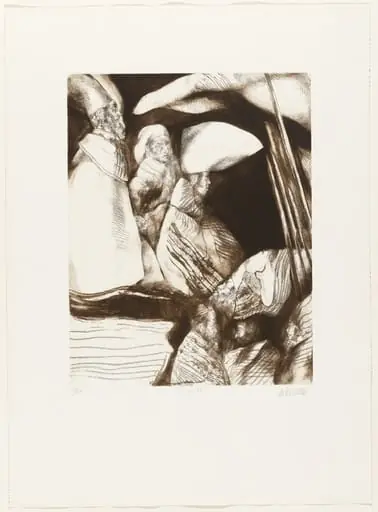
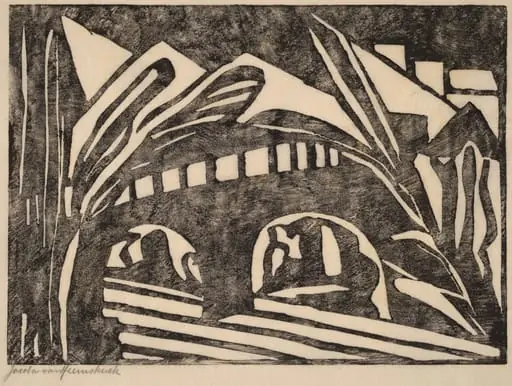
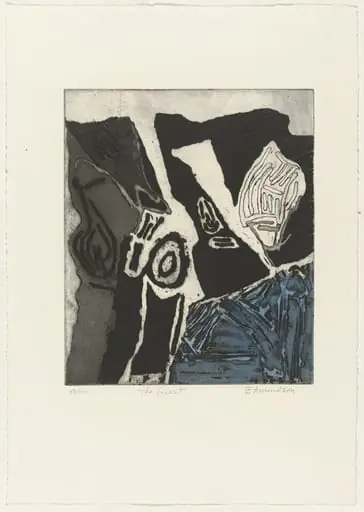
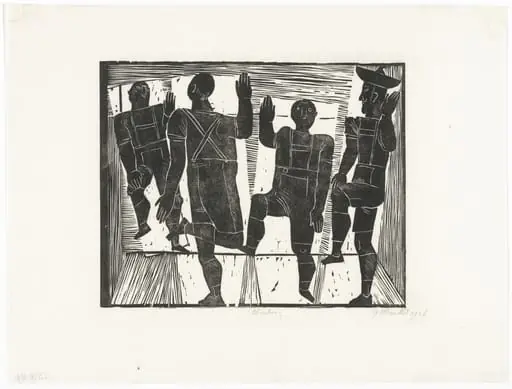
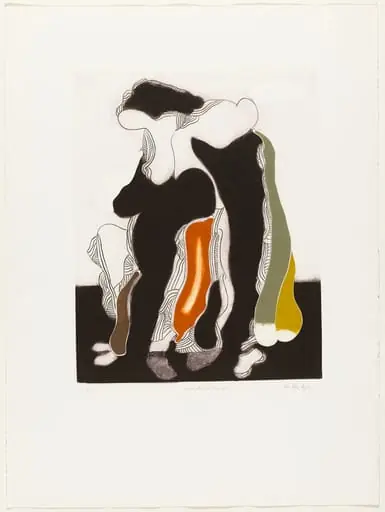
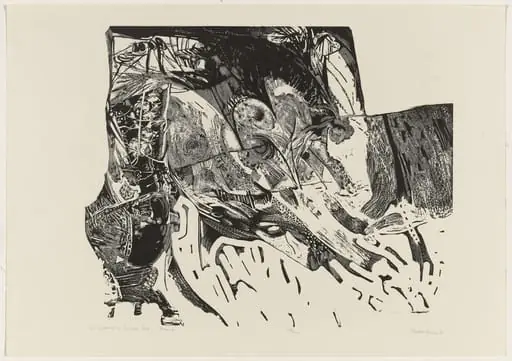
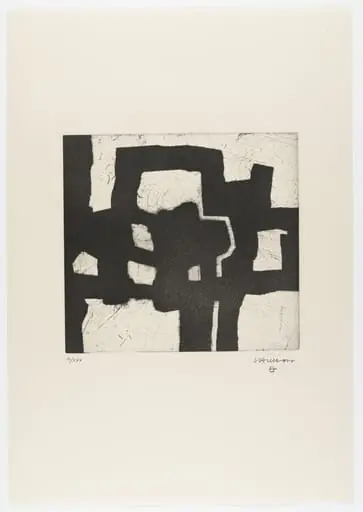
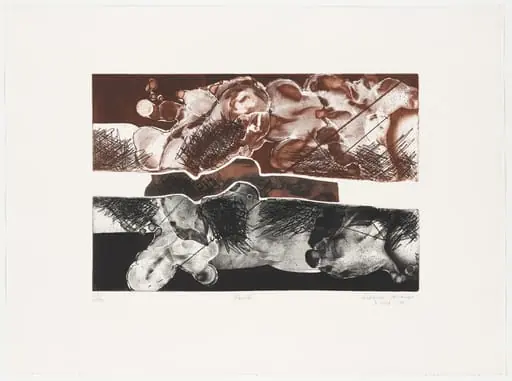
Untitled is an ink print by Rolf Nesch. It dates from 1932 and is held in the collection of the Museum of Modern Art.
About this work
Overview
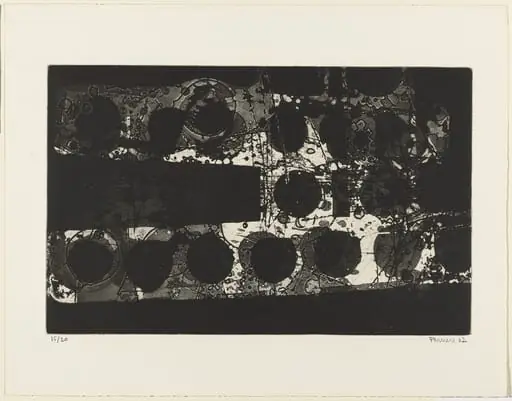
Created in 1932, this metal print with aquatint by Rolf Nesch is part of The Museum of Modern Art’s collection. The work belongs to a series of prints exploring abstracted human forms through tonal contrast and textured surfaces. Its medium combines the precision of aquatint with the durability of metal, allowing for subtle gradations of light and shadow that define the composition.
Subject & Meaning
The absence of facial features and individualizing details suggests anonymity or collective presence rather than specific identities.
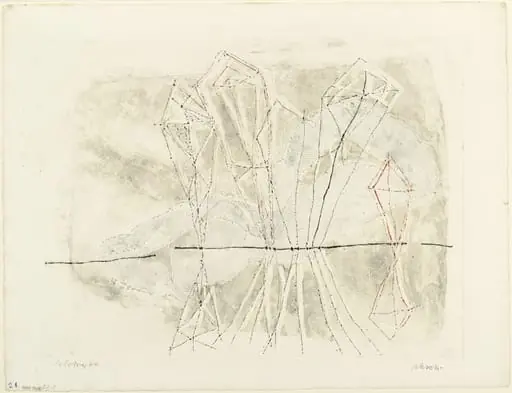
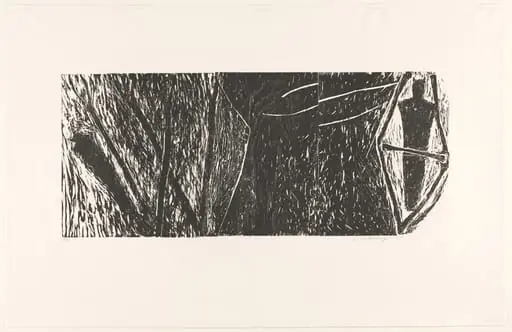
Three elongated, faceless figures stand in close proximity, their forms rendered as angular silhouettes with sharp, fractured edges. The absence of facial features and individualizing details suggests anonymity or collective presence rather than specific identities. The figures seem to emerge from darkness, their illuminated contours implying a tension between visibility and obscurity, possibly evoking themes of isolation or silent communion.
Technique & Style
Nesch employed aquatint on a metal plate to achieve rich, uneven tonal fields, contrasting sharply defined figures against a deep, near-black background. Light areas are not painted but etched through controlled acid biting, creating a sense of luminosity within the shadows. A small geometric form in the corner introduces a contrasting texture, breaking the organic rhythm and adding structural tension to the composition.
History & Provenance
This print was produced during Nesch’s early period in Germany, before his emigration to Norway. It reflects his experimentation with printmaking techniques following his training as a painter and sculptor. The work entered The Museum of Modern Art’s collection in the mid-20th century as part of a broader effort to document European modernist printmaking beyond traditional woodcuts and etchings.
Context
Made in 1932, the work coincides with rising political tensions in Europe and a broader modernist interest in abstraction and psychological expression. Nesch’s approach aligns with contemporaries exploring form through reduction and emotional resonance rather than narrative. The print’s starkness and ambiguity reflect a shift away from figurative realism toward more introspective, symbolic representations of the human presence.
Legacy
Nesch’s use of aquatint on metal distinguished his practice from contemporaries who favored paper-based techniques. This work contributed to expanding the possibilities of printmaking as a medium for expressive abstraction. Though less widely known than some of his peers, his innovations influenced later generations interested in texture, tonal depth, and the materiality of the printed image.
Artist & collection

Artist
Rolf Nesch was a German-born Norwegian expressionist artist, especially noted for his printmaking.