Artwork
Judecata de Apoi
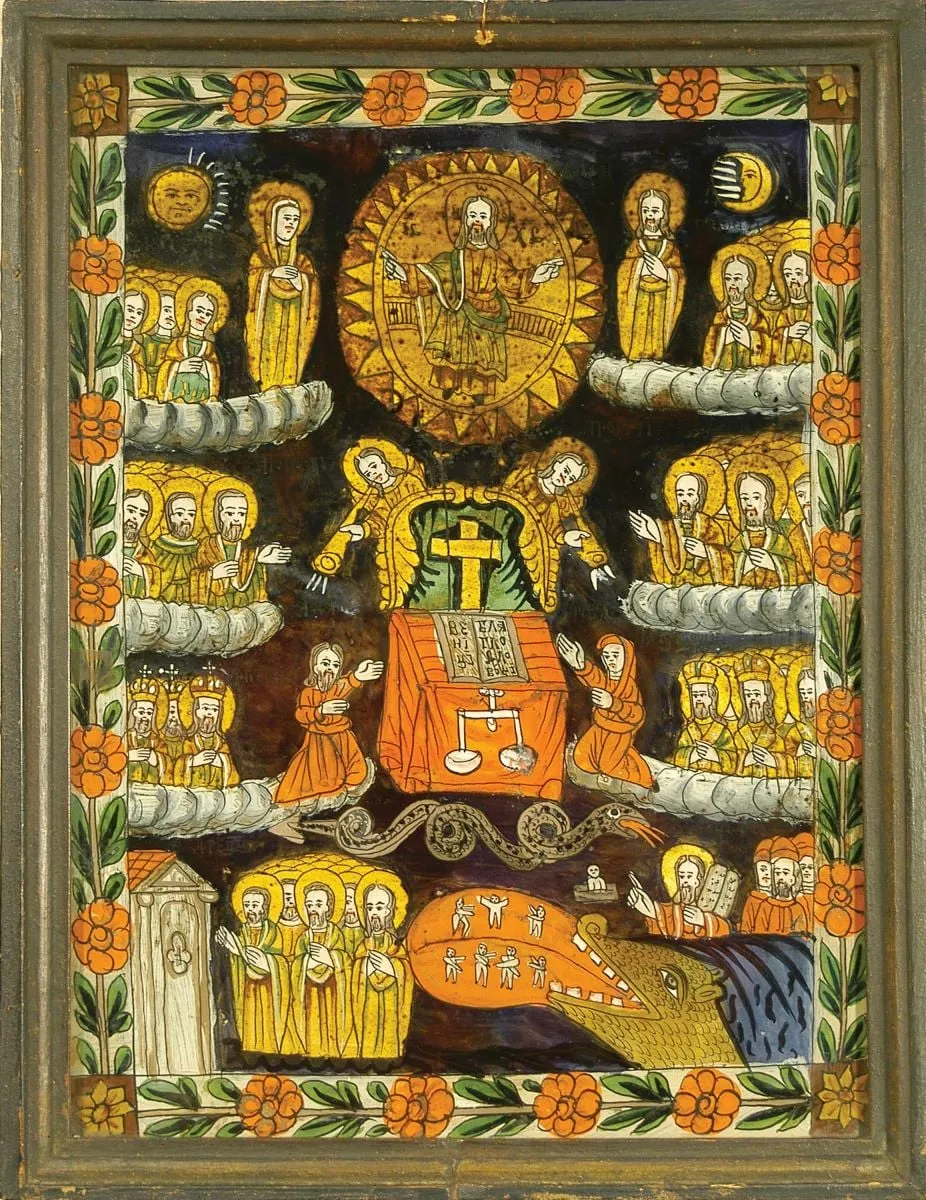
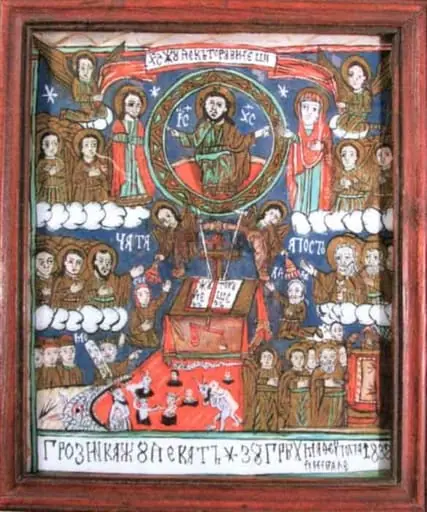
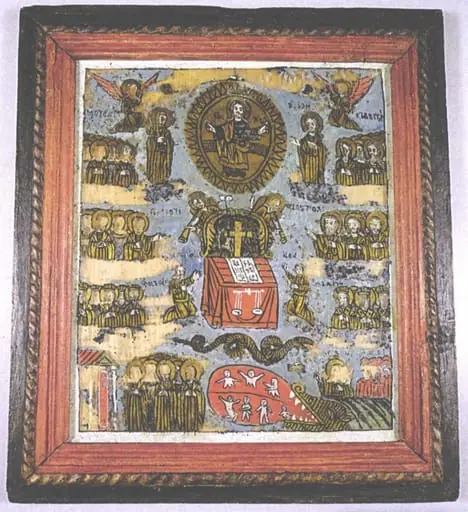
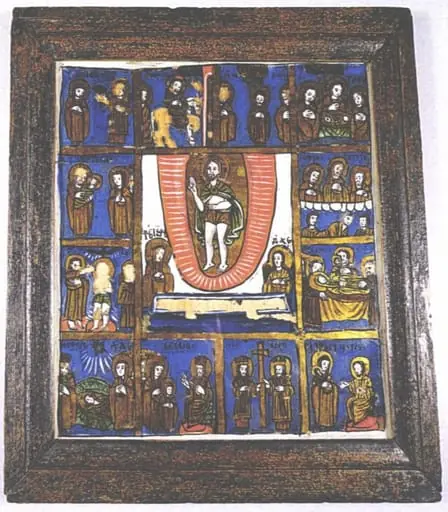
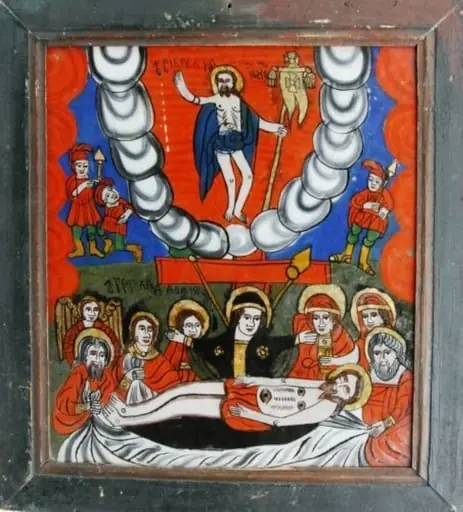
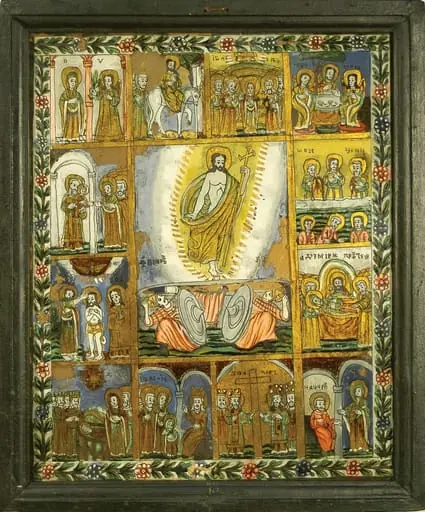
Judecata de Apoi is a drawing by Ilie Poienaru. It is held in the collection of the Alba Iulia Unification National Museum. This work presents a celestial judgment scene rendered in vivid hues and dense figuration.
About this work
Overview
This work presents a celestial judgment scene rendered in vivid hues and dense figuration. A central robed figure, seated on a golden throne and holding a cross, presides over a gathering of celestial and earthly beings. The composition is structured in horizontal tiers, with figures arranged in orderly rows, evoking a ritualized theatrical arrangement rather than naturalistic space.
Subject & Meaning
Surrounding figures—angels, saints, and souls—gesture toward the throne or upward, signaling reverence, anticipation, or intercession.
The central figure, likely Christ in Majesty, administers divine judgment while blessing the assembly below. Surrounding figures—angels, saints, and souls—gesture toward the throne or upward, signaling reverence, anticipation, or intercession. The sun and moon in the background reinforce cosmic order, while floral borders suggest sacred enclosure, aligning the scene with liturgical and eschatological traditions.
Technique & Style
Bright, flat pigments dominate the palette, with minimal shading to emphasize symbolic clarity over realism. Figures are stylized and aligned in regimented rows, creating a rhythmic, iconographic structure. The use of gold for the throne and halos enhances spiritual radiance, while vines and flowers frame the scene as a sacred tableau, typical of devotional imagery from the period.
History & Provenance
The painting originates from a religious context, likely commissioned for a church or monastery in the Eastern Mediterranean or Balkans during the late medieval period. Its format and iconography align with Byzantine and post-Byzantine traditions, though exact provenance remains undocumented. It may have served as an altar piece or devotional panel in a liturgical setting.
Context
This image reflects widespread medieval Christian beliefs in the Last Judgment, where divine authority is visually affirmed through hierarchical composition. Similar scenes appear in frescoes and icons across Orthodox communities, where visual theology replaced textual instruction for largely illiterate congregations. The orderly arrangement reinforces doctrinal certainty and the permanence of divine order.
Legacy
Though not widely known outside regional collections, the painting exemplifies a persistent visual language in Eastern Christian art. Its emphasis on symbolic arrangement over naturalism influenced later icon painting traditions. It remains a testament to how religious authority was communicated through structured, luminous imagery in pre-modern devotional culture.
Artist & collection
Artist
Ilie Poienaru kept his life quieter than his bold ink lines. He drew saints and biblical scenes with a steady hand, using nothing but black and white to make halos glow and robes drape real. If you’ve ever stood in a…
Museum
Alba Iulia Unification National Museum
Continue through works from the same source collection.