Artwork
Încoronarea Fecioarei/Apostolii Petru și Pavel
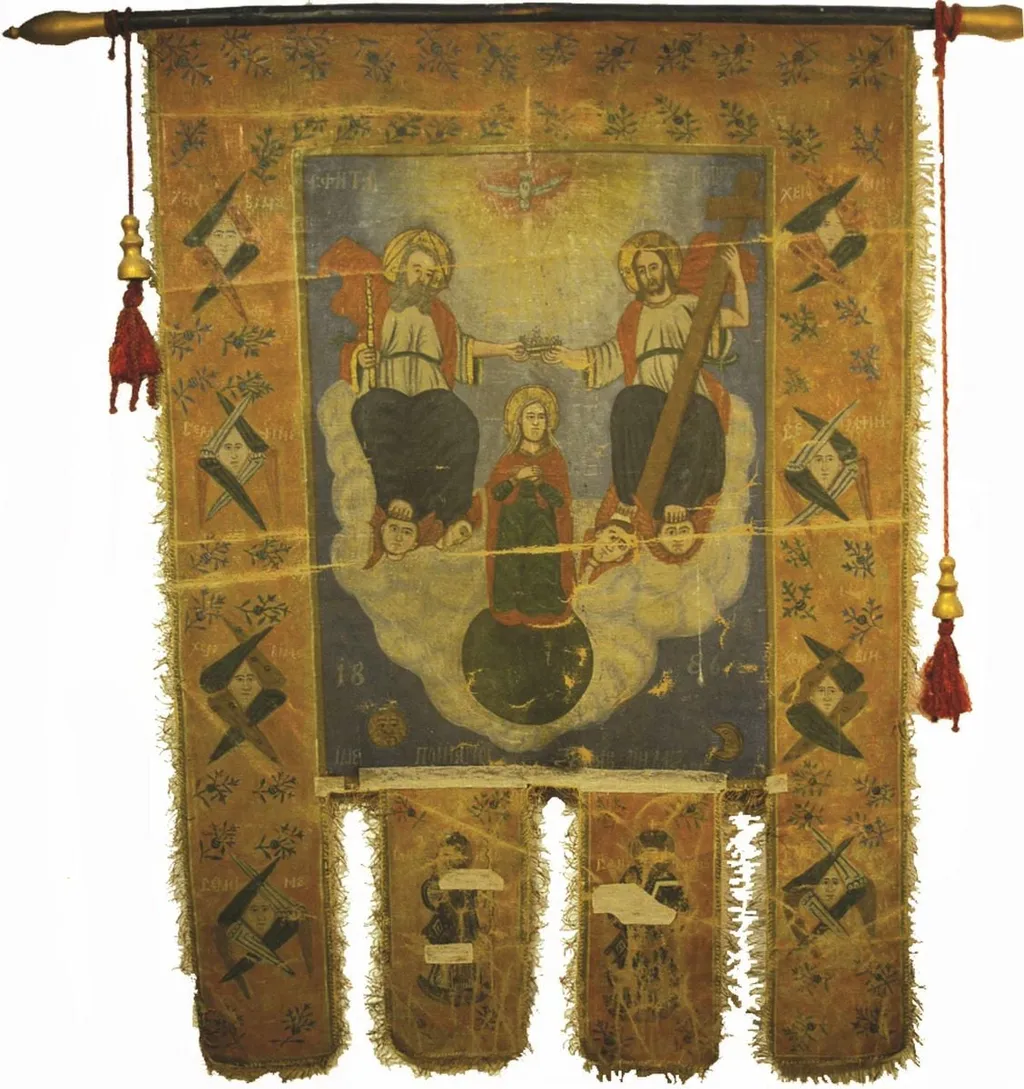
Încoronarea Fecioarei/Apostolii Petru și Pavel is an unspecified painting by the Byzantine icon painting artist Ilie Poienaru. It dates from 1886 and is held in the collection of the Alba Iulia Orthodox Archdiocese.
About this work
Overview
Its layered composition and worn surface suggest use in a liturgical or domestic spiritual context, blending sacred symbolism with folk aesthetic traditions.
Painted in 1886 by Ilie Poienaru, this religious composition depicts a symbolic coronation scene centered on a female figure. The work is part of the Museum of Ethnography’s collection and reflects devotional imagery common in late 19th-century Romanian ecclesiastical art. Its layered composition and worn surface suggest use in a liturgical or domestic spiritual context, blending sacred symbolism with folk aesthetic traditions.
Subject & Meaning
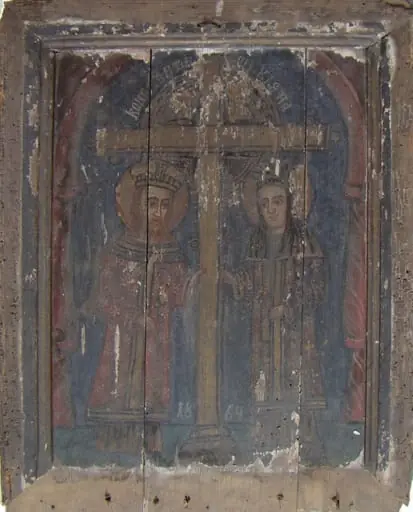
The central figure, likely the Virgin Mary, is being crowned by two apostles—Peter holding keys and Paul with a book—signifying divine authority and doctrinal foundation. Floating figures above, some crowned, may represent saints or angels, while the globe beneath alludes to earthly dominion under heavenly grace. The scene merges Byzantine iconography with Western compositional elements, reinforcing theological themes of intercession and celestial order.
Technique & Style
Poienaru employs chiaroscuro to model forms with subtle gradations of light and shadow, lending volume to the figures despite the flat, decorative background. The textured surface mimics aged textile, enhancing the sense of sacred objecthood. Gold leaf patterns along the edges, now faded, once framed the scene in luminous ornamentation, while small faces emerging from borders suggest a celestial realm encircling the sacred moment.
History & Provenance
Created in 1886, the painting entered the Museum of Ethnography’s holdings as part of a broader effort to preserve religious artifacts from rural and ecclesiastical communities. Its condition—worn, layered, and partially faded—indicates prolonged use, possibly in a church or private chapel. The work’s journey from devotional object to museum piece reflects shifting attitudes toward folk religious expression in modern Romania.
Context
In late 19th-century Romania, religious art often bridged Orthodox traditions with emerging national identity. Poienaru’s work aligns with a movement to formalize local iconography while incorporating Western techniques. The inclusion of apostles and coronation motifs echoes both Byzantine models and Catholic influences, revealing a period of theological and artistic negotiation within Romanian spiritual culture.
Legacy
The painting remains a rare example of post-Byzantine religious imagery adapted into a secular museum context. It documents how folk artists interpreted doctrinal themes through accessible visual language. Though not widely exhibited, its preservation underscores the value placed on vernacular religious expression as a cultural record rather than merely devotional artifact.
Artist & collection
Artist
Ilie Poienaru kept his life quieter than his bold ink lines. He drew saints and biblical scenes with a steady hand, using nothing but black and white to make halos glow and robes drape real. If you’ve ever stood in a…
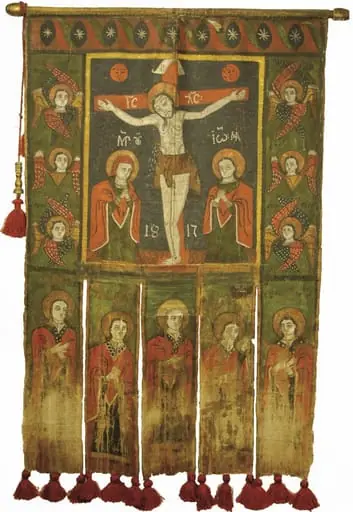 Răstignirea lui Iisus/Maica Domnului cu Pruncul
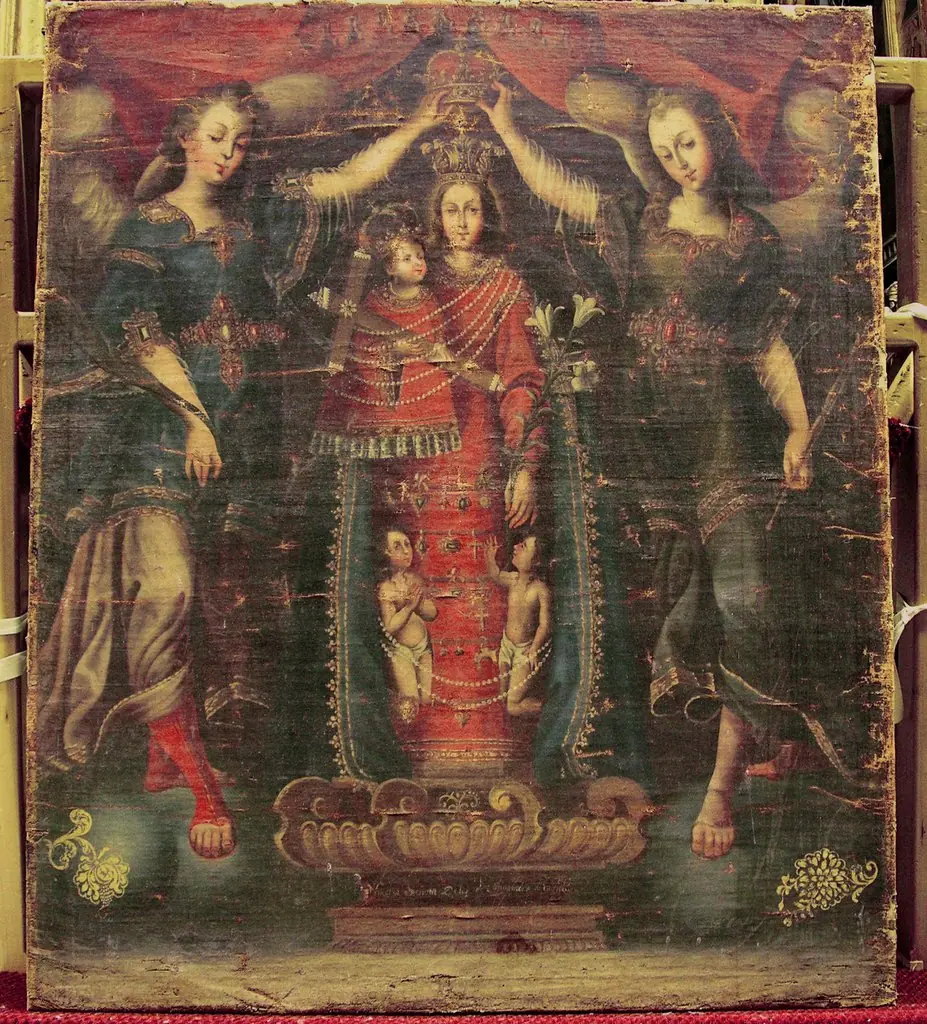 Nuestra Señora de los Desamparados (Our Lady of the Forsaken)
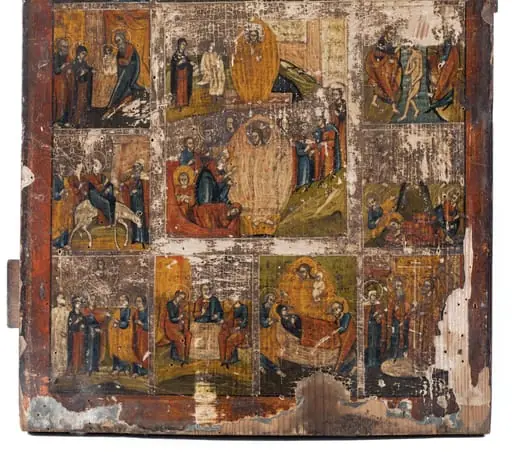 Scene biblice
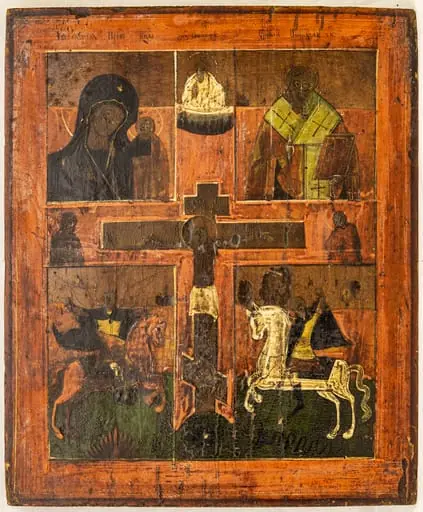 Icoană în patru registre, în centru Iisus Crucificat
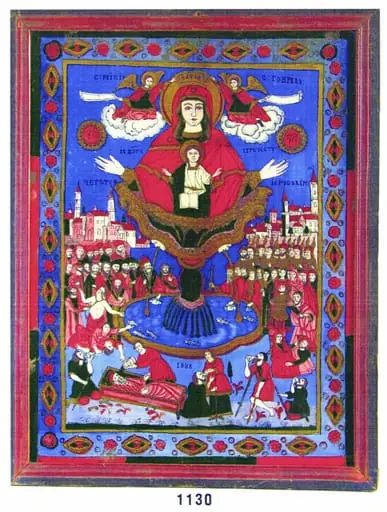 Maica Domnului în Potir - Izvorul Tămăduirii
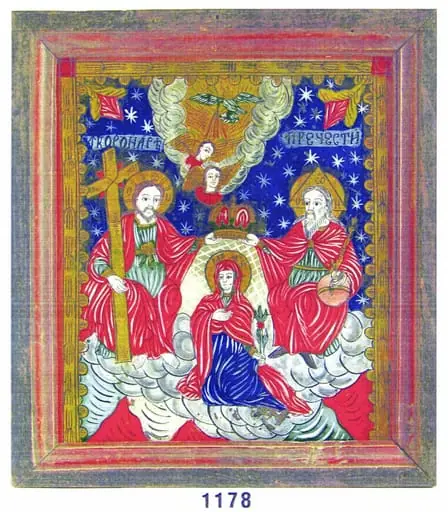 Încoronarea Maicii Domnului
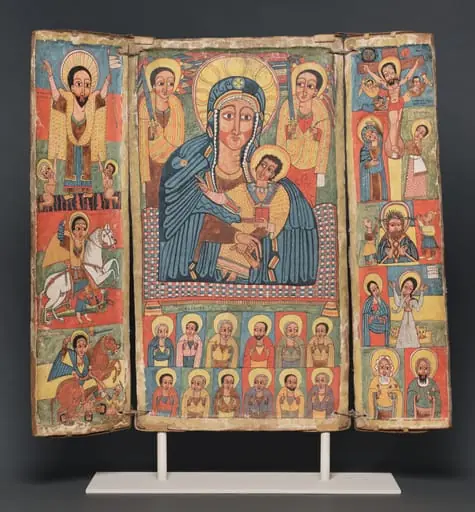 Triptych Icon
 Maica Domnului Îndurerată
 Arhanghelii Mihail și Gavriil