Artwork
Sf. Apostol Ioan
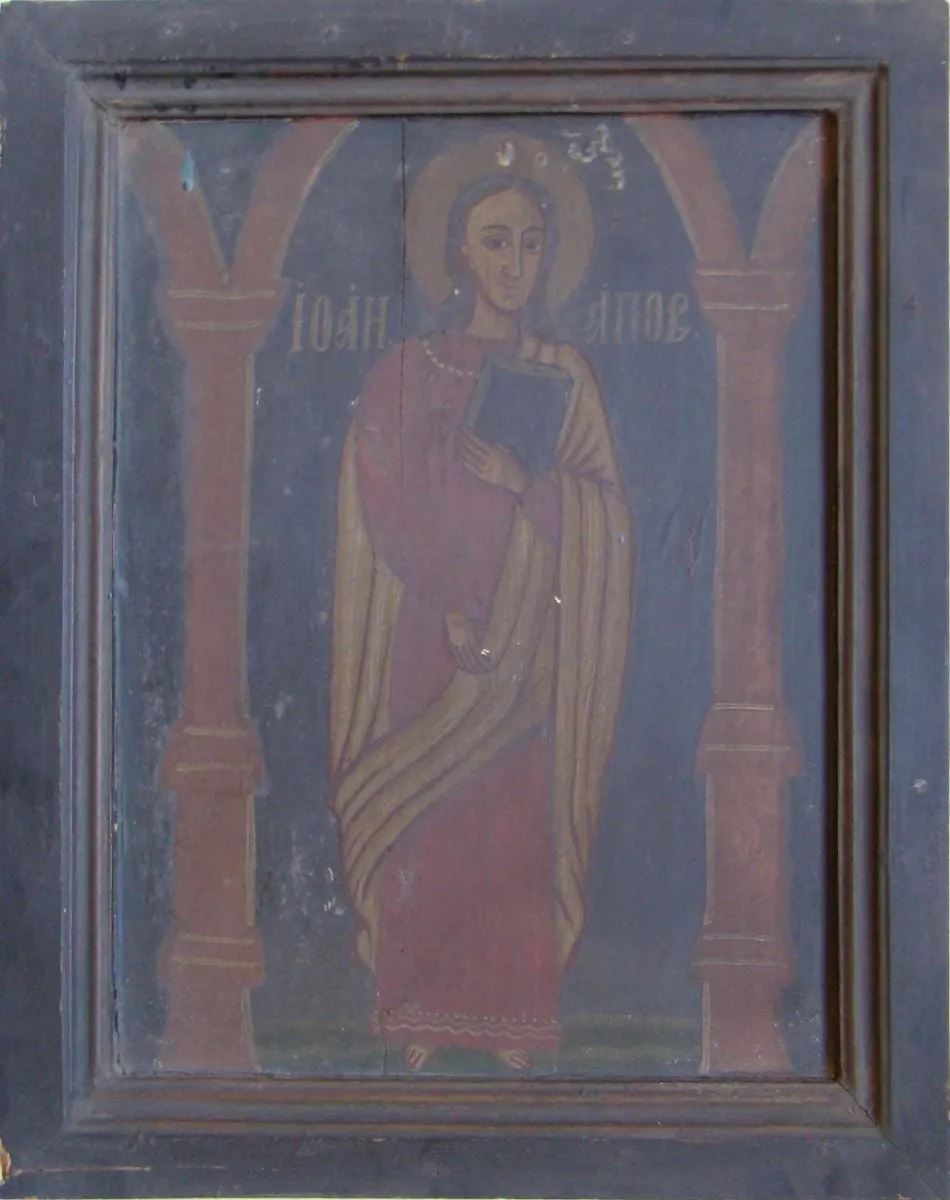
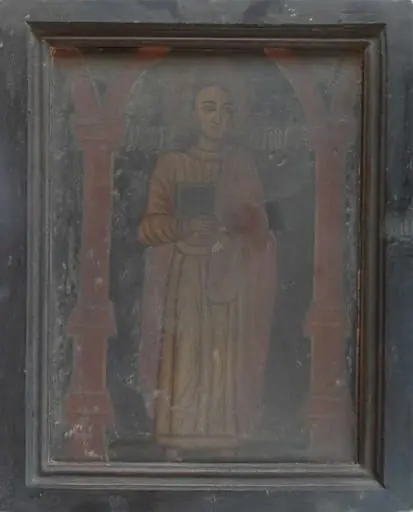
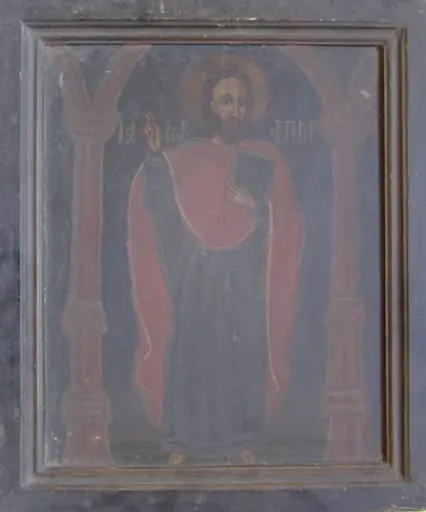
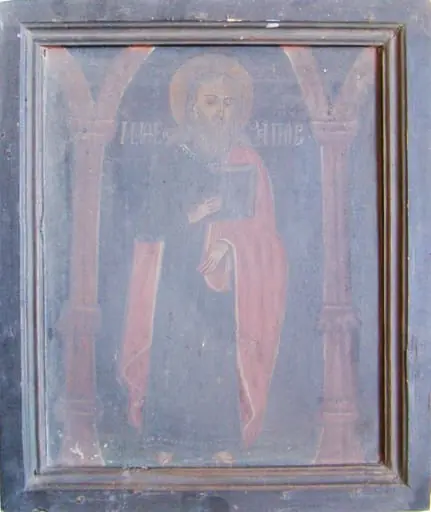
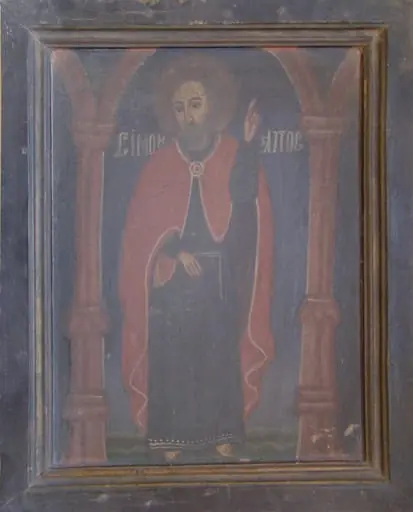
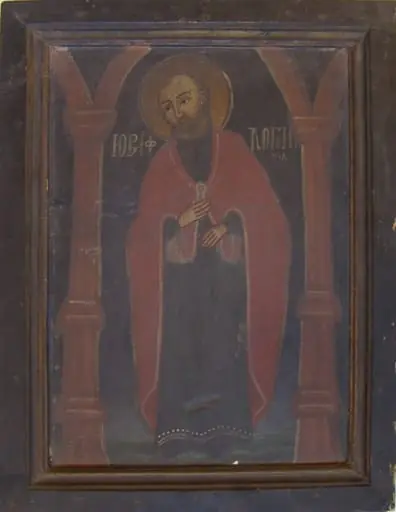
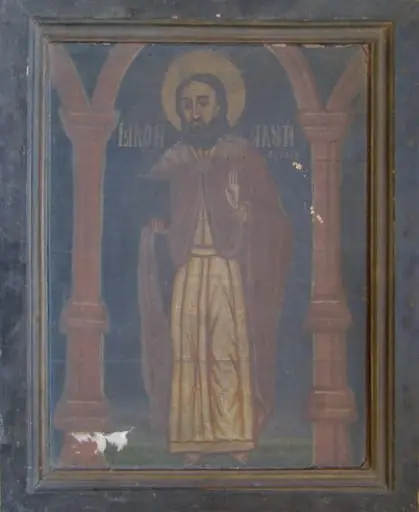
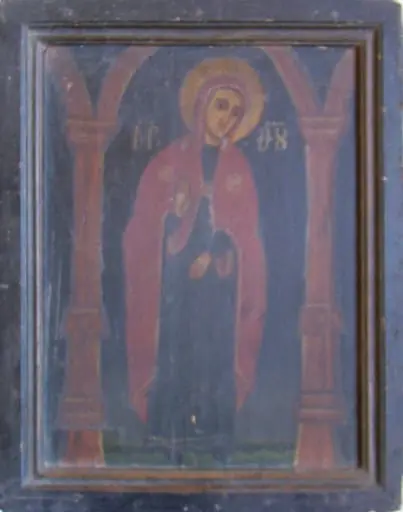
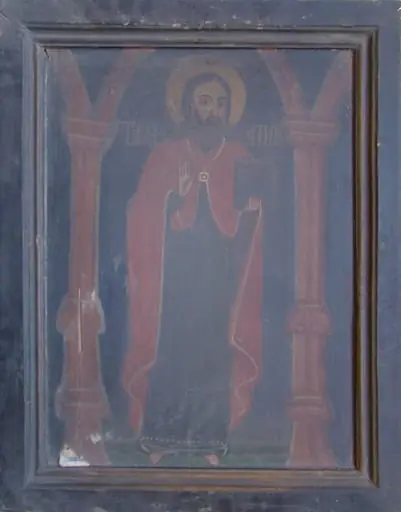
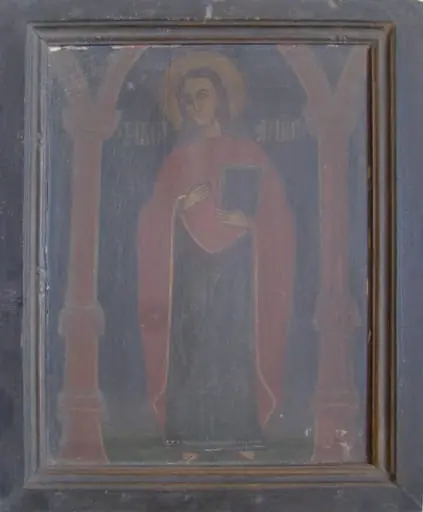
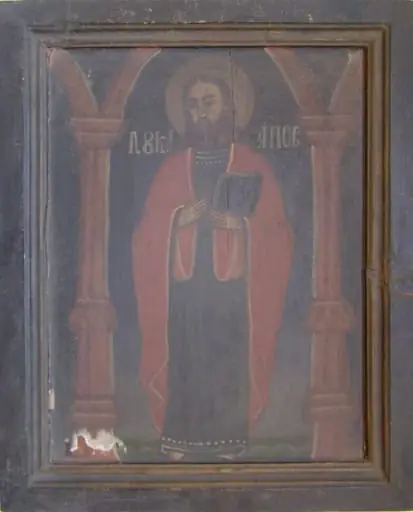
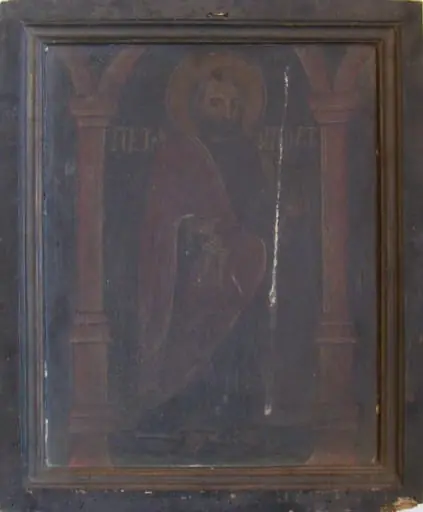
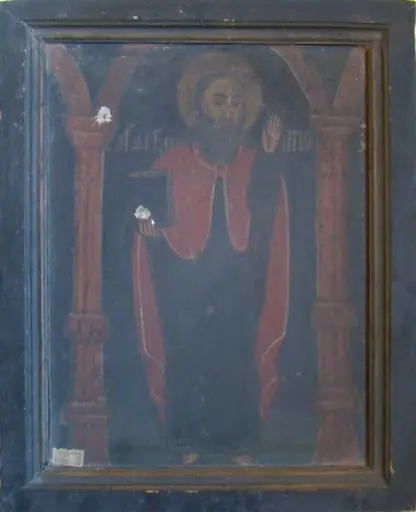
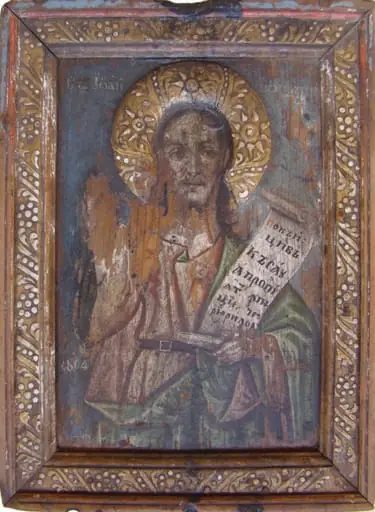
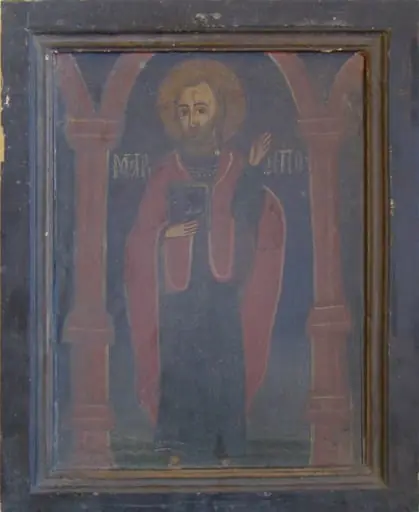
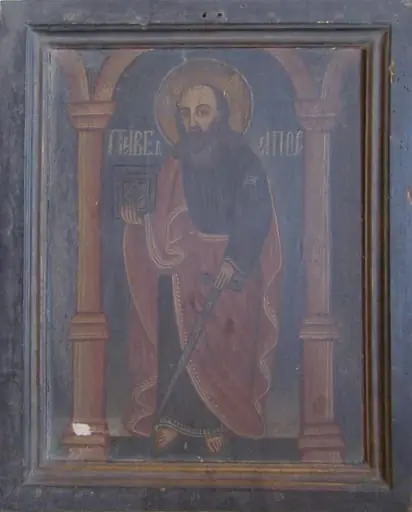
Sf. Apostol Ioan is a drawing by Toma Poienaru. It is held in the collection of the Alba Iulia Orthodox Archdiocese. This small devotional image depicts Saint John the Apostle as a solemn, standing figure framed by two vertical red columns.
About this work
Overview
Rendered in a restrained palette of deep purple, gold, and dark blue, the composition emphasizes clarity and spiritual presence.
This small devotional image depicts Saint John the Apostle as a solemn, standing figure framed by two vertical red columns. Rendered in a restrained palette of deep purple, gold, and dark blue, the composition emphasizes clarity and spiritual presence. The figure holds a book, suggesting scriptural authority, while a golden halo signifies sanctity. The style is minimalist yet intentional, avoiding ornate detail in favor of symbolic clarity.
Subject & Meaning
The figure is identified as Ioan Apostol—John the Apostle—through Greek inscriptions above. His calm expression and upright posture convey quiet authority, aligning with traditional portrayals of apostolic wisdom. The book in his hand likely represents the Gospel or Revelation, texts traditionally attributed to him. The red columns may allude to ecclesiastical structure or the pillars of the Church, reinforcing his role as a foundational witness.
Technique & Style
The robe’s surface is enlivened by fine gold lines that suggest texture without realism, a technique common in Byzantine iconography. The background is uniformly dark blue, isolating the figure and enhancing focus. Facial features are simplified, and contours are clean, avoiding shading or perspective. This deliberate flatness prioritizes spiritual representation over naturalism, relying on symbolic form rather than illusionistic depth.
History & Provenance
Though exact origins are unrecorded, the use of Greek script and the stylistic conventions point to a Byzantine or post-Byzantine origin, likely from the 13th to 16th centuries. Such icons were typically created for private devotion or small chapels. The preservation of the inscription and intact condition suggest it was carefully maintained, possibly within a religious community that valued its liturgical function.
Context
This image belongs to a tradition of Eastern Christian icon painting where saints were depicted not as individuals but as eternal witnesses to divine truth. The use of gold and purple, costly materials, signaled sacred importance. Unlike Western Renaissance art, which sought naturalism, this style emphasized timeless presence, aligning with theological views that saw icons as windows to the divine rather than portraits.
Legacy
The icon’s enduring simplicity reflects a lasting aesthetic in Orthodox Christian art, where clarity and symbolism outweigh decorative complexity. Its format influenced later regional traditions across the Balkans and Eastern Europe. While not widely known outside liturgical circles, it remains a quiet example of how spiritual meaning was encoded through restrained visual language, continuing to guide devotional practice today.
Artist & collection
Artist
Toma Poienaru painted Christian religious scenes at a time when drawing and painting on paper were common for devotional prints.