Artwork
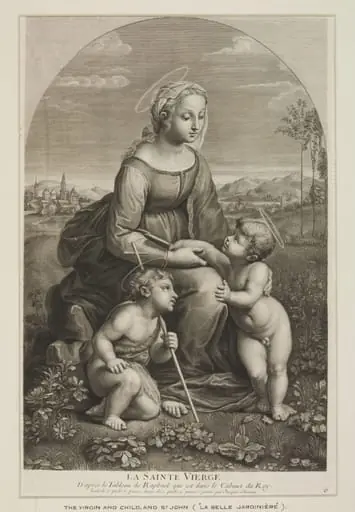
La Sainte Vierge
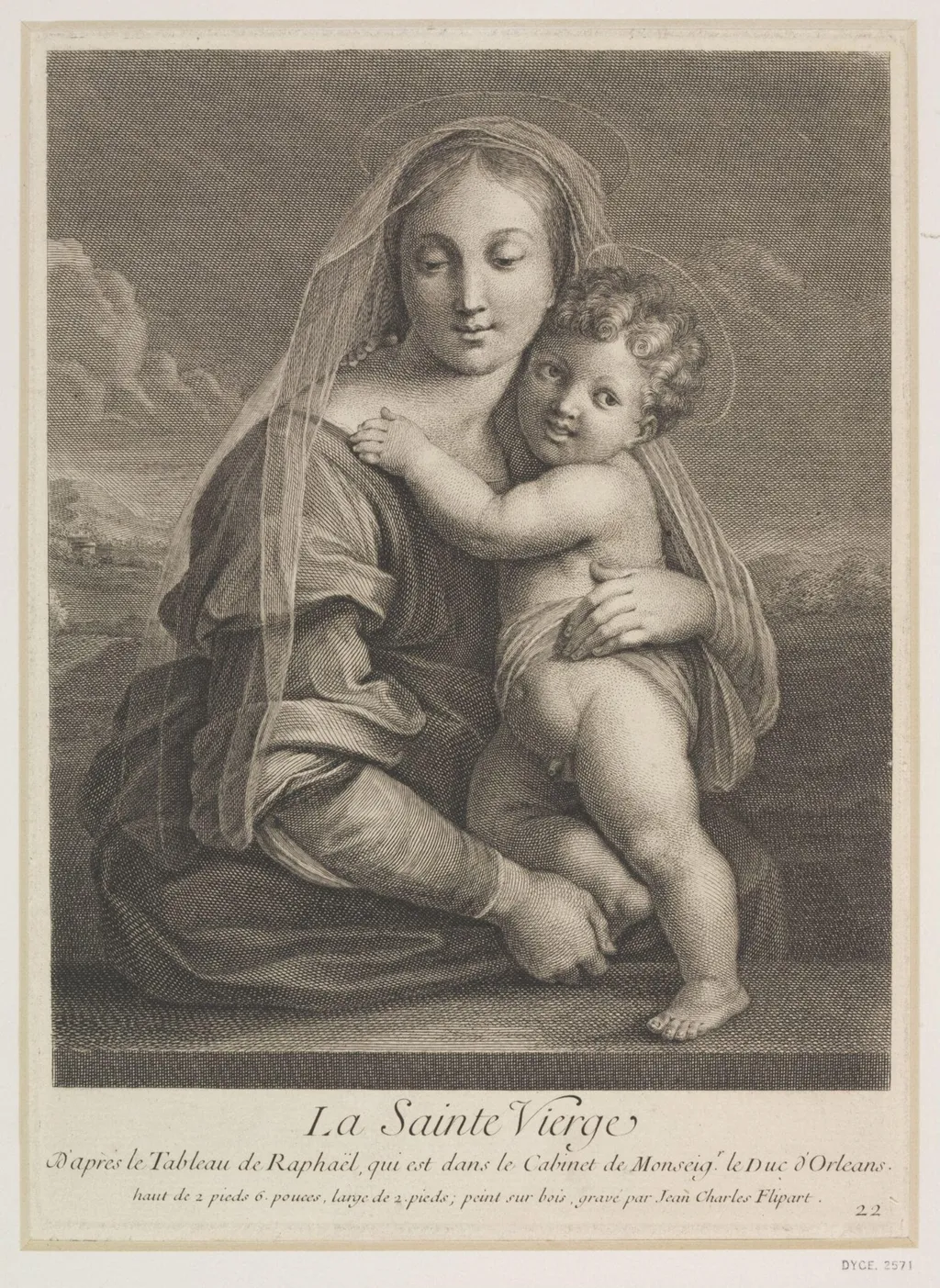
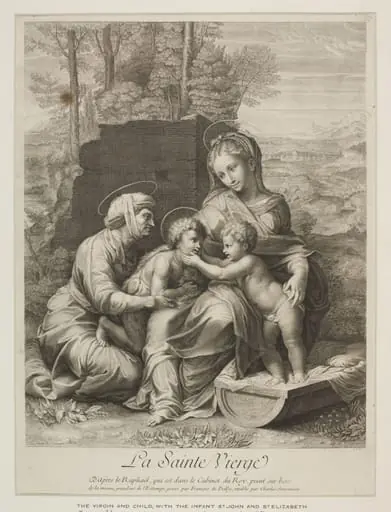
La Sainte Vierge is a print by Jean Charles Flipart. It dates from 1750 and is held in the collection of the Victoria and Albert Museum.
About this work
Overview
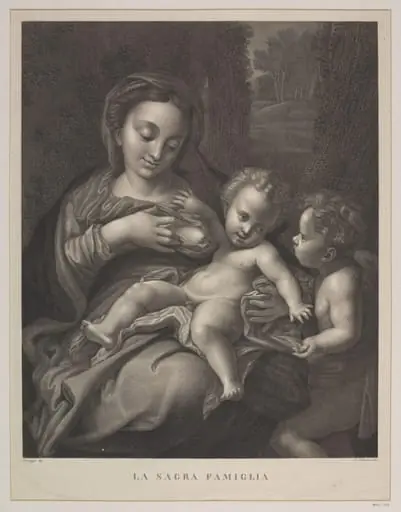
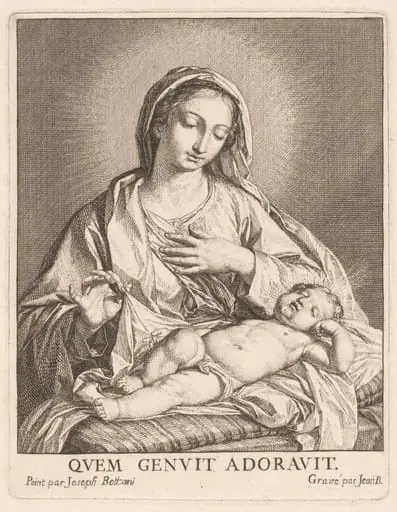
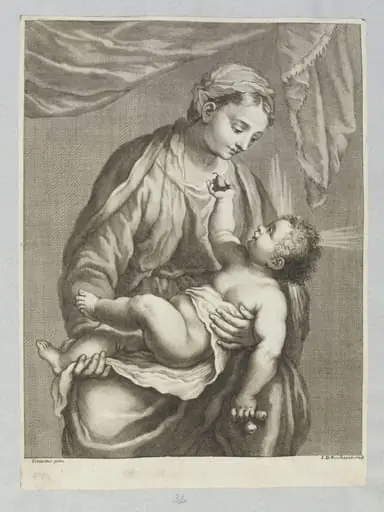
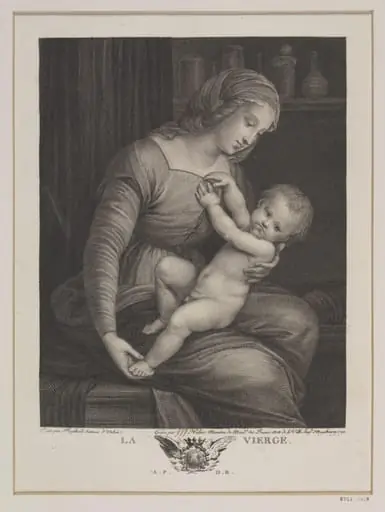
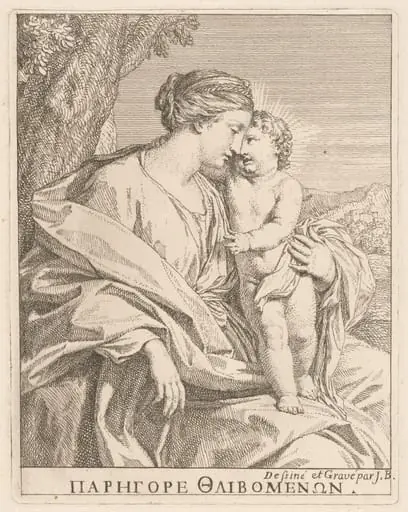
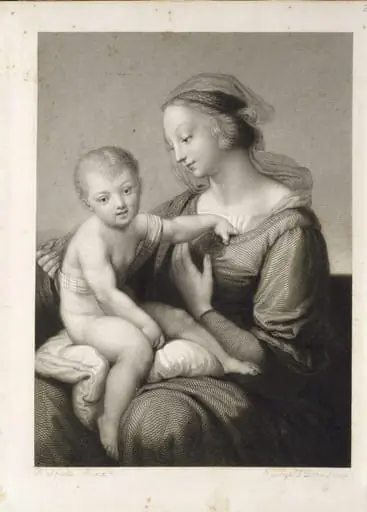
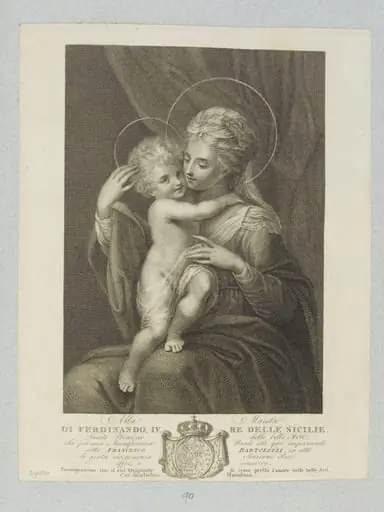
La Sainte Vierge is a 1750 print by Jean Charles Flipart, depicting the Virgin and Child in a composition inspired by the style of Raphael. The work features a woman, identified as the Holy Virgin, draped in flowing robes with a loosely covered head, holding a child who leans against her. A faint, distant landscape is set against a predominantly dark background.
Subject & Meaning
The print's subject is the Virgin Mary with the Christ Child, conveyed through traditional iconography: the Virgin's veiled head and flowing robes signify her sacred role. The child's pose, with an arm around the Virgin's neck, conveys intimacy and maternal devotion.
Technique & Style
Flipart's print employs strong chiaroscuro, characterized by pronounced light and dark contrasts, enhancing the emotional depth of the scene. The overall style emulates Raphael's Renaissance manner, as indicated by the print's attribution.
History & Provenance
Created in 1750, La Sainte Vierge is a reproduction of an earlier, unspecified painting. The original artwork's details are not provided, but Flipart's print suggests a continued admiration for Renaissance styles during the 18th century.
Context
This work reflects the enduring influence of Renaissance art, particularly Raphael's, on 18th-century European printmaking. It also highlights the persistent demand for religious imagery during this period.
Legacy
While specific impacts of La Sainte Vierge on subsequent art are not detailed, it contributes to the broader legacy of Renaissance-style reproductions in the 18th century, facilitating wider access to revered artworks.
Artist & collection
Artist
A printmaker working in late 17th- to mid-18th-century Paris, Jean Charles Flipart carved religious scenes meant for home devotion.