Artwork
St. Jerome
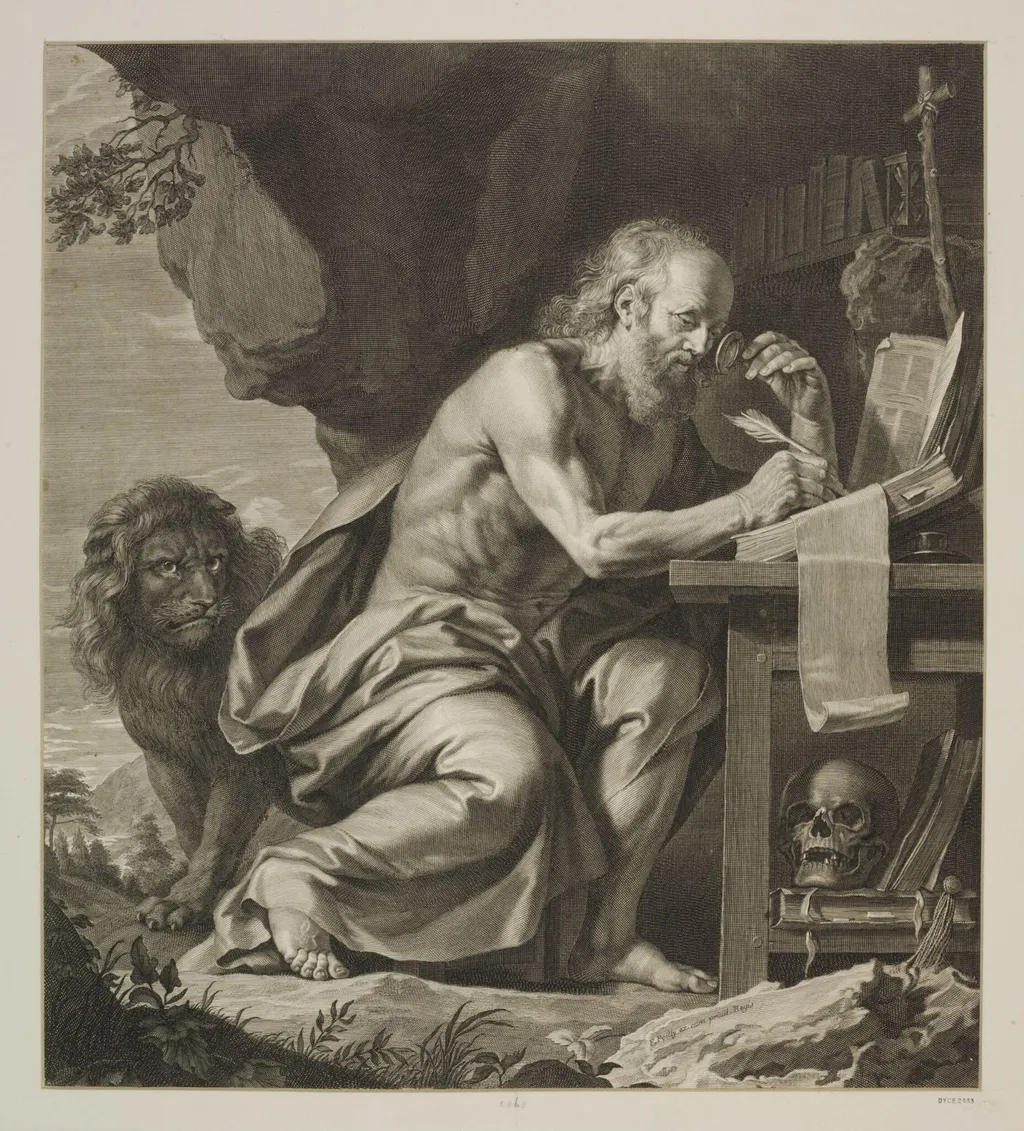
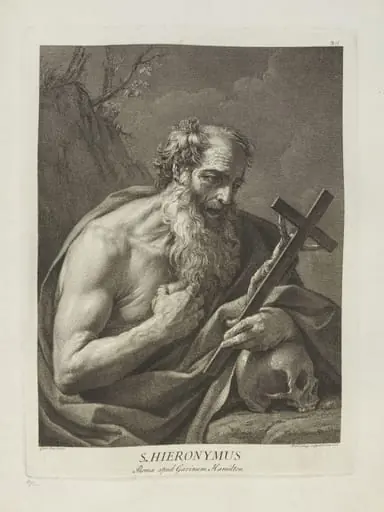
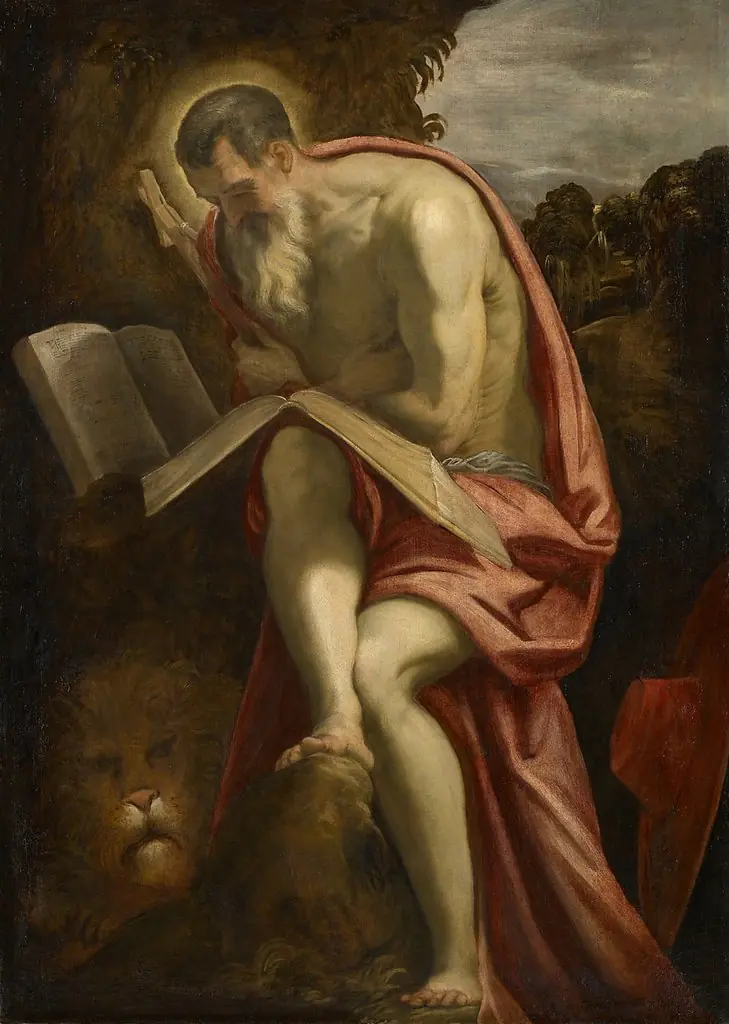
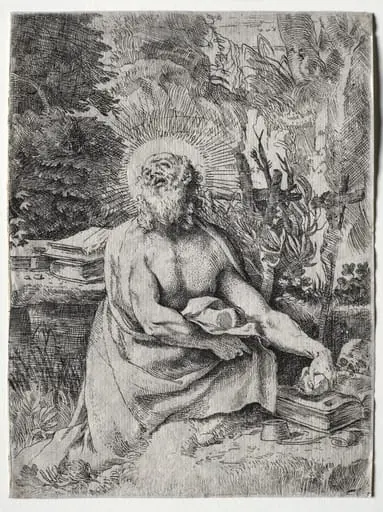
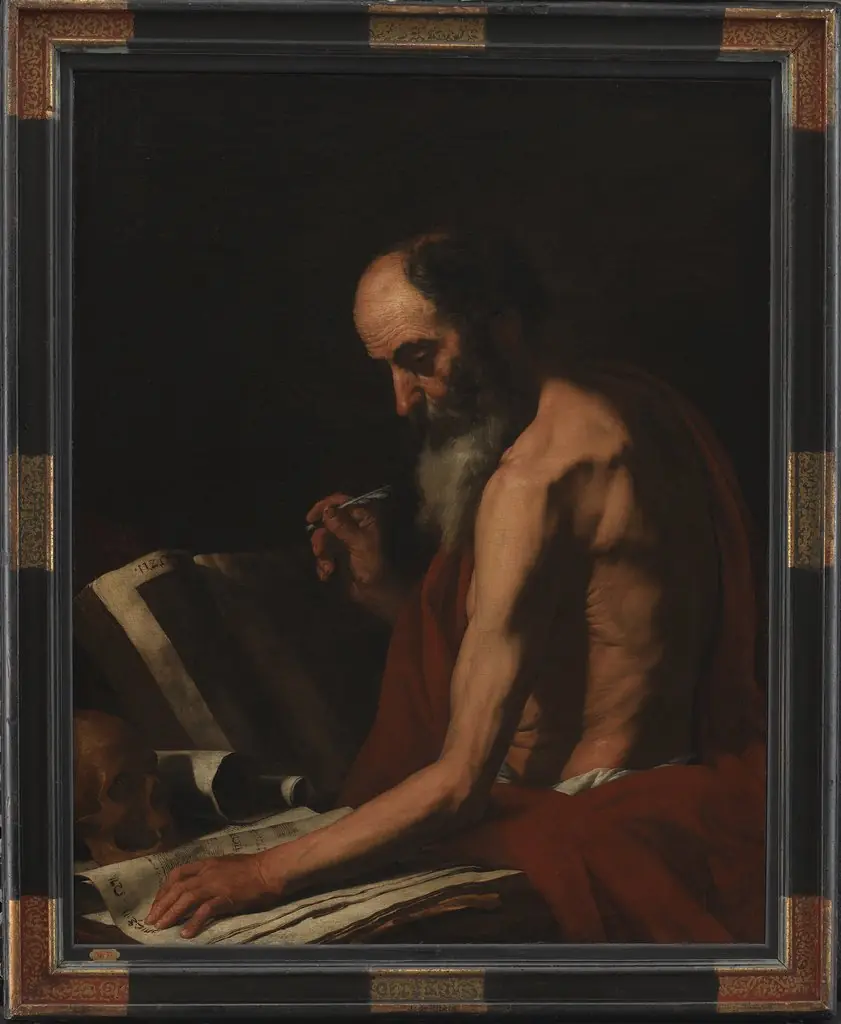
St. Jerome is a print by the Baroque artist François de Poilly. It dates from 1635 and is held in the collection of the Victoria and Albert Museum. This print on paper portrays Saint Jerome in a cave, adapted from a composition by Guido Reni.
About this work
Overview
This print on paper portrays Saint Jerome in a cave, adapted from a composition by Guido Reni. The inscription 'F. POILLY EX. CUM PRIVIL. REGIS.' indicates the print was produced by François Poilly under royal privilege. The image captures the saint in a moment of scholarly devotion, surrounded by symbolic objects that reflect his life and spiritual focus.
Subject & Meaning
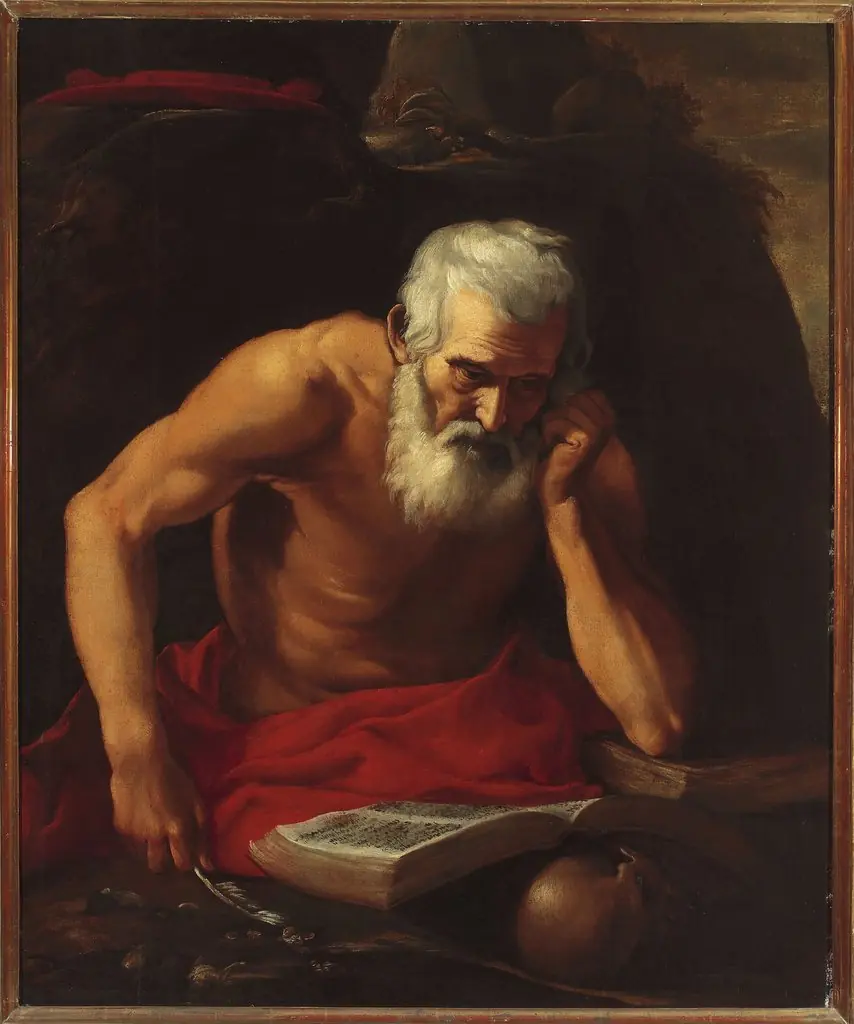
Saint Jerome, depicted in contemplative concentration, is shown translating the Bible into Latin. The lion at his side references the legend of him removing a thorn from its paw, symbolizing compassion. The skull and crossbones nearby evoke mortality, reinforcing the theme of earthly transience and the spiritual weight of his labor.
Technique & Style
The print employs chiaroscuro to model form and depth, using sharp contrasts between light and shadow to define the saint’s drapery and the cave’s recesses. Fine linework renders textures of fabric, fur, and stone with precision. The composition is tightly framed, directing focus to the figure’s intense concentration and the intimate space of his study.
History & Provenance
Produced by François Poilly, a French engraver active in the late 17th century, this print was made after Guido Reni’s original painting. The royal privilege mentioned in the inscription suggests official endorsement, likely granting Poilly exclusive rights to reproduce the image. Such prints circulated widely among collectors and religious institutions.
Context
Saint Jerome was a frequent subject in Counter-Reformation art, valued for his scholarly piety and role in standardizing the Latin Bible. Prints like this one served devotional and educational purposes, making revered religious figures accessible beyond church walls. The cave setting aligns with traditions depicting him in solitude, emphasizing withdrawal from worldly distractions.
Legacy
Poilly’s engraving helped disseminate Reni’s interpretation of Saint Jerome across Europe, influencing later depictions of the saint in both print and painting. Its enduring presence in collections reflects the continued resonance of Jerome as a symbol of intellectual devotion and spiritual discipline in early modern religious culture.
Artist & collection
Artist
François de Poilly made intricate religious prints and engravings in 17th-century France.