Artwork
Holy Family
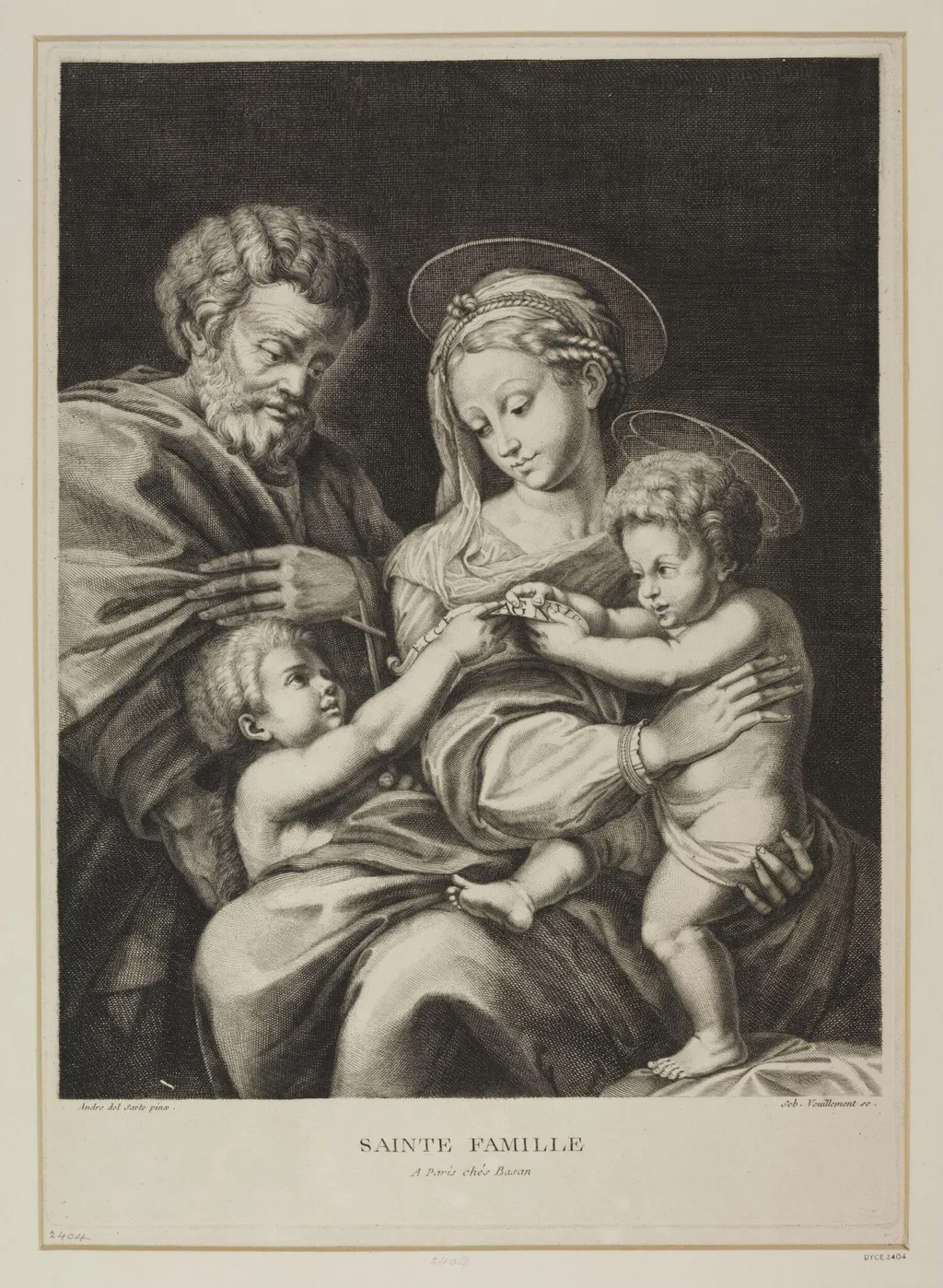
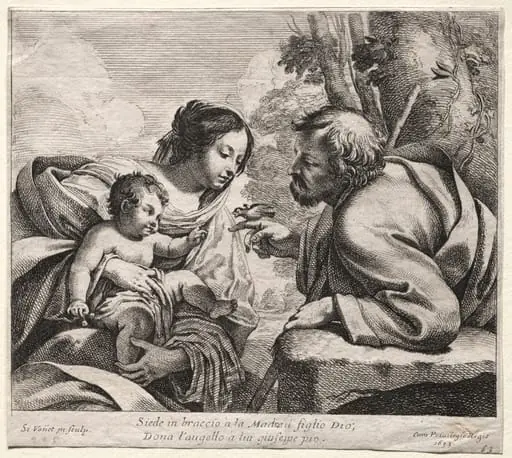
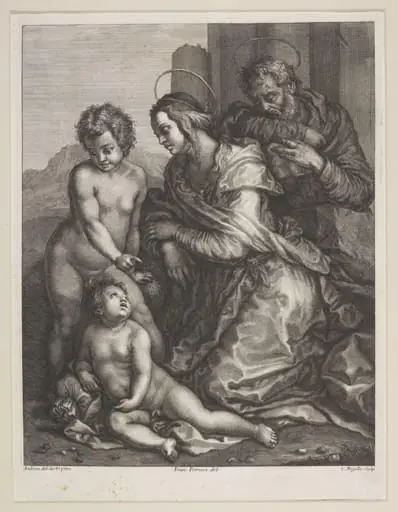
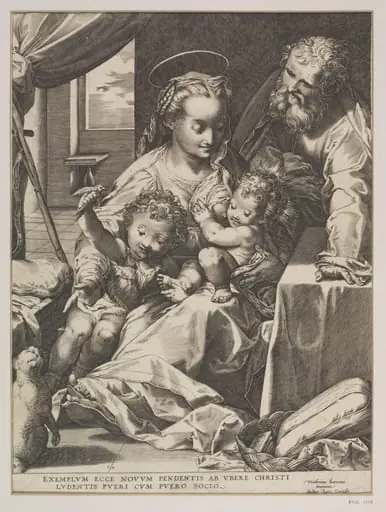
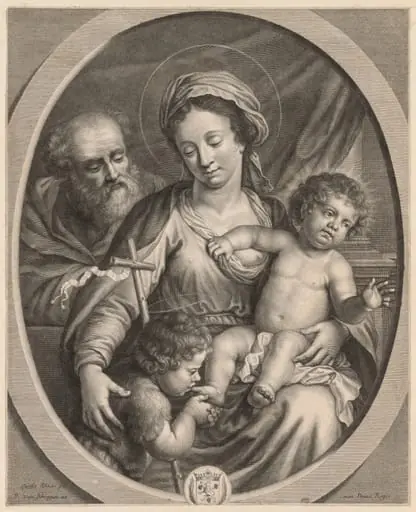
Holy Family is a print by Sébastien Vouillemont. It dates from 1650 and is held in the collection of the Victoria and Albert Museum.
About this work
Overview
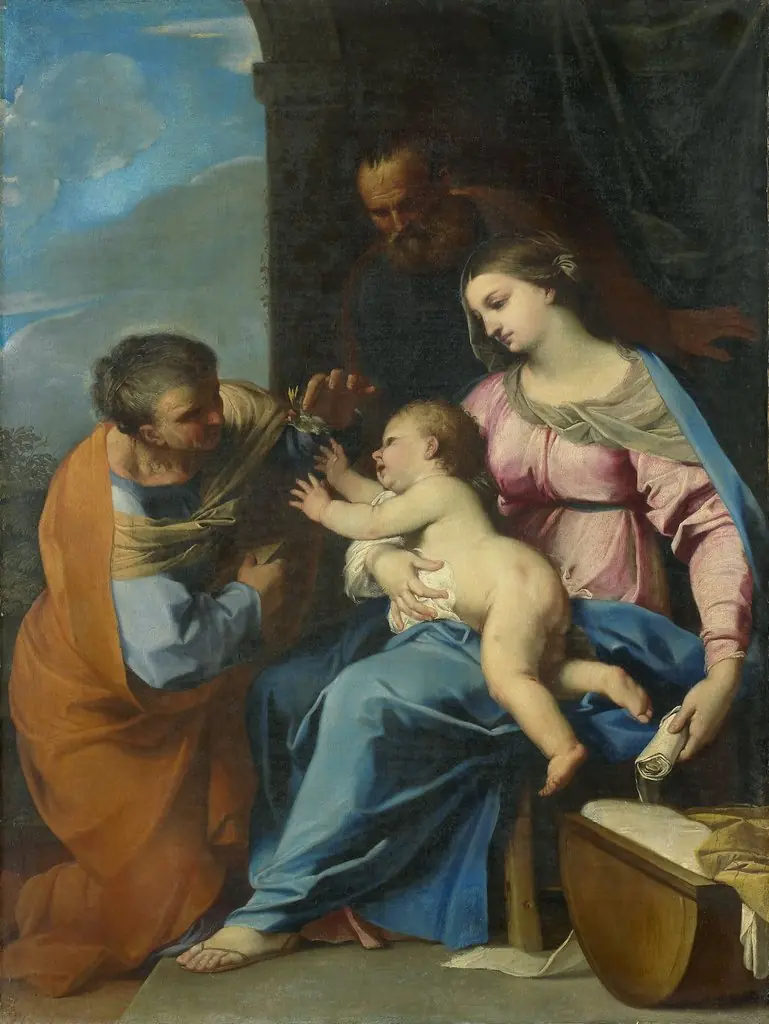
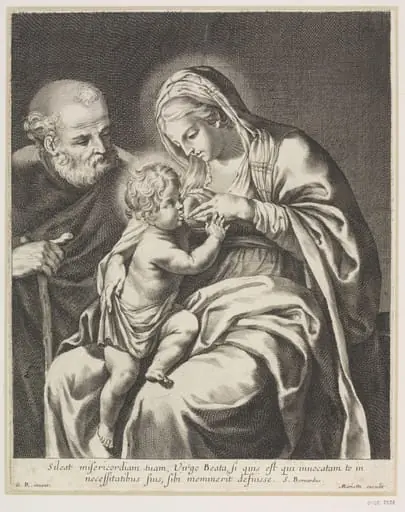
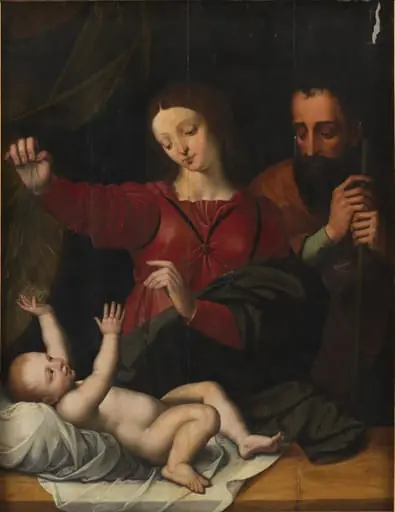
This print, created circa 1650 by Sébastien Vouillemont, is a reproductive engraving based on a painting by Andrea del Sarto. It depicts the Holy Family—Mary, Joseph, and the infant Jesus—in a quiet domestic moment. Rendered on paper, the work reflects the 17th-century practice of disseminating religious imagery through print, making devotional compositions accessible beyond original paintings.
Subject & Meaning
The scene centers on Mary seated with the swaddled Christ child, while Joseph stands beside her, gazing downward with quiet reverence.
The scene centers on Mary seated with the swaddled Christ child, while Joseph stands beside her, gazing downward with quiet reverence. The composition emphasizes tenderness and familial stillness, aligning with Counter-Reformation ideals that promoted the Holy Family as a model of piety and domestic virtue. The absence of overt symbolism invites contemplation of ordinary holiness within the household.
Technique & Style
Vouillemont employs fine linear engraving to render form and texture, using delicate hatching to suggest volume and shadow. The soft gradations of light mimic chiaroscuro, lending depth to the figures without the richness of paint. The golden ambient glow is implied through subtle tonal contrasts, focusing attention on the faces and hands, where emotional nuance is most present.
History & Provenance
The print derives from a lost or little-known painting by Andrea del Sarto, likely produced in the early 16th century. Vouillemont’s version, made over a century later, reflects the continued circulation of Renaissance compositions through reproductive prints. Its survival suggests it was owned or collected by individuals interested in devotional art, though its specific early ownership remains undocumented.
Context
In mid-17th-century Europe, prints like this served both religious and educational purposes, especially in regions where access to original paintings was limited. The Holy Family was a popular subject, reinforced by Church teachings emphasizing Mary’s purity and Joseph’s protective role. Vouillemont’s work fits within a broader tradition of engravers translating sacred imagery for private devotion.
Legacy
Though not widely known today, Vouillemont’s print contributes to the historical record of how Renaissance compositions were preserved and reinterpreted in print form. It exemplifies the role of engravers as intermediaries between major painters and wider audiences, ensuring the endurance of religious iconography beyond the confines of original artworks.
Artist & collection
Artist
Sébastien Vouillemont never left Paris, yet his prints traveled farther than he did.