Artwork
West Door, Monza Cathedral
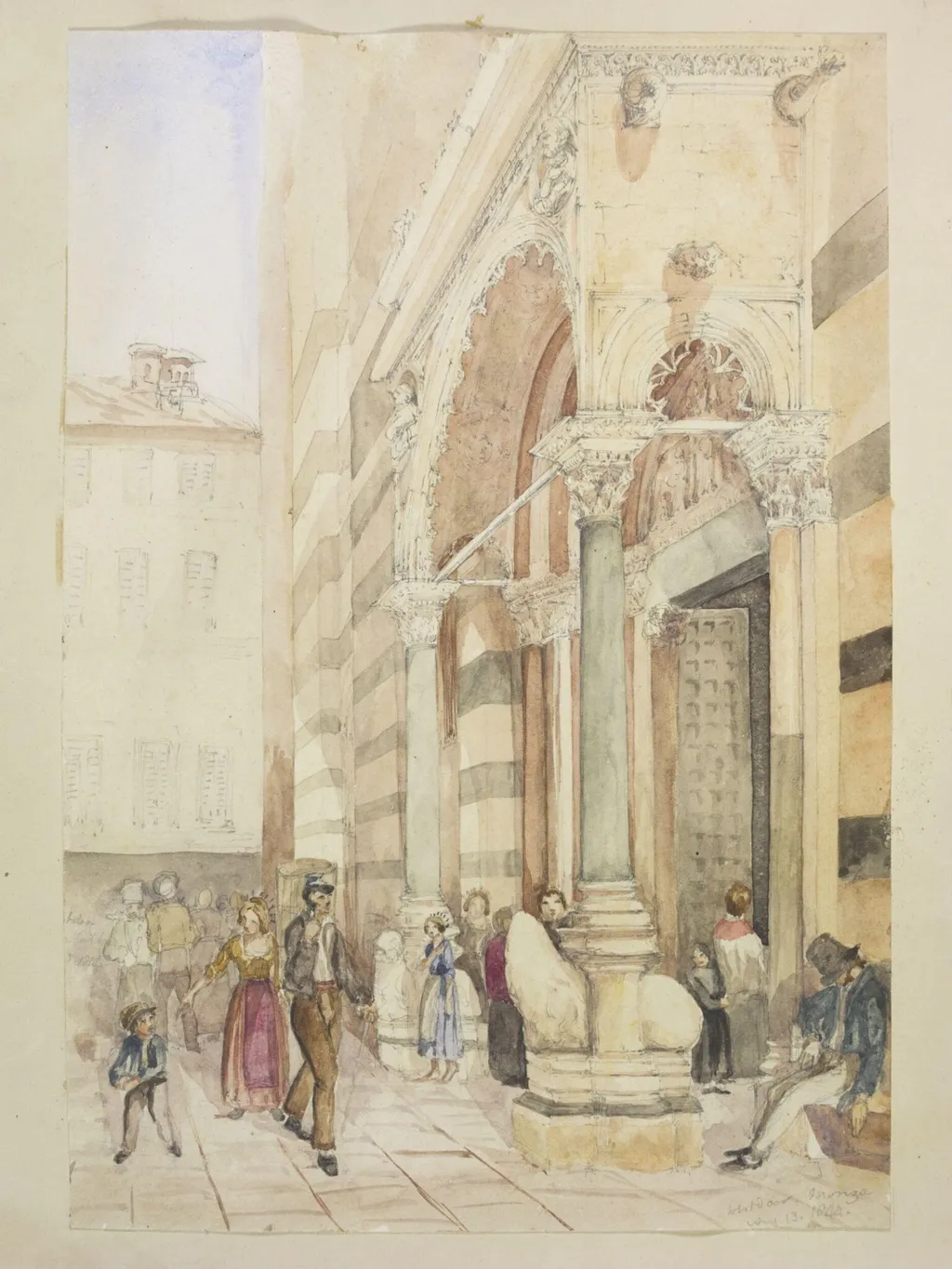
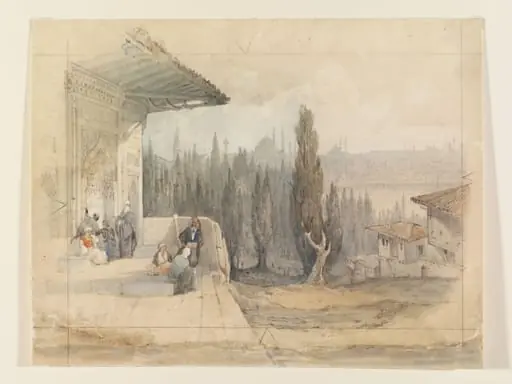
West Door, Monza Cathedral is a watercolor work on paper by the Romanticist artist Pollen. It dates from 13 and is held in the collection of the Victoria and Albert Museum. This watercolour depicts the west entrance of Monza Cathedral, rendered in loose, spontaneous brushwork on paper mounted to card.
About this work
Overview
The scene captures an interior space alive with movement: figures in period attire move through the nave, their forms softened by ambient light.
This watercolour depicts the west entrance of Monza Cathedral, rendered in loose, spontaneous brushwork on paper mounted to card. The scene captures an interior space alive with movement: figures in period attire move through the nave, their forms softened by ambient light. The artist’s quick strokes suggest a direct observation, preserving the immediacy of a moment rather than a polished composition.
Subject & Meaning
The image portrays ordinary activity within a sacred space—worshippers walking, pausing, conversing—emphasizing the cathedral as a living environment rather than a static monument. The presence of a distant archway revealing an external structure hints at the building’s connection to the wider urban context, grounding the sacred in daily life.
Technique & Style
Executed in transparent watercolour, the work relies on washes and minimal detail to suggest texture and form. Light is implied through subtle gradations, catching folds of fabric and the striations of stone columns. The sketch-like quality, with visible pencil underdrawings on the reverse, indicates it was likely a study, not a finished piece for display.
History & Provenance
The watercolour is mounted on card, with pencil sketches on the reverse, including a winged figure possibly an angel. These annotations suggest the artist used the reverse as a sketchpad, repurposing the support. Its origin is tied to 19th-century artistic practice, though the creator remains unidentified. It entered the Victoria and Albert Museum’s collection as part of a broader group of architectural studies.
Context
In the 19th century, artists frequently made watercolour studies of ecclesiastical architecture during travels across Europe. Monza Cathedral, with its distinctive striped columns and historical significance, attracted such attention. These works served as references for larger projects or personal records, reflecting a broader trend of documenting heritage sites with observational precision.
Legacy
This watercolour contributes to a body of 19th-century architectural sketches that prioritize atmosphere over monumentality. Its informal character and layered reverses offer insight into the working methods of artists documenting religious spaces. It remains a quiet testament to the everyday life within historic buildings, preserved not as grandeur but as lived experience.
Artist & collection

Artist
Pollen is a powdery substance produced by most types of flowers of seed plants for the purpose of sexual reproduction. It consists of pollen grains, which produce male gametes.

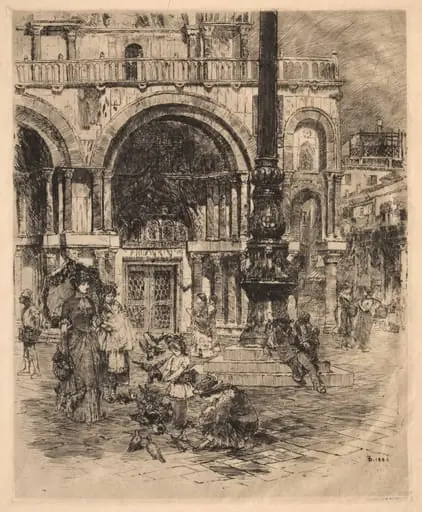 Piazza San Marco, Venice
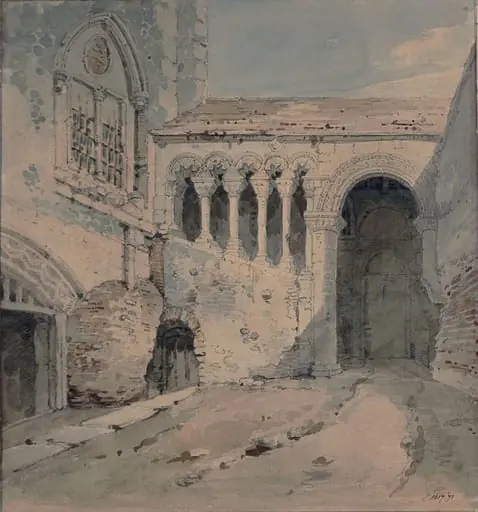 The Square at Canterbury
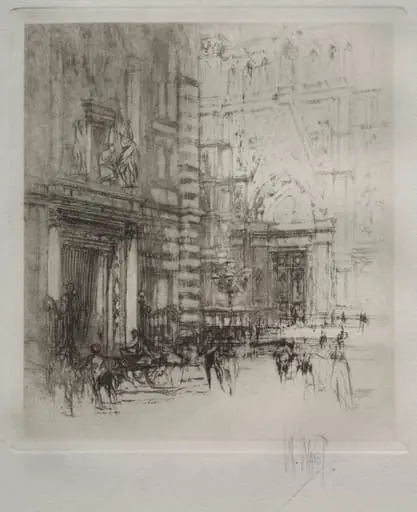 The Baptistry, Florence
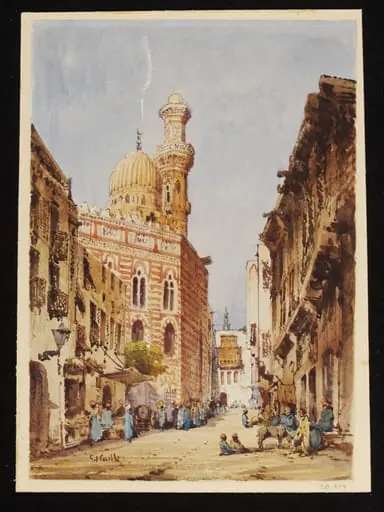 Sharia Bab al-Wazir with the Madrasah and Tomb of Sultan Shaban II (Umm al-Sultan)
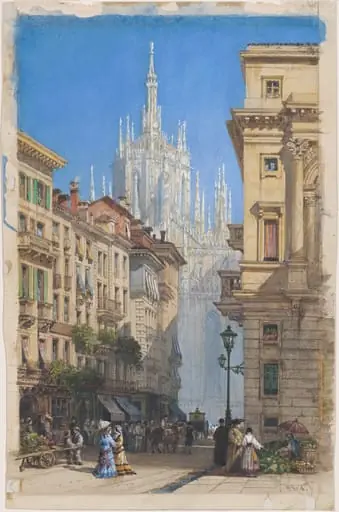 The Duomo in Milan from a Side Street
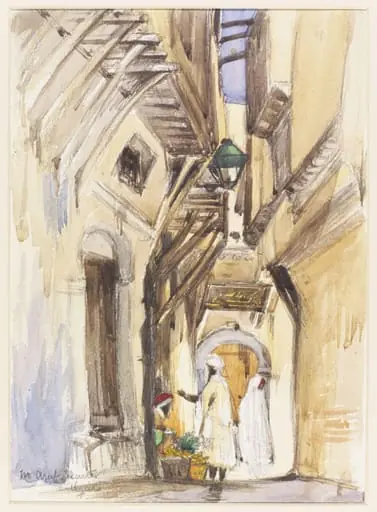 In Arab Quarter Algiers
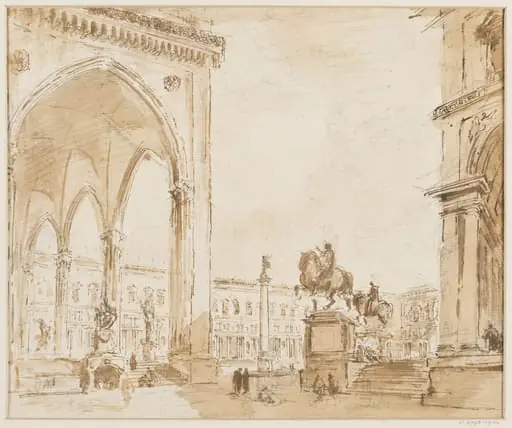 Drawing
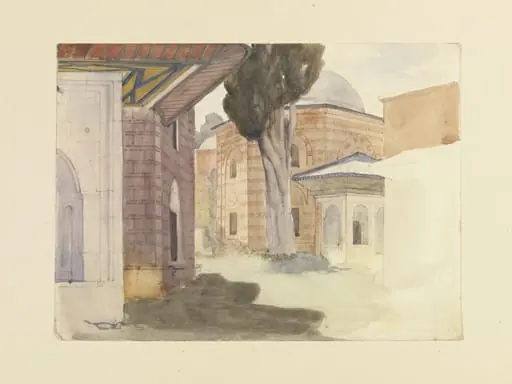 Türbes in the Royal Cemetery of the Muradiye (Murad II), Bursa
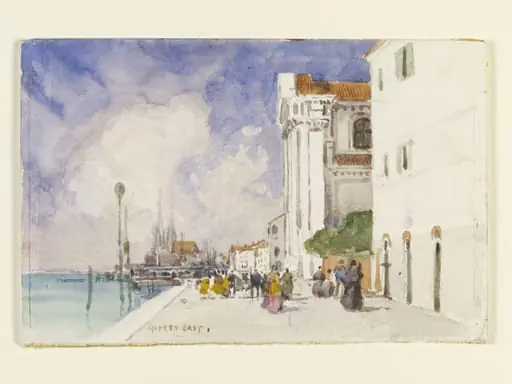 The Jesuits' Church, or Santa Maria del Rosario, Venice
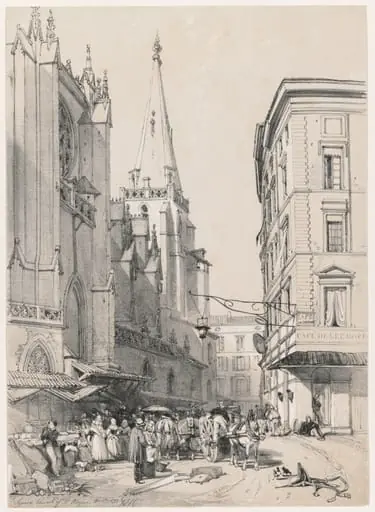 Sketches at Home and Abroad: Lyons Church of St. Hezier, October 1832
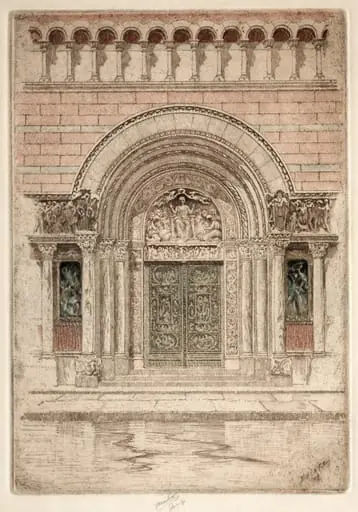 Door of St. Bartholomew
 Pera
Pera