Artwork
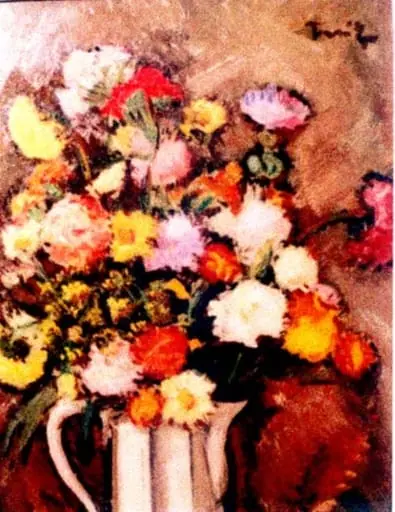
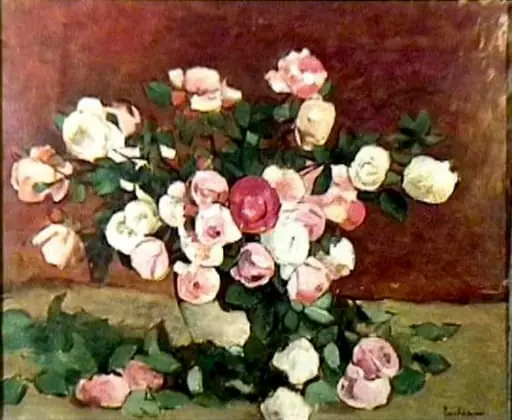
Natură statică cu flori
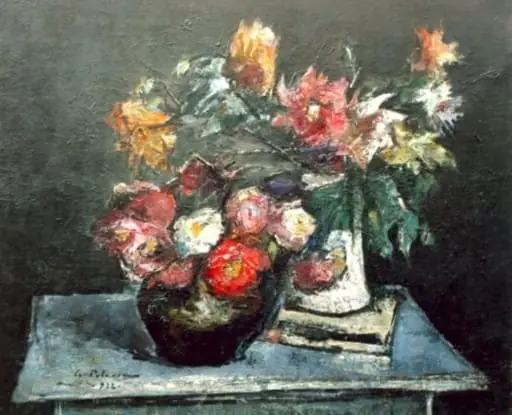
Natură statică cu flori is an unspecified painting by Ștefan Popescu. It dates from 1924 and is held in the collection of the Argeș County Museum.
About this work
Overview
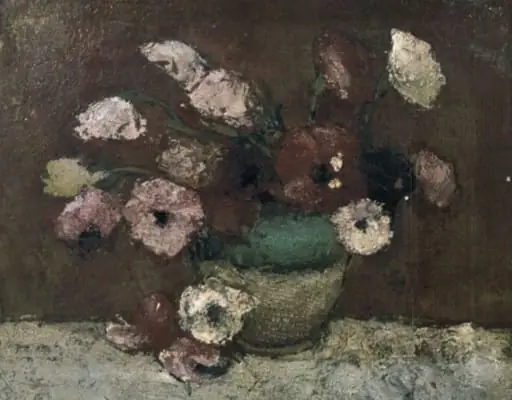
Painted in 1924 by Ștefan Popescu, this still life presents a simple arrangement of flowers in a weathered vase. The composition centers on the blooms, with no additional objects or context, drawing attention to their form and texture. The work reflects a direct, unembellished approach to natural subjects, characteristic of early 20th-century Romanian modernism.
Subject & Meaning
The arrangement includes red, pink, and white flowers, arranged loosely as if freshly gathered. There is no symbolic narrative or formal structure; the subject is the transient beauty of the blooms themselves. The absence of ornamentation or idealization suggests an interest in the ordinary, emphasizing impermanence and raw vitality over decorative convention.
Technique & Style
Popescu applied paint thickly and unevenly, using visible brushstrokes and scraped textures to build surface depth. Petals are rendered with energetic, almost abrasive strokes, enhancing their tactile presence. The background is softly blurred, creating atmospheric depth without detail, allowing the flowers to dominate through physicality rather than precision.
History & Provenance
Created in 1924, the painting emerged during a period of artistic experimentation in Romania, as local painters moved away from academic traditions. While specific ownership history is not widely documented, the work is held in public collections and has been included in exhibitions focused on interwar Romanian modern art.
Context
In the 1920s, Romanian artists were exploring new modes of expression influenced by European modernism, including Post-Impressionism and Expressionism. Popescu’s use of textured paint and informal composition aligns with broader trends rejecting polished realism, favoring emotional resonance and material presence over classical harmony.
Legacy
The painting contributes to the recognition of Romanian modernists who prioritized personal expression over academic norms. Its emphasis on materiality and spontaneous brushwork anticipates later developments in post-war Eastern European painting, where texture and gesture became key vehicles for emotional and aesthetic inquiry.
Artist & collection
Artist
Ștefan Popescu painted quiet scenes from the 1920s, blending everyday places with soft light.