Artwork
Peisaj oriental
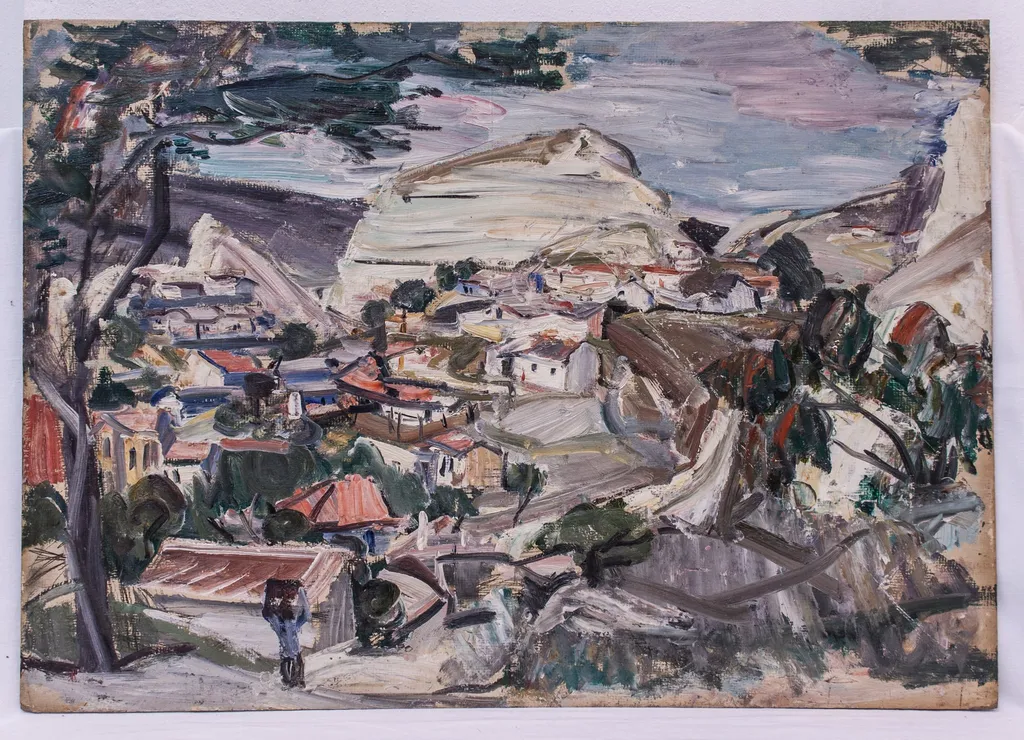
Peisaj oriental is a print by Arnold Max Wexler. It is held in the collection of the Gavrila Simion Eco-Museum Research Institute Tulcea.
About this work
Overview
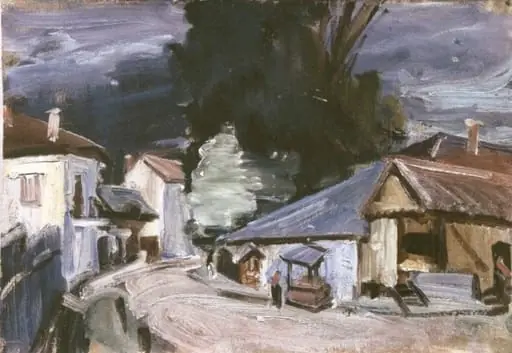
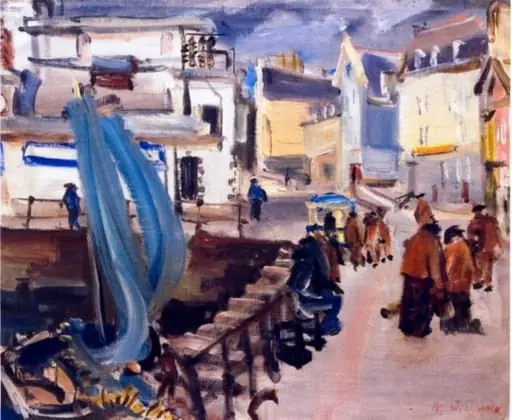
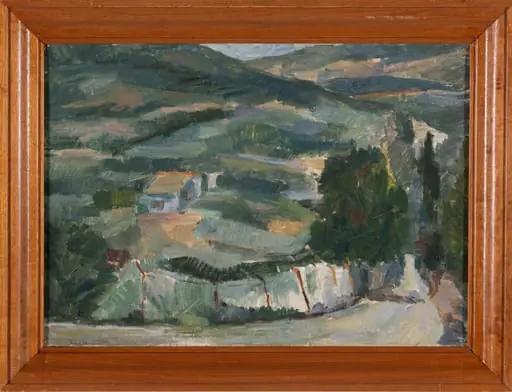
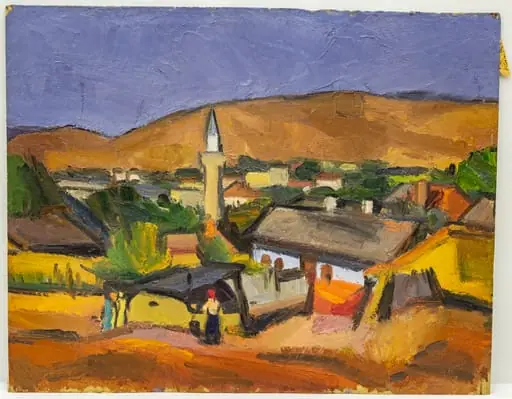
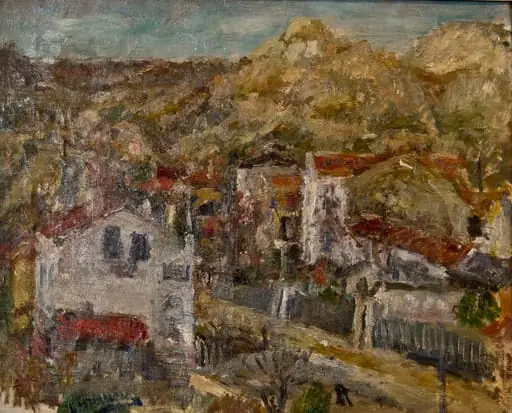
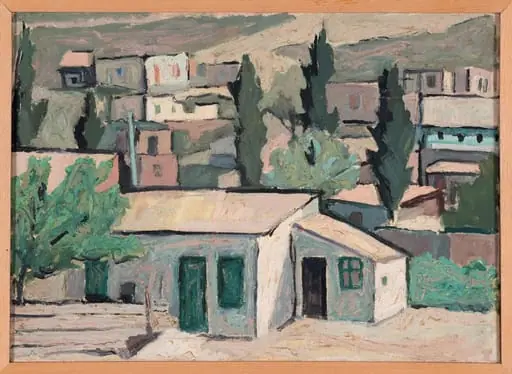
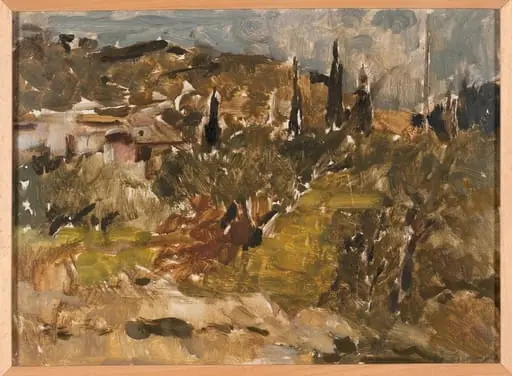
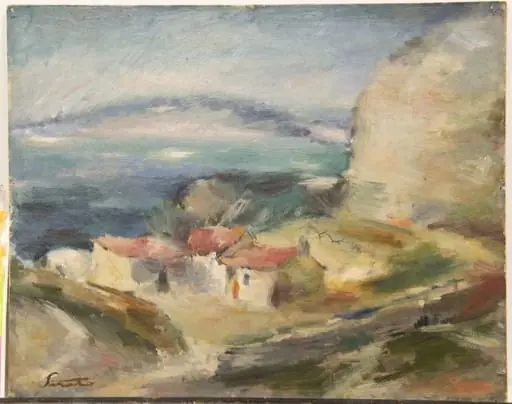
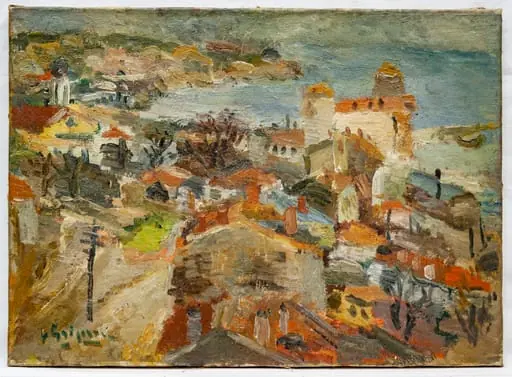
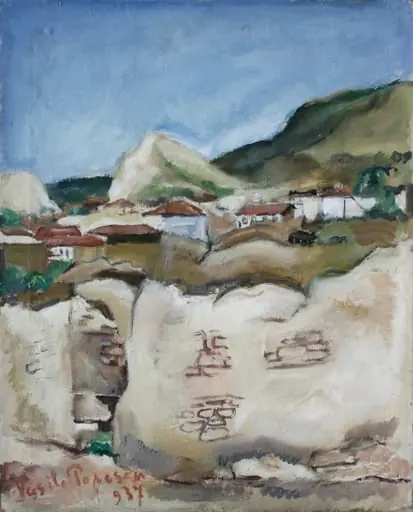
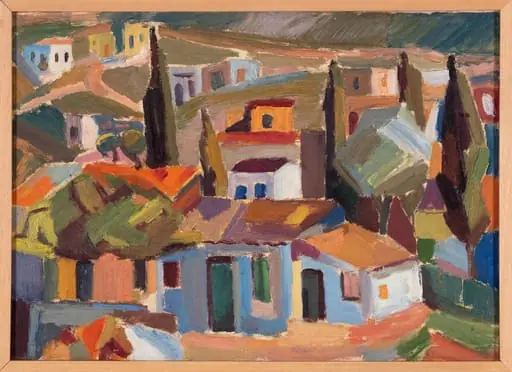
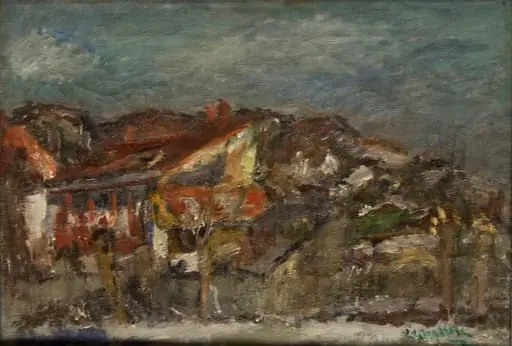
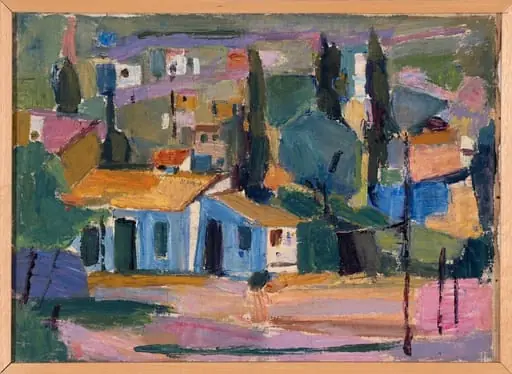
Peisaj oriental is a painting depicting a village nestled at the foot of a hilly, mountainous background. Characterized by a predominantly muted color palette of browns, grays, and faded blues, the work features prominent, uneven brushstrokes.
Subject & Meaning
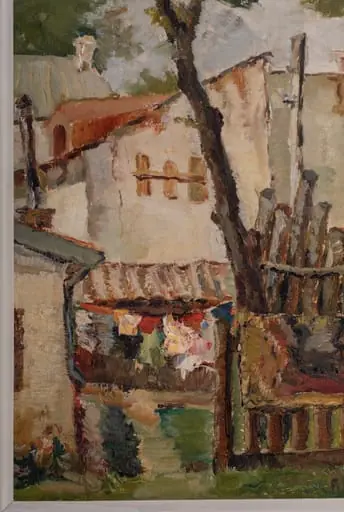
The subject is a rural, possibly Eastern European or Middle Eastern village, implied by the title and the architecture with sloped roofs. The emphasis on everyday, rustic life suggests a focus on capturing the essence of a common scene rather than an idealized or monumental one.
Technique & Style
The painting exhibits a loose, expressive technique with thick, uneven brushstrokes, giving it a sketchy, spontaneous appearance. The uneven texture, with areas appearing scratched or worn, aligns with impasto techniques, emphasizing the physicality of the paint.
Context
While specific contextual details about the artist's intentions or the exact location depicted are not provided, the style and subject matter place it within traditions of early 20th-century European art that valued expressive, everyday scenes over realism.
Legacy
The legacy of Peisaj oriental is not detailed in the provided information, suggesting it may not be a widely recognized work in broad art historical narratives or may require further research to understand its impact or influence.
Artist & collection
Artist
Arnold Max Wexler made drawings and paintings of everyday scenes and landscapes around the 1930s–40s.
Museum
Gavrila Simion Eco-Museum Research Institute Tulcea
Continue through works from the same source collection.