Artwork
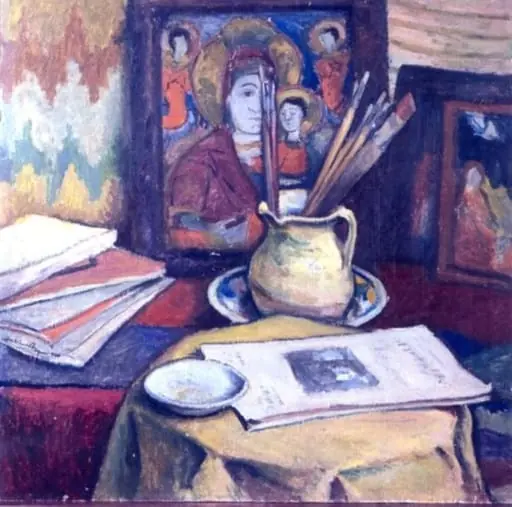
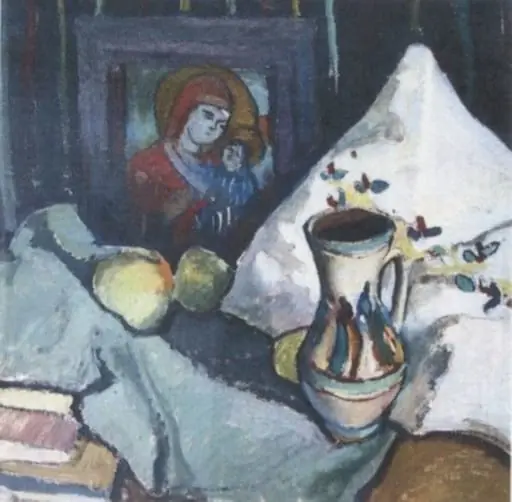
Icoană și ortensie
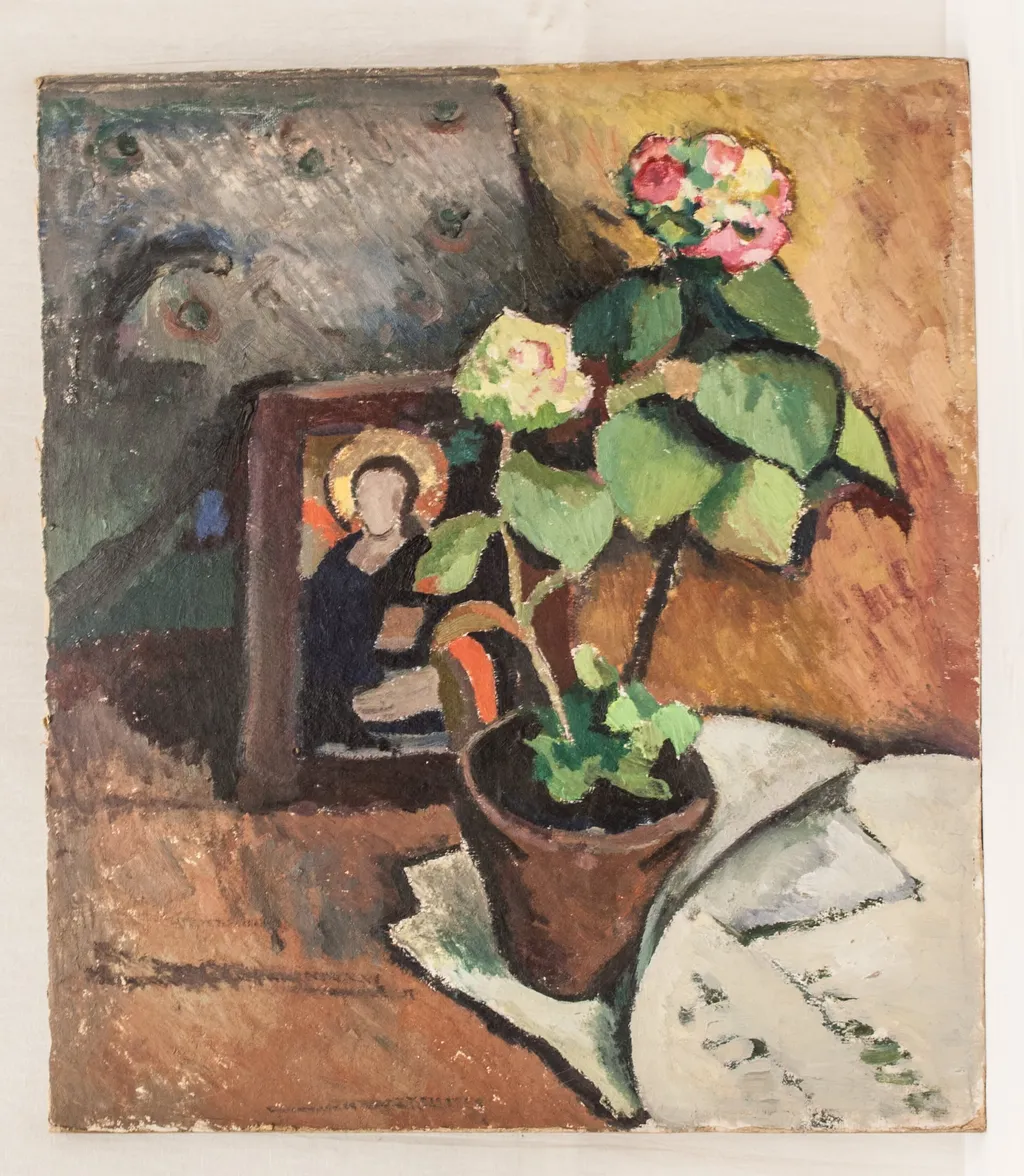
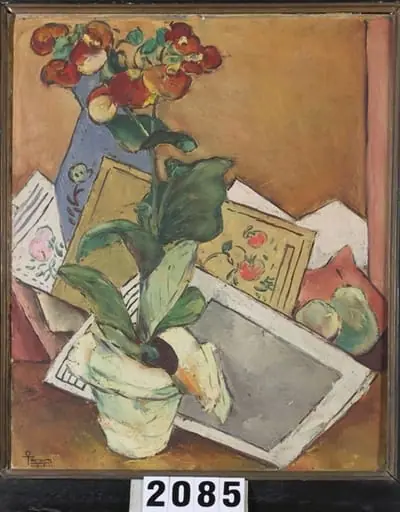
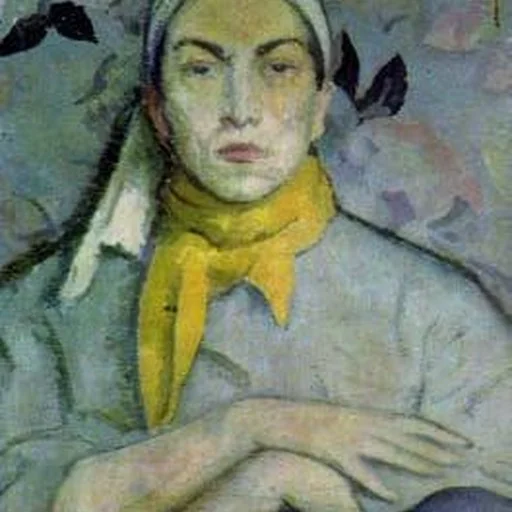
Icoană și ortensie is an unspecified painting by Sabin Popp. It dates from 1922 and is held in the collection of the Gavrila Simion Eco-Museum Research Institute Tulcea.
About this work
Overview
The composition avoids idealization, favoring tactile surfaces and unrefined brushwork that emphasize material presence over narrative clarity.
Sabin Popp created Icoană și ortensie around 1922, a quiet still life that merges religious iconography with domestic flora. The work is held in the collection of the Museum of Ethnography. It presents a textured wall supporting a framed image and a potted plant, rendered with deliberate physicality. The composition avoids idealization, favoring tactile surfaces and unrefined brushwork that emphasize material presence over narrative clarity.
Subject & Meaning
A small religious icon, its features softened into a faint luminous blur, hangs beside a vibrant ortensie—hydrangea—with bold red and yellow blooms. The pairing suggests a quiet dialogue between sacred tradition and everyday life. The blurred face resists clear veneration, while the plant’s lushness grounds the scene in the physical world. Together, they evoke a personal, perhaps intimate, space where faith and nature coexist without resolution.
Technique & Style
Popp applied paint with varied thickness—thick impasto in places, thin and sketchy in others—creating a surface that feels both built and hurried. The brushwork is unpolished, rejecting smooth transitions. Colors are saturated but unevenly distributed, enhancing the sense of immediacy. The lack of refinement draws attention to the act of painting itself, prioritizing texture and gesture over precise representation.
History & Provenance
The painting entered the Museum of Ethnography’s collection in the early 20th century, likely acquired during a period of renewed interest in Romanian folk and modernist expression. Its survival and preservation suggest it was recognized early as an unusual synthesis of devotional imagery and modernist technique. No documented ownership history predates its museum acquisition, indicating it may have remained in the artist’s circle before institutional recognition.
Context
Created in the aftermath of World War I, the work reflects a broader Romanian artistic shift toward introspective, material-focused painting. While urban centers embraced avant-garde trends, Popp’s approach retained a regional sensibility—blending Orthodox visual culture with modernist experimentation. The painting’s rawness aligns with contemporaneous efforts to reclaim authenticity amid rapid social change.
Legacy
Icoană și ortensie remains a quiet example of interwar Romanian modernism that resists easy categorization. It influenced later artists interested in the emotional weight of texture and the ambiguity of sacred symbols in domestic settings. Though not widely reproduced, its presence in the Museum of Ethnography ensures its role as a touchstone for studies of vernacular modernism in Eastern Europe.
Artist & collection
Museum
Gavrila Simion Eco-Museum Research Institute Tulcea
Continue through works from the same source collection.