Artwork
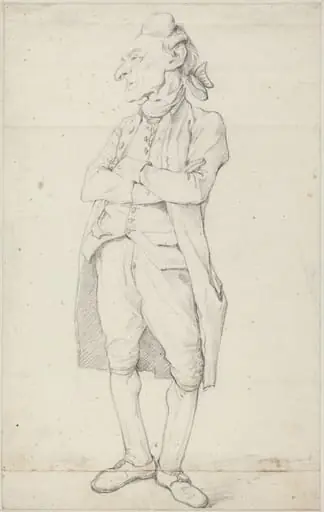
A French Gentleman Standing
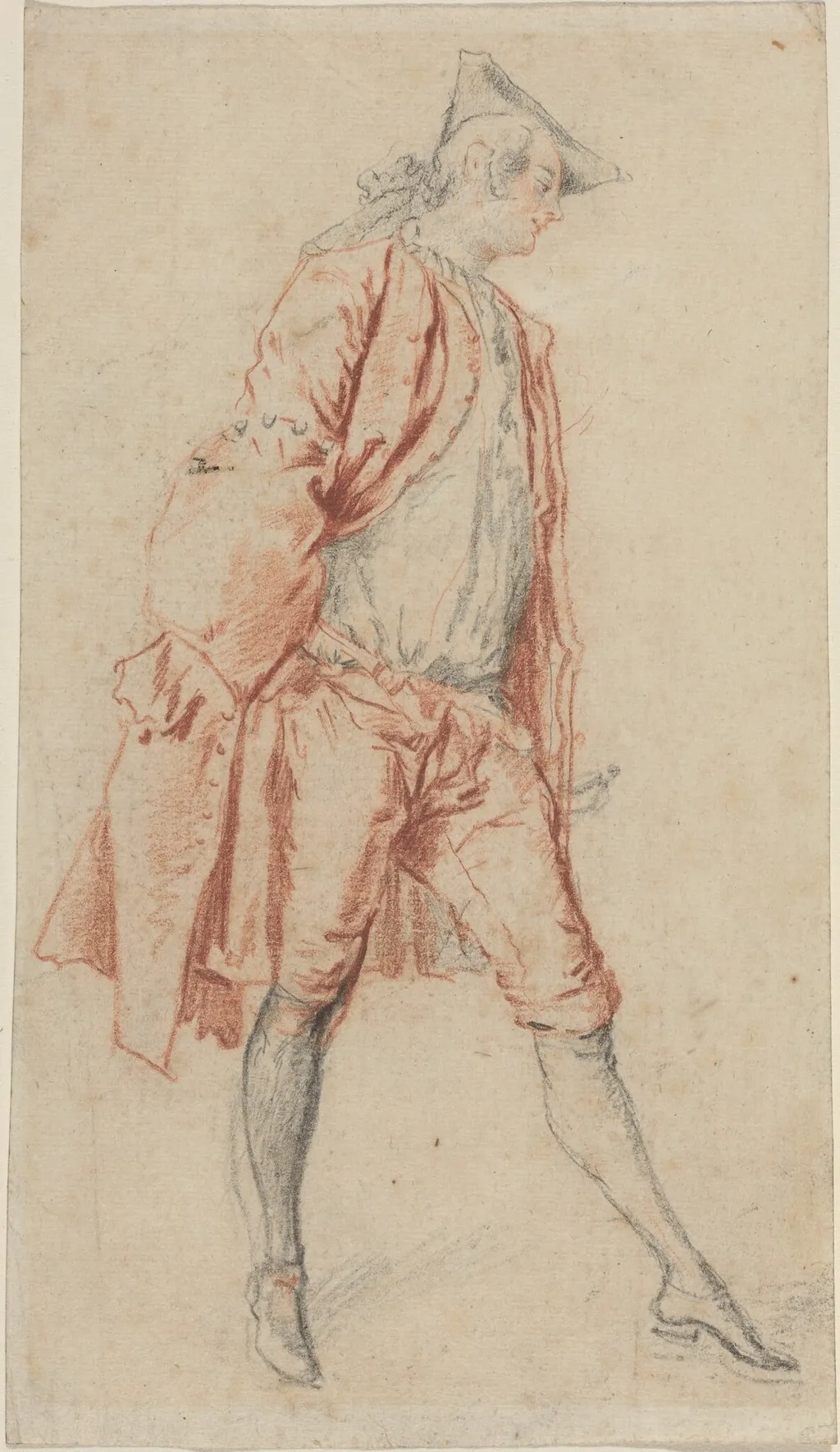
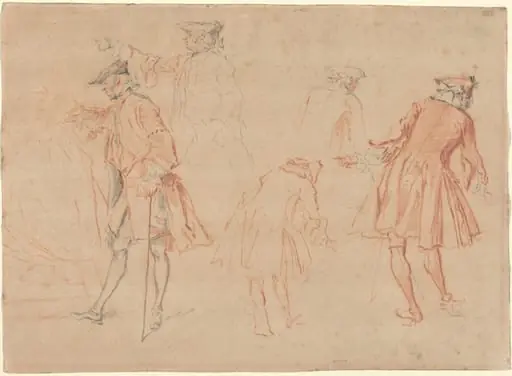
A French Gentleman Standing is a chalk drawing by the Baroque artist Jacques André Portail. It dates from 1727 and is held in the collection of the National Gallery of Art.
About this work
Overview
Created in 1727 by Jacques André Portail, this drawing captures a standing gentleman in medium-sized format using black and red chalk on laid paper.
Created in 1727 by Jacques André Portail, this drawing captures a standing gentleman in medium-sized format using black and red chalk on laid paper. Executed with swift, economical strokes, it avoids fine detail in favor of broad, suggestive forms. The contrast between the warm red and cool black lines enhances the figure’s presence against the unworked paper, suggesting immediacy rather than finished presentation.
Subject & Meaning
The figure is a man of apparent refinement, dressed in a long coat and wide-brimmed hat, one hand tucked into his pocket. His posture conveys casual poise, not formal rigidity. The drawing does not aim to identify a specific individual but rather to record the silhouette and bearing of a French gentleman of the era, reflecting contemporary social types through gesture and attire.
Technique & Style
Portail employed chalk with a loose, gestural hand, relying on tonal contrasts rather than contour to define form. The red chalk outlines key areas like the coat and hat, while black adds shadow and depth. Strokes are rapid and overlapping, omitting texture or facial features. This approach prioritizes movement and silhouette over precision, aligning with observational sketching practices of the period.
History & Provenance
The drawing is documented as originating from Portail’s personal sketchbook, likely made during his time in France. Its survival suggests it was retained as a study or reference rather than a finished work. No early ownership records are known, and it entered institutional collections in the 20th century, where it is now preserved as an example of 18th-century draftsmanship.
Context
In early 18th-century France, artists often used chalk drawings to capture fleeting impressions of people and scenes. Portail’s work reflects this tradition, where quick studies served as visual notes for later compositions or as records of social types. The absence of elaborate detail aligns with the informal, observational culture of preparatory drawing among French draftsmen of the time.
Legacy
Though not widely exhibited, the drawing exemplifies the quiet rigor of French academic sketching before the rise of Romantic individualism. It stands as a modest but clear instance of how artists recorded everyday presence with minimal means. Its influence is indirect, contributing to the broader understanding of how observational drawing functioned within artistic training of the period.
Artist & collection