Artwork
Lord Bacon, "Knowledge is Power"
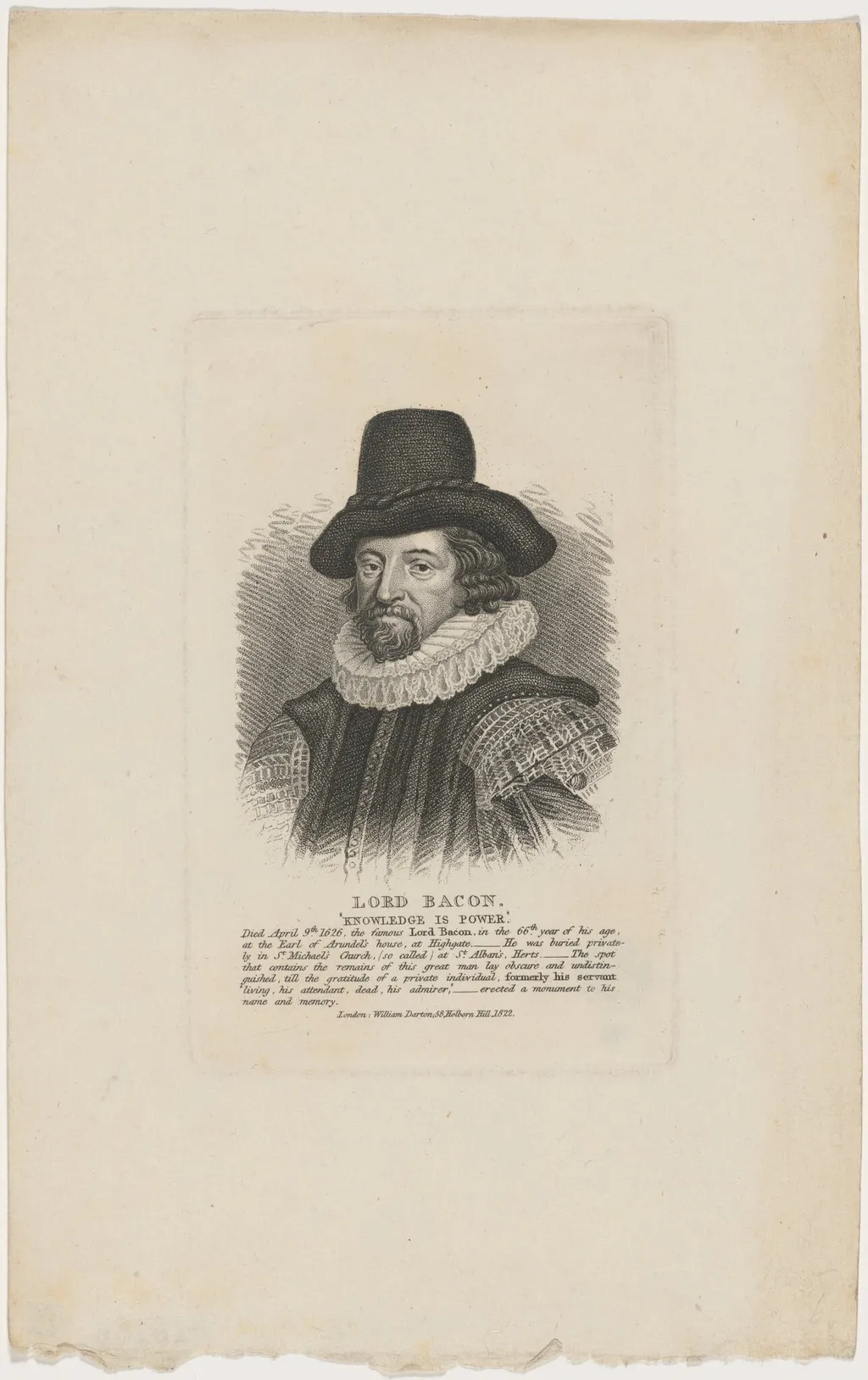
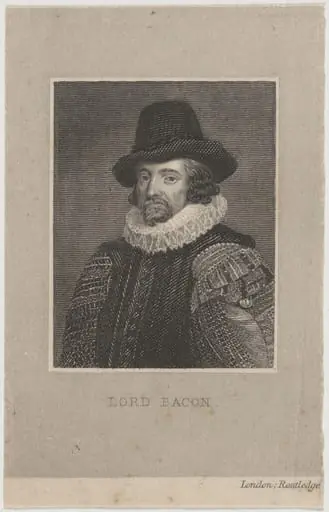
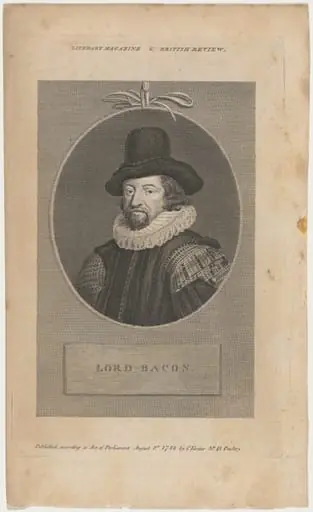
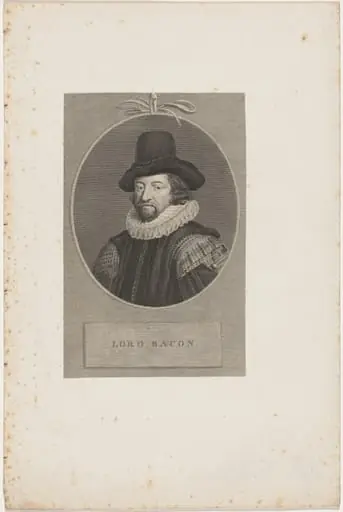
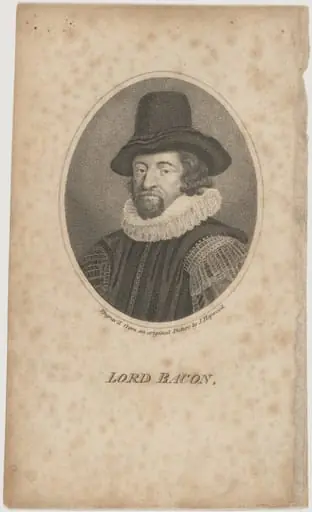
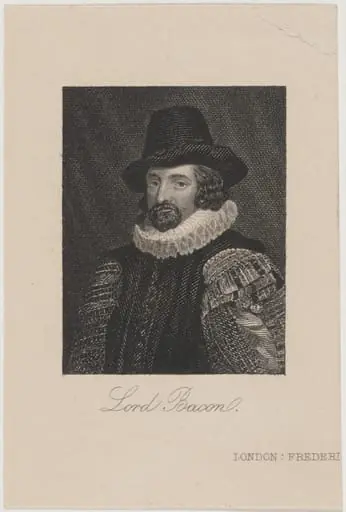
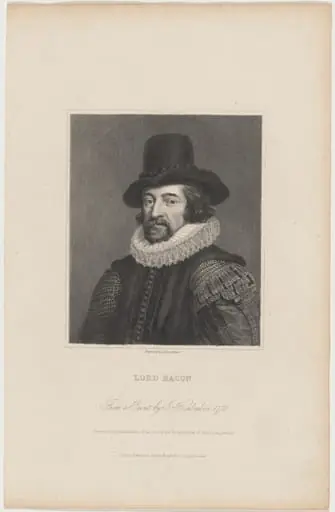
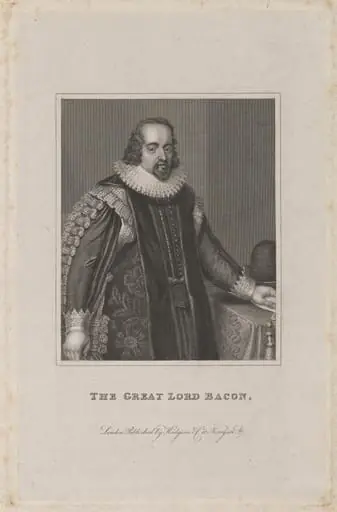
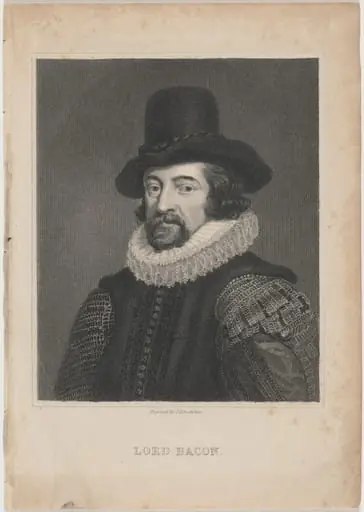
Lord Bacon, "Knowledge is Power" is an ink print by the Romanticist artist Unknown 19th Century. It dates from 1822 and is held in the collection of the National Gallery of Art. This black-and-white engraving depicts Francis Bacon, 1st Viscount St Albans, in formal 17th-century dress.
About this work
Overview
Rendered with fine linear detail, the portrait emphasizes his scholarly bearing through precise rendering of his ruffled collar, ornate sleeves, and tall hat.
This black-and-white engraving depicts Francis Bacon, 1st Viscount St Albans, in formal 17th-century dress. Rendered with fine linear detail, the portrait emphasizes his scholarly bearing through precise rendering of his ruffled collar, ornate sleeves, and tall hat. Below the image, his name and the phrase 'Knowledge is Power' are inscribed, alongside a quotation and biographical note, reinforcing his association with empirical thought.
Subject & Meaning
The portrait represents Francis Bacon, philosopher and statesman, as an emblem of early modern intellectual authority. The inclusion of 'Knowledge is Power'—a phrase often attributed to him—positions him as a proponent of empirical inquiry over dogma. His direct gaze and composed expression convey gravitas, aligning his image with the ideals of reason and systematic learning central to his writings.
Technique & Style
Executed as a line engraving, the work relies on controlled etched strokes to model form and texture. The contrast between the dark jacket and pale ruff highlights facial features, while the meticulous rendering of hair and fabric reflects conventions of portrait engraving in the 17th and 18th centuries. The style is formal and restrained, prioritizing clarity over emotional expression, typical of scholarly portraiture of the period.
History & Provenance
The engraving likely dates from the late 17th or early 18th century, produced to disseminate Bacon’s image and ideas following his death in 1626. Such prints were commonly used in educational and political contexts to promote influential figures. Its inclusion of a direct quotation suggests it was intended for public or institutional display, possibly in libraries or academic settings.
Context
Though the note references Romanticism, this engraving predates that movement by over a century and aligns instead with the visual culture of the Scientific Revolution. Portraits like this served to legitimize emerging scientific ideals by associating them with respected public figures. Bacon’s advocacy for observation and experimentation made him a natural subject for such commemorative imagery in the centuries after his death.
Legacy
This print contributed to the enduring visual identity of Bacon as the father of empiricism. Repeated in textbooks and scholarly publications, the image helped cement his association with the phrase 'Knowledge is Power' in popular consciousness. Though stylistically traditional, its persistence reflects the lasting cultural weight of his philosophical contributions to modern science.
Artist & collection

Artist