Artwork
Hercules and Antaeus
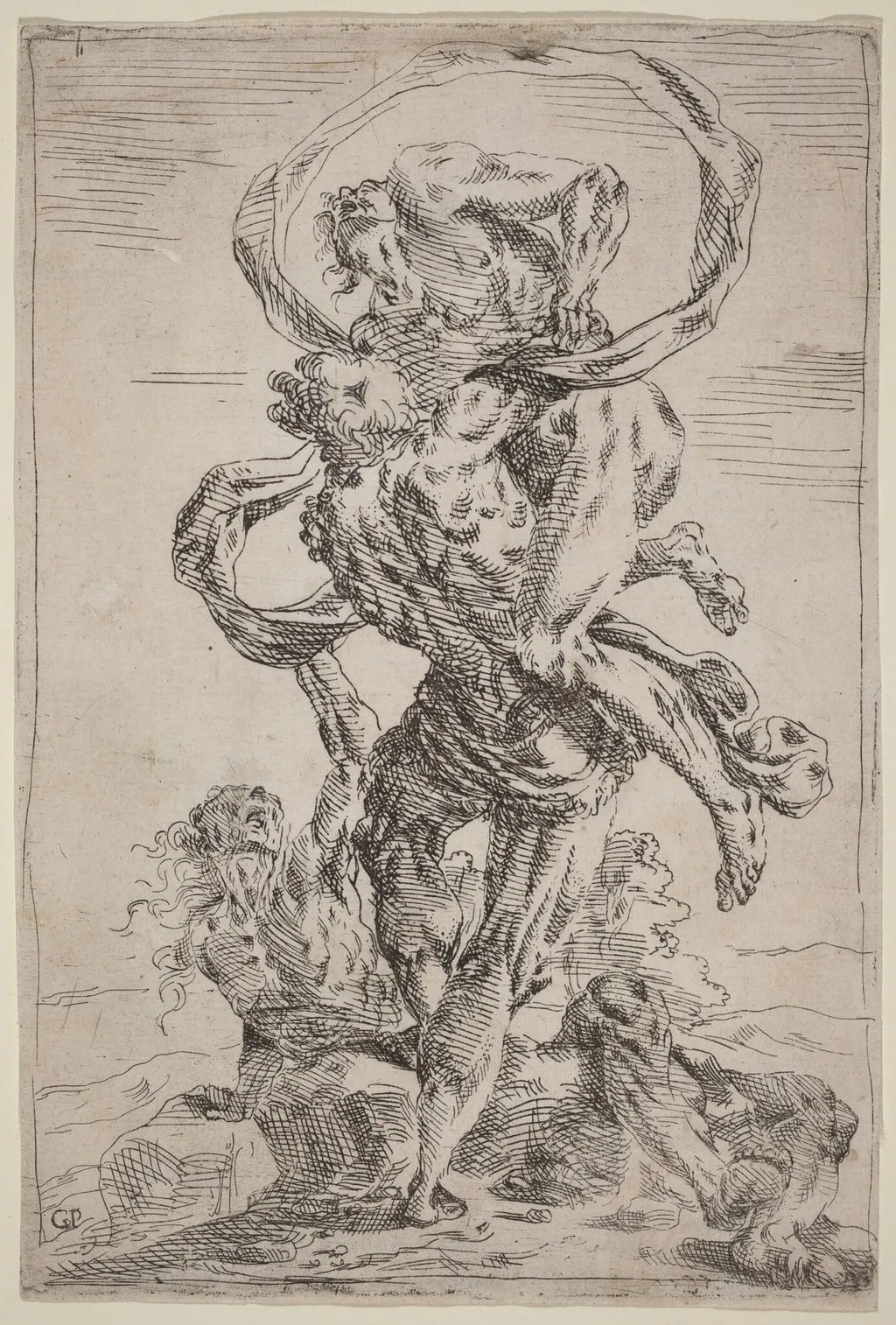
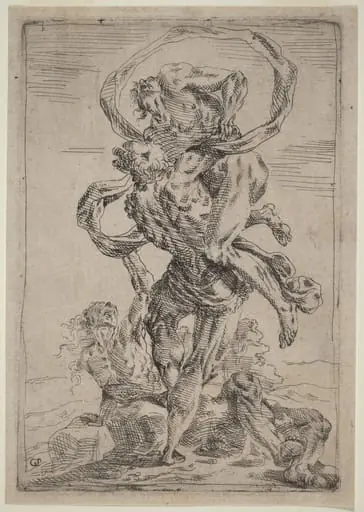
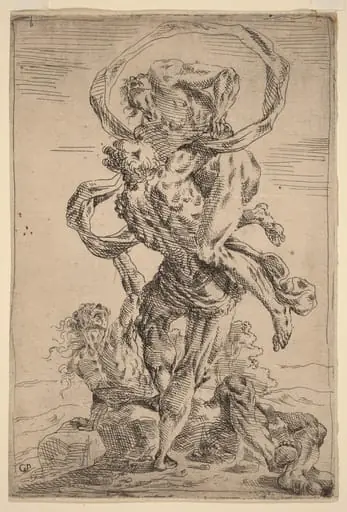
Hercules and Antaeus is an ink print by the Baroque artist Giovanni Pietro Possenti. It dates from 1638 and is held in the collection of the National Gallery of Art.
About this work
Overview
Giovanni Pietro Possenti’s 1638 etching, titled Hercules and Antaeus, presents a dynamic encounter between two mythic figures. The larger, muscular figure dominates the scene, lifting the smaller opponent who clutches at his legs. The composition captures a moment of struggle, rendered in bold, decisive lines that emphasize the physical tension between the characters.
Subject & Meaning
The print illustrates the legendary duel in which Hercules confronts the giant Antaeus, a foe who draws strength from contact with the earth. By raising Antaeus off the ground, Hercules deprives him of his power, symbolizing the triumph of human ingenuity and heroic resolve over primal forces.
Technique & Style
Executed as an etching, the work relies on incised lines on a copper plate, allowing Possessi to achieve a range of tonal values through varied hatching and cross‑hatching. Thick, swift strokes define the musculature, while subtle shading creates a sense of volume, reflecting the Baroque preference for dramatic contrast and three‑dimensional illusion in printmaking.
History & Provenance
Created in the early Baroque period, the piece aligns with a broader 17th‑century fascination with classical mythology in visual art. While specific ownership records are sparse, the etching is attributed to Possenti’s mature output and is documented in several European print collections that catalog works from the 1630s.
Artist & collection