Artwork
Resting Horse
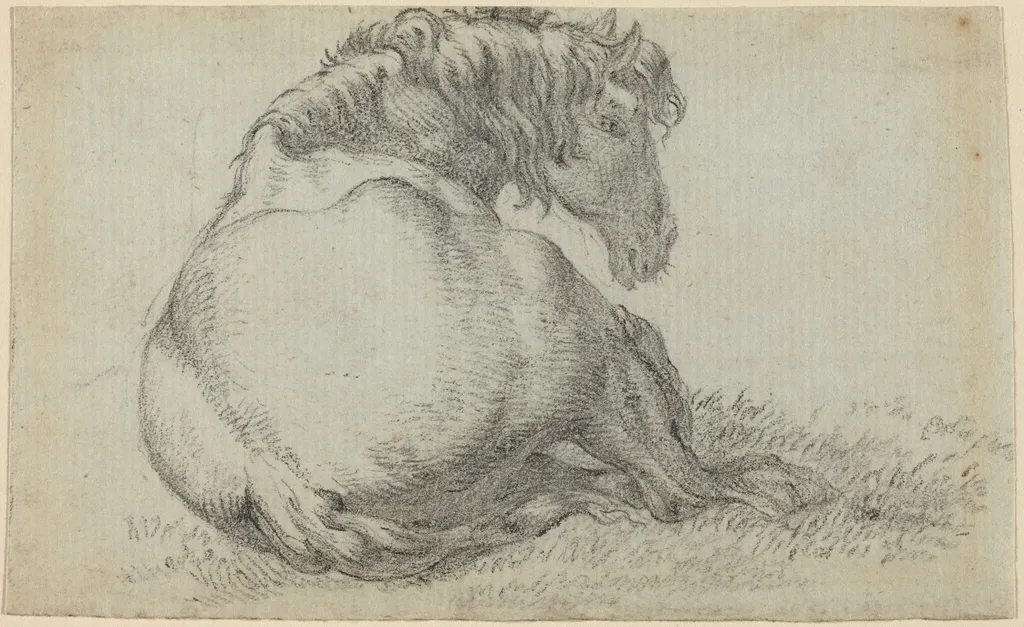
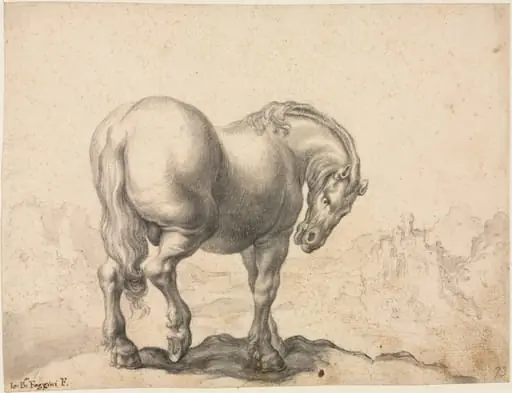
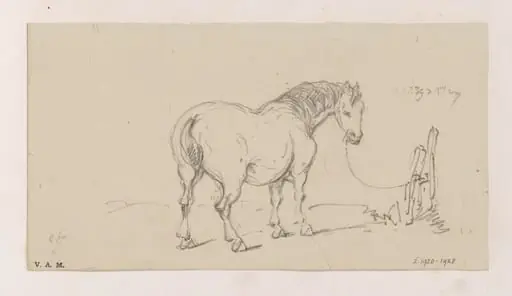
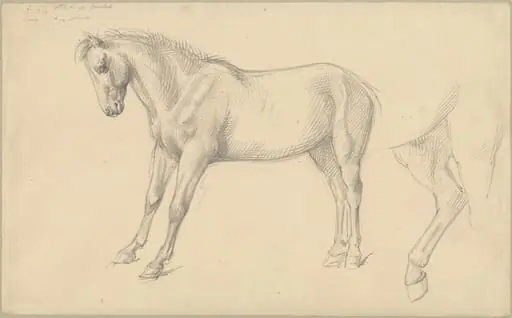
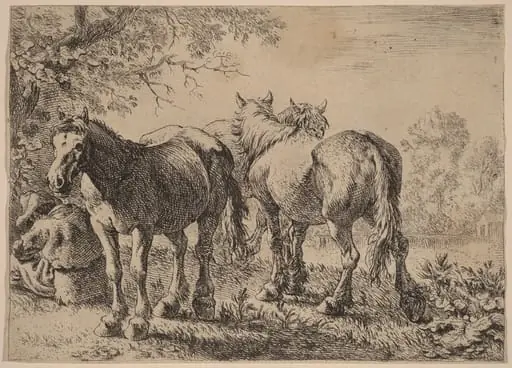
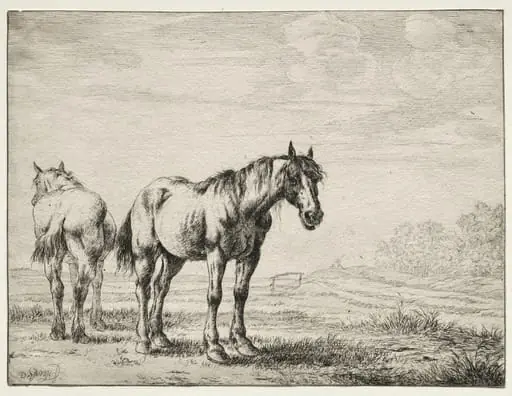
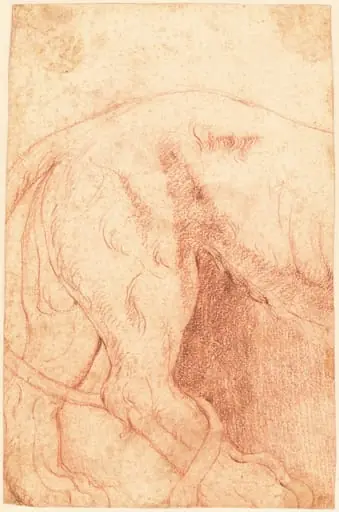
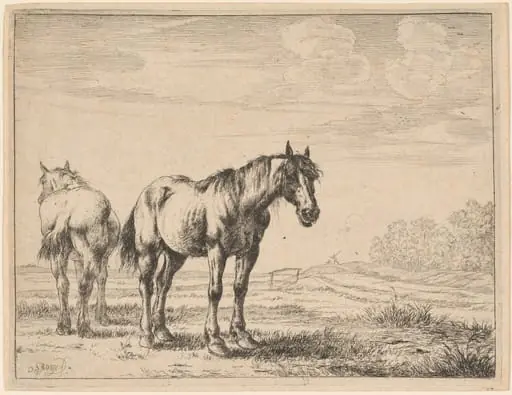
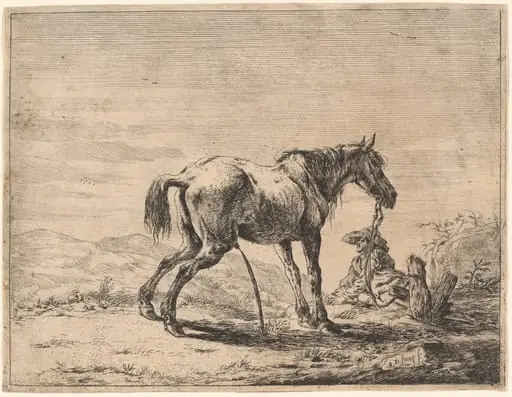
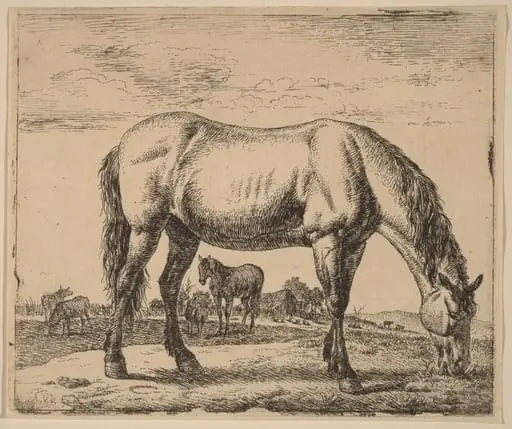
Resting Horse is a chalk drawing by the Baroque artist Paulus Potter. It dates from 1640 and is held in the collection of the National Gallery of Art. Created in 1640, this drawing portrays a solitary horse at rest, rendered in black chalk on a sheet of laid paper.
About this work
Overview
Created in 1640, this drawing portrays a solitary horse at rest, rendered in black chalk on a sheet of laid paper. The animal is seated, its head turned slightly to the right, with a flowing mane and tail that suggest movement even in stillness. The work exemplifies the artist’s interest in observing animals within a natural setting.
Subject & Meaning
The composition focuses exclusively on the horse, emphasizing its anatomical structure and the quiet moment of repose. By presenting the animal from a low viewpoint, the drawing invites viewers to consider the creature’s presence within the landscape, reflecting a broader 17th‑century Dutch fascination with the realism of everyday fauna.
Technique & Style
Executed with black chalk, the artist employs varied line work and subtle shading to model the horse’s volume. Contrasting light and dark areas generate a sense of three‑dimensionality, while the texture of the laid paper contributes to the overall tactile quality. The handling of chiaroscuro, though restrained, highlights the animal’s form against the paper’s surface.
History & Provenance
The drawing is attributed to Paulus Potter, a Dutch artist noted for his animal studies. Potter produced roughly a hundred works before his premature death from tuberculosis at twenty‑eight. This piece, like many of his drawings, aligns with the Dutch tradition of detailed natural observation that characterized mid‑17th‑century art.
Artist & collection
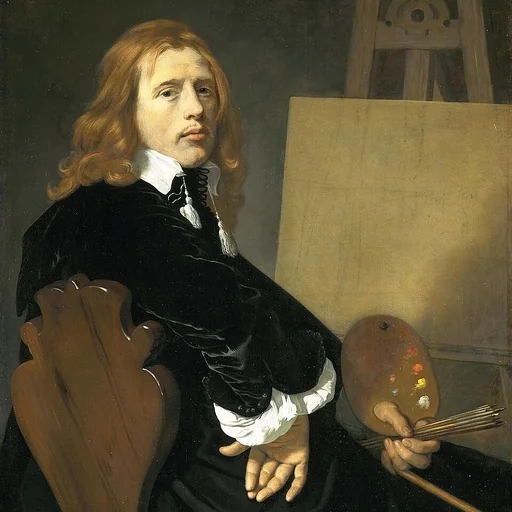
Artist
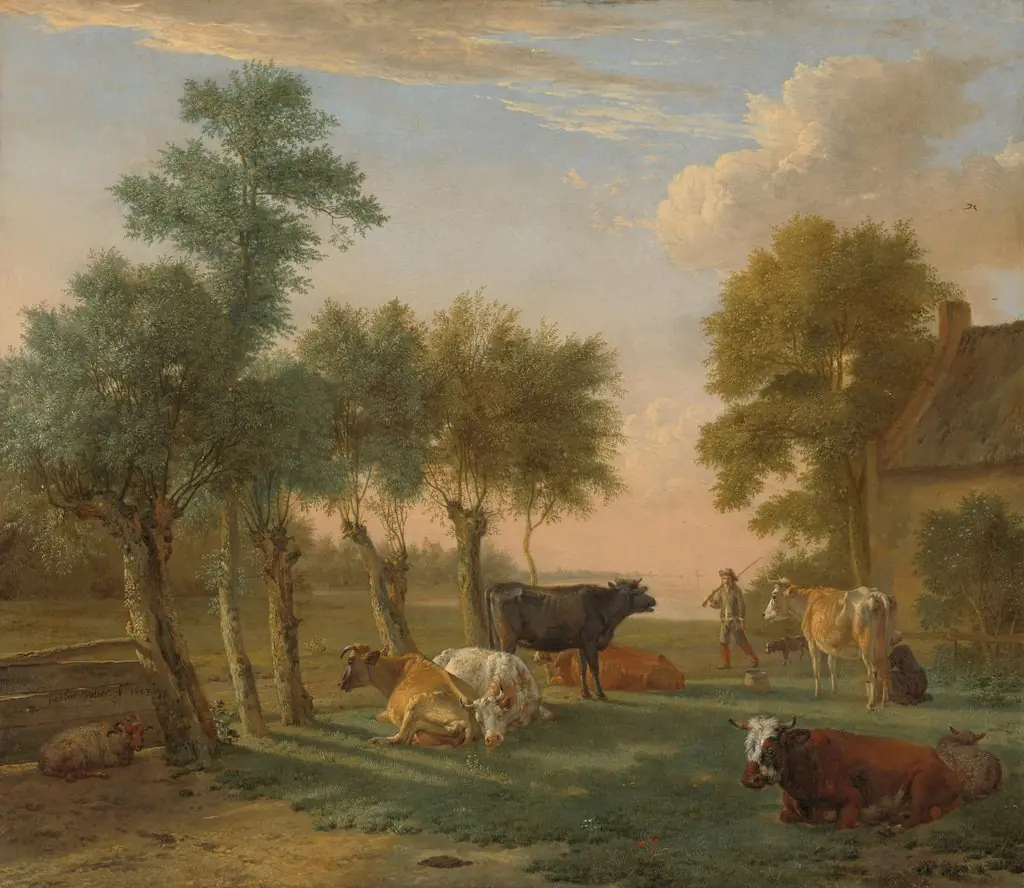
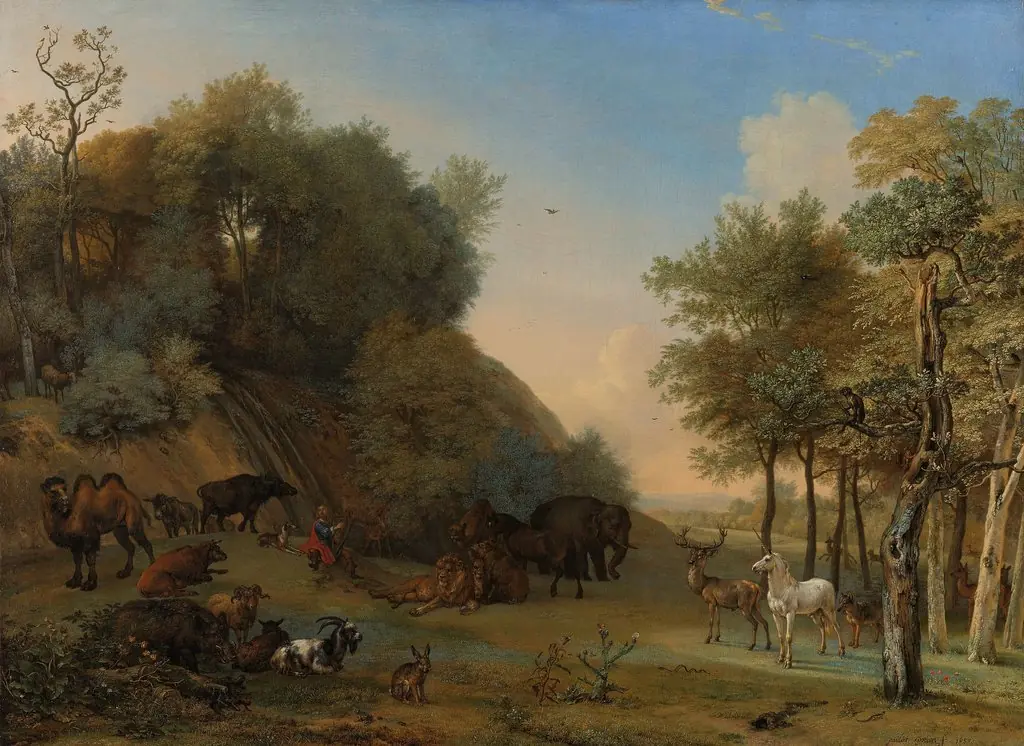
Paulus Potter (Dutch pronunciation: ; 20 November 1625 (baptised) – 17 January 1654 (buried)) was a Dutch painter who specialized in landscapes featuring animals, often from a low vantage point.