Artwork
Gerhard Richter (1932)/Oskar Wilde (1854-1900)
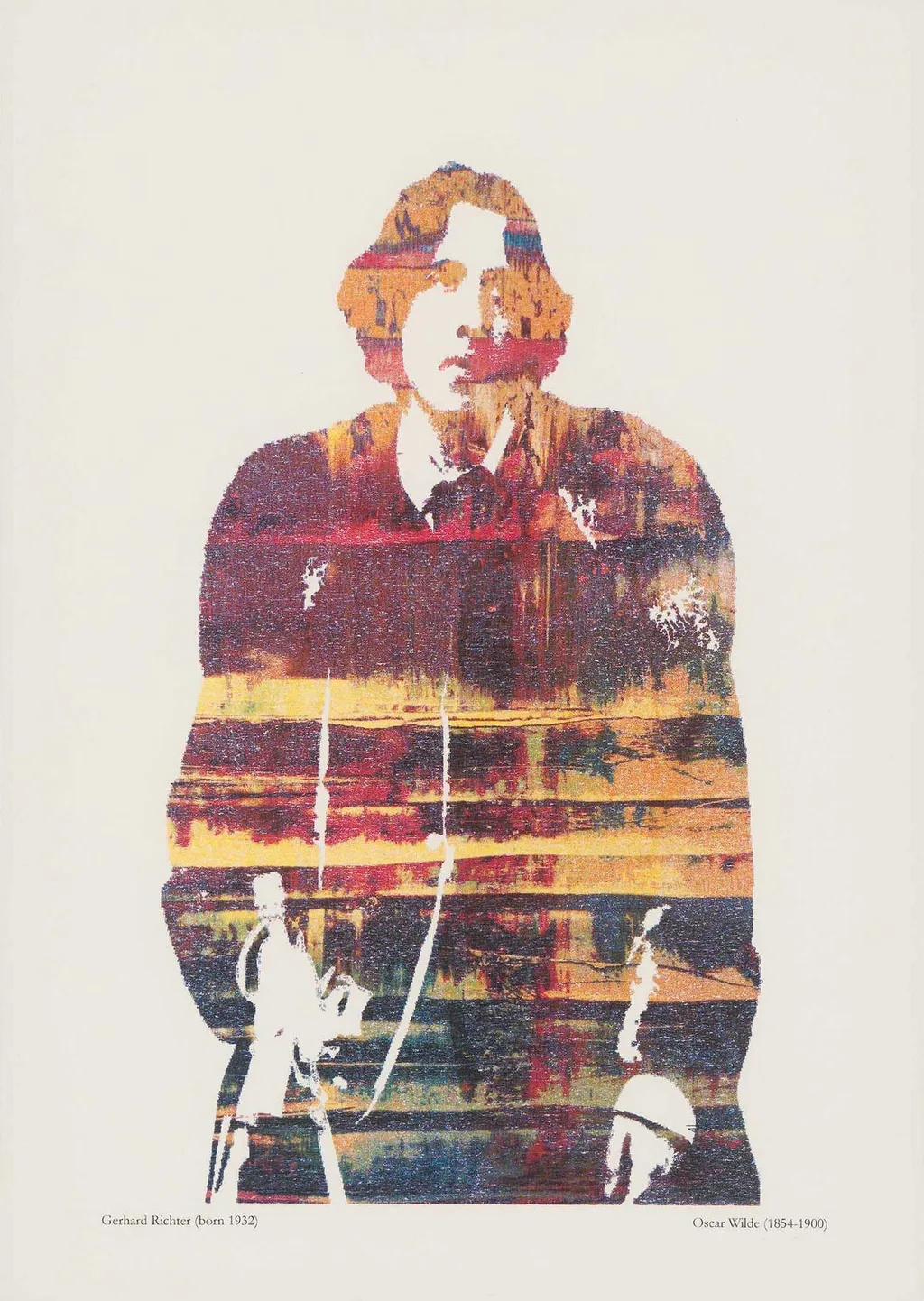
Gerhard Richter (1932)/Oskar Wilde (1854-1900) is a drawing by Natassa Poulantza. It is held in the collection of the Metropolitan Organisation of Museums of Visual Arts of Thessaloniki – MOMus.
About this work
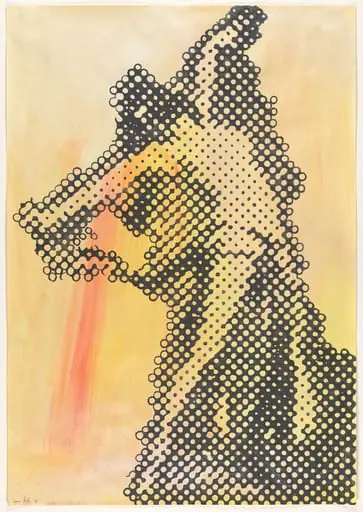
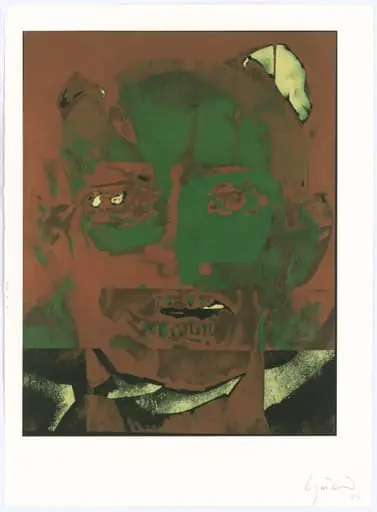
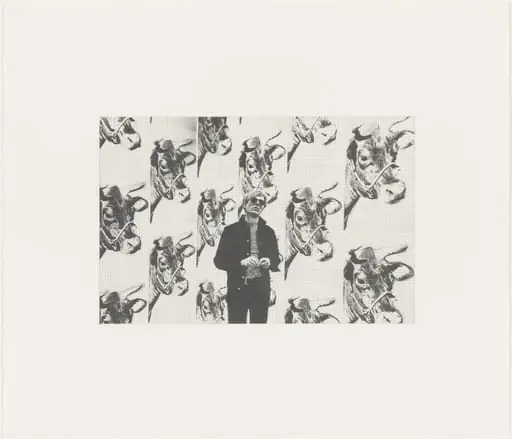
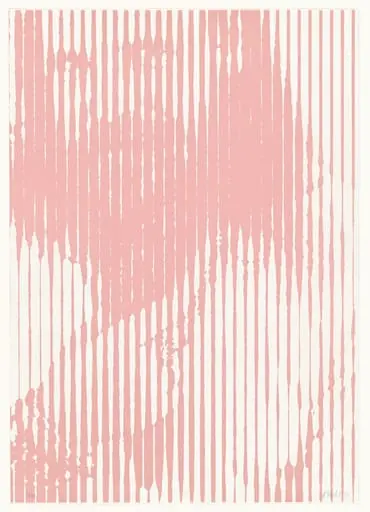
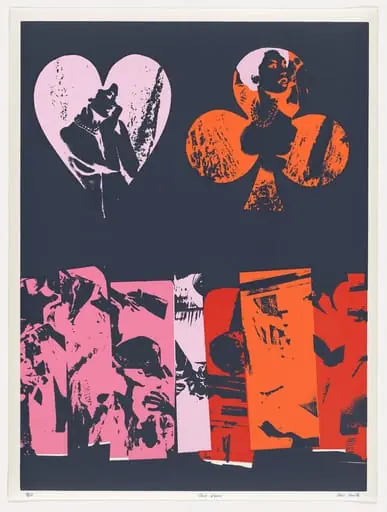
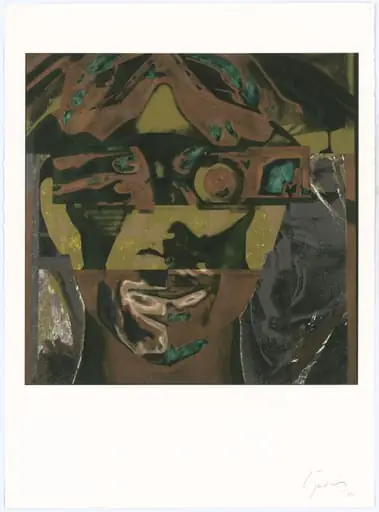
This drawing shows a mix of two images: a painting by Gerhard Richter and a portrait of Oskar Wilde.
The interesting thing about this work is that it was created using a digital game-app. The app combines images of famous paintings and thinkers in random ways.
To learn more about the artist behind this unique project, look up the work of artist: Poulantza, Natassa (1965).
Overview
When a user triggers the mechanism, the images scroll and lock into a single composite, which is then printed as a unique, signed artifact on archival paper.
This digital print originates from a generative application called Game of Fortune, developed by artist Natassa Poulantza. The program randomly combines photographic images of modernist paintings with portraits of 19th- and 20th-century intellectuals. When a user triggers the mechanism, the images scroll and lock into a single composite, which is then printed as a unique, signed artifact on archival paper.
Subject & Meaning
The composition pairs a portrait of Oscar Wilde, the Irish literary figure known for wit and social critique, with a gestural abstraction by Gerhard Richter. The juxtaposition invites reflection on the relationship between intellectual legacy and visual expression, without asserting a direct narrative. The randomness of the algorithm undermines authorial intent, emphasizing chance over curated meaning.
Technique & Style
The work is produced through algorithmic layering of digitized source images, with no manual intervention after the initial selection. Richter’s blurred, painterly texture merges with Wilde’s photographic likeness, creating a hybrid surface that blurs distinctions between photography and painting. The final output is a single print on A4 paper, bearing the artist’s signature as proof of its singular generation.
History & Provenance
The piece emerged from Game of Fortune, a digital project initiated by Natassa Poulantza in the 2010s. It operates as a participatory system where users become co-creators by selecting when to halt the image sequence. Each print is a one-time result of this interaction, making provenance tied to the moment of user engagement rather than traditional studio production.
Context
The project responds to broader inquiries into digital authorship and the erosion of originality in algorithmic culture. By using images of canonical artists and thinkers, it situates itself within debates about cultural memory and mechanical reproduction. The use of a slot-machine interface critiques consumerist engagement with art, framing aesthetic experience as a gamble.
Legacy
As part of a growing body of algorithmically generated art, this work contributes to discussions on agency in digital creation. It resists the notion of the artist as sole producer, instead positioning the viewer as an active participant in the formation of meaning. Its legacy lies in its method — not in the visual outcome, but in the process that challenges traditional notions of originality.
Artist & collection
Artist
These drawings mash up famous artists and writers—Franz Marc with Nikos Poulantzas, Mark Rothko with Michel Foucault—layering ink on paper to pair their styles.
Museum
Metropolitan Organisation of Museums of Visual Arts of Thessaloniki – MOMus
Continue through works from the same source collection.
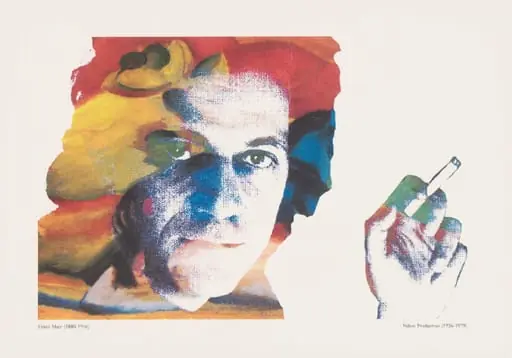 Franz Marc (1880-1916)/Nikos Poulantzas (1936-1979)
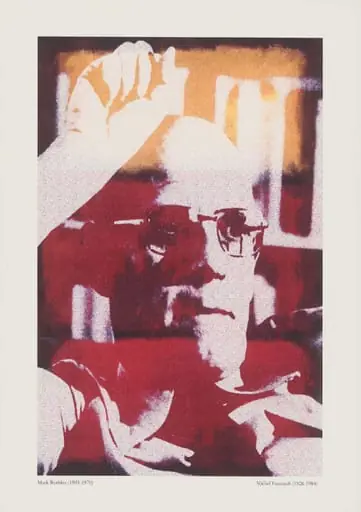 Mark Rothko (1903-1970)/Michel Foucault (1926-1984)
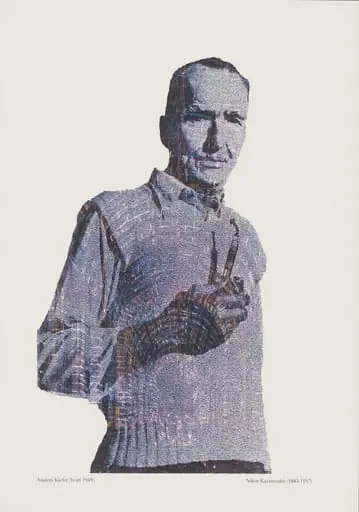 Anslem Kiefer (1945)/Nikos Kazantzakis (18831957)
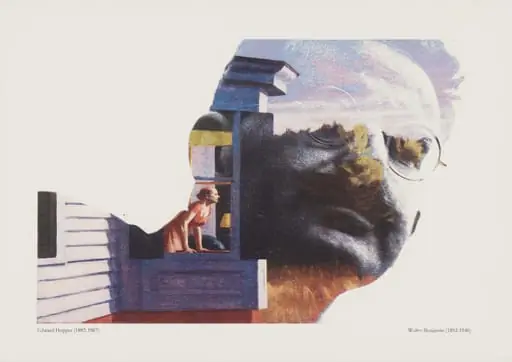 Edward Hopper (1882-1967)/Walter Benjamin (1892-1940)
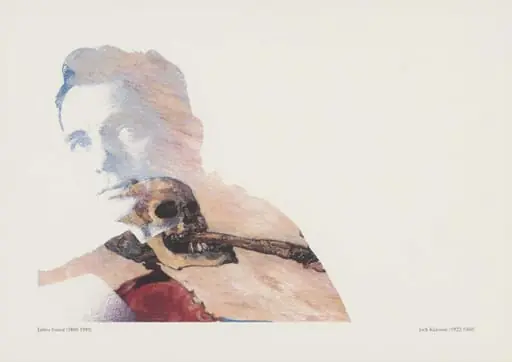 James Ensor (1860-1949)/Jack Kérouac (1922-1969)
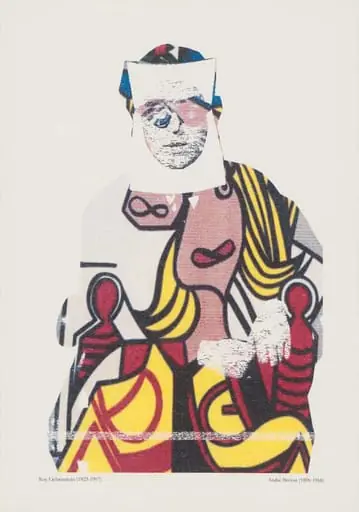 Roy Lichtenstein (1923-1997)/André Beton
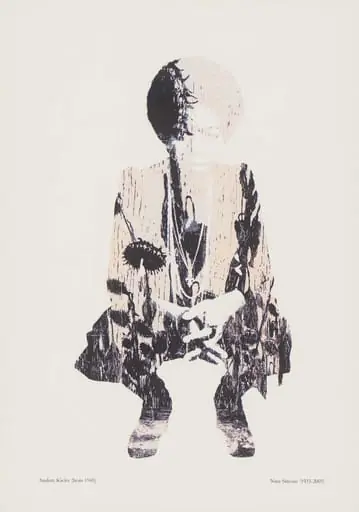 Anslem Kiefer (1945)/Nina Simone (1933-2003)
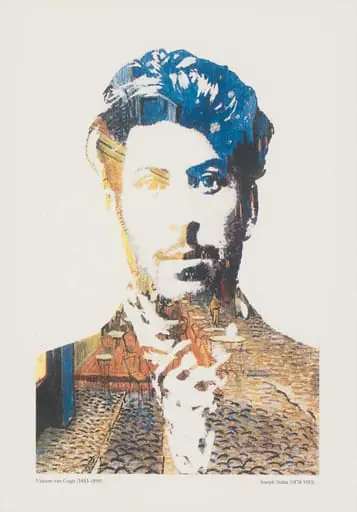 Vincent Van Gogh (1853-1890)/Joseph Stalin (1878-1953)