Artwork
Vincent Van Gogh (1853-1890)/Joseph Stalin (1878-1953)
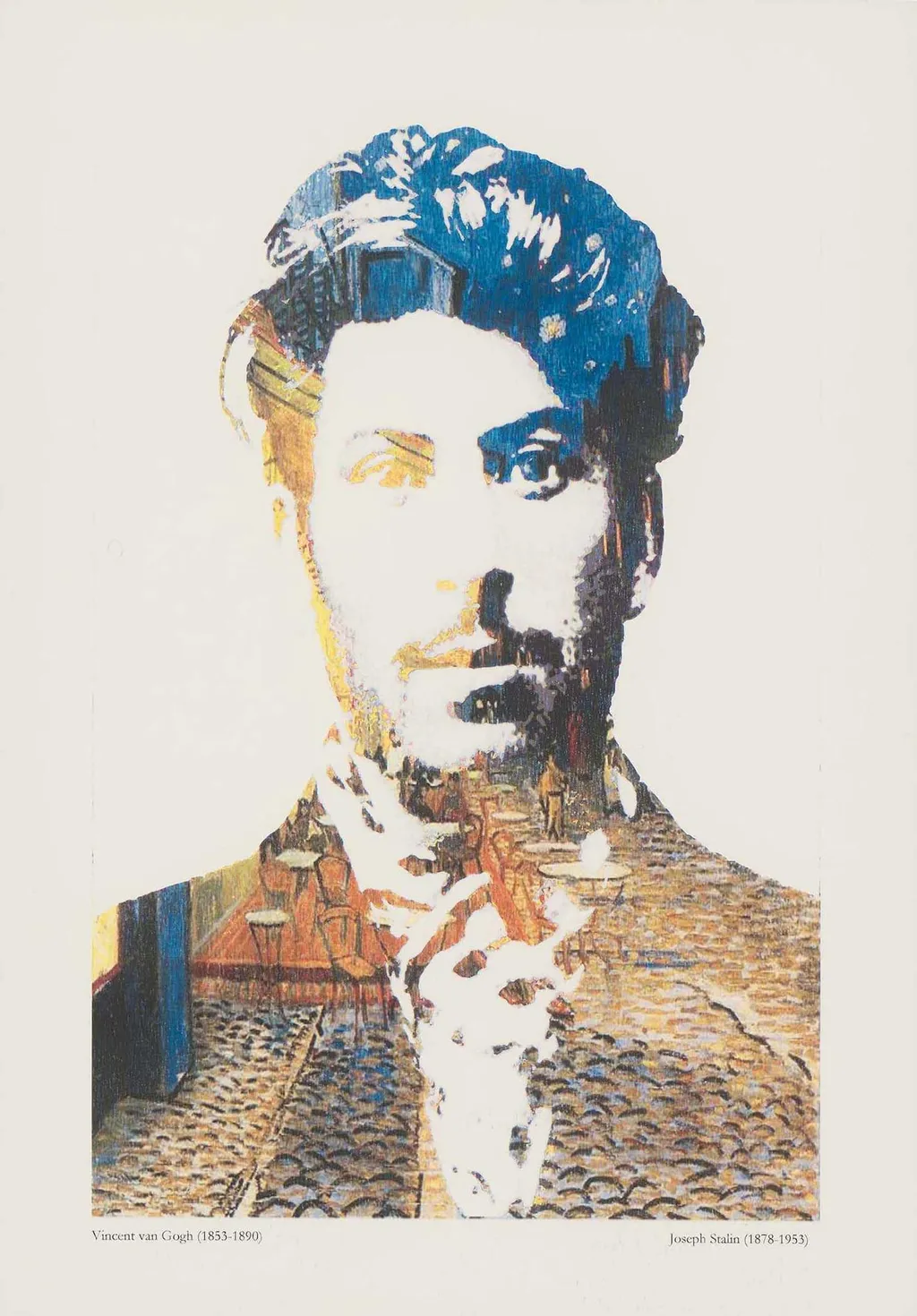
Vincent Van Gogh (1853-1890)/Joseph Stalin (1878-1953) is a drawing by Natassa Poulantza. It is held in the collection of the Metropolitan Organisation of Museums of Visual Arts of Thessaloniki – MOMus.
About this work
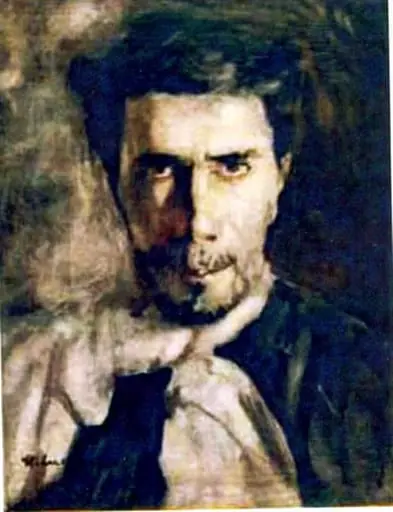
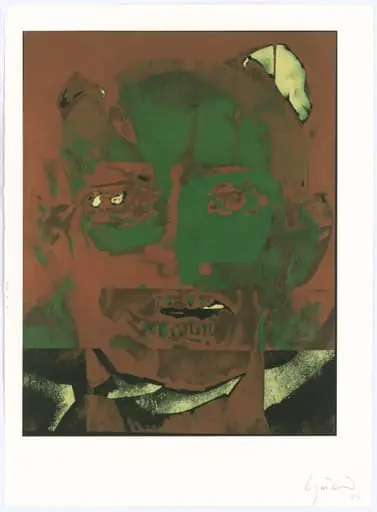
This pencil drawing mixes two faces side by side. On the left is Van Gogh’s swirling beard and hat. On the right sits Stalin’s cold stare and mustache.
It’s part of an app game. You tap a button and random portraits spin like slots until they stop together. This pair landed face-to-face by chance.
Try the same trick with her cross-hatching. Look up Poulantza, Natassa (1965).
Overview
Users initiate a spin of two image columns—paintings on one side, portraits on the other—until a pair locks into place.
This digital print emerges from the interactive project Game of Fortune, a slot-machine-style application that randomly combines images of artists and historical figures. Users initiate a spin of two image columns—paintings on one side, portraits on the other—until a pair locks into place. When satisfied, the user prints the outcome on archival paper, producing a singular, signed artifact. The resulting image pairs Van Gogh with Stalin, generated not by design but by algorithmic chance.
Subject & Meaning
The pairing juxtaposes Vincent van Gogh, a tormented post-impressionist painter, with Joseph Stalin, a 20th-century political leader whose authority was absolute. Neither figure was intended to be linked, yet their collision invites reflection on the nature of legacy, creativity, and power. The image does not suggest harmony or critique—it simply presents an accidental convergence, leaving interpretation open to the viewer.
Technique & Style
The print is a digital composite, not a hand-drawn or painted work. It derives from a randomized algorithm that overlays photographic fragments of Van Gogh’s self-portraits and Stalin’s early images. The visual result is a split-face composition: one side bears Van Gogh’s textured beard and wide-brimmed hat; the other, Stalin’s stern gaze and narrow mustache. The style is flat, mechanical, and devoid of brushwork, reflecting its origin in digital chance rather than artistic intention.
History & Provenance
The work originates from Game of Fortune, a digital art experiment created in the 21st century. It has no historical lineage tied to either Van Gogh or Stalin. Each print is unique, signed by the project’s artist, and produced on demand. The specific combination of Van Gogh and Stalin occurred randomly during user interaction, with no premeditated selection or thematic intent behind the pairing.
Context
The project responds to contemporary digital culture’s fascination with randomness, algorithmic authorship, and the recombination of historical imagery. It draws on the aesthetics of gambling interfaces and social media’s viral image loops. By placing cultural icons in arbitrary pairings, it questions how meaning is constructed in the age of digital curation, where context is fluid and authorship is distributed.
Legacy
As a product of an ephemeral app, this print exists outside traditional art-historical narratives. Its significance lies not in its visual quality or technical mastery, but in its embodiment of digital-age authorship—where chance, user participation, and technological mediation redefine the boundaries of artistic creation. It may serve as a document of how 21st-century tools reshape our engagement with historical figures.
Artist & collection
Artist
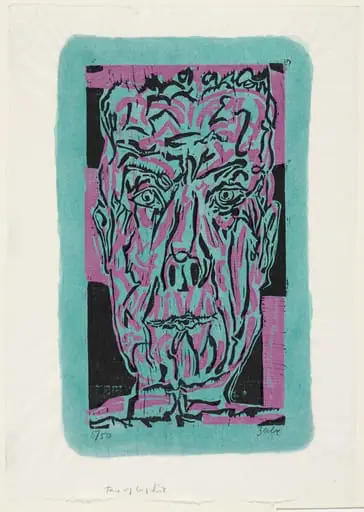
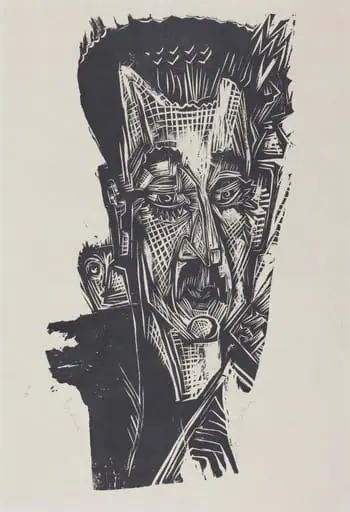
These drawings mash up famous artists and writers—Franz Marc with Nikos Poulantzas, Mark Rothko with Michel Foucault—layering ink on paper to pair their styles.
Museum
Metropolitan Organisation of Museums of Visual Arts of Thessaloniki – MOMus
Continue through works from the same source collection.
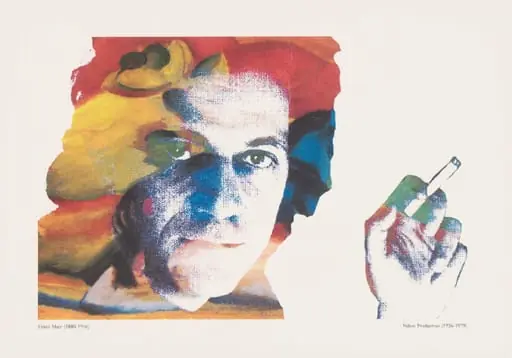 Franz Marc (1880-1916)/Nikos Poulantzas (1936-1979)
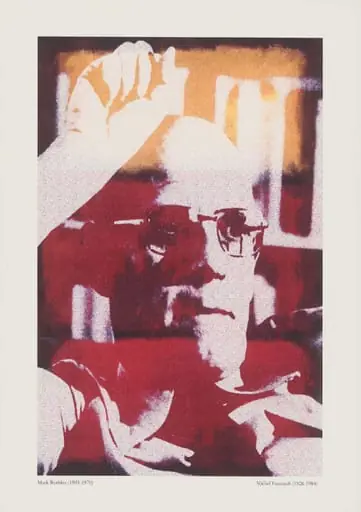 Mark Rothko (1903-1970)/Michel Foucault (1926-1984)
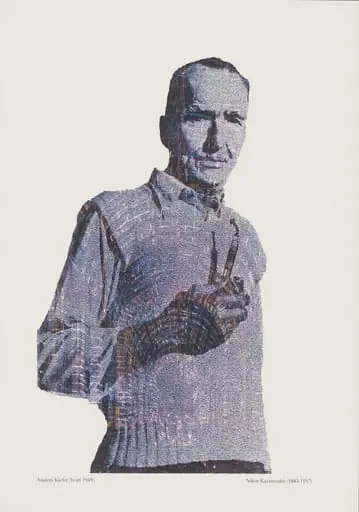 Anslem Kiefer (1945)/Nikos Kazantzakis (18831957)
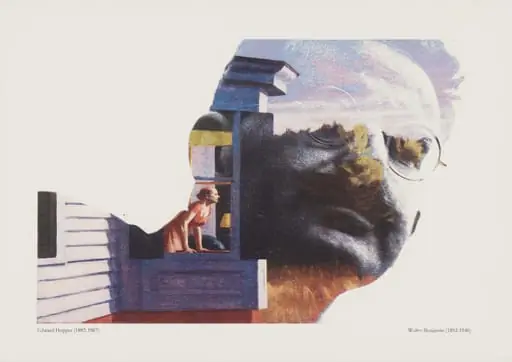 Edward Hopper (1882-1967)/Walter Benjamin (1892-1940)
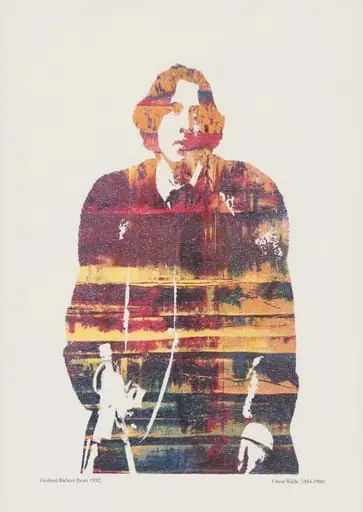 Gerhard Richter (1932)/Oskar Wilde (1854-1900)
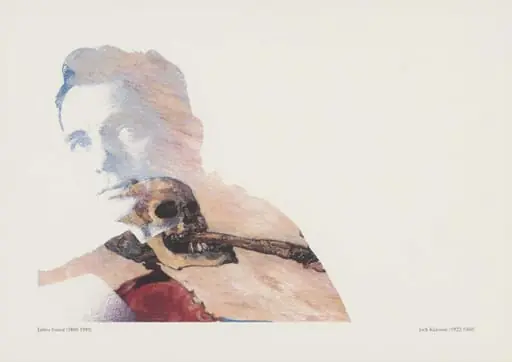 James Ensor (1860-1949)/Jack Kérouac (1922-1969)
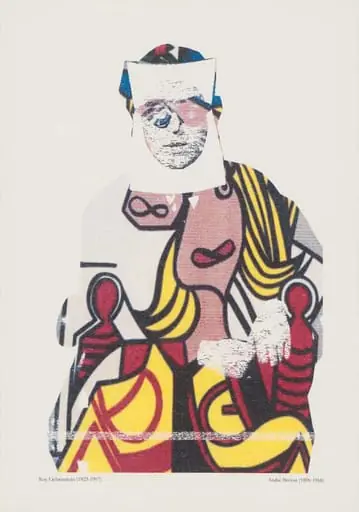 Roy Lichtenstein (1923-1997)/André Beton
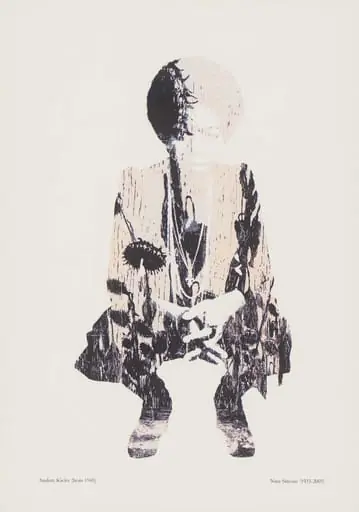 Anslem Kiefer (1945)/Nina Simone (1933-2003)