Artwork
Louis XV
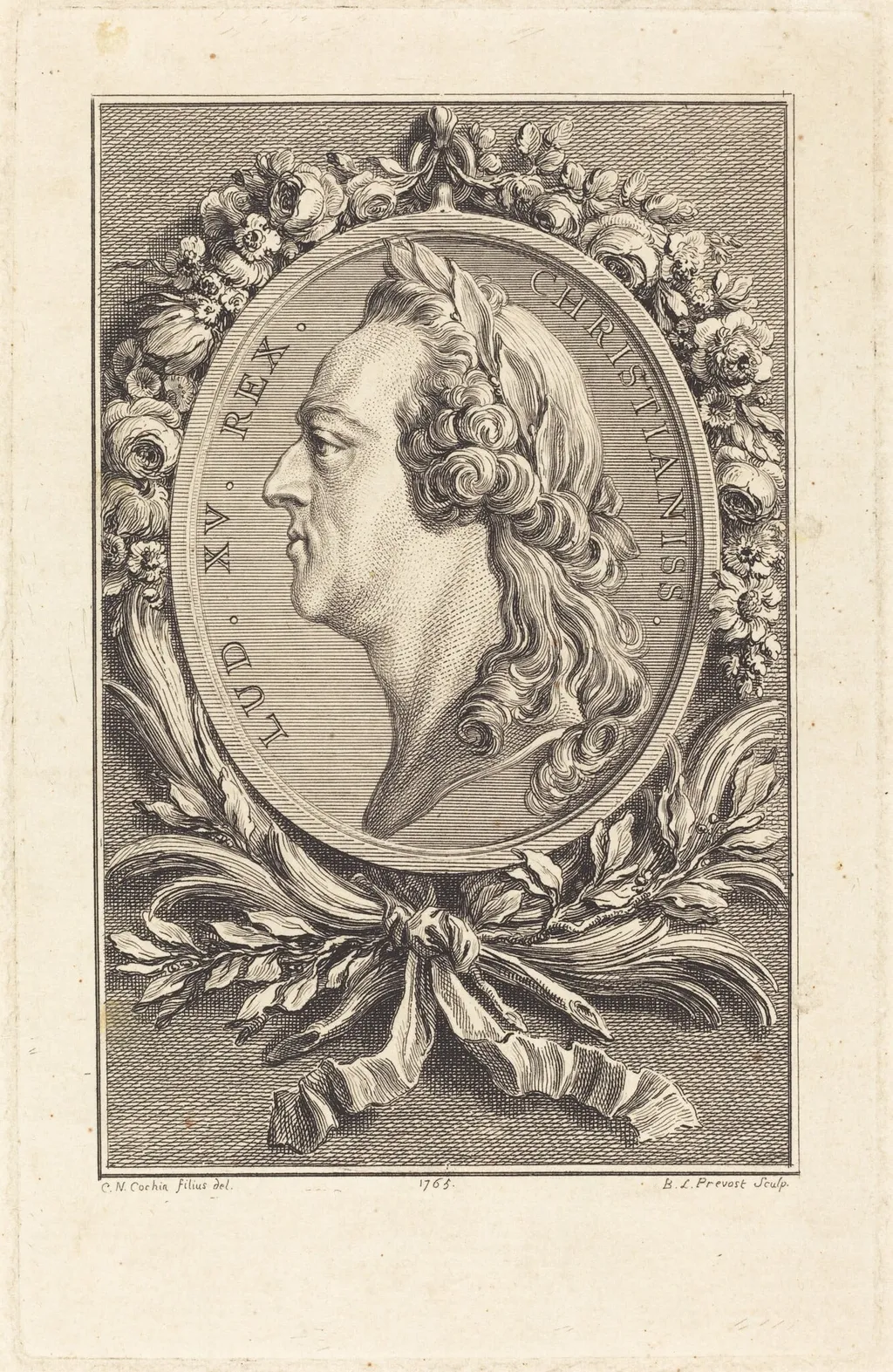
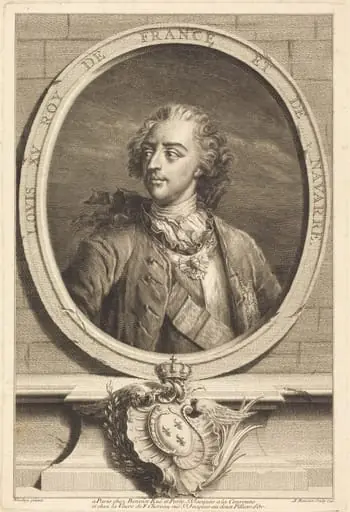
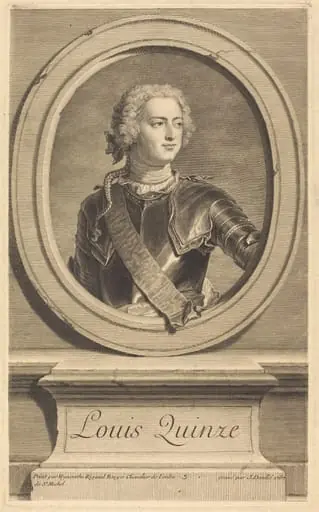
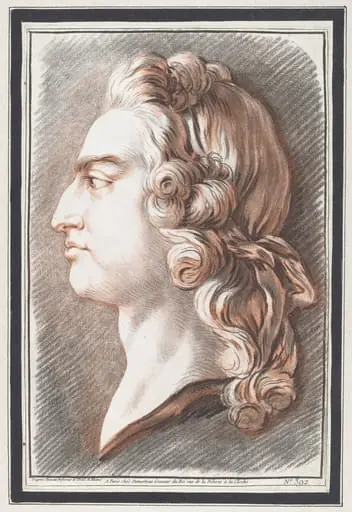
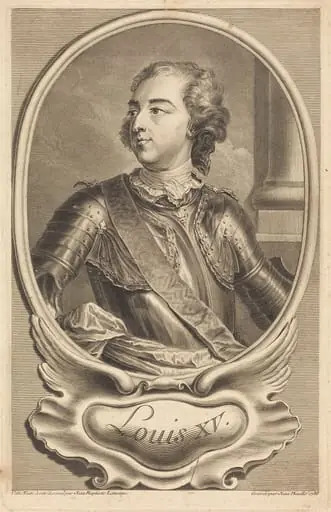
Louis XV is an ink print by the Romanticist artist Benoît-Louis Prévost. It dates from 1765 and is held in the collection of the National Gallery of Art.
About this work
Overview
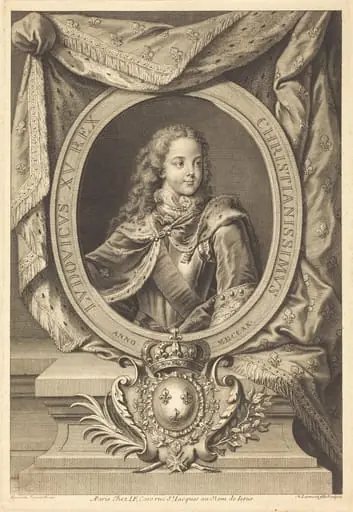
Benoît‑Louis Prévost’s engraving, executed in 1765, depicts the French monarch Louis XV. Rendered on laid paper, the image presents the king seated in an elaborately carved chair, his wig tightly curled around his face and a heavy robe adorned with fleur‑de‑lis motifs covering his shoulders.
Subject & Meaning
The portrait emphasizes royal authority through formal posture and regal attire. The carved chair and ornamental robe signal the king’s status, while the prominent fleur‑de‑lis embroidery reinforces the association with the French crown and its traditional symbols of sovereignty.
Technique & Style
Created by intaglio engraving, the work employs fine line work to model the textures of fabric, hair, and wood. The use of laid paper provides a subtle tooth that catches the ink, allowing delicate gradations of tone that convey depth within the limited monochrome palette.
History & Provenance
Produced nine years before Louis XV’s death in 1774, the print formed part of a broader series of royal images circulated during his reign. Engravings such as this were inexpensive to reproduce, facilitating rapid dissemination of the monarch’s likeness across France and beyond.
Context
In the mid‑eighteenth century, French print culture served both decorative and propagandistic functions. Prévost’s work aligns with contemporary efforts to reinforce monarchical presence in public consciousness, complementing other visual media like portrait paintings and ceremonial engravings.
Artist & collection