Artwork
L'homme et la puce (The Man with Fleas)
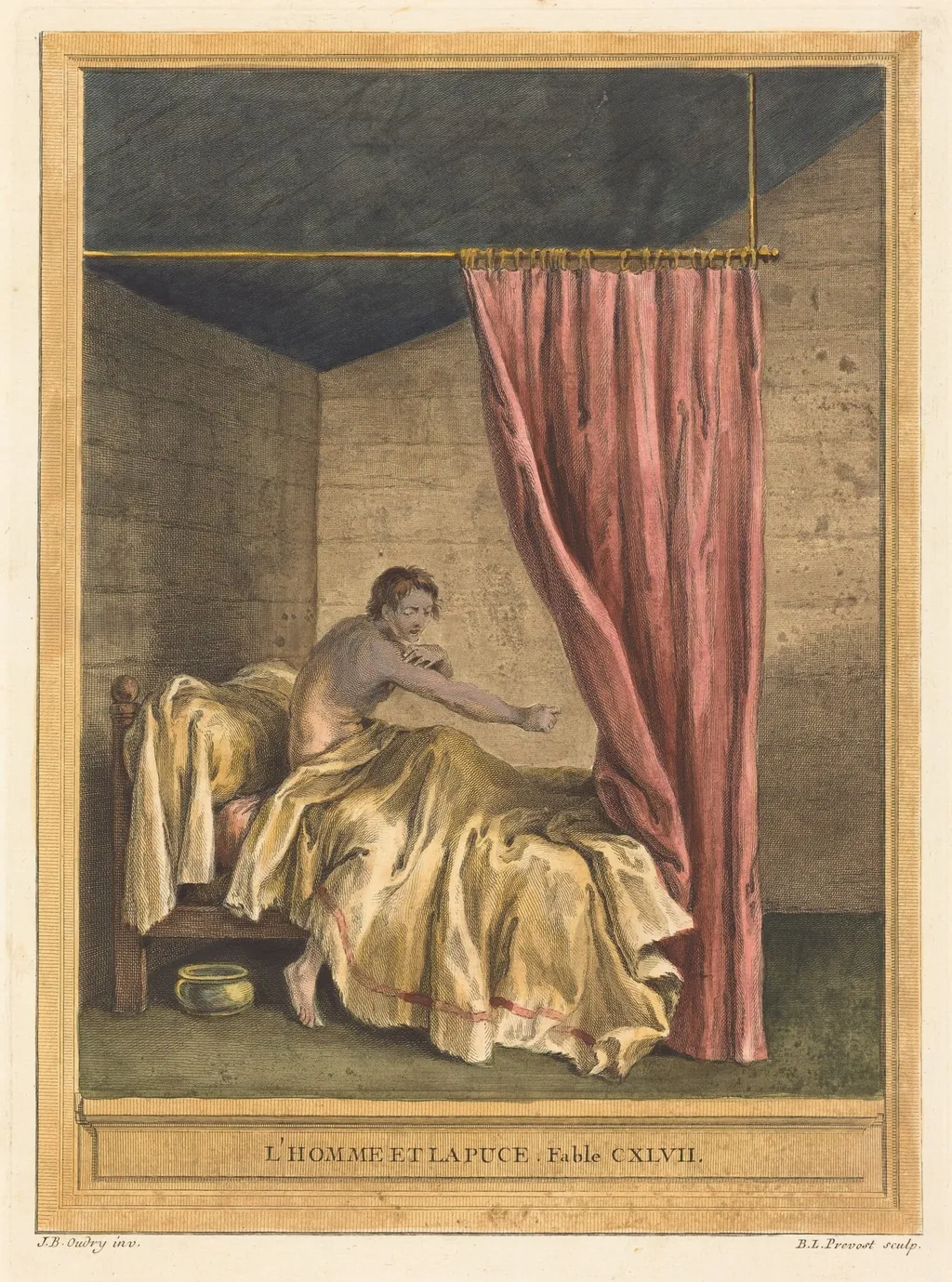
L'homme et la puce (The Man with Fleas) is an ink print by the Romanticist artist Benoît-Louis Prévost. It dates from 1756 and is held in the collection of the National Gallery of Art.
About this work
Overview
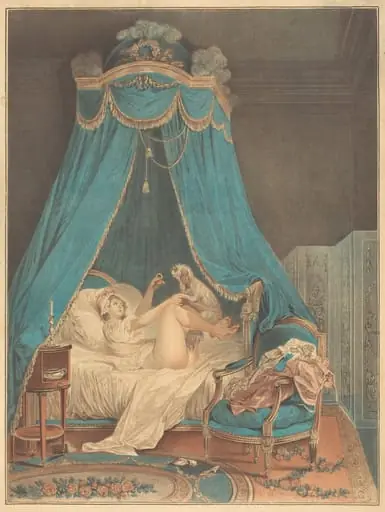
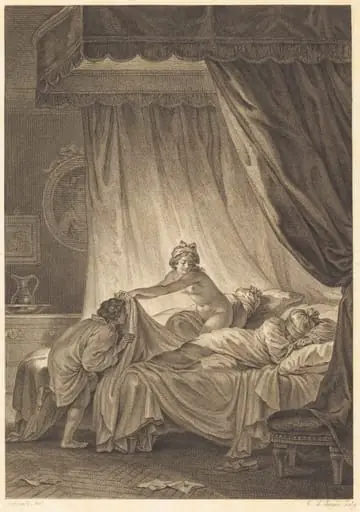
Created in 1756 by French printmaker Benoît‑Louis Prévost, *L’homme et la puce* (The Man with Fleas) is a hand‑colored etching that depicts a domestic interior in which a man lies on a bed, visibly irritated as fleas swarm around his exposed arm.
Subject & Meaning
The composition centers on the figure’s discomfort, his hand raised to scratch an inflamed arm while tiny insects are shown leaping nearby. The scene suggests a moment of everyday pestilence, perhaps commenting on the fragility of health and the intrusion of nature into private spaces.
Technique & Style
Prévost employed traditional etching methods, incising lines into a copper plate and then printing them onto paper. Hand‑coloring adds subtle tonal variations, while cross‑hatching and stippling create depth and texture, especially in the dimly lit room and the rough plastered walls.
History & Provenance
The work originates from the mid‑eighteenth century, a period when French artists frequently explored genre scenes of domestic life. It is documented as part of Prévost’s output for the Parisian market, though specific ownership records prior to the modern era remain sparse.
Context
During the 1750s, etching was a popular medium for disseminating genre images that combined humor with moral observation. Flea infestations were a common urban problem, making the subject relatable to contemporary viewers and aligning the print with other satirical depictions of everyday ailments.
Legacy
Although not as widely reproduced as later prints, *L’homme et la puce* illustrates the technical skill and narrative interest of French etchers before the rise of lithography. It continues to serve as a reference for scholars studying the visual culture of health and hygiene in the eighteenth century.
Artist & collection