Artwork
A Nubian Girl standing beside the First[?] Cataract of the Nile
![A Nubian Girl standing beside the First[?] Cataract of the Nile, by Achille-Constant-Théodore-Emile Prisse d'Avennes, watercolor, 1839](https://artifactworldgallery.com/img/achille-constant-theodore-emile-prisse-d-avennes--a-nubian-girl-standing-beside-the-first-cataract-of-the-nile--50be460b2df7006f-w1024.webp)
A Nubian Girl standing beside the First[?] Cataract of the Nile is a watercolor work on paper by the Orientalist artist Achille-Constant-Théodore-Emile Prisse d'Avennes. It dates from 1839 and is held in the collection of the Victoria and Albert Museum. This watercolour depicts a young Nubian girl standing by the Nile's rapids, surrounded by a mix of ancient and contemporary elements.
About this work
Overview
This watercolour depicts a young Nubian girl standing by the Nile's rapids, surrounded by a mix of ancient and contemporary elements.
Subject & Meaning
The girl's attire and hairstyle echo those found in ancient Egyptian reliefs, highlighting the continuity of cultural practices. The scene combines historical and natural elements, such as a Roman gravestone and local flora.
Technique & Style
The watercolour showcases Prisse d'Avennes' ability to capture a vivid, spontaneous moment. The contrast between the girl's dark skin and the pale water is notable.
History & Provenance
Prisse d'Avennes created this work during his travels along the Nile in the 1830s, often in response to commissions from fellow travelers.
Context
The painting reflects the artist's interest in the cultural and historical richness of the regions he visited, as seen in his other works and publications, such as the Oriental Album.
Artist & collection

Artist
Achille-Constant-Théodore-Emile Prisse d'Avennes
Achille-Constant-Théodore-Émile Prisse d'Avennes was a French archaeologist, Egyptologist, architect and writer.

 Zurumati Indians
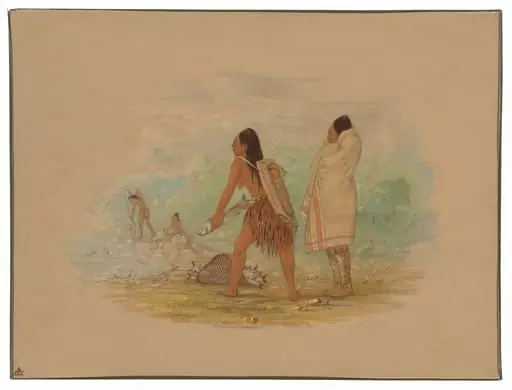 Flathead Indians
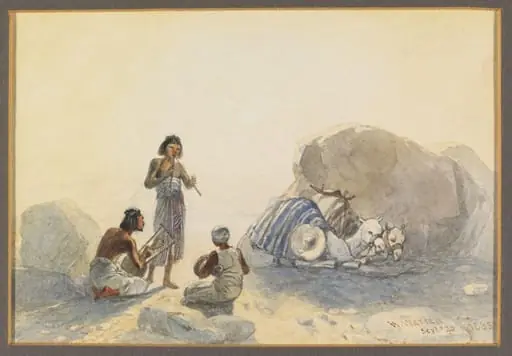 A Nubian Concert in the Desert
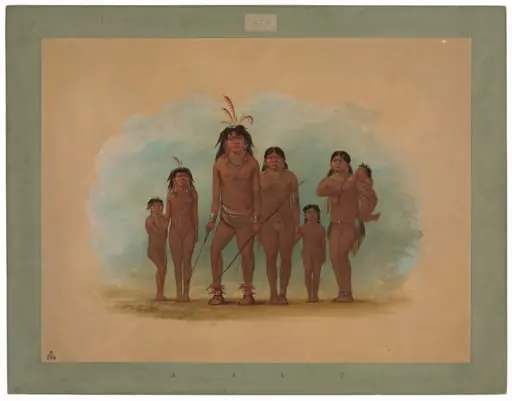 Lengua Chief, His Two Wives, and Four Children
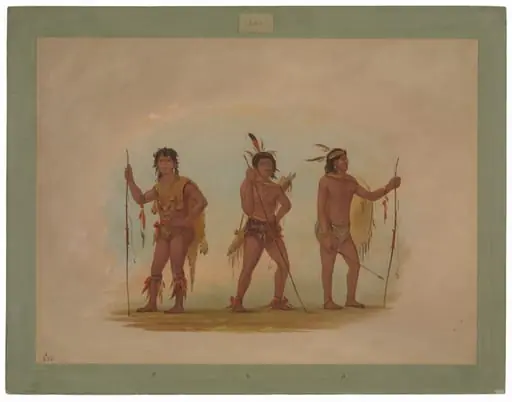 Three Chaymas Men
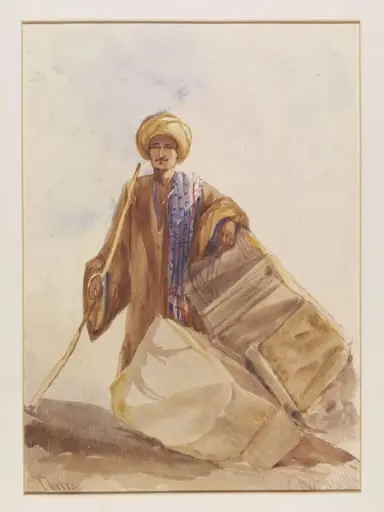 A Man standing by Rocks, Thebes
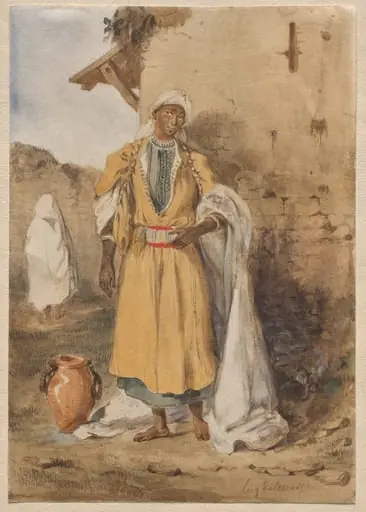 A Young Black Woman Fetching Water
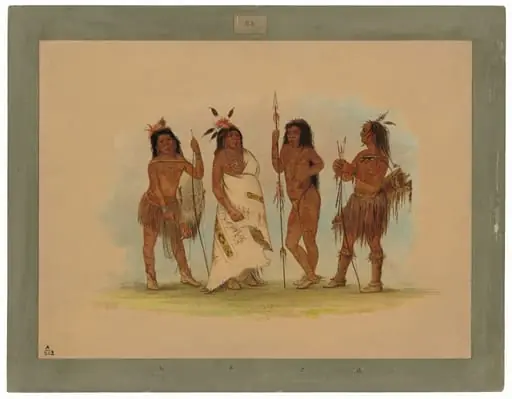 Apachee Chief and Three Warriors
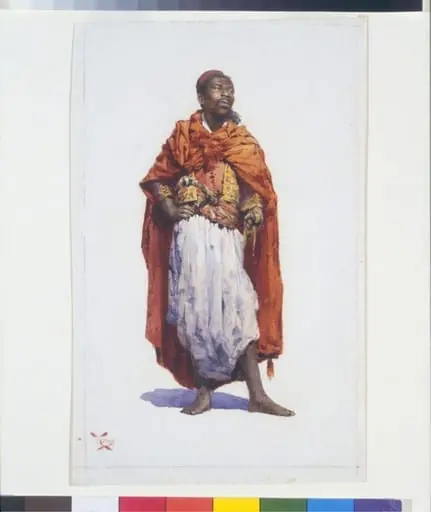 North African man in travelling costume
 Print Collection
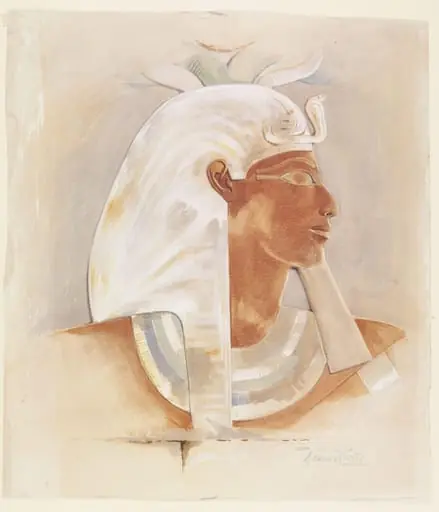 Head of Queen Makare Hatshepsut: copy of a painted low relief in the Mortuary Temple of Hatshepsut, Deir al-Bahri