Artwork
A Young Black Woman Fetching Water
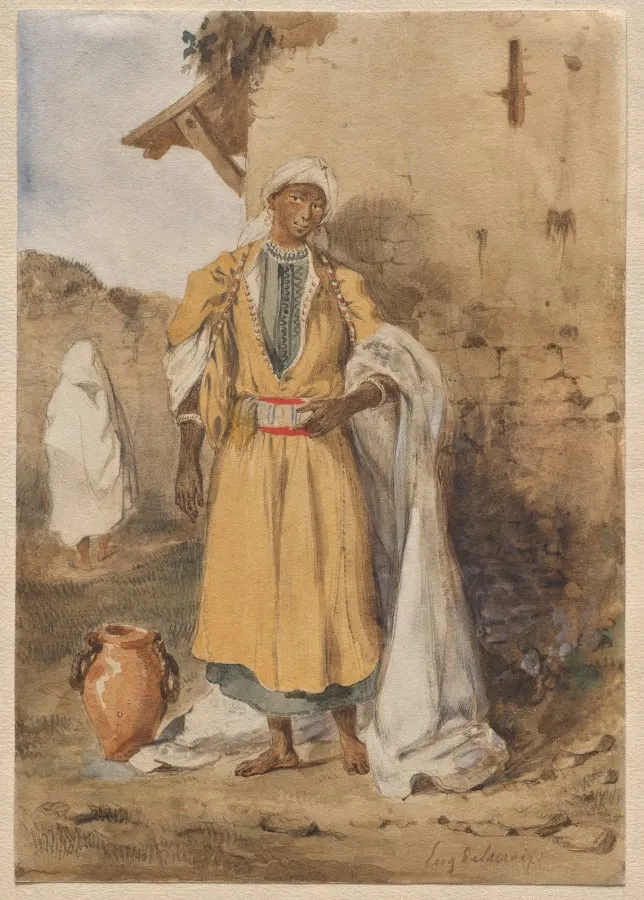
A Young Black Woman Fetching Water is a drawing by the Romanticist artist Eugène Delacroix. It dates from 1832 and is held in the collection of the Cleveland Museum of Art.
About this work
To see how other artists showed daily life in North Africa, look up *The Cleveland Museum of Art*.
You see a young Black woman in a long dress and headscarf, bending to lift a water jar.
Delacroix sketched her in 1832 while traveling in North Africa. She’s likely enslaved, doing daily chores. The lines are quick and light, as if he drew her in a few minutes. It’s not a grand scene—just a quiet moment he noticed and saved.
To see how other artists showed daily life in North Africa, look up *The Cleveland Museum of Art*.
Overview
In 1832, Eugène Delacroix traveled through North Africa as part of a diplomatic mission, producing a series of sketches that captured everyday scenes. This watercolor, one of eighteen compiled into an album for the French ambassador, depicts a young Black woman collecting water. Rendered with swift, delicate strokes, the drawing records a fleeting, unposed moment rather than a staged composition.
Subject & Meaning
The figure is likely an enslaved woman performing routine labor, her posture and attire suggesting both physical strain and quiet dignity. Delacroix does not idealize or dramatize her; instead, he observes her with a sense of immediacy. The absence of narrative context invites focus on her presence alone, grounding the image in the reality of domestic life under colonial conditions.
Technique & Style
Executed in watercolor and pencil, the drawing employs loose, economical lines that convey motion and weight without detail. Delacroix’s rapid handling suggests spontaneous observation, possibly made on-site. The transparency of the medium allows the paper’s texture to contribute to the sense of atmosphere, reinforcing the immediacy of the encounter.
History & Provenance
The sketch was part of a personal album Delacroix compiled during his travels and presented to Count de Mornay as a memento. Its survival within this private collection, rather than a public exhibition, reflects its initial function as a personal record rather than a finished work of art. Later, it entered institutional hands through documented provenance.
Context
Delacroix’s North African journey occurred during a period of heightened European interest in the region, fueled by colonial expansion and Orientalist fascination. While many artists depicted exoticized or theatrical scenes, this drawing stands apart for its restraint and attention to unremarkable labor, offering a quieter counterpoint to prevailing visual narratives.
Legacy
The drawing contributes to a broader archive of 19th-century visual documentation of African life, often filtered through colonial perspectives. Its modest scale and unembellished subject challenge grander Orientalist tropes, providing a rare, unmediated glimpse into the daily existence of an individual whose name and story remain unknown.
Artist & collection
Artist
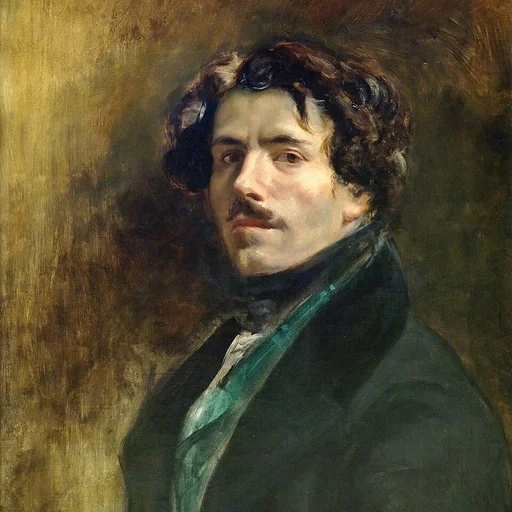
Ferdinand Victor Eugène Delacroix ( DEL-ə-krwah, -KRWAH; French: ; 26 April 1798 – 13 August 1863) was a French Romantic artist who was regarded as the leader of the French Romantic school.

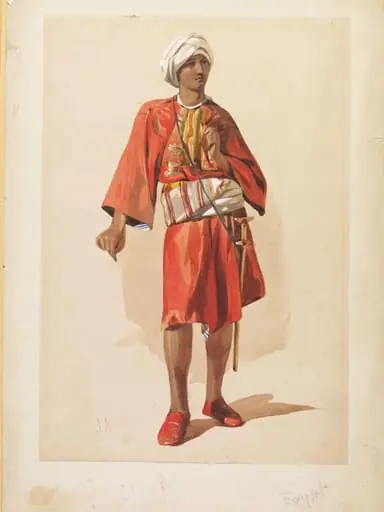 Young Soldier
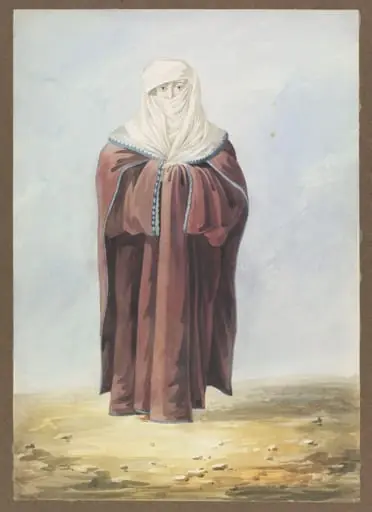 A Turkish lady in Walking Dress
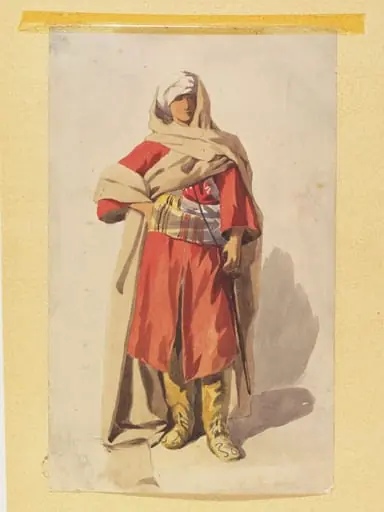 Soldier
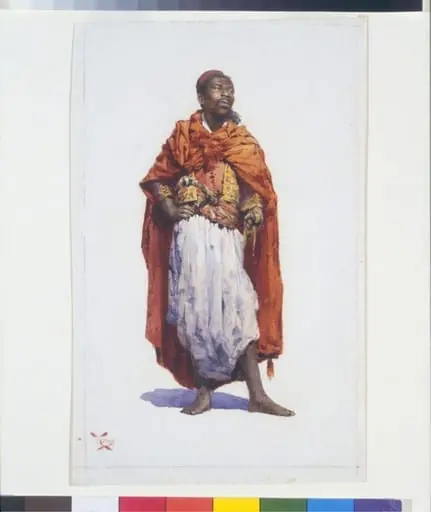 North African man in travelling costume
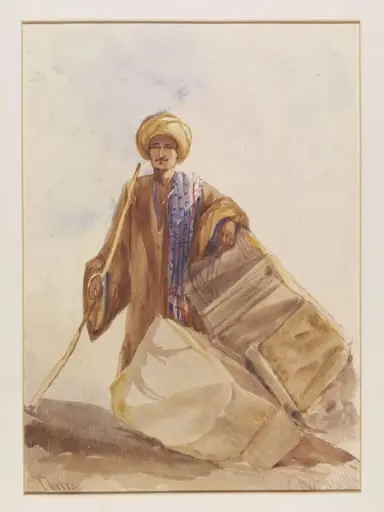 A Man standing by Rocks, Thebes
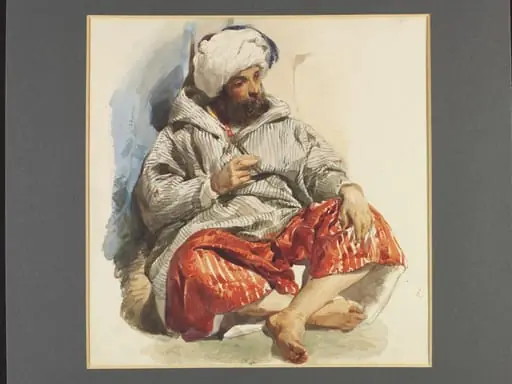 A European in Oriental dress, seated cross legged
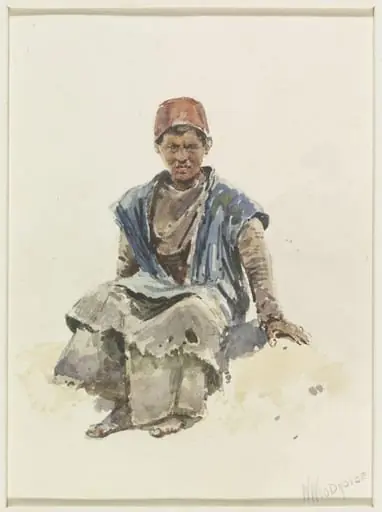 Arab Lad
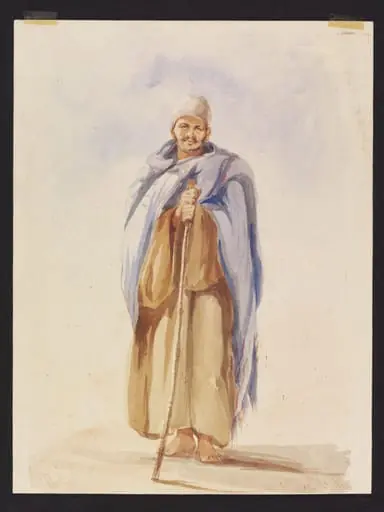 A Man with a Staff, Thebes
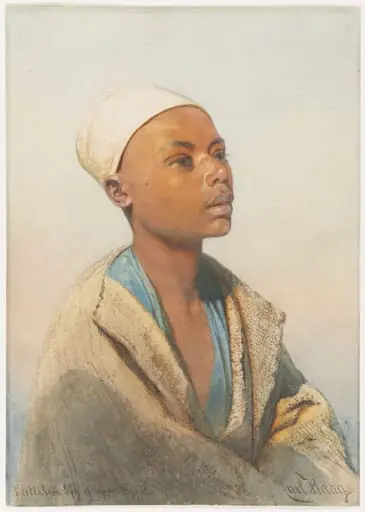 Hassan: A Fellah Boy of Upper Egypt
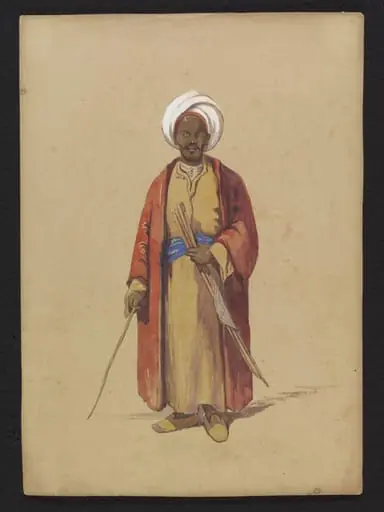 A Nubian selling Canes
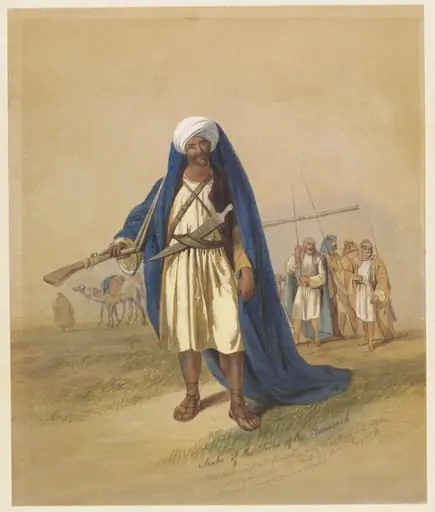 Arabs of the Tribe of the Benisaid
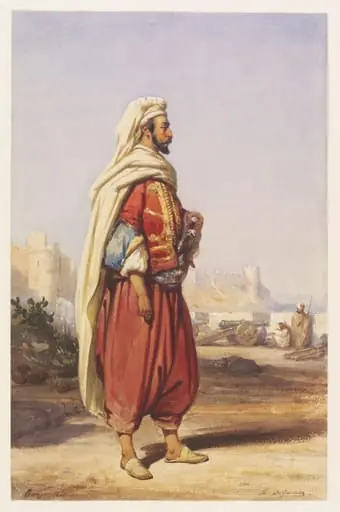 A Moroccan Amir