Artwork
A Nubian Concert in the Desert
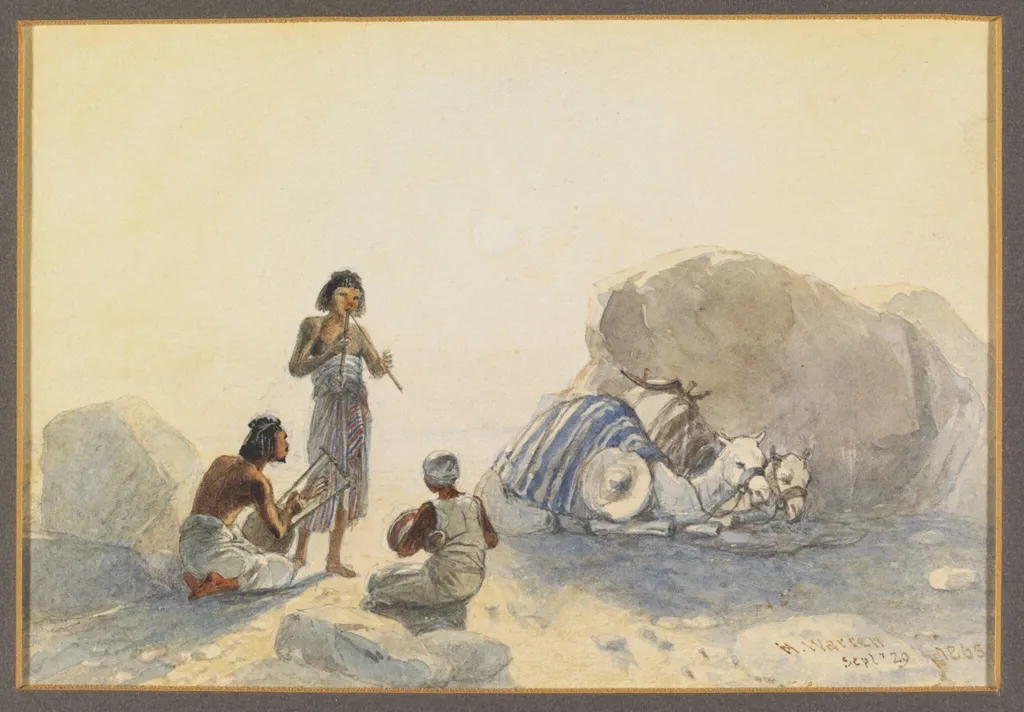
A Nubian Concert in the Desert is a watercolor work on paper by the Impressionist artist Henry Warren. It dates from 1865 and is held in the collection of the Victoria and Albert Museum.
About this work
Overview
Rendered in delicate washes, the piece avoids dramatic flair, instead emphasizing stillness and the subdued tones of the arid environment.
Created in 1865 by Henry Warren, this watercolour depicts a quiet moment in a Nubian desert landscape. The work captures three figures engaged in subtle, everyday actions, framed by sparse natural elements. Rendered in delicate washes, the piece avoids dramatic flair, instead emphasizing stillness and the subdued tones of the arid environment. Its modest scale and intimate composition reflect a documentary approach to ethnographic observation.
Subject & Meaning
The scene portrays three individuals: one standing with a staff, another crouching over an object in their hands, and a third seated on a rock, playing a small drum. The presence of livestock beneath a striped cloth suggests a temporary encampment. No narrative is overtly stated; the work conveys a sense of routine, perhaps a pause in travel or a moment of rest. The focus on quiet activity implies respect for the dignity of ordinary life in the region.
Technique & Style
Warren employed transparent watercolour washes to build soft gradients of earth tones—ochres, browns, and pale blues—creating a sense of atmospheric light. Forms are suggested rather than sharply defined, with minimal outlines. The muted palette and gentle transitions between light and shadow reflect a preference for naturalism over embellishment. The technique supports the scene’s tranquil mood, avoiding contrast or vivid detail in favor of harmony with the desert setting.
History & Provenance
The watercolour was completed in 1865 and remained in private hands until its sale at Sotheby’s in October 1981, where it fetched £94. Documentation by Rodney Searight confirms this transaction. There is no record of prior public exhibition or institutional ownership prior to the auction. Its journey through private collections suggests it was valued as a personal record rather than a major artistic statement of its time.
Context
Warren’s work emerged during a period of increased European travel and documentation in North Africa. While many contemporaries emphasized exoticism or spectacle, this piece avoids romanticization. Its quiet observation aligns with a growing trend among amateur artists and ethnographers to record daily life with restraint. The absence of colonial figures or overt power dynamics reflects a more observational, less intrusive perspective.
Legacy
Though not widely exhibited or reproduced, the work remains a quiet example of 19th-century ethnographic watercolour. Its survival and eventual auction indicate a niche interest in non-dramatic depictions of African life. It contributes to a broader, understudied corpus of travel sketches that prioritize authenticity over spectacle, offering insight into how Western observers engaged with local cultures without overt intervention.
Artist & collection
Artist
Henry Warren kept a diary with tiny pencil sketches in the corners, but he never let anyone read the words—only the pictures.

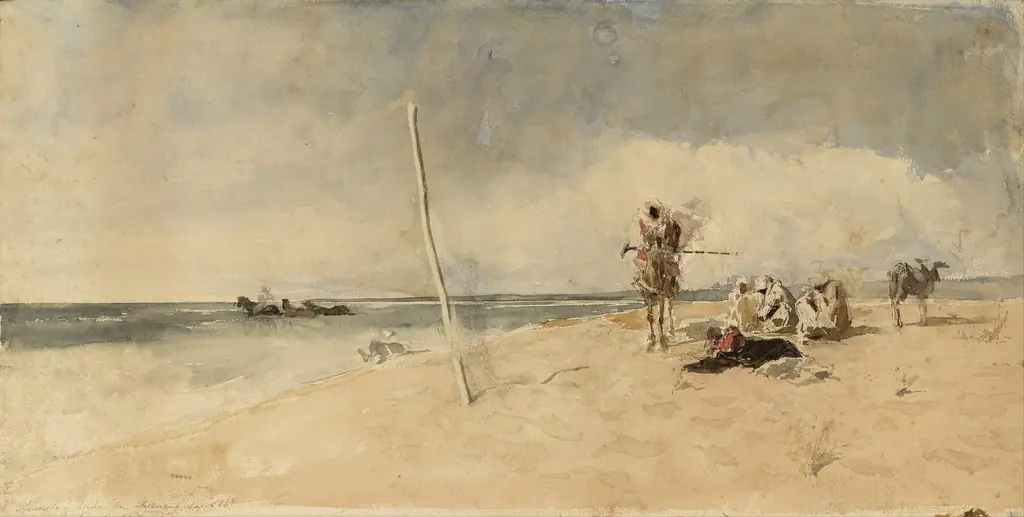 African Beach
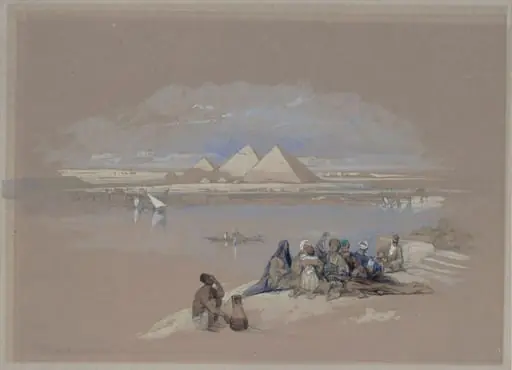 Pyramids of Gizeh from Old Cairo
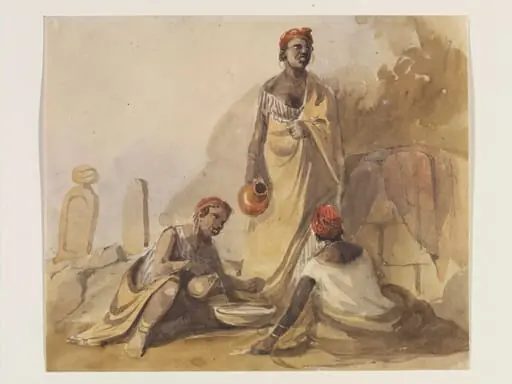 African Women at a Fountain in a Muslim Cemetery
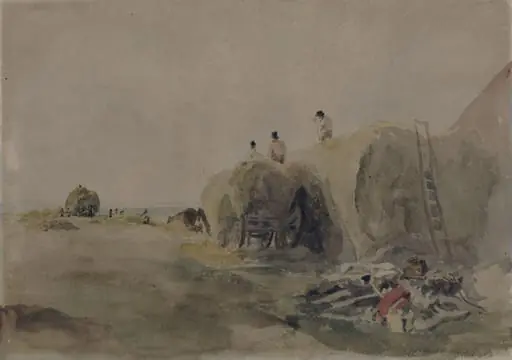 Stacking Hay, near Lincoln
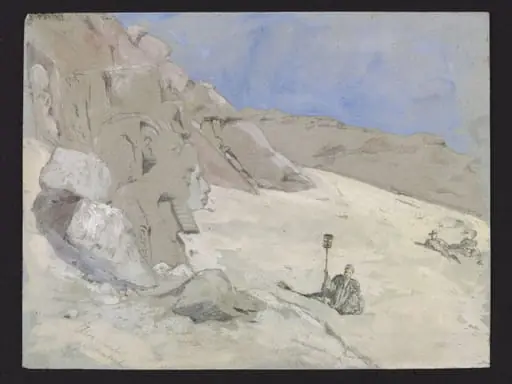 Aboo Simbel
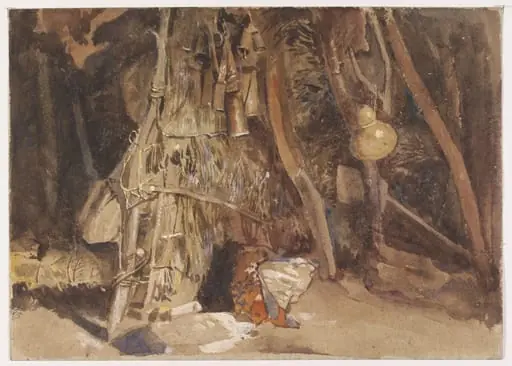 Interior of a Turkish shepherd's hut
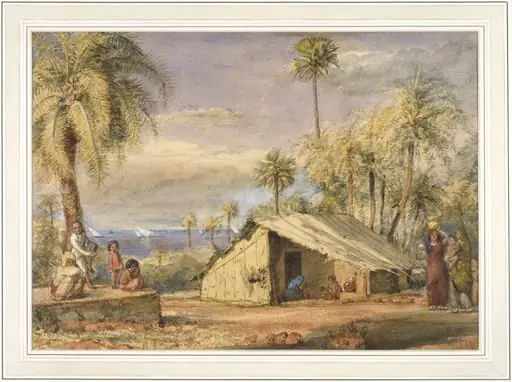 Toddywallah's hut in a grove of date palms near Breach Candy, Bombay
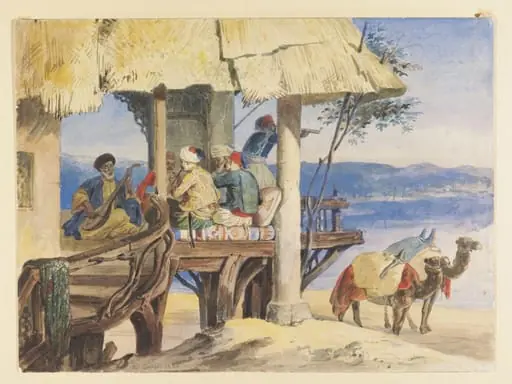 Turkish Musicians in a coffee-house overlooking the Bosphorus
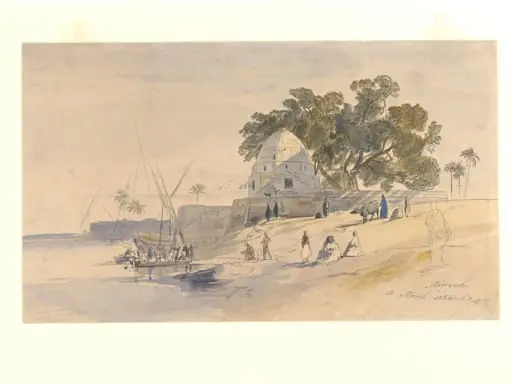 Minyeh, Egypt
![A Nubian Girl standing beside the First[?] Cataract of the Nile, by Achille-Constant-Théodore-Emile Prisse d'Avennes](https://artifactworldgallery.com/img/achille-constant-theodore-emile-prisse-d-avennes--a-nubian-girl-standing-beside-the-first-cataract-of-the-nile--50be460b2df7006f-w320.webp) A Nubian Girl standing beside the First[?] Cataract of the Nile
A Nubian Girl standing beside the First[?] Cataract of the Nile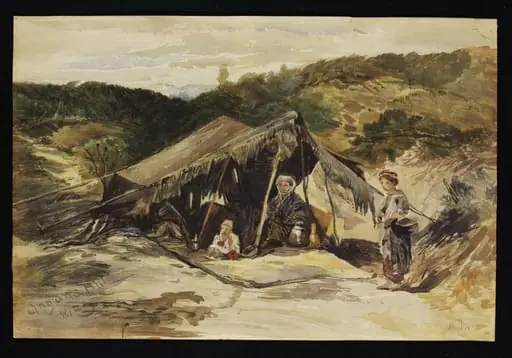 Cingans Hut
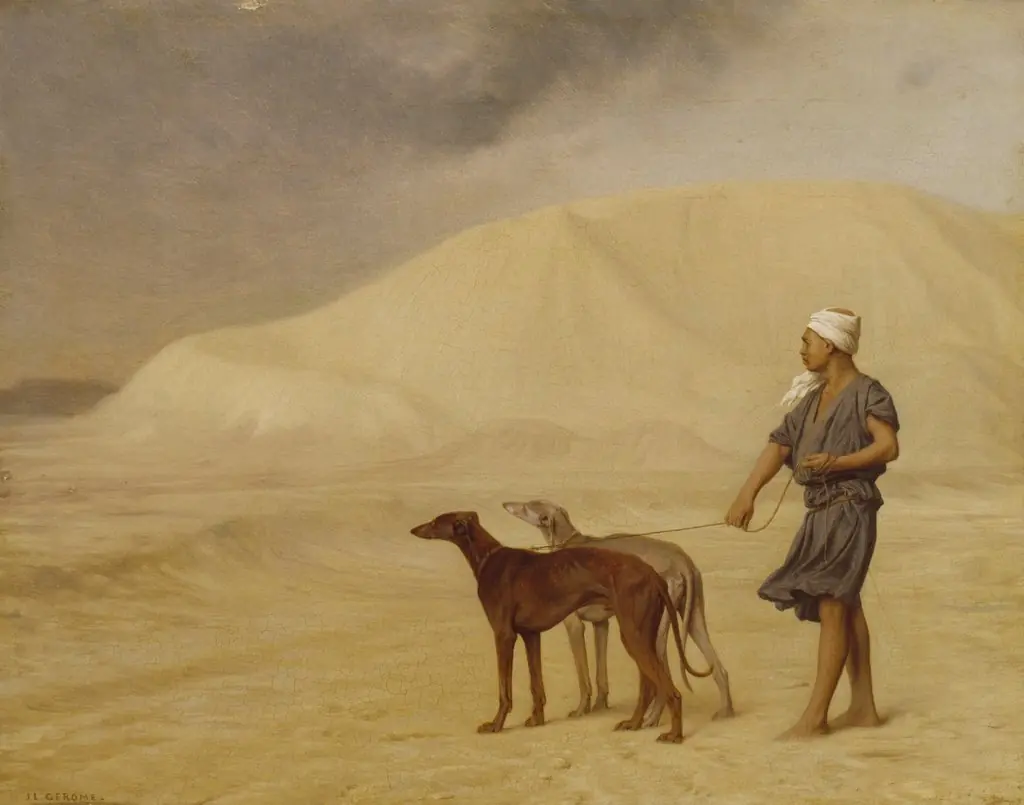 On the Desert