Artwork
Saint Bartholomew
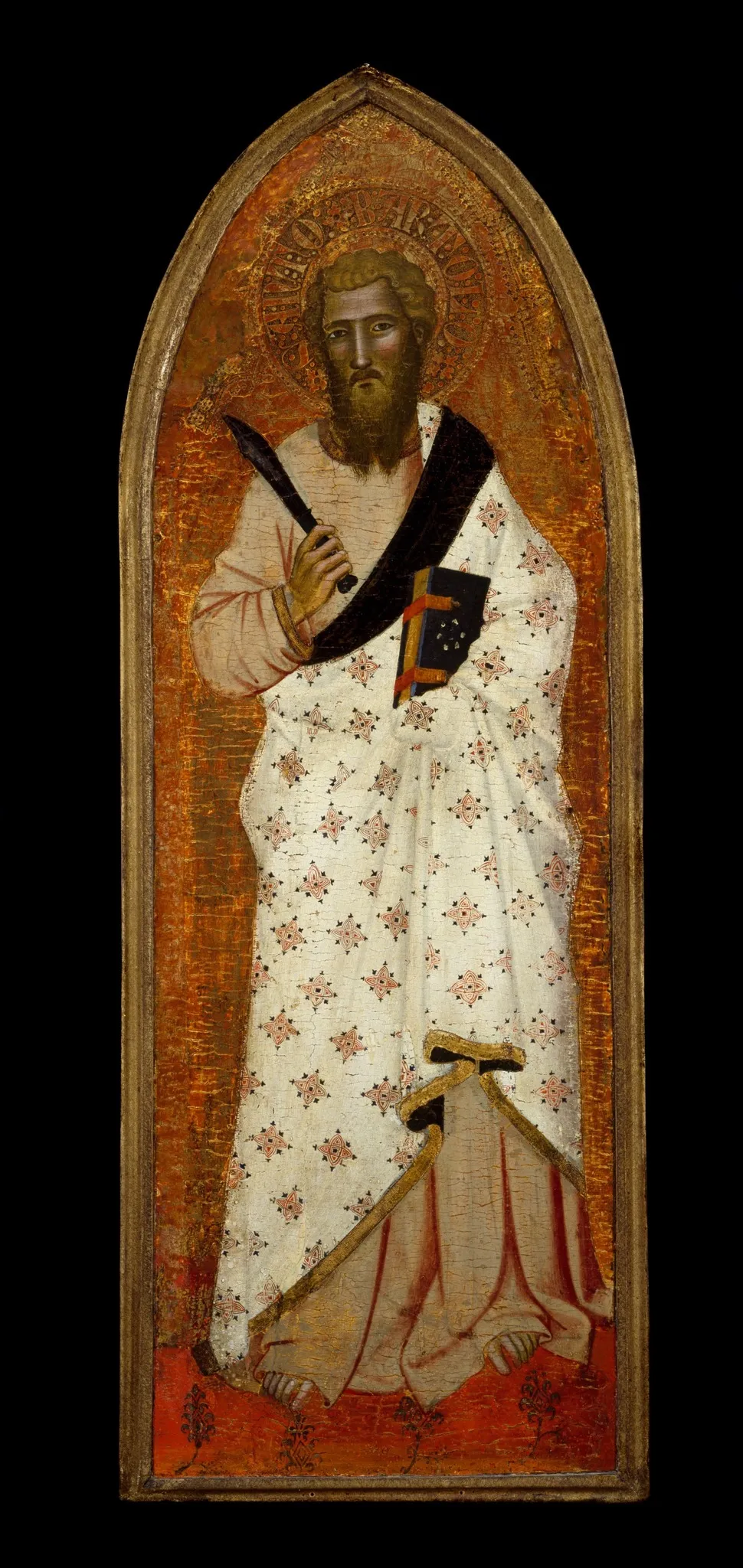
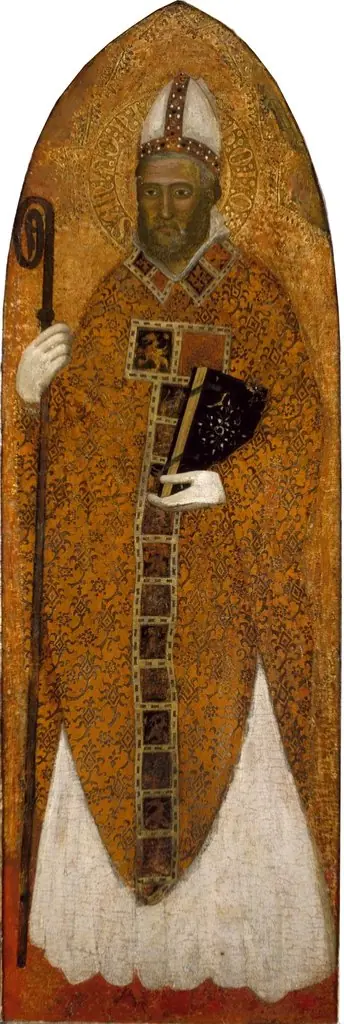
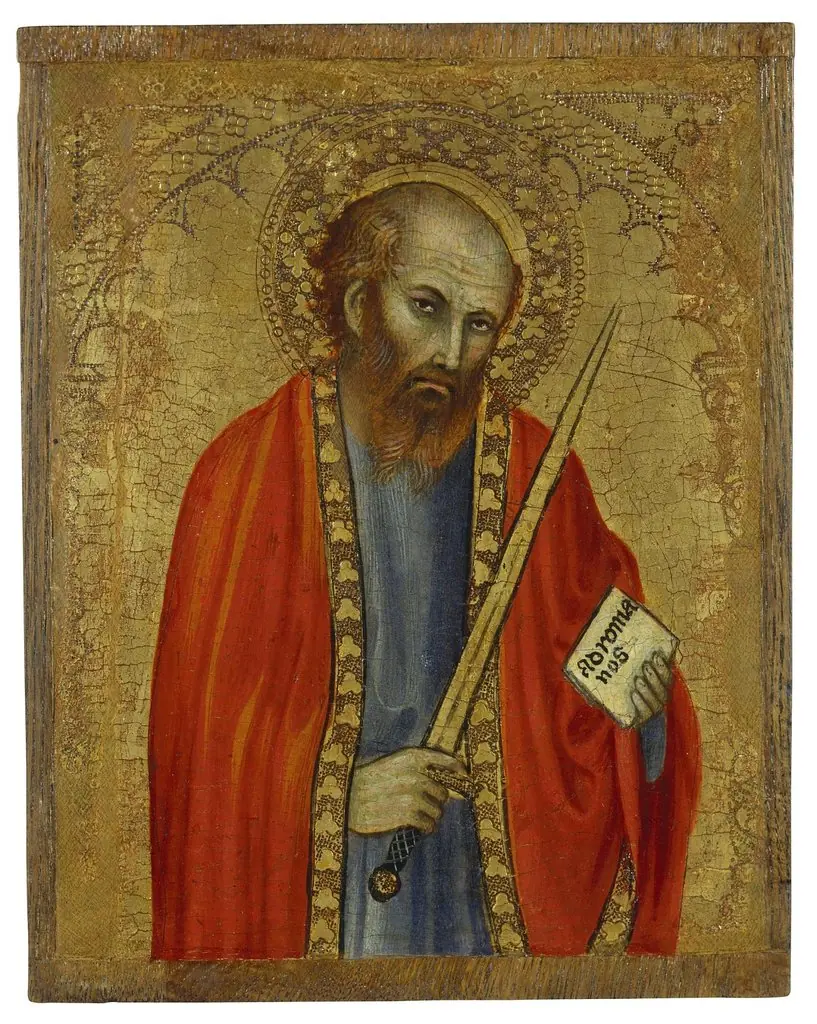
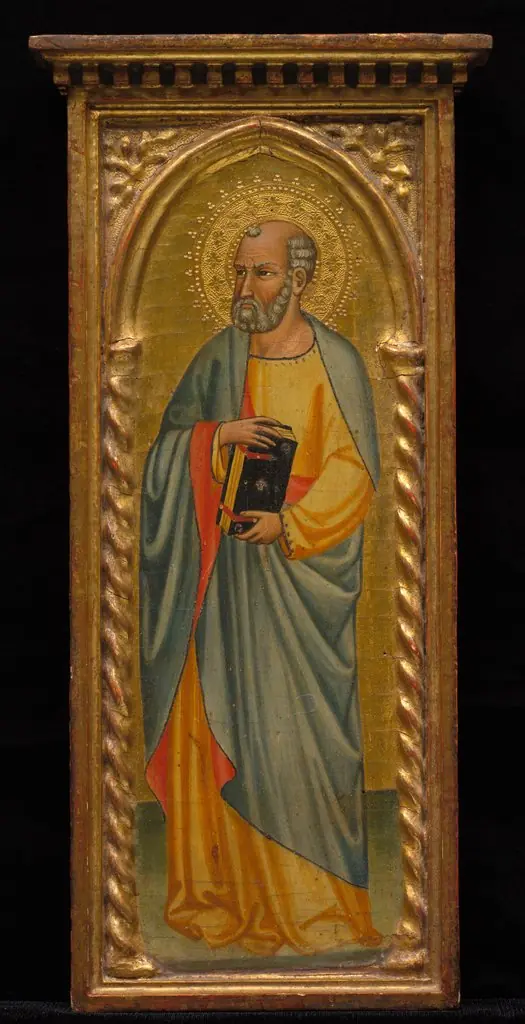
Saint Bartholomew is an unspecified painting by the Byzantine icon painting artist Andrea di Bonaiuto. It dates from 1365 and is held in the collection of the Museum of Fine Arts, Houston.
About this work
Overview
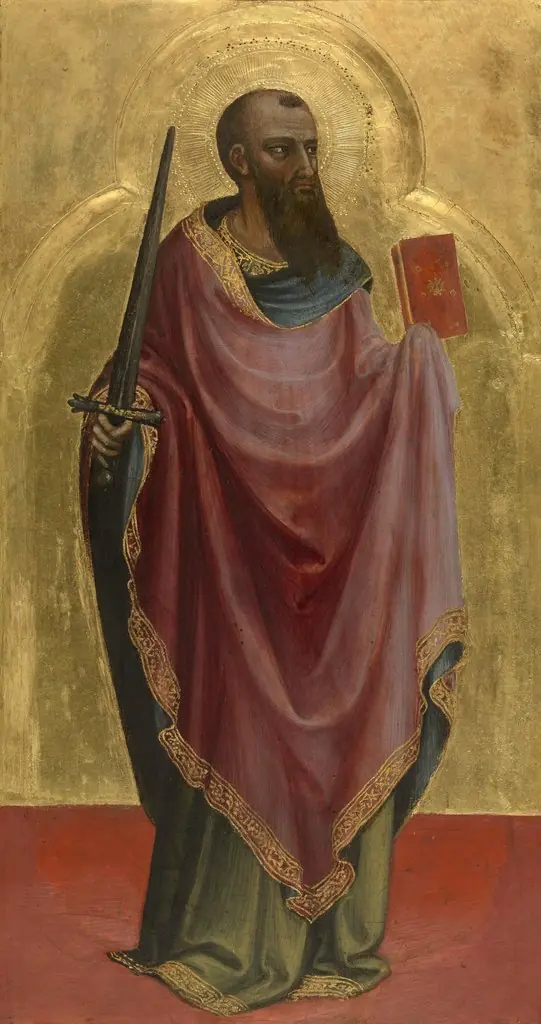
Created in 1365 by the Florentine painter Andrea di Bonaiuto, this panel portrays the apostle Bartholomew. The figure stands in a white robe trimmed with tiny red blossoms, his gaze fixed forward, and is set against a warm orange backdrop. A halo crowns his head, emphasizing his sanctity, while he holds a knife in his right hand and a book in his left.
Subject & Meaning
The knife is a conventional attribute identifying Bartholomew, recalling the manner of his martyrdom, and the book alludes to his role as a preacher of the Gospel. Together the symbols convey both his suffering and his theological authority, inviting contemplation of his witness to faith.
Technique & Style
Executed in tempera on panel, the work reflects the Byzantine influence that permeated mid‑fourteenth‑century Florentine art. The figure is rendered with a flat, linear quality, and the use of vivid, saturated colors—particularly the orange ground and the red accents—creates a striking visual contrast typical of the period’s devotional imagery.
History & Provenance
Andrea di Bonaiuto, active from 1343, is better known for frescoes in the Spanish Chapel of Santa Maria Novella, where he celebrated the Dominican Order. This independent panel later entered the collection of the Museum of Fine Arts, Houston, where it remains on display.
Context
The painting belongs to a broader tradition of religious iconography that emphasized clear identification of saints through specific attributes. In the mid‑1300s, such images served both liturgical functions and private devotion, reinforcing the narratives of martyrdom and apostolic teaching within the visual culture of the church.
Artist & collection
Artist
Andrea di Bonaiuto da Firenze or Andrea da Firenze was an Italian painter active in Florence.