Artwork
Nașterea lui Iisus
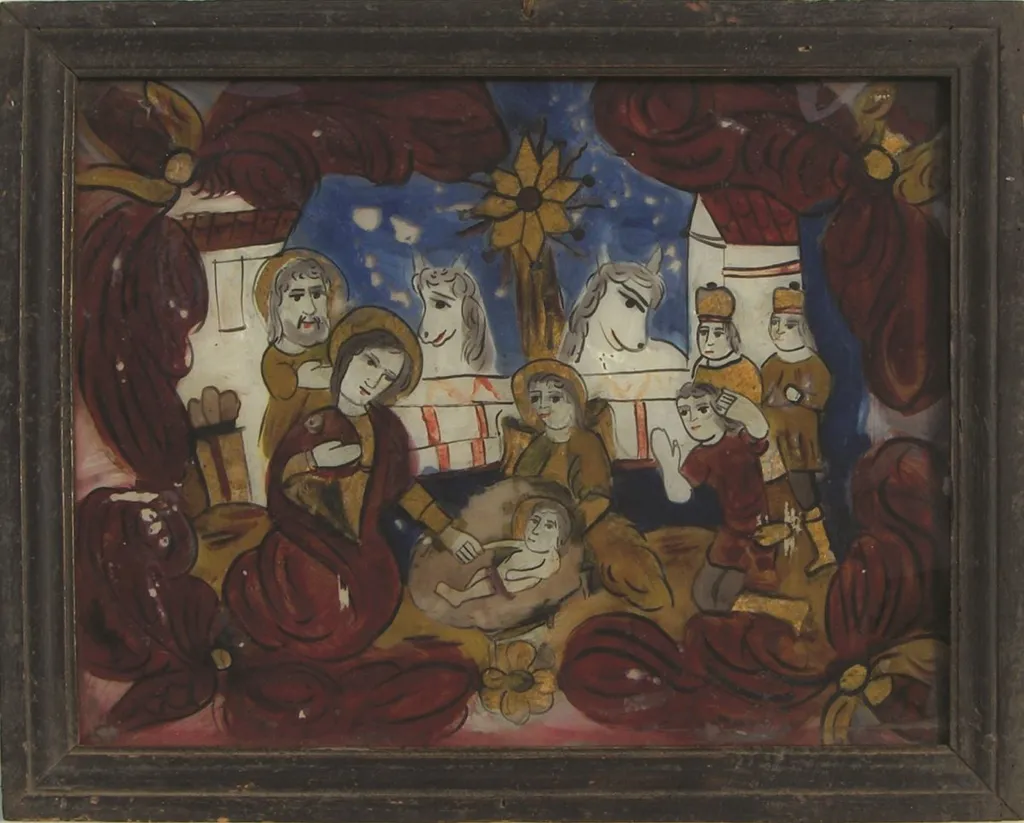
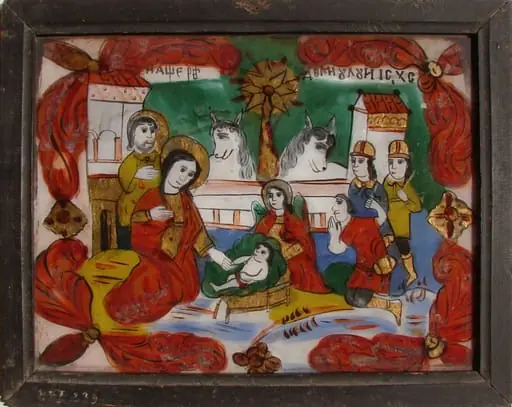
Nașterea lui Iisus is a drawing by Maria Prodan. It is held in the collection of the Alba Iulia Unification National Museum. This folk-art painting portrays the Nativity, centering Mary, Joseph, and the infant Jesus within a simplified domestic setting.
About this work
Overview
The dark brown frame, adorned with red and gold swirls, enhances the work’s devotional tone without distracting from its central narrative.
This folk-art painting portrays the Nativity, centering Mary, Joseph, and the infant Jesus within a simplified domestic setting. Rendered with bold outlines and vivid hues, the composition avoids naturalism in favor of symbolic clarity. A blue background frames the white stable with a red roof, while figures wear richly colored robes. The dark brown frame, adorned with red and gold swirls, enhances the work’s devotional tone without distracting from its central narrative.
Subject & Meaning
The scene emphasizes the quiet reverence of Christ’s birth, with Mary cradling the child as Joseph stands nearby in quiet watchfulness. The absence of angels or animals narrows focus to the familial bond, underscoring humility and tenderness. The stylized forms and direct gaze of the figures invite contemplation rather than spectacle, aligning with devotional traditions that prioritize spiritual intimacy over grandeur.
Technique & Style
Executed in a regional folk idiom, the painting uses flat planes of color, minimal shading, and strong outlines to define forms. Details are reduced to essential elements—robes are indicated by solid bands of brown and gold, architecture by simple geometric shapes. The palette remains bright and unmodulated, reinforcing emotional warmth. The decorative frame echoes motifs found in local craft traditions, tying the image to communal artistic practices.
History & Provenance
The work likely originated in a rural community where religious imagery was produced for home altars or parish use, rather than by trained artists. Its materials and style suggest it was made in the late 19th or early 20th century, possibly in Eastern Europe or the Balkans. No documented provenance exists, but similar pieces were commonly passed through families as heirlooms or gifts for religious occasions.
Context
This painting reflects a widespread tradition in peasant and artisan communities of creating sacred imagery outside academic conventions. Such works often blended local aesthetics with biblical narratives, prioritizing emotional resonance and symbolic clarity over anatomical accuracy. They served as visual prayers, reinforcing faith through accessible, familiar forms rooted in everyday visual culture.
Legacy
Though unsigned and unattributed, the painting exemplifies how religious themes were sustained in vernacular art long after the decline of ecclesiastical patronage. Its survival in private collections speaks to its enduring role in domestic spirituality. Today, it stands as a quiet testament to the persistence of folk expression in conveying sacred stories beyond institutional frameworks.
Artist & collection
Artist
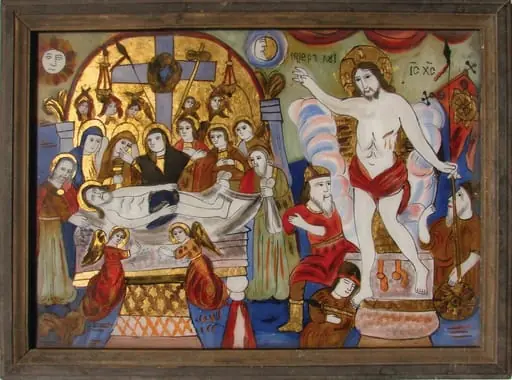
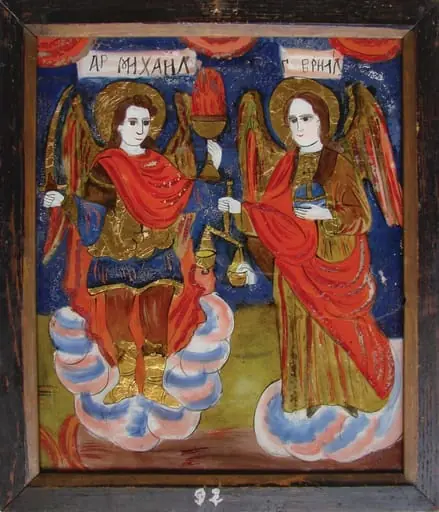
Maria Prodan's work belongs to a traditional era of religious art. She painted "Sfinții Mihail și Gavril" and drew "Prohodul și Învierea lui Iisus". These pieces, along with "Iisus Hristos arhiereu și învățător,…
Museum
Alba Iulia Unification National Museum
Continue through works from the same source collection.
 Nașterea lui Iisus
 Nașterea și Prohodul lui Iisus
 Prohodul lui Iisus
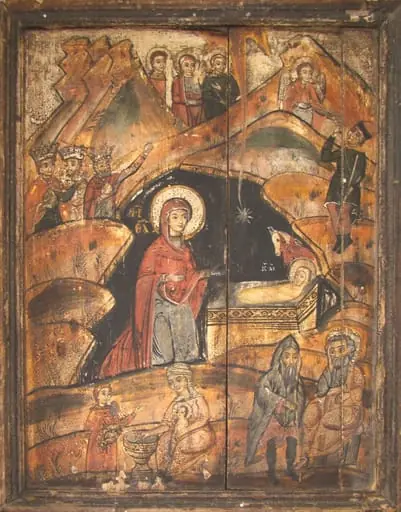 Nașterea lui Iisus
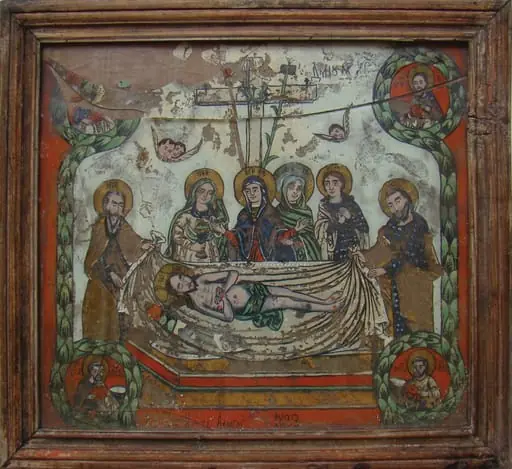 Prohodul lui Iisus
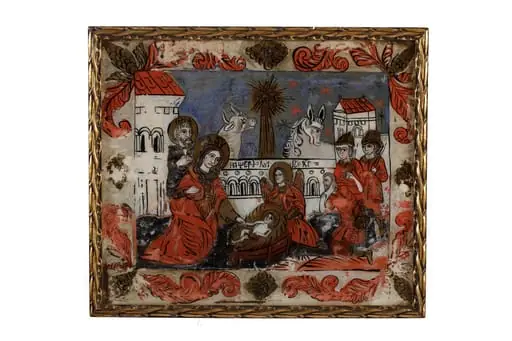 Icoană pe sticlă reprezentând scena Nașterii lui Iisus Hristos. Are ramă de lemn, aurie, sculptată. Pruncul este prezentat de un înger pe un strat auriu, care îl evidențiază. În stânga apar Iosif și Ana (?), iar în dreapta un bărbat îngenuncheat în roșu și doi soldați cu veșminte roșii și caschete aurii. Fundalul este constituit din clădiri albe, care se detașează pe cerul albastru cu stele roșii, negre și albe. Central se află steaua magilor, aurie, care luminează întreaga scenă și este încadrată de două capete de animale. Pe marginea de sus a clădirii centrale se află inscripția „Nașterea lui Iisus Hristos”. Scena întreagă este încadrată de un chenar cu frunze și flori roșii și aurii, pe fond alb-gri.