Artwork
Nașterea lui Iisus
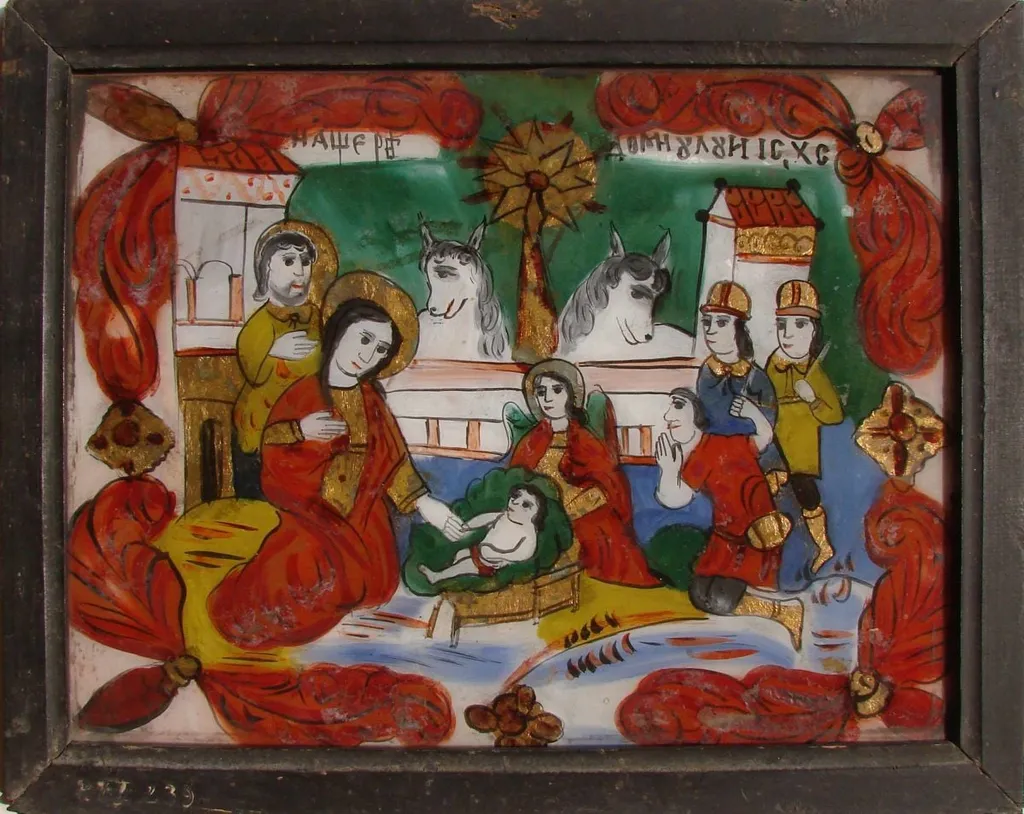
Nașterea lui Iisus is a drawing by Petru Prodan. It is held in the collection of the Alba Iulia Orthodox Archdiocese.
About this work
Overview
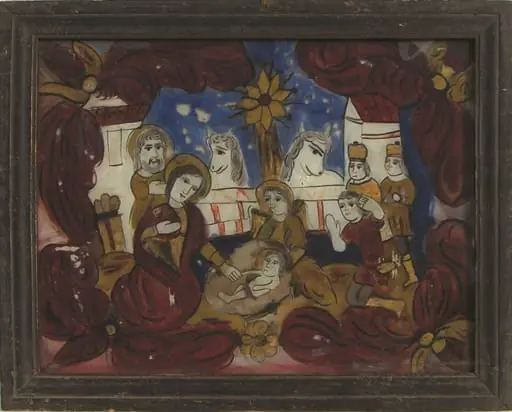
Central to the composition is the infant Jesus, held by a woman, with figures and animals arranged around them in a flattened, decorative space.
The painting 'Nașterea lui Iisus' presents the Nativity in a distinctly folkloric idiom, characterized by vivid hues and unrefined forms. Central to the composition is the infant Jesus, held by a woman, with figures and animals arranged around them in a flattened, decorative space. The palette emphasizes red, blue, and yellow, creating a luminous, almost ceremonial atmosphere that contrasts with the humble setting.
Subject & Meaning
The scene illustrates the birth of Christ, a foundational moment in Christian tradition, rendered here with communal reverence. The figures surrounding the child—likely Mary, Joseph, and attendants—observe with quiet awe, while the presence of a horse and donkey anchors the event in a rural, earthly context. The absence of grandeur emphasizes spiritual intimacy over institutional solemnity.
Technique & Style
The work employs simplified contours and flat planes of color, typical of regional folk painting traditions. Brushwork is direct, with minimal shading, and forms are outlined boldly to enhance clarity. The lack of perspective and proportional realism reflects an aesthetic prioritizing symbolic expression over naturalism, aligning with vernacular artistic practices in rural Eastern Europe.
History & Provenance
Attributed to the hand of Petru Prodan, the painting likely originated in a Moldavian or Transylvanian village studio during the late 19th or early 20th century. Such works were often commissioned for domestic or ecclesiastical use, passed down through families or donated to local churches. Its survival suggests it was valued as both devotional object and cultural artifact.
Context
This painting emerges from a tradition of religious folk art that flourished in Romanian-speaking regions under Ottoman and Habsburg influence. Artists like Prodan drew from liturgical icons but adapted them using local materials and visual languages, blending sacred narratives with everyday rural life. The result was a devotional art accessible to communities with limited access to formal religious education.
Legacy
Works such as this contributed to a broader recognition of folk art as a legitimate expression of spiritual and cultural identity. Though not widely exhibited in major institutions, they remain important in regional museums and private collections, preserving a visual language that resisted urban academic norms and sustained local religious customs into the modern era.
Artist & collection
Artist
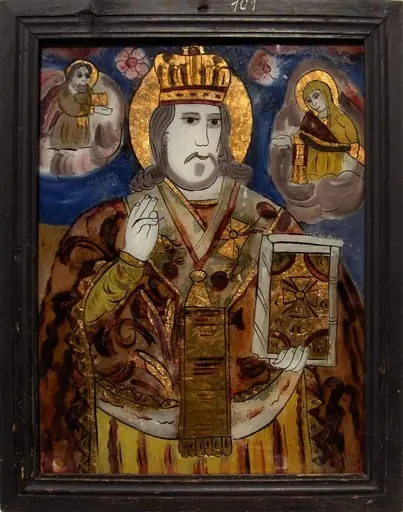
Petru Prodan painted religious scenes in the icon tradition. His works include *Sf. Nicolae* and *Prohodul lui Iisus*, showing saints and biblical figures in gold-leaf settings. The figures are stiff and frontal,…
 Nașterea lui Iisus
 Nașterea lui Iisus
 Nașterea Domnului
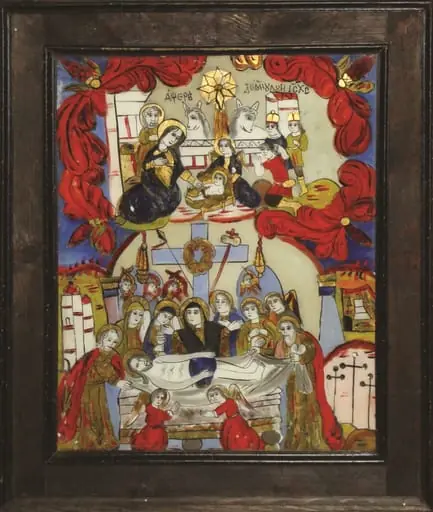 Nașterea și Prohodul lui Iisus
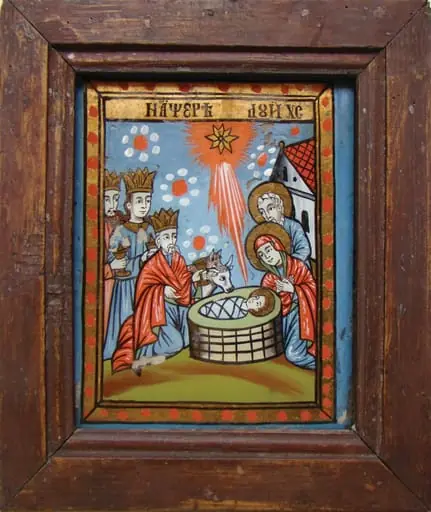 Nașterea lui Iisus
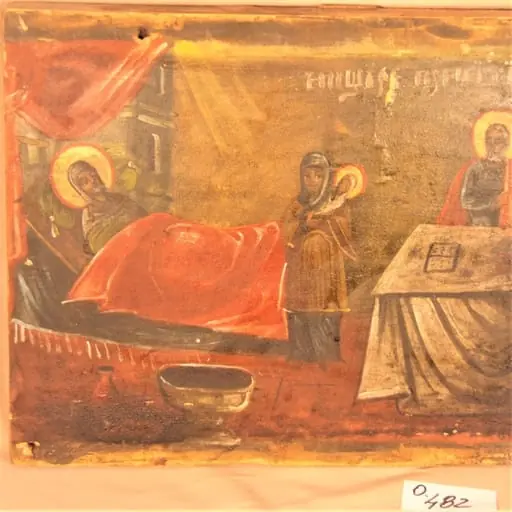 Nașterea Preacinstitei
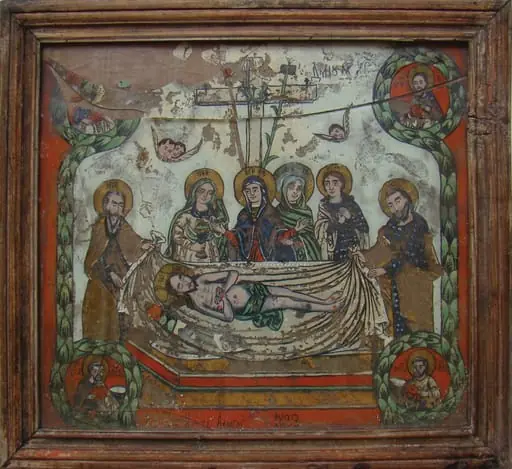 Prohodul lui Iisus
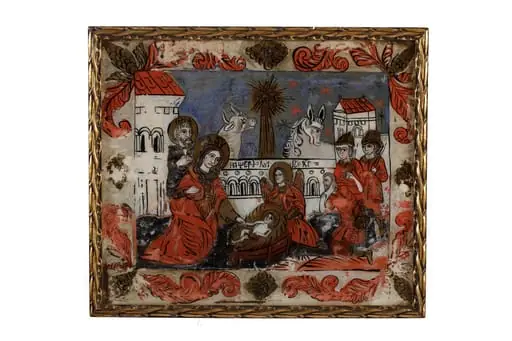 Icoană pe sticlă reprezentând scena Nașterii lui Iisus Hristos. Are ramă de lemn, aurie, sculptată. Pruncul este prezentat de un înger pe un strat auriu, care îl evidențiază. În stânga apar Iosif și Ana (?), iar în dreapta un bărbat îngenuncheat în roșu și doi soldați cu veșminte roșii și caschete aurii. Fundalul este constituit din clădiri albe, care se detașează pe cerul albastru cu stele roșii, negre și albe. Central se află steaua magilor, aurie, care luminează întreaga scenă și este încadrată de două capete de animale. Pe marginea de sus a clădirii centrale se află inscripția „Nașterea lui Iisus Hristos”. Scena întreagă este încadrată de un chenar cu frunze și flori roșii și aurii, pe fond alb-gri.