Artwork
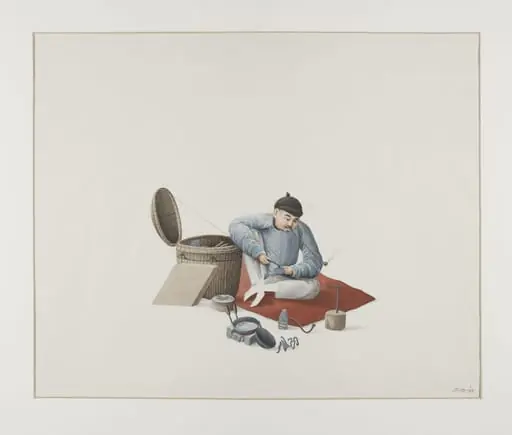
A Candle Maker
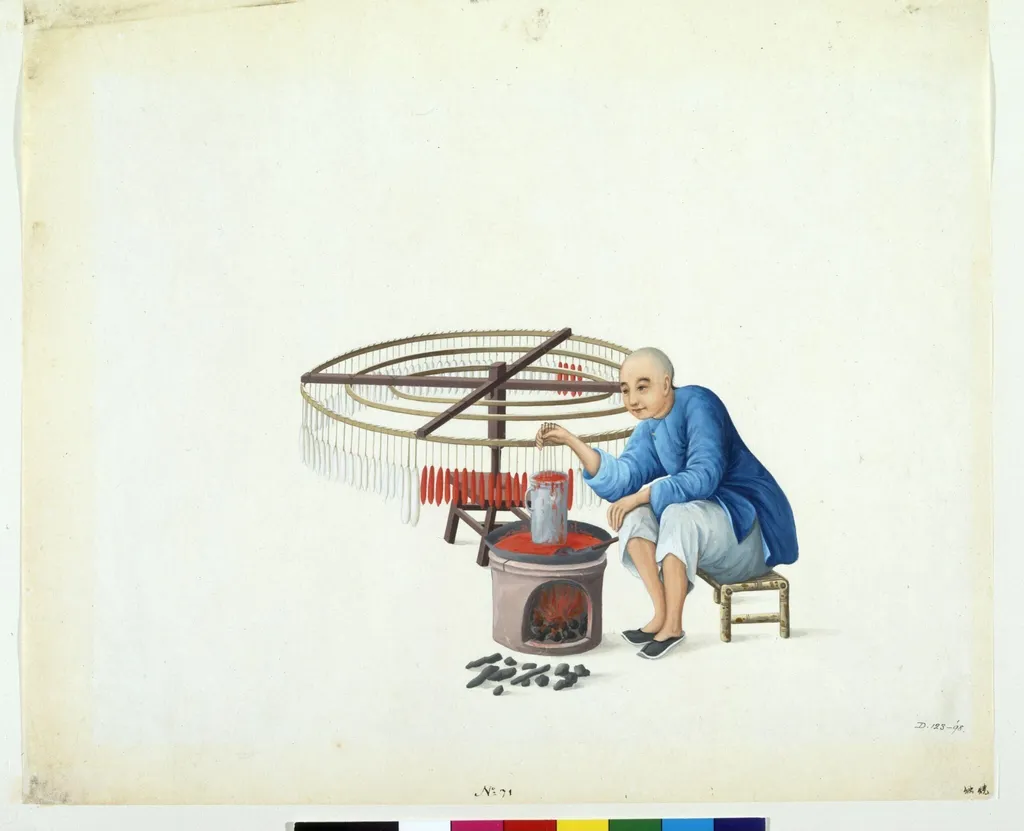
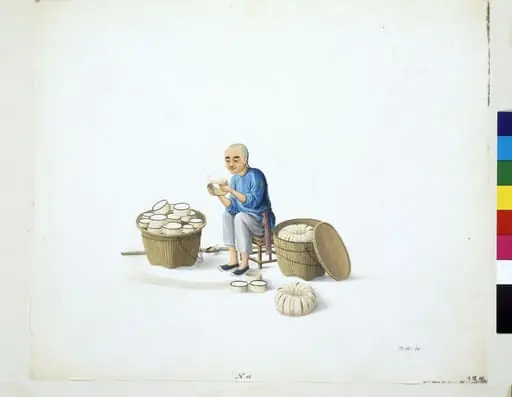
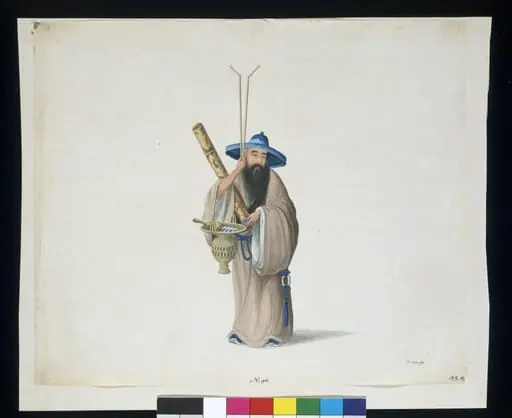
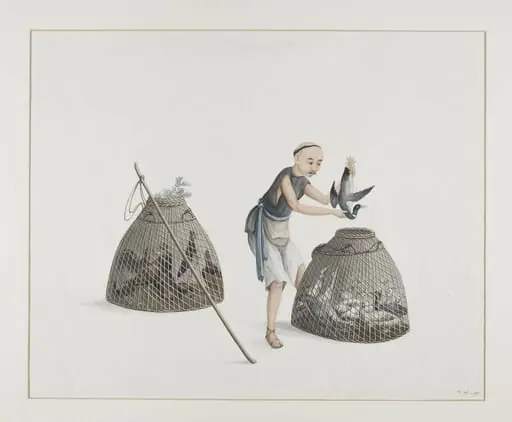
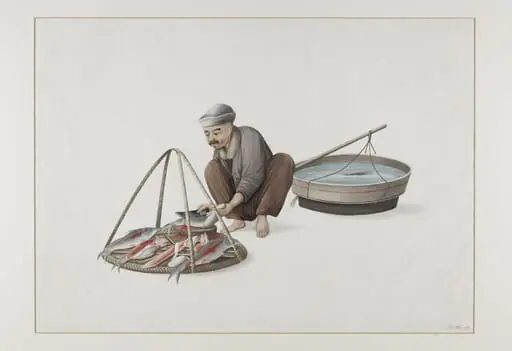
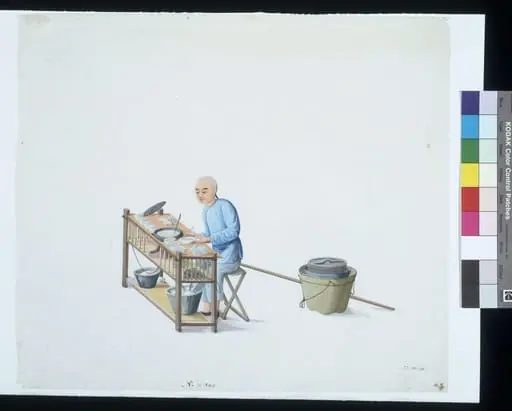
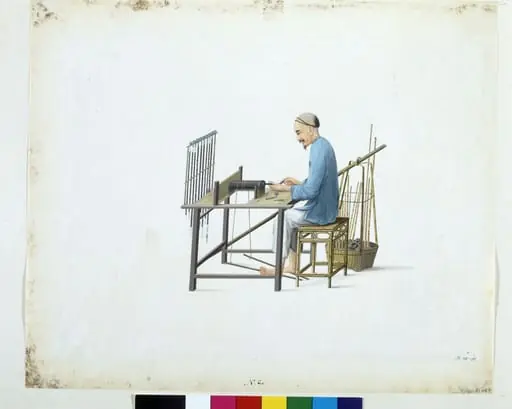
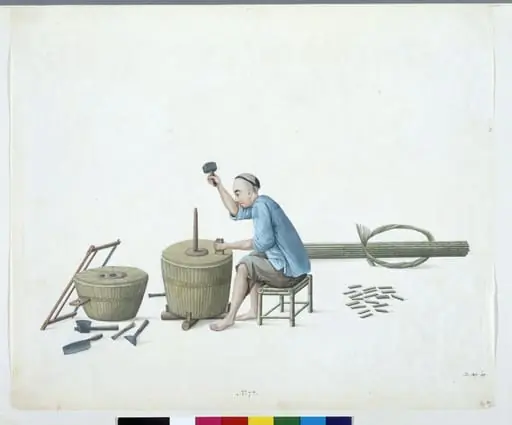
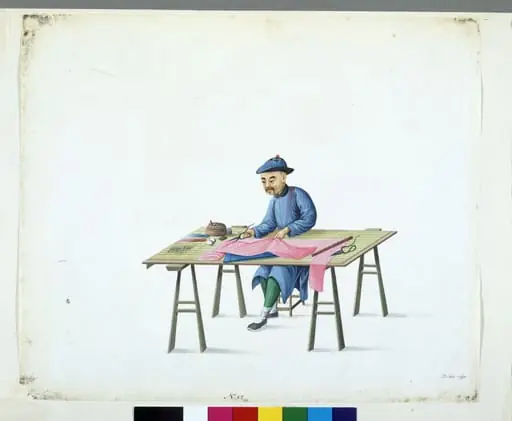
A Candle Maker is a paint painting by the Patna School of Painting artist Puqua. It dates from 1790 and is held in the collection of the Victoria and Albert Museum. Created around 1790, this painting is one of a series of one hundred works documenting occupational life in Guangzhou, then known as Canton.
About this work
Made around 1790, it’s part of 100 paintings showing trades in Canton.
This painting shows a candle maker in a small shop. Light from the candle brightens his focused face. Others in the background work but he’s the main figure.
Made around 1790, it’s part of 100 paintings showing trades in Canton. Europeans bought these to learn about Chinese life. The style softens edges, almost like blurry focus.
It’s set in Guangzhou, then called Canton. The shop looks crowded but calm. If you like this, try Puqua’s other works.
Overview
Created around 1790, this painting is one of a series of one hundred works documenting occupational life in Guangzhou, then known as Canton. Produced for European collectors, the series aimed to illustrate the daily routines of Chinese artisans. The candle maker is depicted in his workshop, surrounded by the tools and materials of his trade, offering a quiet glimpse into urban craftsmanship during the late Qing period.
Subject & Meaning
The central figure is a candle maker, illuminated by the very product he creates, emphasizing his concentration and the intimate nature of his labor. Others are present in the background, engaged in their own tasks, but the composition draws attention to the artisan’s focused demeanor. The scene reflects not spectacle but steady, repetitive work—valued by European viewers as an authentic representation of Chinese daily life.
Technique & Style
The painting employs a soft, diffused handling of form, with blurred edges and muted contrasts that suggest a gentle, almost atmospheric rendering. This approach, distinct from sharp academic realism, may reflect local artistic conventions or adaptations to European tastes. The lighting is naturalistic, with candle glow subtly modeling the maker’s face, enhancing the sense of quiet intimacy within the cramped space.
History & Provenance
The work originated in Guangzhou, a major port for foreign trade, where artists produced export paintings for Western merchants. These images were collected as ethnographic curiosities and souvenirs. Though the specific provenance of this piece is undocumented, it belongs to a well-documented genre of Cantonese export art, widely circulated in Europe during the late 18th century.
Context
In the late 1700s, European interest in Chinese culture surged through trade and travel. Canton became a hub for visual documentation of local trades, as foreign buyers sought tangible records of unfamiliar customs. These paintings functioned as both cultural intermediaries and commercial products, shaped by the demands of an overseas market while preserving local artisanal practices.
Legacy
The series of one hundred trade paintings remains a valuable historical record of Qing-era labor and urban life. Though often attributed collectively to anonymous Cantonese artists, individual works like this one contribute to broader studies of cross-cultural exchange. Their survival in museum and private collections underscores their role as early visual anthropology, capturing ordinary life with quiet precision.
Artist & collection