Artwork
An Umbrella Mender
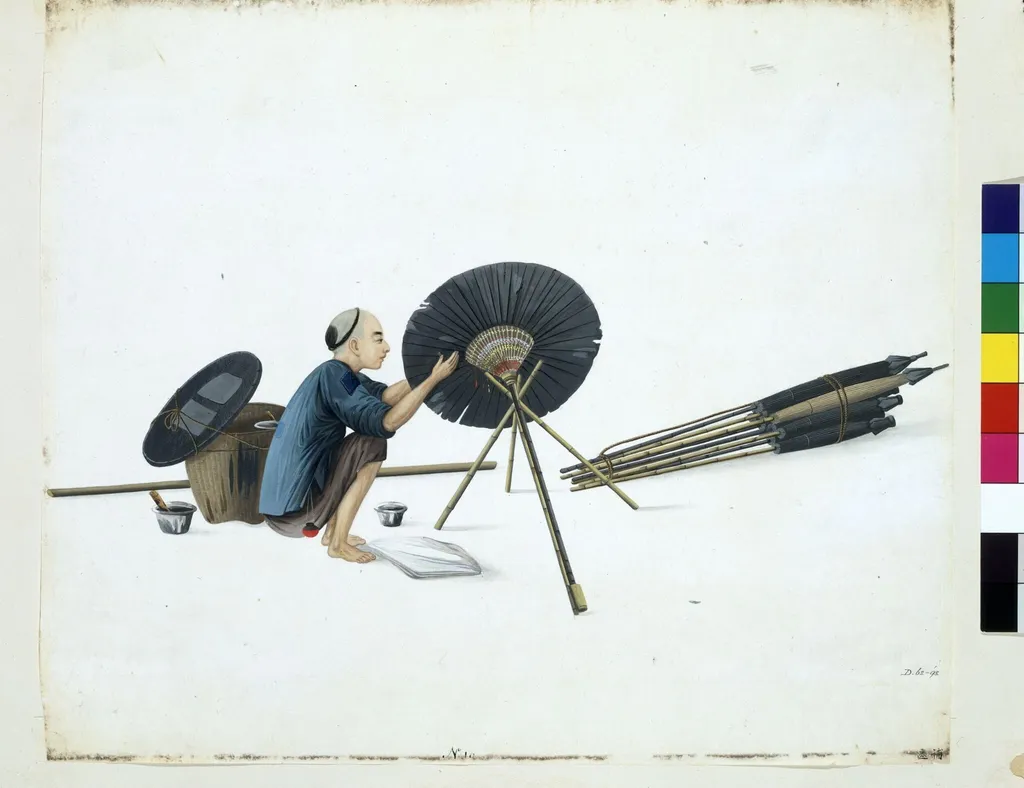
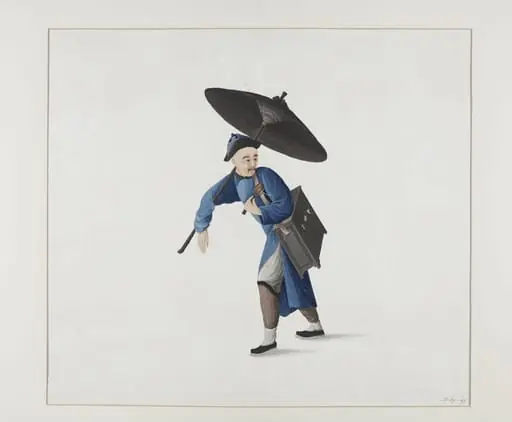
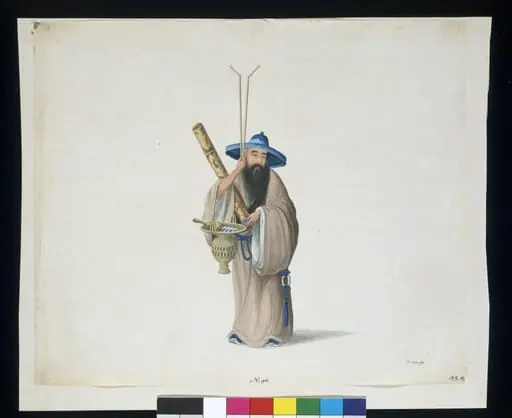
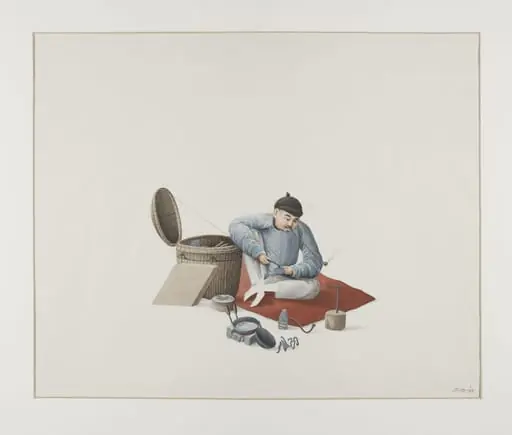
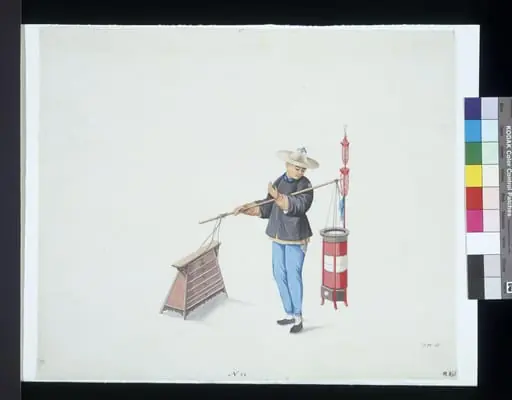
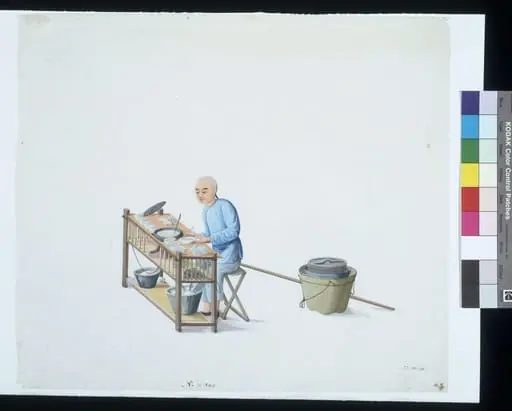
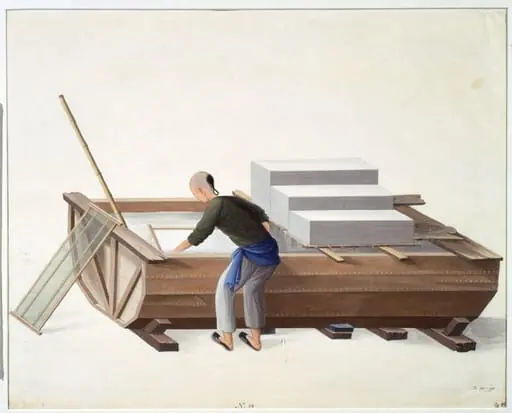
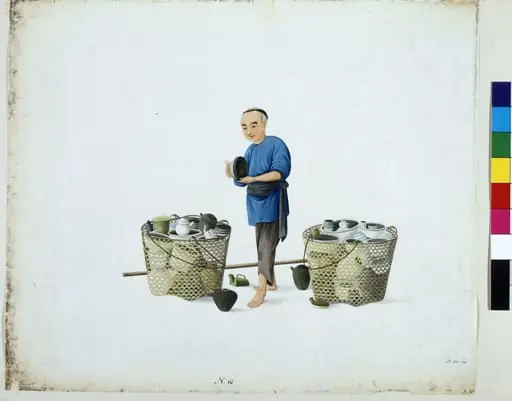
An Umbrella Mender is a paint painting by the Patna School of Painting artist Puqua. It dates from 1790 and is held in the collection of the Victoria and Albert Museum.
About this work
Overview
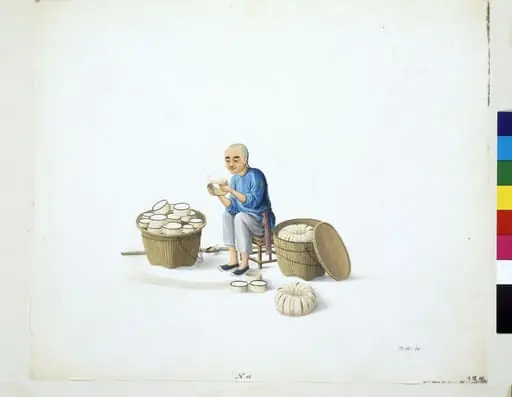
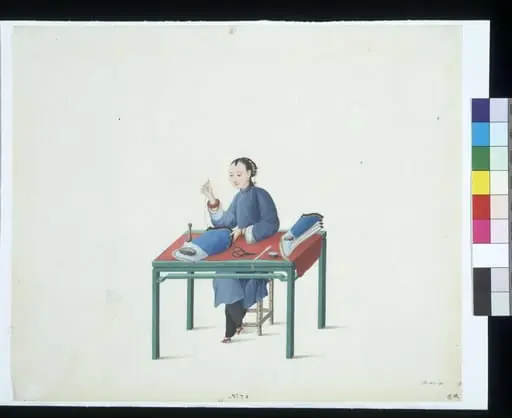
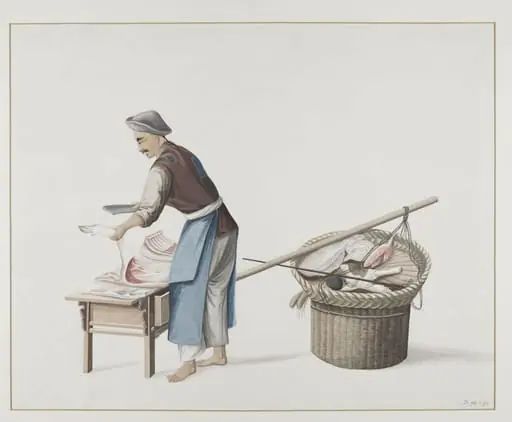
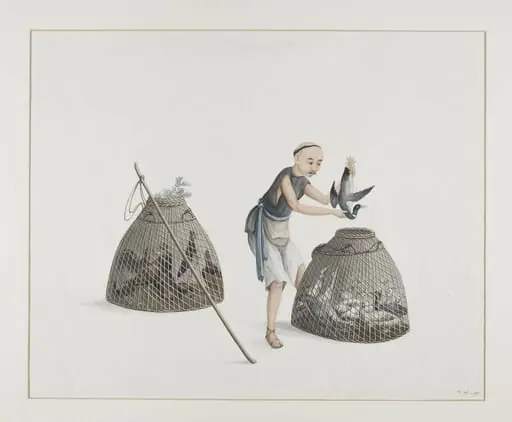
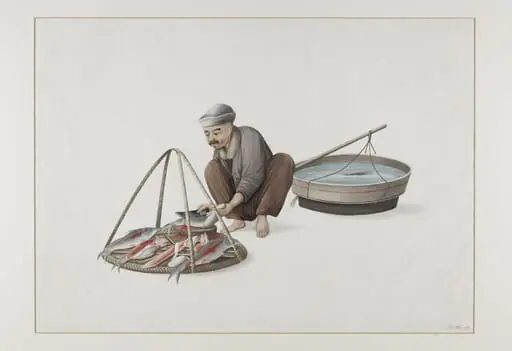
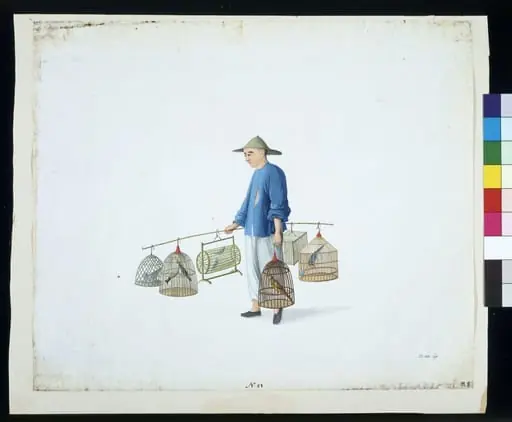
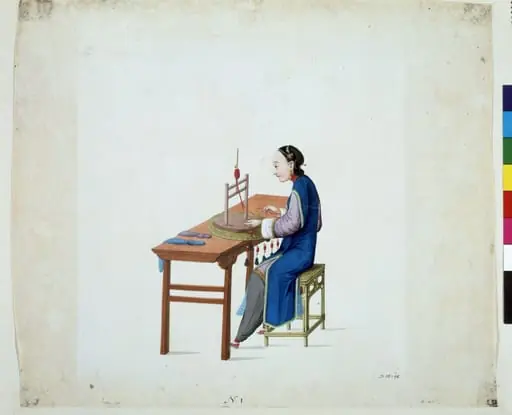
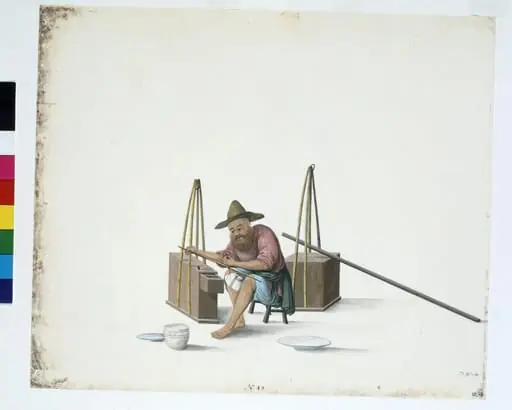
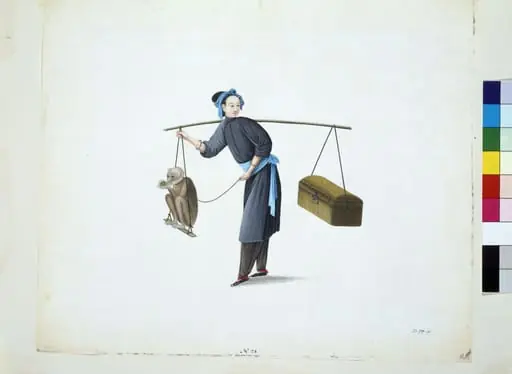
This painting is one of a hundred works created in Canton during the late 18th or early 19th century, each portraying a distinct trade or occupation.
This painting is one of a hundred works created in Canton during the late 18th or early 19th century, each portraying a distinct trade or occupation. Designed for export to European markets, the series offered viewers abroad a glimpse into the daily labor of Chinese society. The umbrella mender is rendered with careful attention to tools and attire, reflecting a broader interest in documenting artisanal life.
Subject & Meaning
The subject is a craftsman repairing an umbrella, a common yet essential trade in southern China’s humid climate. The scene emphasizes skill and diligence rather than spectacle, presenting labor as a quiet, integral part of urban life. These images were not idealized but aimed to convey authenticity, satisfying European curiosity about unfamiliar professions and social structures.
Technique & Style
Executed in watercolor on paper, the painting employs fine brushwork and muted tones to capture texture and form. Details such as the bamboo frame, fabric patches, and tools are rendered with precision, suggesting a documentary intent. The composition is straightforward, with the figure centered and the background minimal, directing focus to the act of repair and the worker’s posture.
History & Provenance
The painting likely originated in Canton’s export art workshops, where Chinese artists produced works for foreign patrons. While the specific artist is unconfirmed, the style aligns with painters like Puqua, who specialized in trade scenes. These works circulated in Europe through trading companies and private collectors, becoming part of early ethnographic collections.
Context
During the Qing dynasty, Canton was the primary port for Western trade, fostering a unique cultural exchange. Artisans adapted traditional techniques to meet foreign demand, creating visual catalogs of local life. These paintings served as both souvenirs and educational tools, shaping European perceptions of Chinese society through the lens of labor and material culture.
Legacy
The series remains a valuable record of 18th–19th century Chinese occupational life, preserved in museums and private collections. While once viewed as curiosities, they are now studied for their ethnographic detail and the agency of Chinese artists in shaping cross-cultural representation. Their influence endures in historical studies of global visual exchange.
Artist & collection