Artwork
A Cooper
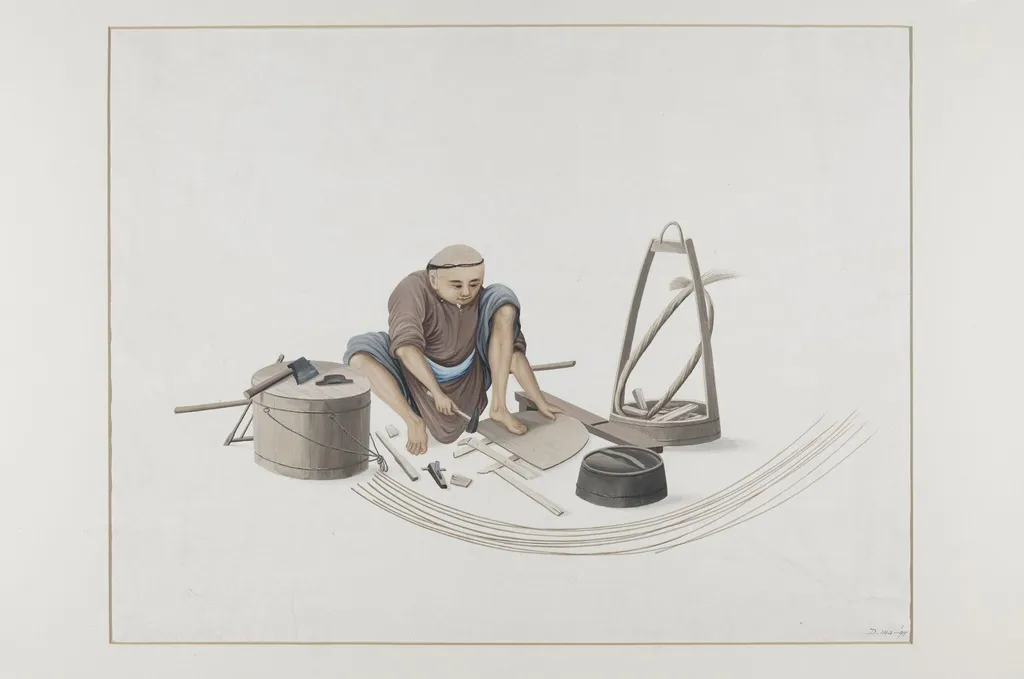
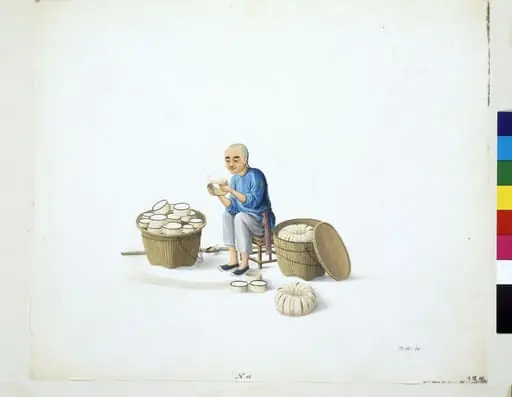
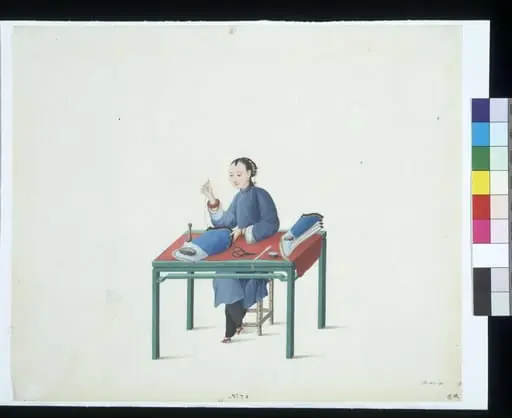
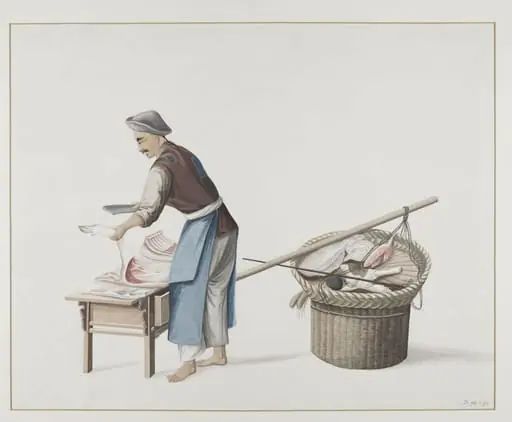
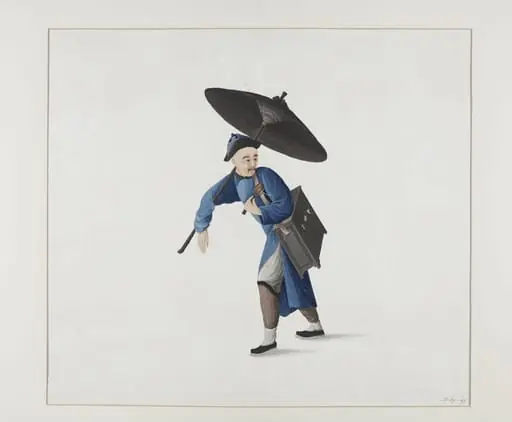
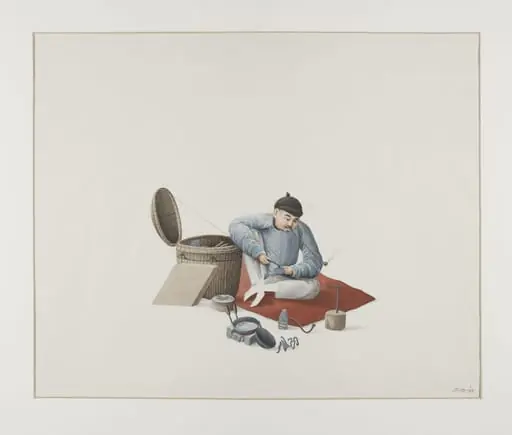
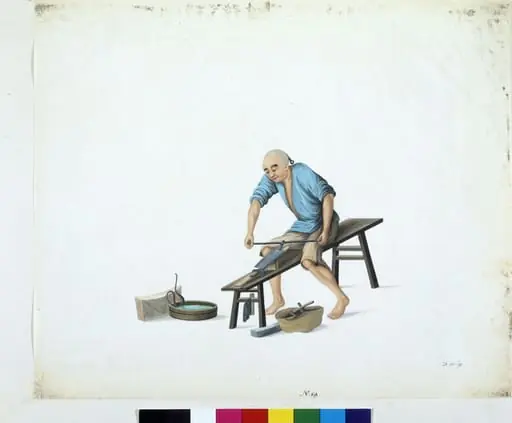
A Cooper is a paint painting by the Romanticist artist Puqua. It dates from 1790 and is held in the collection of the Victoria and Albert Museum. This watercolour, dated 1790, is one of a hundred small paintings commissioned to document trades in Canton.
About this work
Overview
The painting entered the collection in 1898 after acquisition from Parsons & Sons, with its provenance confirmed during a 2022 research initiative.
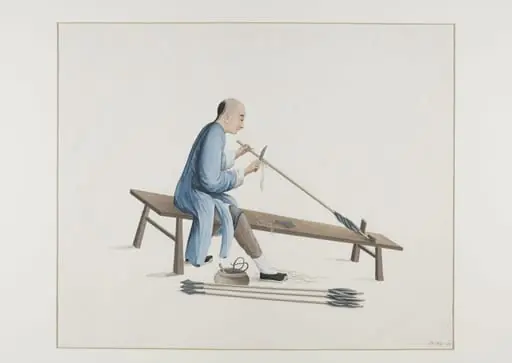
This watercolour, dated 1790, is one of a hundred small paintings commissioned to document trades in Canton. Executed by the artist Puqua, it captures a cooper at work, surrounded by tools and partially formed barrel components. The composition is restrained, emphasizing quiet labor over spectacle. The painting entered the collection in 1898 after acquisition from Parsons & Sons, with its provenance confirmed during a 2022 research initiative.
Subject & Meaning
The painting portrays a cooper, a skilled artisan who constructs wooden barrels, engaged in the meticulous task of shaping staves and hoops. The focused posture and arranged tools suggest a ritualized, disciplined craft. The presence of a half-finished hoop and a black pot implies a functional workspace, grounding the scene in daily reality. The image honors the precision of manual labor without idealization, reflecting a broader interest in occupational documentation.
Technique & Style
Rendered in transparent watercolour, the work employs fine brushwork to define textures—wood grain, leather straps, and the matte surface of clay pottery. Lines are controlled, with minimal shading, creating clarity over depth. The composition is tightly framed, directing attention to the cooper’s hands and tools. The absence of background detail isolates the figure, enhancing the sense of concentrated activity and artisanal focus.
History & Provenance
The painting was acquired by the museum in 1898 from Parsons & Sons, a known dealer of Chinese export art. Its inclusion in the Asia Department registers was verified during a 2022 provenance review, confirming its early entry into the collection. As part of a larger series commissioned for Western audiences, the work reflects 18th-century commercial demand for visual records of Chinese trades, though its original purpose remains undocumented.
Context
This painting belongs to a set of one hundred works produced in Canton for export, likely intended as ethnographic curiosities for European collectors. Such series emerged during the late Qing dynasty, when foreign trade expanded and visual documentation of local crafts became commercially viable. Puqua’s contribution stands out for its attention to detail and quiet realism, distinguishing it from more stylized contemporaries.
Legacy
Puqua’s series remains a valuable record of pre-industrial craftsmanship in southern China. While the artist’s broader oeuvre is not extensively studied, this painting exemplifies a genre that bridged cultural exchange and documentary observation. Its preservation offers insight into the material culture of 18th-century artisans, contributing to ongoing scholarship on Chinese export art and the visual representation of labor.
Artist & collection