Artwork
A Carpenter
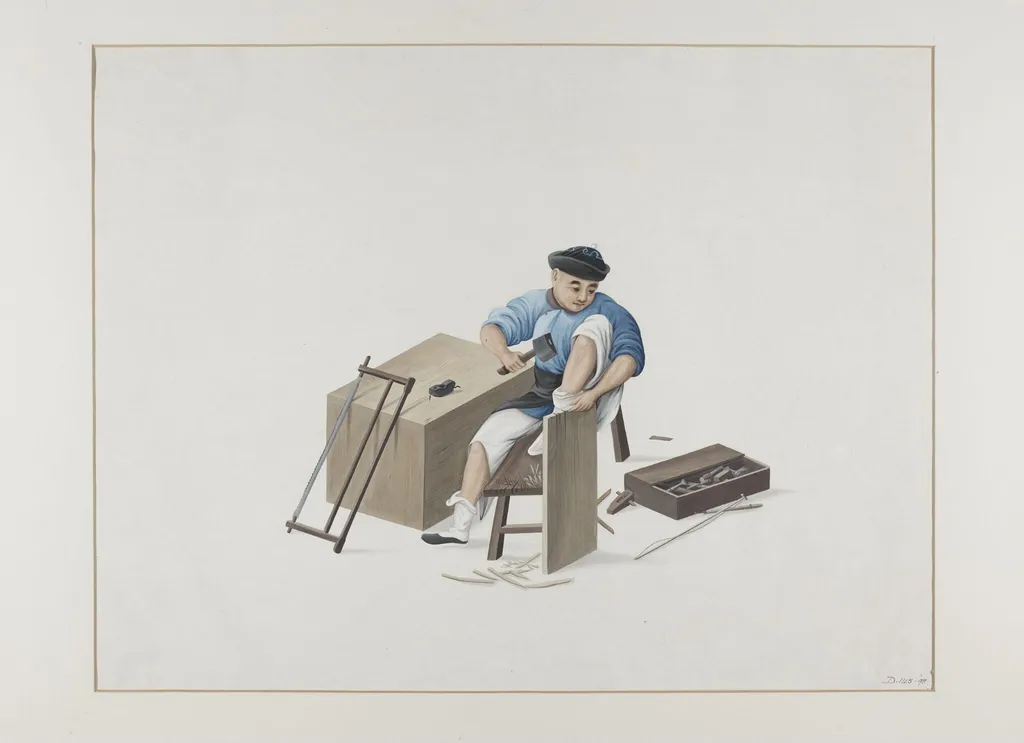
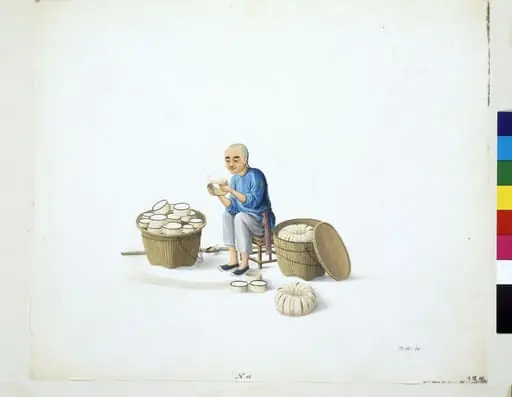
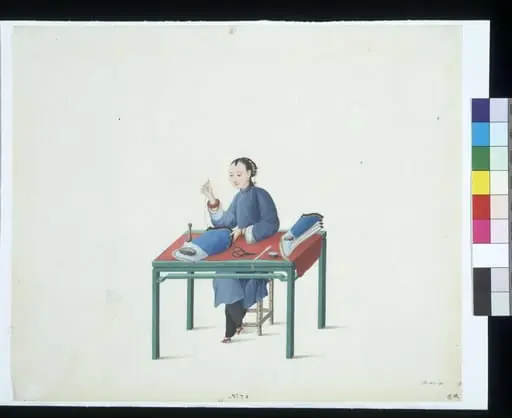
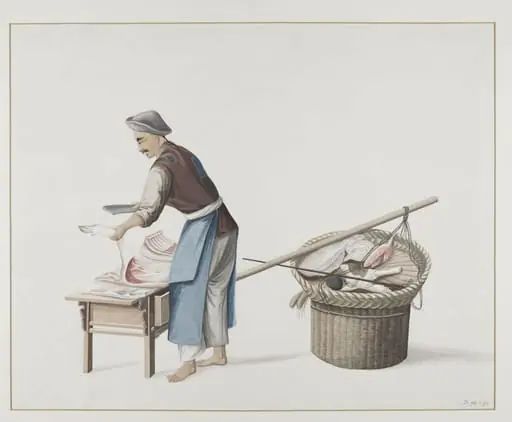
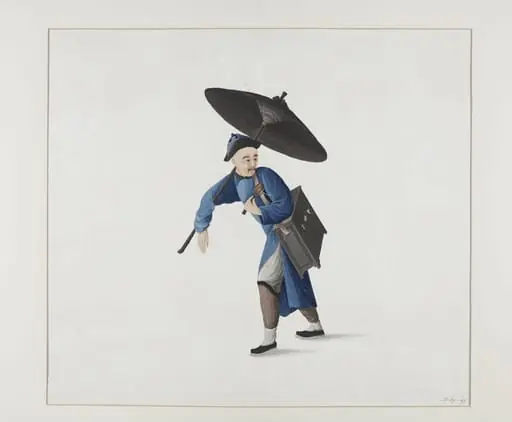
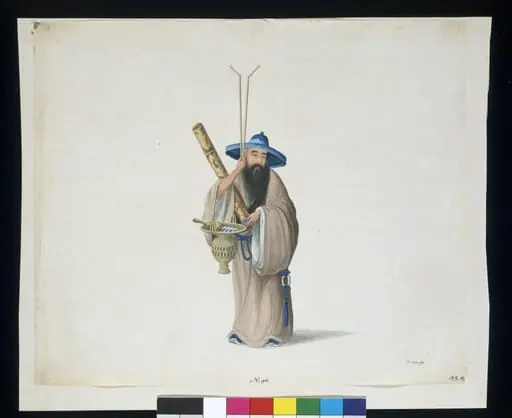
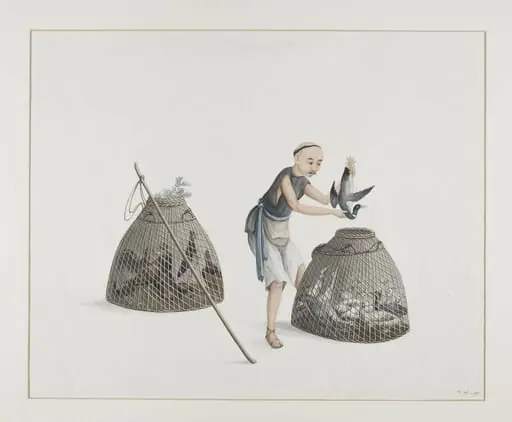
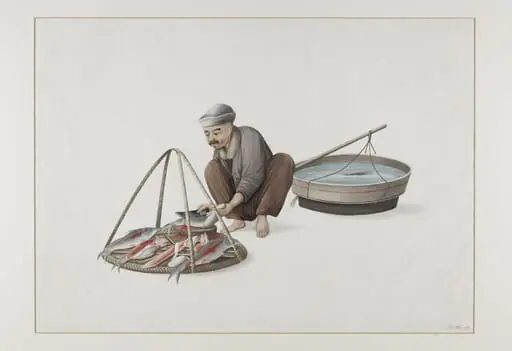
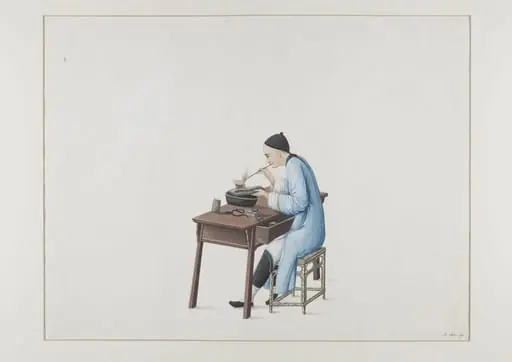
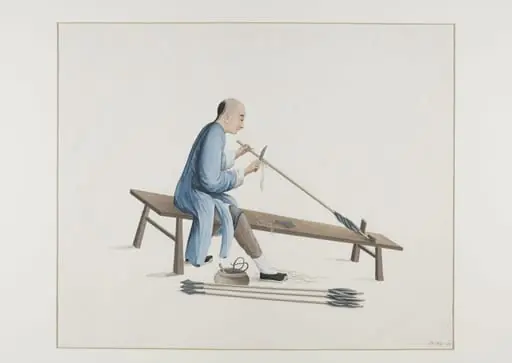
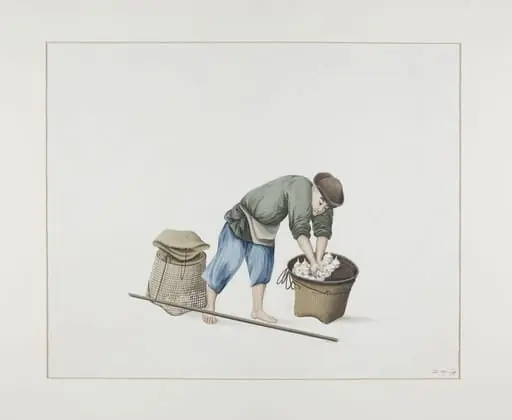
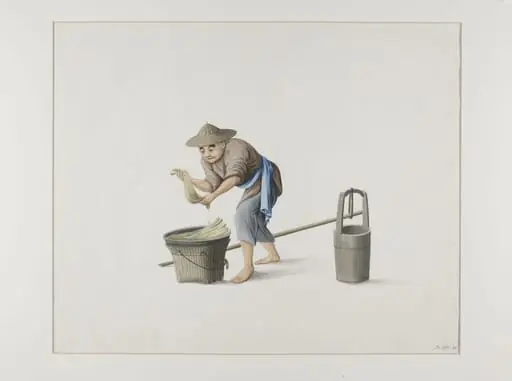
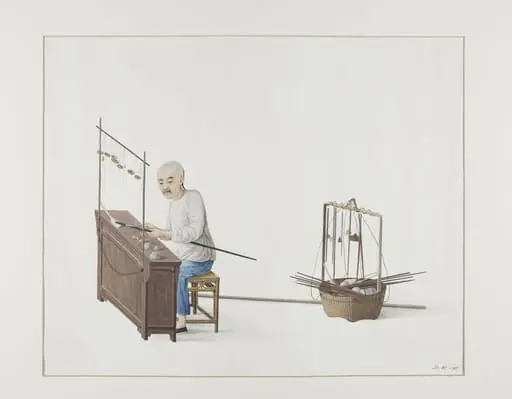
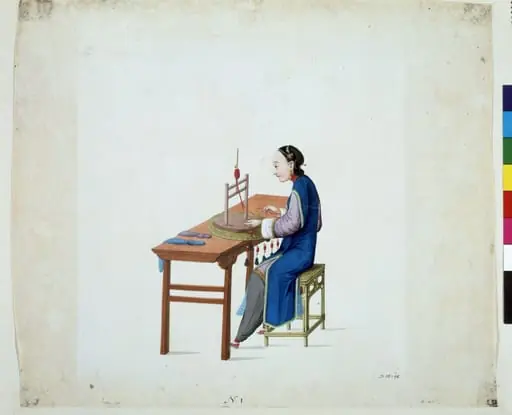
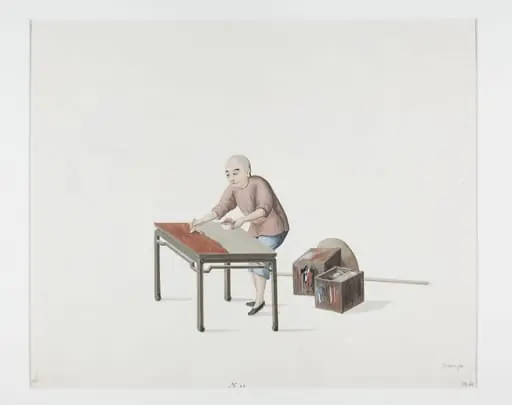
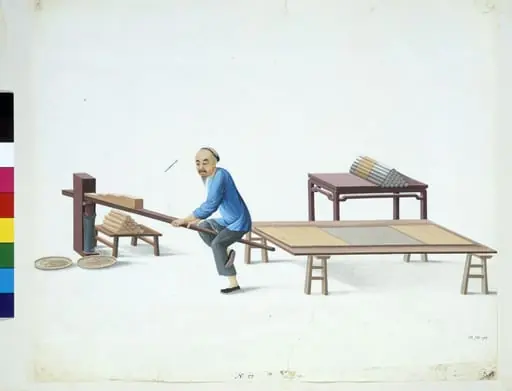
A Carpenter is a paint painting by the Patna School of Painting artist Puqua. It dates from 1790 and is held in the collection of the Victoria and Albert Museum. This watercolour painting, dated 1790, is one of a hundred works documenting trades in Canton during the late Qing period.
About this work
Overview
Its modest scale and medium reflect its function as part of a commercial series intended for foreign collectors interested in Chinese artisan life.
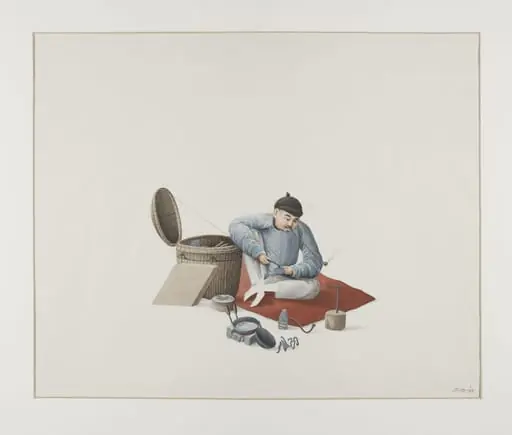
This watercolour painting, dated 1790, is one of a hundred works documenting trades in Canton during the late Qing period. Created by the artist Puqua, it portrays a carpenter at work, capturing a moment of quiet concentration. The piece entered the collection in 1898 after being acquired from Parsons & Sons. Its modest scale and medium reflect its function as part of a commercial series intended for foreign collectors interested in Chinese artisan life.
Subject & Meaning
The subject is a carpenter, shown in mid-task, planing a wooden surface with focused attention. His attire—a simple blue shirt and cap—suggests working-class status, while the scattered tools imply a functional, unidealized workspace. The scene avoids narrative drama, instead emphasizing dignity in labor. The composition invites contemplation of skill and routine, presenting craftsmanship as a quiet, essential part of daily life in 18th-century southern China.
Technique & Style
Puqua employed transparent watercolour with restrained brushwork, using clean lines and flat planes to define form. Strong directional light highlights the carpenter’s face and forearms, accentuating the texture of wood grain and the sheen of sweat. The background remains unmodeled and luminous, directing focus to the figure and his tools. The simplicity of shapes and absence of detail create a sense of stillness, aligning with observational traditions in Chinese export art.
History & Provenance
The painting was produced as part of a commercial series commissioned for export to European markets. It passed through the hands of Parsons & Sons, a British trading firm active in Canton, before being acquired by the museum in 1898. Its survival as a single piece from a larger set suggests it was valued for its visual clarity and ethnographic detail, though little is known about its specific journey prior to institutional acquisition.
Context
In late 18th-century Canton, foreign demand for depictions of Chinese trades grew alongside expanding trade networks. Artists like Puqua produced series documenting occupations—from tea packers to tailors—to satisfy curiosity in Europe and America. These works blended documentary intent with aesthetic appeal, offering glimpses into local life while conforming to Western expectations of exoticism and order.
Legacy
This painting contributes to a broader visual archive of Chinese artisanal life from the Qing period. Though once viewed primarily as ethnographic curiosities, such works are now recognized for their subtle rendering of labor and material culture. Its preservation allows ongoing study of how Chinese artists represented their own society to foreign audiences, offering insight into cross-cultural perception and artistic adaptation.
Artist & collection