Artwork
A Tobacco Cutter
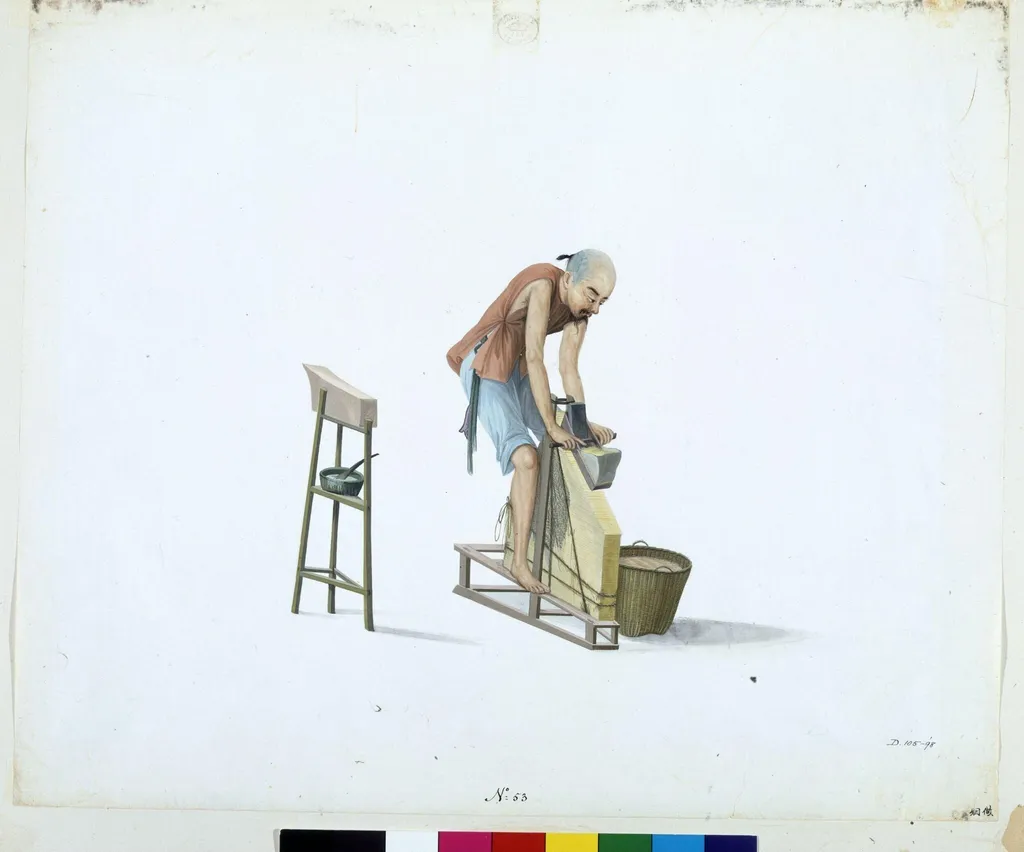
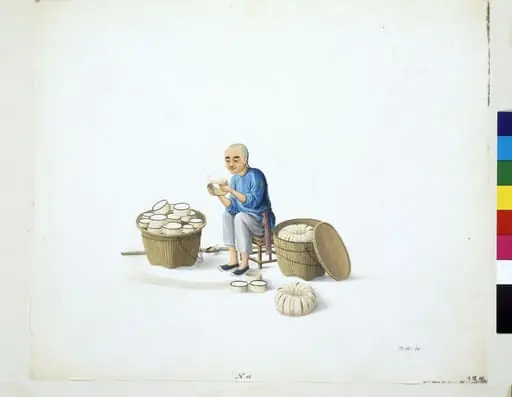
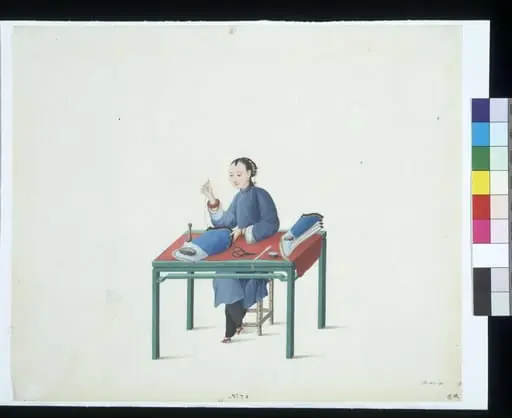
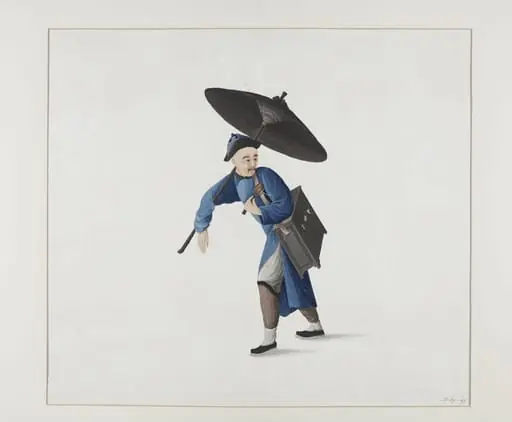
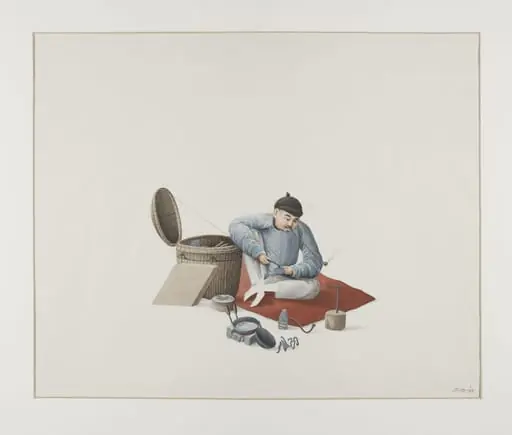
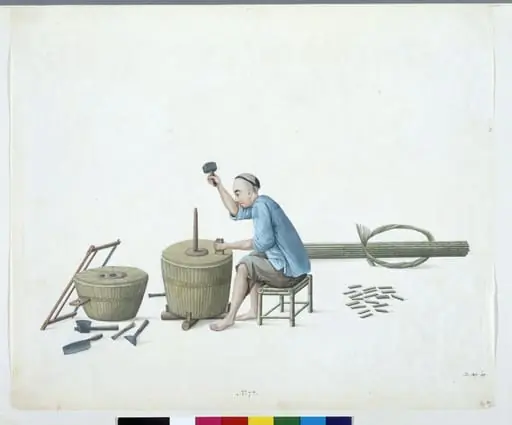
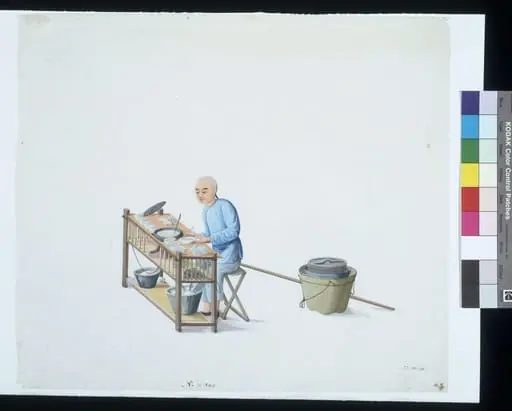
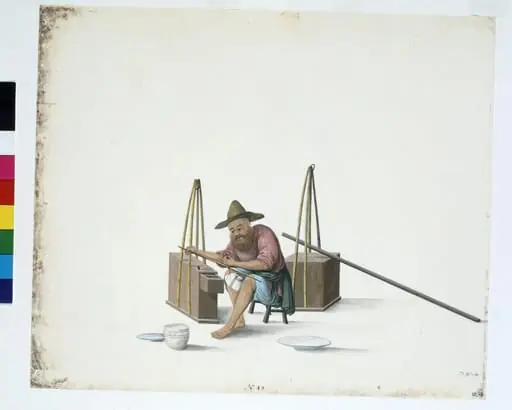
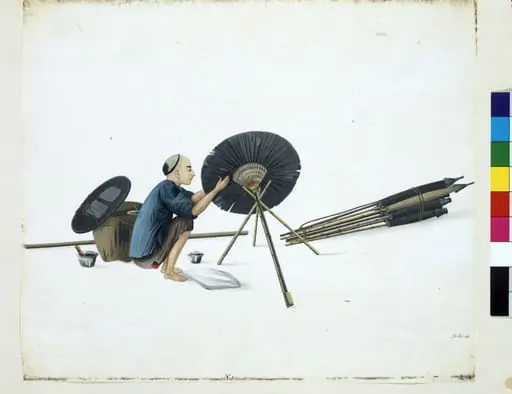
A Tobacco Cutter is a paint painting by the Patna School of Painting artist Puqua. It dates from 1790 and is held in the collection of the Victoria and Albert Museum. Created in Canton around 1790, this small painting is one of a series of one hundred images that document various Chinese occupations.
About this work
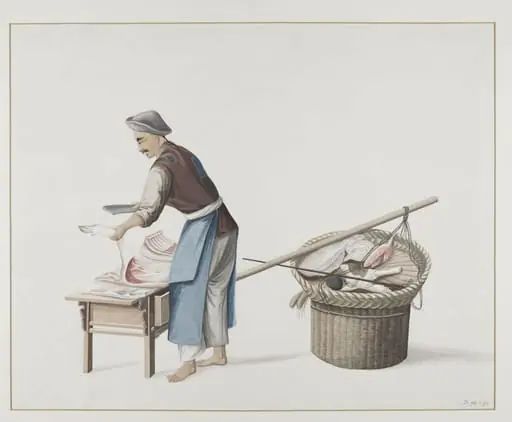
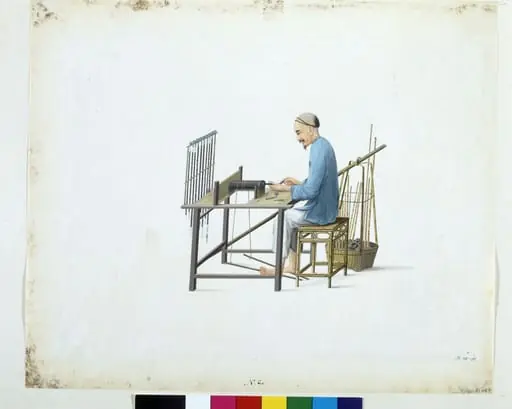
This painting shows a man cutting tobacco leaves into thin strips with a knife.
This painting shows a man cutting tobacco leaves into thin strips with a knife. He sits at a simple table, dressed in loose robes. Light falls on his hands, leaving the background plain.
It comes from a set of 100 images made in Canton around 1790. Europeans bought these to learn about daily life in China. The artist paid close attention to tools and fabric textures.
You can see it in person at the Victoria and Albert Museum.
Overview
Created in Canton around 1790, this small painting is one of a series of one hundred images that document various Chinese occupations. It depicts a lone figure engaged in the preparation of tobacco, a trade that had become common in the city during the late eighteenth century.
Subject & Meaning
The central figure sits at a modest table, dressed in loose‑cut robes, and uses a knife to slice tobacco leaves into fine strips. The work offers a straightforward visual record of a quotidian task, reflecting the practical aspects of daily life rather than any symbolic narrative.
Technique & Style
Executed in a clear, linear style, the artist renders the textures of fabric and metal tools with careful attention. Light falls on the man’s hands, emphasizing the manual precision of the cutting process, while the background remains plain, directing focus to the activity itself.
History & Provenance
The series was produced for a European market eager for visual information about Chinese society. After circulating among collectors, the painting entered the collection of the Victoria and Albert Museum, where it is currently on display.
Context
By the 1790s, tobacco had been introduced to China and was increasingly cultivated and processed in coastal ports such as Canton. This image captures that economic shift, illustrating how a foreign commodity became integrated into local labor practices.
Artist & collection