Artwork
Meadow of the Sweet Waters of Asia, Constantinople
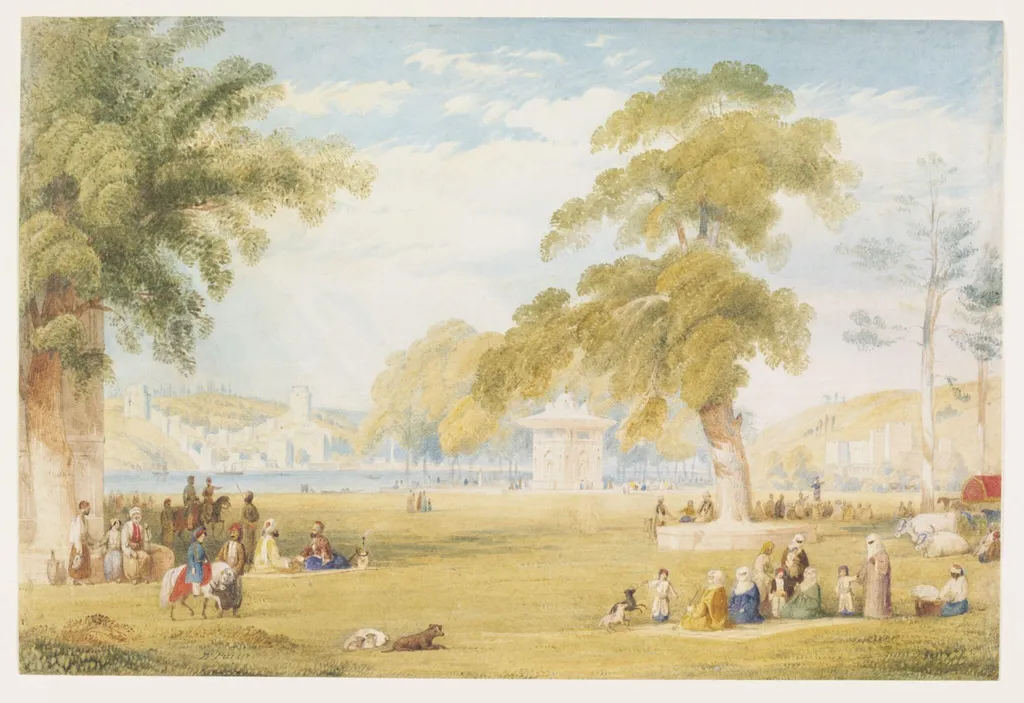
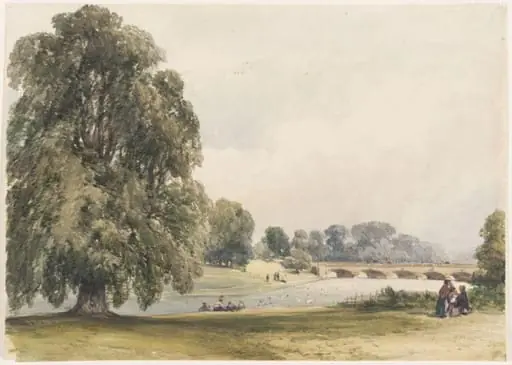
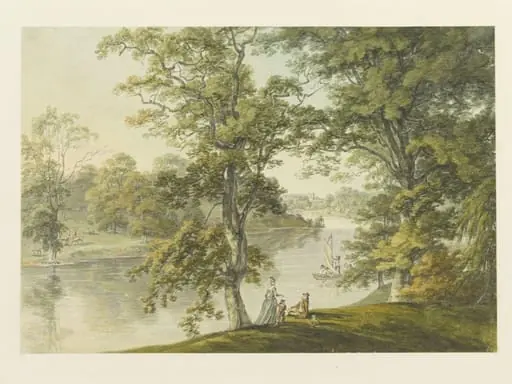
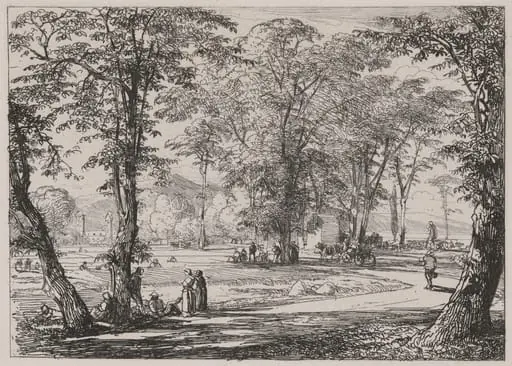
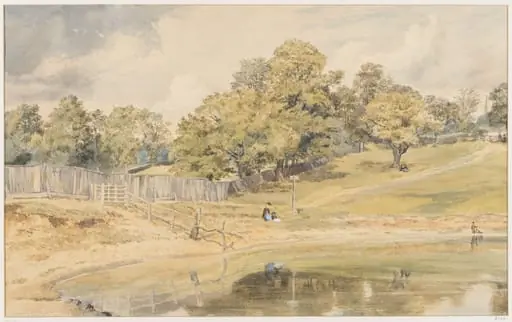
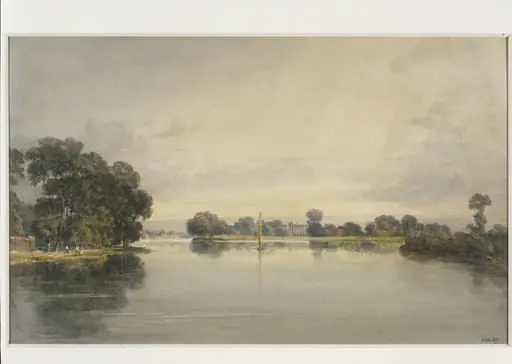
Meadow of the Sweet Waters of Asia, Constantinople is a watercolor work on paper by the Romanticist artist William Purser. It dates from 1825 and is held in the collection of the Victoria and Albert Museum. This watercolour depicts a tranquil riverside meadow near the Bosphorus, known in Ottoman times as the Sweet Waters of Asia.
About this work
Overview
This watercolour depicts a tranquil riverside meadow near the Bosphorus, known in Ottoman times as the Sweet Waters of Asia.
This watercolour depicts a tranquil riverside meadow near the Bosphorus, known in Ottoman times as the Sweet Waters of Asia. The site, where the Göksu and Küçüksu streams met the sea, was a favored retreat for both Ottoman and European elites. Purser captured the scene with delicate brushwork, emphasizing the interplay of natural landscape and human leisure, framed by the distant silhouette of Anadolu Hisarı.
Subject & Meaning
The painting portrays a leisurely afternoon in a secluded coastal meadow, where families arrived in ornate ox-drawn carriages and men rode horses, seeking respite from urban life. The presence of Mihrisah Sultan’s small baroque fountain introduces a note of imperial patronage, subtly anchoring the pastoral scene in the cultural memory of Ottoman aristocracy. The image reflects a moment of cross-cultural relaxation, where European visitors and local elites shared a common space of repose.
Technique & Style
Executed in watercolour, the work employs light washes and precise linear detail to convey atmosphere and texture. Purser’s handling of foliage, water, and architecture suggests a keen eye for topographical accuracy, while the soft tonal transitions evoke the hazy quality of afternoon light. The composition balances natural elements with structured man-made features, creating a harmonious, almost staged tranquility.
History & Provenance
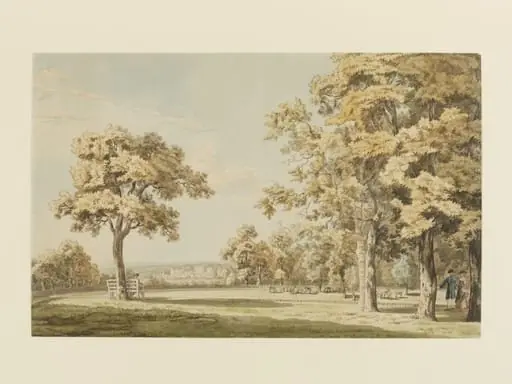
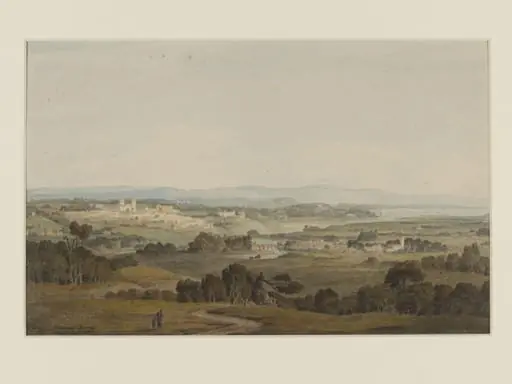
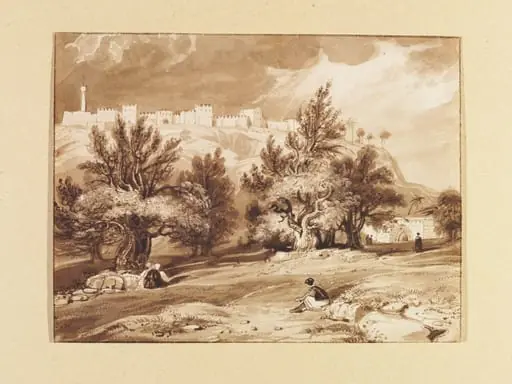
This piece is one of four similar watercolours by Purser depicting views around Constantinople, now held in the Searight Collection. The artist likely traveled to the region during the 1820s or 1830s, though no records survive detailing his purpose or patronage. The works were probably made for private collectors interested in the exoticism of Ottoman landscapes, rather than as official commissions.
Context
During the early 19th century, the Sweet Waters of Asia were a well-documented escape for Constantinople’s upper classes, both Muslim and foreign. The area’s reputation as a place of gentle recreation attracted European travelers and artists, who recorded its scenery as a romantic contrast to the city’s density. The fountain, though modest, symbolized the Ottoman elite’s engagement with European aesthetic traditions.
Legacy
Purser’s watercolours contribute to a broader visual record of Ottoman Istanbul as seen through foreign eyes during a period of increasing Western interest in the region. While not widely exhibited, these works remain valuable for their unembellished documentation of a specific social landscape, offering insight into the quiet coexistence of cultures at the margins of imperial power.
Own this work as a print
Artist & collection

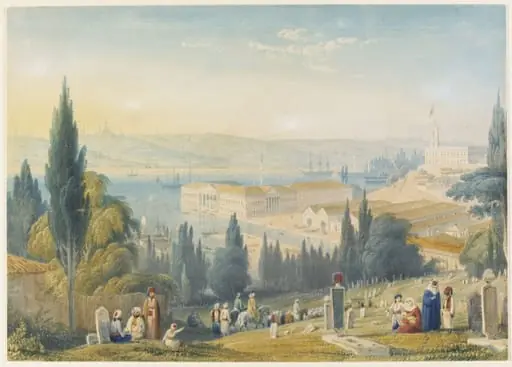 A view of the new Turkish Naval Buildings and Dockyards on the Golden Horn: Constantinople in the background
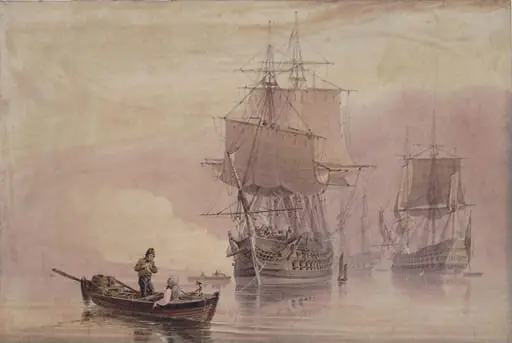 The Morning Gun
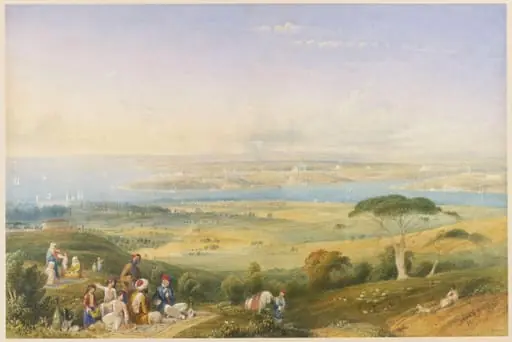 Turks picnicing in fields outside Scutari with a view of Constantinople in the distance
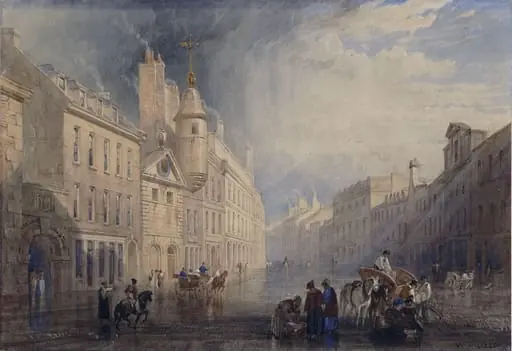 Broad Street, Aberdeen
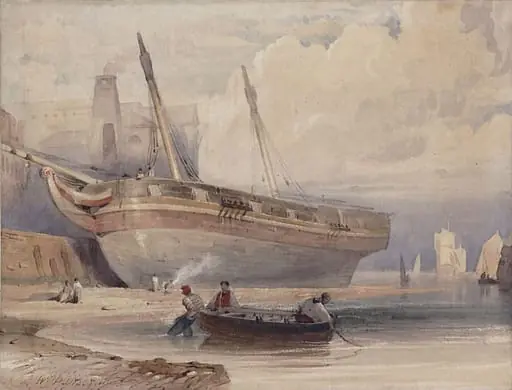 A Vessel Careened by a Wharf
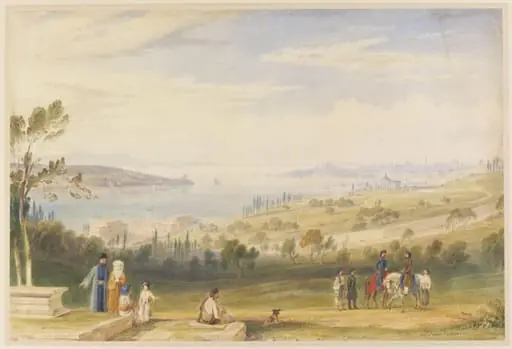 View of the Bosphorus from above Dolmabahçe, looking towards the Sea of Marmara