Artwork
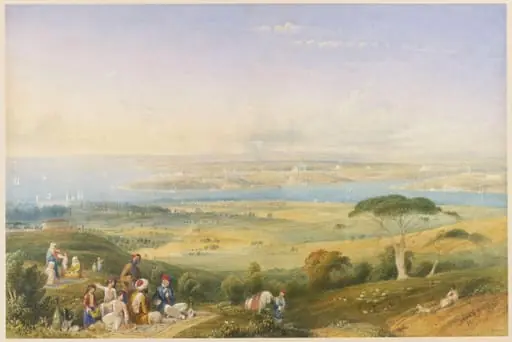
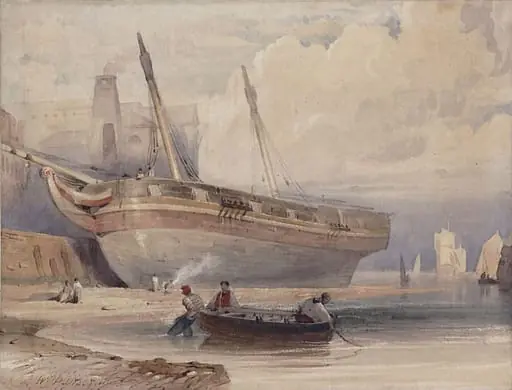
A view of the new Turkish Naval Buildings and Dockyards on the Golden Horn: Constantinople in the background
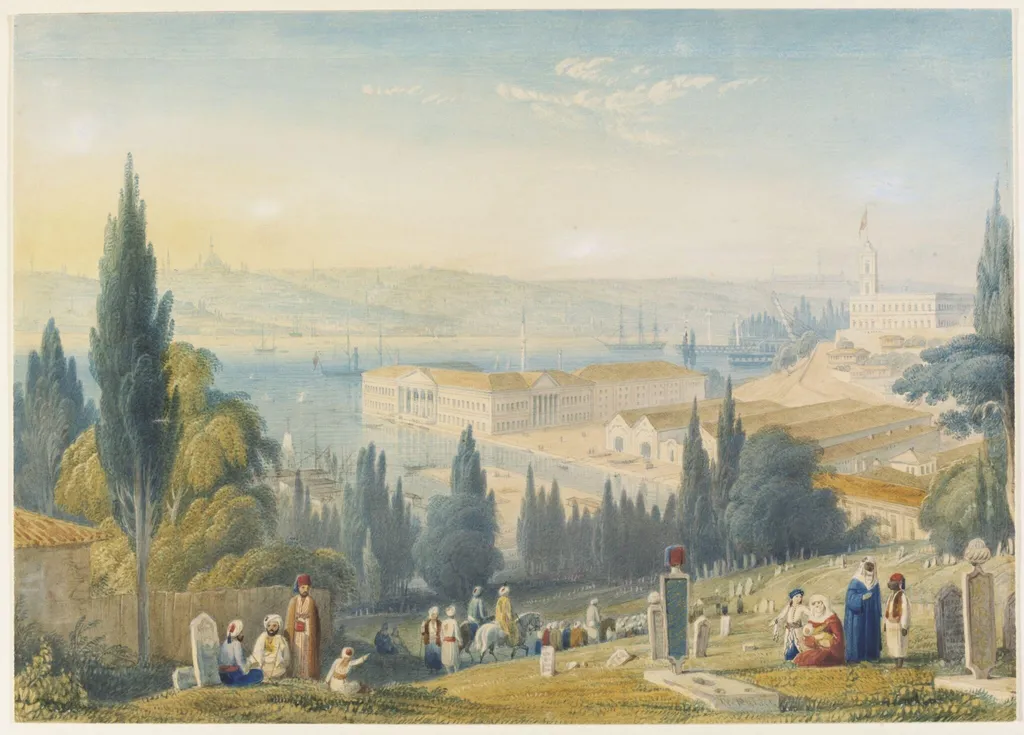
A view of the new Turkish Naval Buildings and Dockyards on the Golden Horn: Constantinople in the background is a watercolor work on paper by the British Romanticist artist William Purser. It dates from 1825 and is held in the collection of the Victoria and Albert Museum.
About this work
Overview
The composition balances human stillness with industrial activity, rendered in delicate washes that soften the transition between land, sea, and sky.
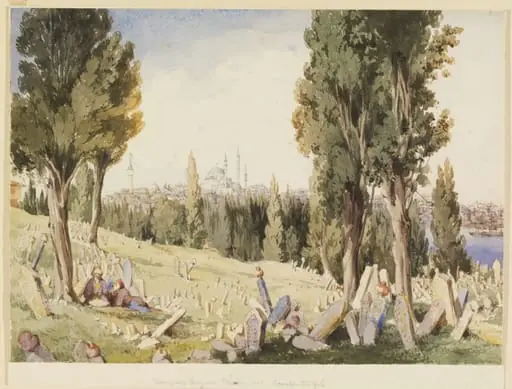
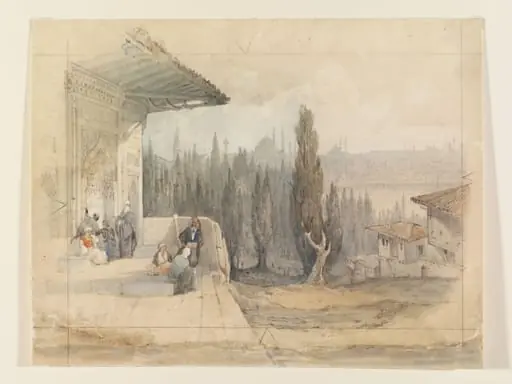
Painted in 1825 by William Purser, this watercolour captures the newly constructed Ottoman naval facilities along the Golden Horn. The scene extends from a quiet cemetery in the foreground to the distant skyline of Constantinople, where domes and minarets rise above the water. The composition balances human stillness with industrial activity, rendered in delicate washes that soften the transition between land, sea, and sky.
Subject & Meaning
The foreground cemetery, shaded by tall cypress trees and dotted with figures in traditional dress, suggests contemplation and mortality. Behind it, the naval complex—active with cranes and docks—signals Ottoman modernization. The juxtaposition implies a quiet tension between tradition and progress, with the city’s silhouette anchoring the scene in a place of enduring cultural weight.
Technique & Style
Purser employed transparent watercolour washes to create atmospheric depth, layering pale tones to suggest haze over the hills and water. Fine linework defines architectural details and figures, while the muted palette—soft blues, greys, and earth tones—enhances the quiet, reflective mood. The technique reflects British watercolour traditions adapted to Ottoman subjects.
History & Provenance
The work was once part of the Old Hall Gallery collection in Rye, England, likely acquired during the early 19th-century British interest in Ottoman affairs. It was sold at Sotheby’s in January 1963, marking a transition from private British collections to broader institutional or private ownership, though its current location is not documented here.
Context
In the 1820s, the Ottoman Empire was modernizing its military, including naval infrastructure along the Golden Horn. European artists, particularly British travelers, documented these changes as part of a growing fascination with the East. Purser’s view aligns with this trend, offering a neutral, observational record rather than a romanticized exoticism.
Legacy
Purser’s watercolour remains a modest but valuable record of early 19th-century Istanbul’s transformation. It contributes to a visual archive of Ottoman reform efforts, capturing not only architecture but also the daily rhythms of life along its shores. Its quiet tone distinguishes it from more dramatic Orientalist works of the period.
Artist & collection

![Constantinople from Pera, looking across the Golden Horn to Seraglio Point, by Michel-François Préaulx [Préaux]](https://artifactworldgallery.com/img/michel-francois-preaulx-preaux--constantinople-from-pera-looking-across-the-golden-horn-to-s--cb81cecd6955bf28-w320.webp)