Artwork
Turks picnicing in fields outside Scutari with a view of Constantinople in the distance
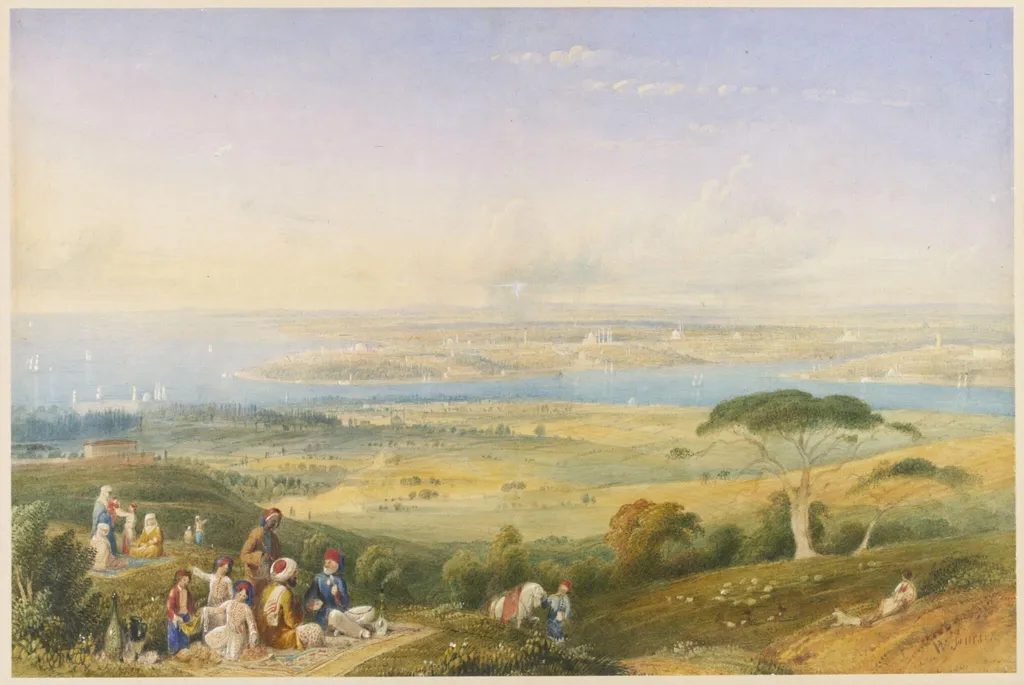
Turks picnicing in fields outside Scutari with a view of Constantinople in the distance is a watercolor work on paper by the Romanticist artist William Purser. It dates from 1825 and is held in the collection of the Victoria and Albert Museum.
About this work
Overview
A watercolour by William Purser captures a quiet scene of Ottoman individuals relaxing on the hills beyond Scutari, with Constantinople visible on the horizon.
A watercolour by William Purser captures a quiet scene of Ottoman individuals relaxing on the hills beyond Scutari, with Constantinople visible on the horizon. Executed in delicate washes, the work reflects 19th-century European interest in Ottoman daily life. The painting’s soft focus and muted palette convey a sense of distance and tranquility, characteristic of travel sketches made during the period.
Subject & Meaning
The figures, dressed in loose garments and head coverings, are engaged in leisure—resting on blankets, tending a horse, or simply observing the landscape. Their presence suggests a moment of repose amid routine life, not staged spectacle. The distant city, rendered faintly through atmospheric perspective, implies a quiet contemplation of place and belonging, without overt narrative or political commentary.
Technique & Style
Purser employed thin watercolour washes to model form and suggest depth, allowing the paper’s texture to contribute to the luminosity of the sky and distant skyline. Soft edges blur the city’s domes and towers into the haze, a technique aligned with Romantic-era landscape conventions. The warm, dry light and sparse vegetation evoke a specific regional climate, observed with attention to naturalistic detail rather than idealization.
History & Provenance
The work was acquired by the Old Hall Gallery in Rye from Sotheby’s in January 1963 for £36. Its earlier history prior to the 20th century remains undocumented. The painting’s modest sale price and lack of prominent exhibition history suggest it was regarded as a modest travel sketch rather than a major artistic statement at the time of acquisition.
Context
Created during a period of increased European travel to the Ottoman Empire, the image reflects a growing fascination with Ottoman customs and landscapes. Purser’s depiction aligns with the broader trend of topographical watercolours made by British artists and tourists, who recorded scenes for personal or commercial circulation, often emphasizing serenity over political or cultural tension.
Legacy
The painting survives as a quiet record of cross-cultural observation, offering insight into how Ottoman life was visually interpreted by outsiders in the 19th century. While not widely exhibited or studied, it contributes to a larger archive of travel art that documents everyday moments in a region undergoing transformation, valued for its understated realism rather than dramatic impact.
Artist & collection

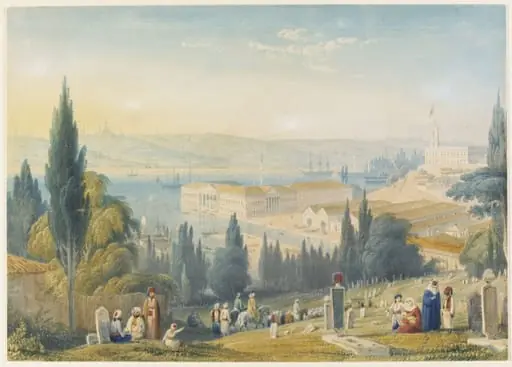 A view of the new Turkish Naval Buildings and Dockyards on the Golden Horn: Constantinople in the background
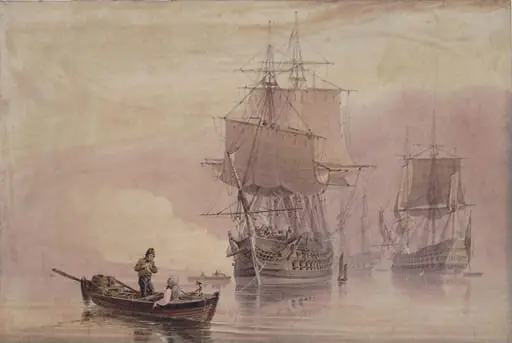 The Morning Gun
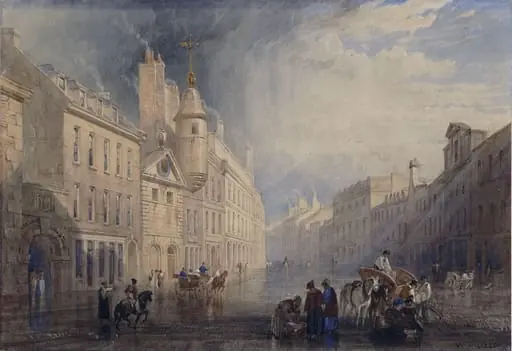 Broad Street, Aberdeen
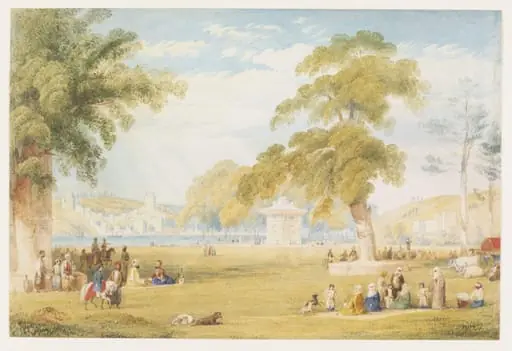 Meadow of the Sweet Waters of Asia, Constantinople
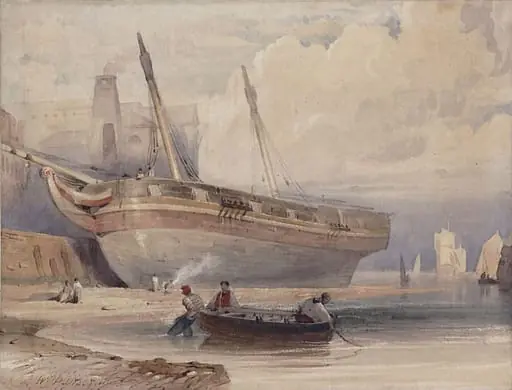 A Vessel Careened by a Wharf
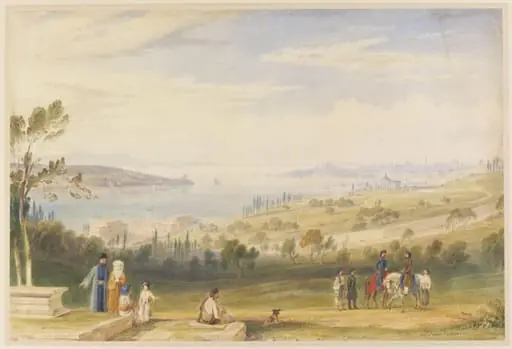 View of the Bosphorus from above Dolmabahçe, looking towards the Sea of Marmara
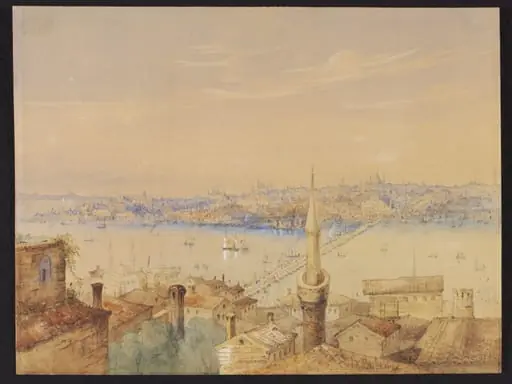 View of Constantinople from Pera across the Golden Horn
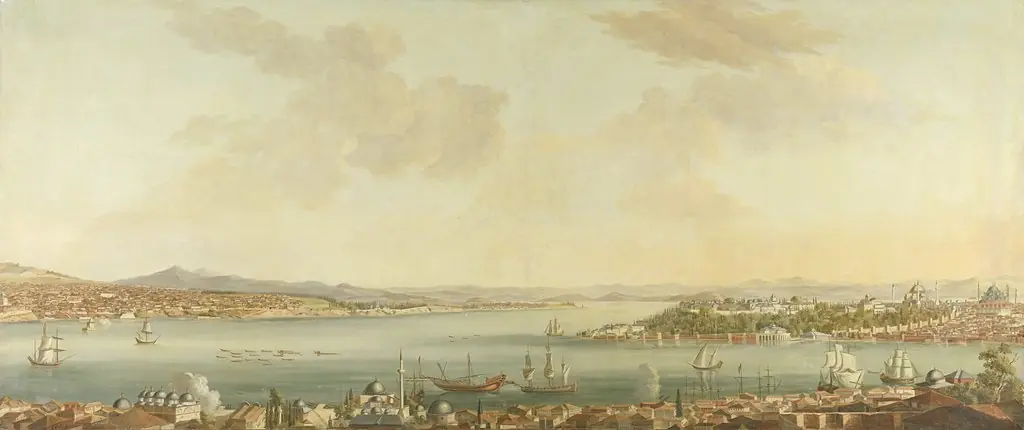 View of Constantinople (Istanbul) and the Seraglio from the Swedish Legation in Pera
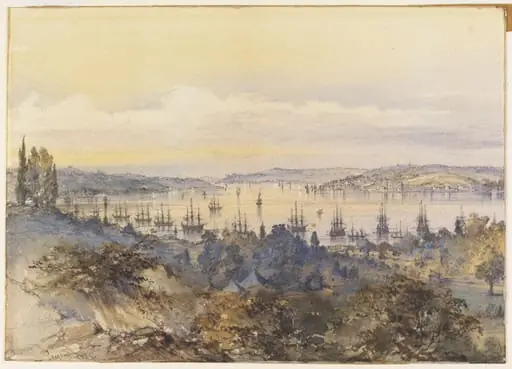 The Bosphorus with the Allied Fleets at Anchor
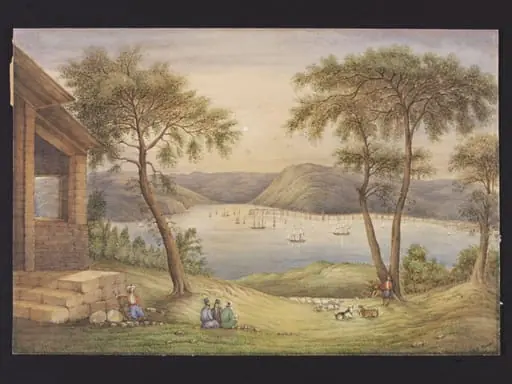 Büyükdere on the Bosphorus from the Giant's Grave
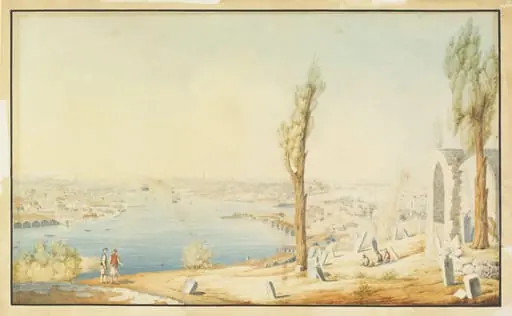 Constantinople and the Golden Horn from the cemetery above Eyüp
 Islands Khalxi and Prinkipos, Sea of Marmora
 Sea of Galilee at Genezareth looking Towards Bashan
 The City Outskirts
 Kororareka in the Bay of Islands