Artwork
Mill Mead, Guildford
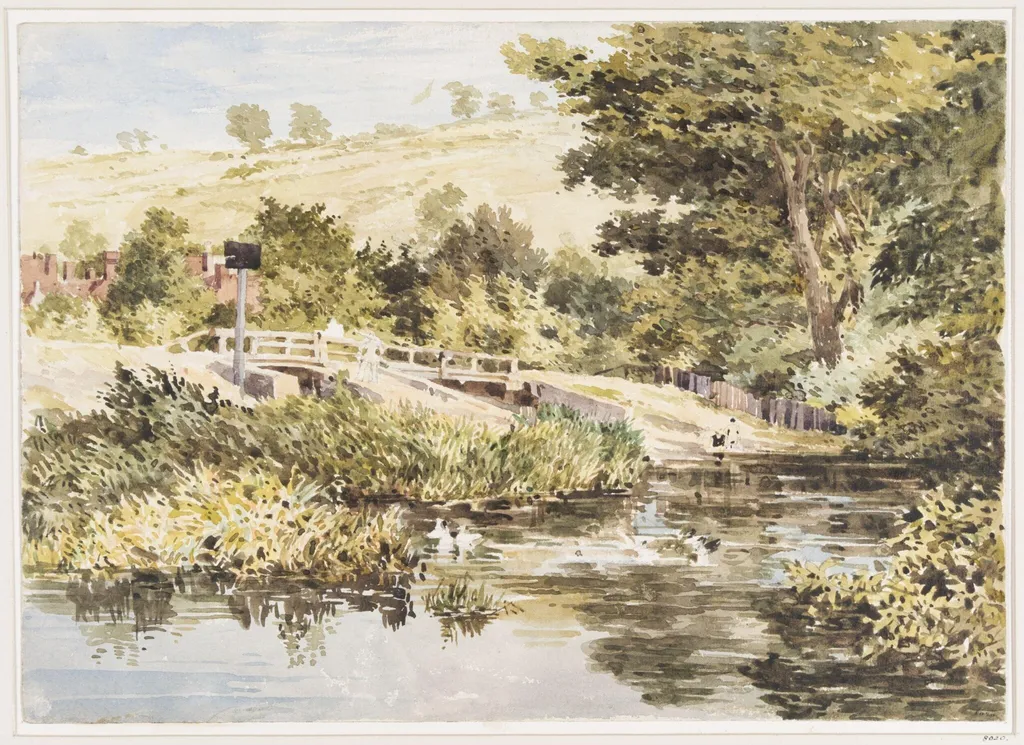
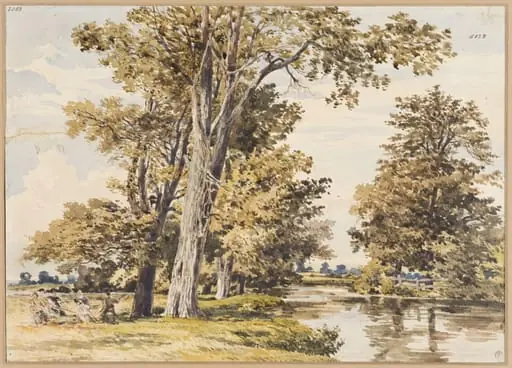
Mill Mead, Guildford is a watercolor work on paper by Charles Claude Pyne. It dates from 1850 and is held in the collection of the Victoria and Albert Museum.
About this work
Overview
Mill Mead, Guildford is a watercolour landscape capturing a tranquil riverside setting near Guildford. The scene unfolds with gentle natural elements—tall grasses, dense trees, and a modest wooden bridge crossing still water. The composition suggests a moment observed directly from nature, rendered with immediacy rather than formal finish.
Subject & Meaning
The painting presents an unassuming rural view: a narrow bridge leads along a winding path into the distance, while ducks rest near the water’s edge. There is no narrative or human activity, only quiet observation. The focus lies in the harmony of the landscape, emphasizing stillness and the subtle rhythms of the natural world.
Technique & Style
Loose, fluid brushwork defines the surface, with wet-on-wet washes creating soft transitions between greens, browns, and pale blues. Ripples on the water and rustling foliage are suggested through minimal strokes, avoiding detail in favor of atmospheric effect. The technique reflects a spontaneous, plein-air approach, prioritizing light and movement over precision.
History & Provenance
The work is held in the collection of the Victoria and Albert Museum, where it is recognized as part of a broader tradition of British watercolour landscape studies from the 19th century. Its origins trace to local scenes around Guildford, likely painted during the artist’s travels or residence in the area.
Context
Created during a period when watercolour was increasingly valued for its capacity to capture fleeting natural effects, this piece aligns with the practices of amateur and professional artists documenting the English countryside. It reflects a growing interest in intimate, everyday landscapes over grand or historical subjects.
Legacy
Mill Mead exemplifies the quiet aesthetic of British watercolour sketching, influencing later generations who favored direct observation and tonal subtlety. Its preservation in a major museum underscores its role as a representative example of 19th-century landscape practice, valued for its sincerity over spectacle.
Own this work as a print
Artist & collection

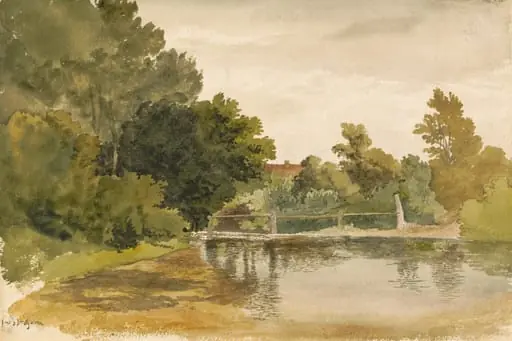 Reflections in a Wooded Pool
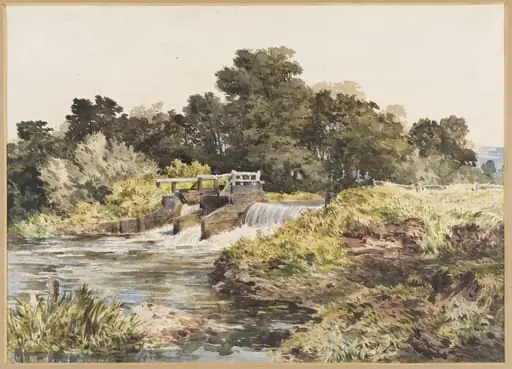 Study from nature: The Weir
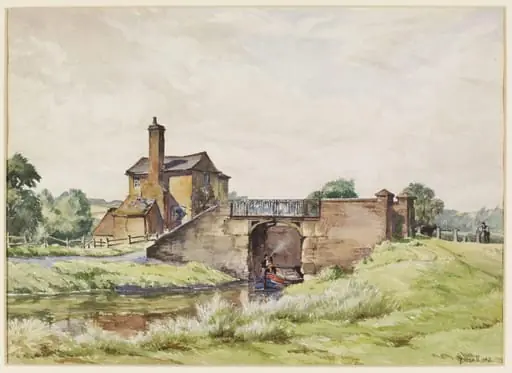 "Wolverley Court Bridge," over the Stafford and Worcester Canal, Wolverley
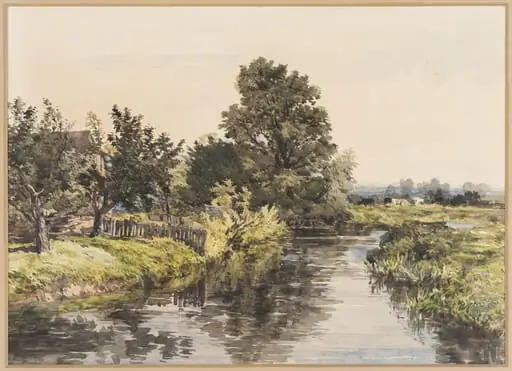 Millpond and Cottage
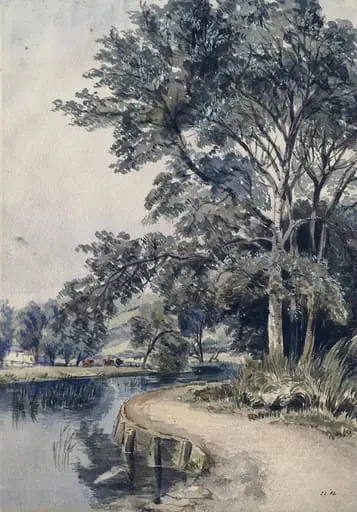 Landscape
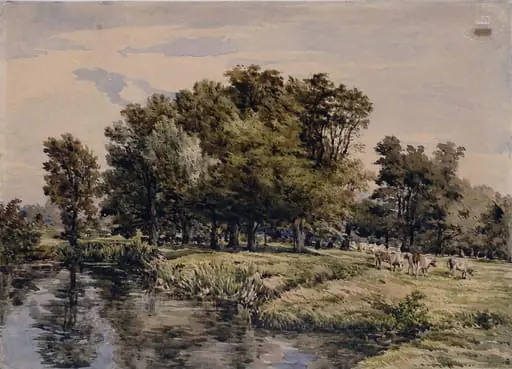 Trees and Cattle
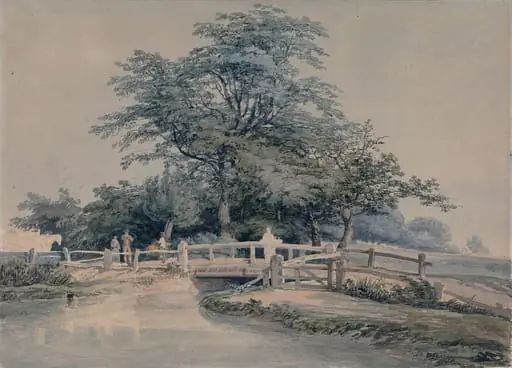 Landscape with trees, figures, bridge and stream
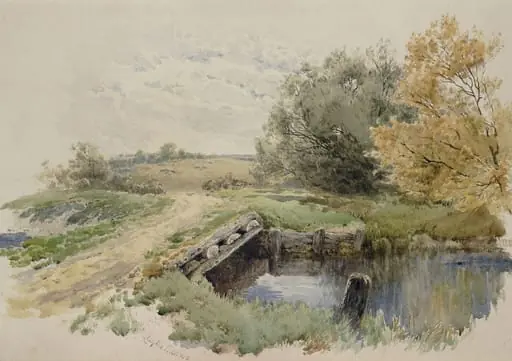 Landscape with bridge over stream
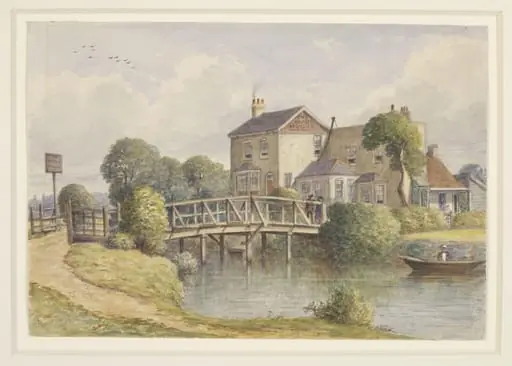 The White House, Hackney Marsh
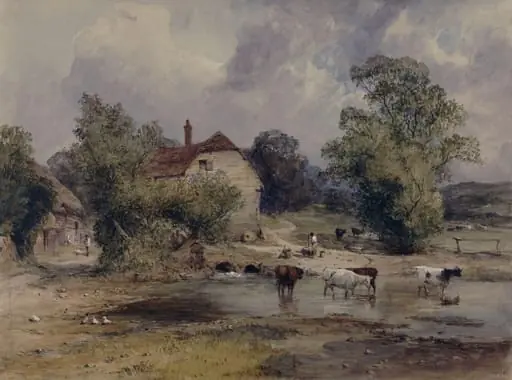 Mill at Droxford, Hampshire
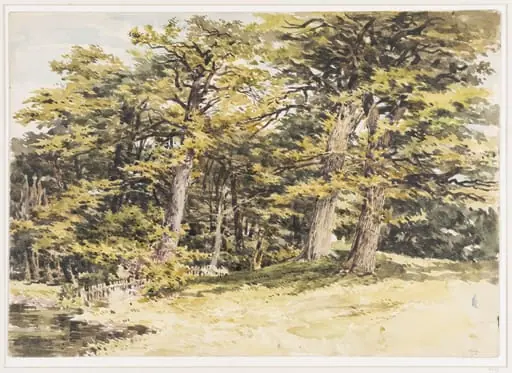 Stoke Park, Guildford