Artwork
Houses at Oxford
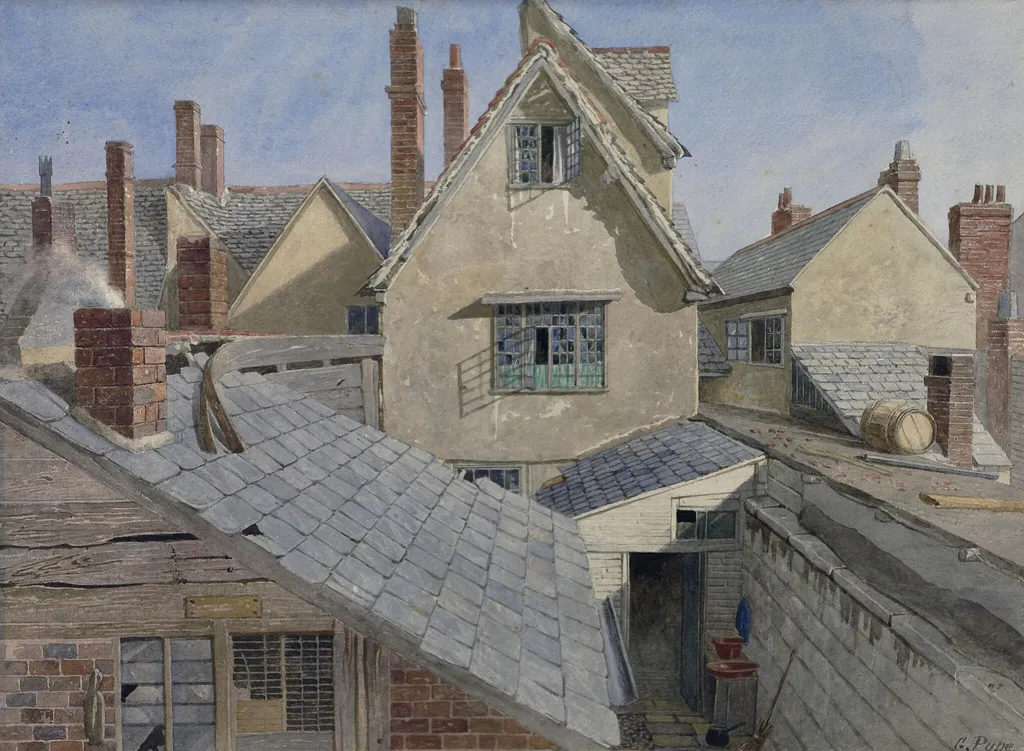
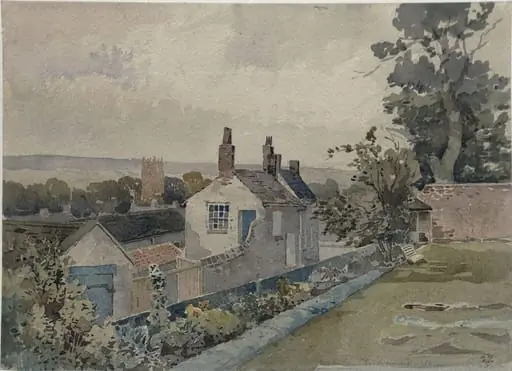
Houses at Oxford is a watercolor work on paper by George Pyne. It dates from 1850 and is held in the collection of the Victoria and Albert Museum.
About this work
Overview
George Pyne’s 1850 watercolour, *Houses at Oxford*, captures a modest urban scene in the English city. Executed in transparent water-based pigments, the work presents a quiet residential street with clustered dwellings. The artist’s signature confirms his direct involvement, situating the piece within his documented body of topographical studies from the mid-nineteenth century.
Subject & Meaning
Scattered details—a barrel on a roof, faint traces of daily objects—hint at domestic routines without dramatizing them.
The painting portrays a row of ordinary Oxford houses, their forms unadorned and functional. A narrow alley runs between them, suggesting the intimate scale of urban life. Scattered details—a barrel on a roof, faint traces of daily objects—hint at domestic routines without dramatizing them. The absence of figures reinforces a sense of stillness, emphasizing architecture as a witness to everyday existence.
Technique & Style
Pyne employed delicate washes of watercolour to model the houses in subdued greys, browns, and beiges. Layered tones suggest texture in brick and tile without sharp outlines, relying on subtle shifts in value. The composition is tightly framed, focusing attention on the facades and rooflines. The medium’s transparency allows the paper’s surface to contribute to the muted luminosity of the scene.
History & Provenance
Created in 1850, the work belongs to Pyne’s period of active topographical recording in southern England. Its survival suggests it was retained by the artist or a contemporary collector, though its early ownership remains undocumented. It entered institutional hands in the twentieth century, where it is now preserved as part of a regional art archive focused on 19th-century British watercolours.
Context
In mid-19th century Britain, watercolour was widely used for topographical and architectural studies, often by amateur or professional artists documenting local scenes. Pyne’s work aligns with this tradition, reflecting a growing interest in recording urban and rural environments with observational accuracy rather than idealization. Oxford, as a university town, attracted such documentation for its historic fabric.
Legacy
Though not widely exhibited, *Houses at Oxford* contributes to a broader understanding of how ordinary urban spaces were recorded in the Victorian era. Pyne’s restrained approach offers a counterpoint to more dramatic landscape traditions, preserving a quiet record of domestic architecture that might otherwise have been overlooked in historical narratives.
Own this work as a print
Artist & collection

 At Richmond, Yorkshire
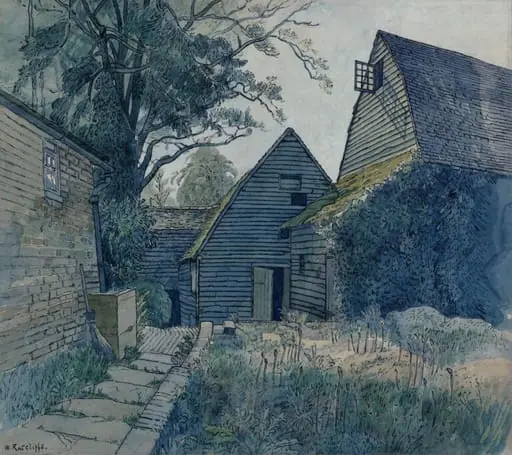 Asparagus Bed, Worth, Sussex.
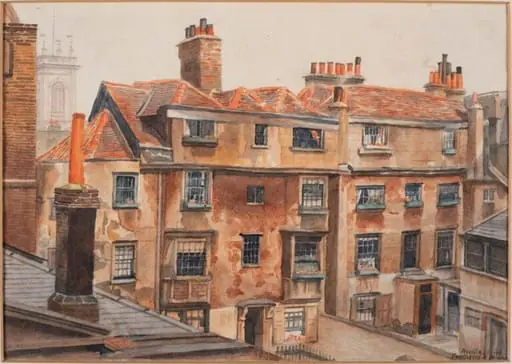 Nevilles Court
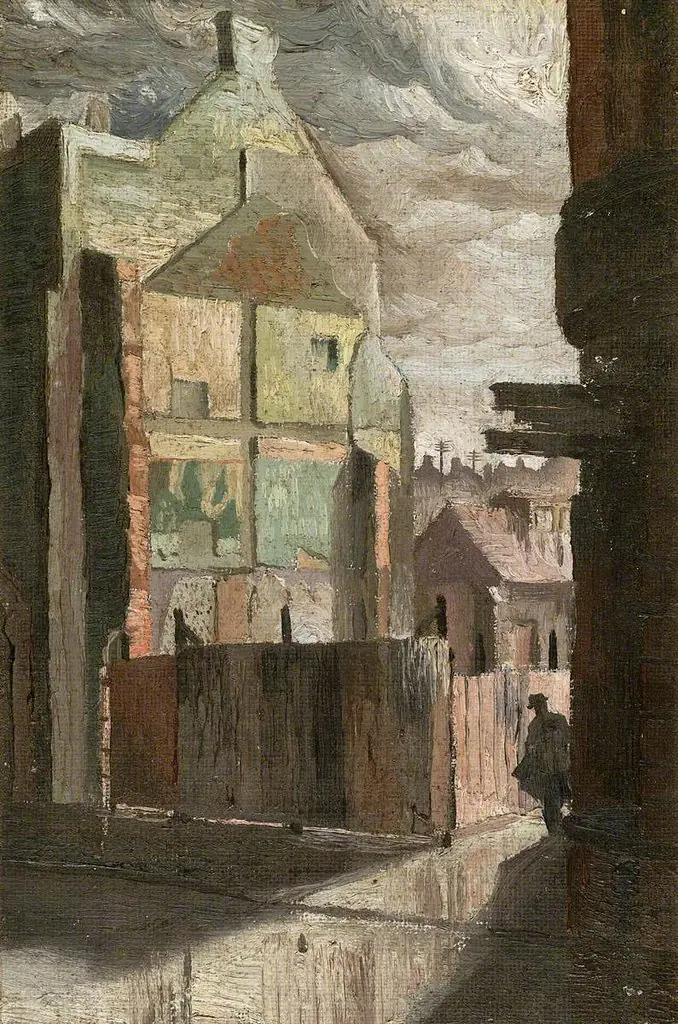 Cleared Site with Hoarding and a Figure
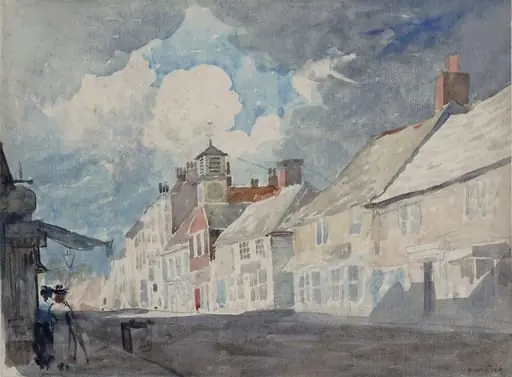 Steyning, Sussex
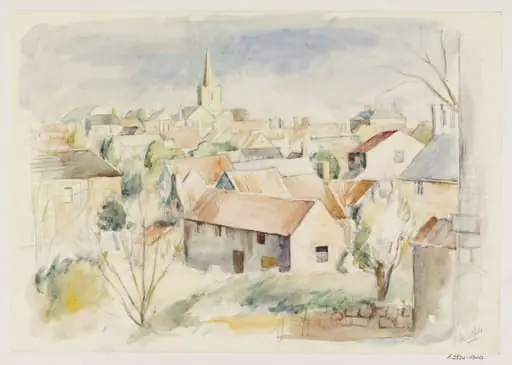 View of Pickering
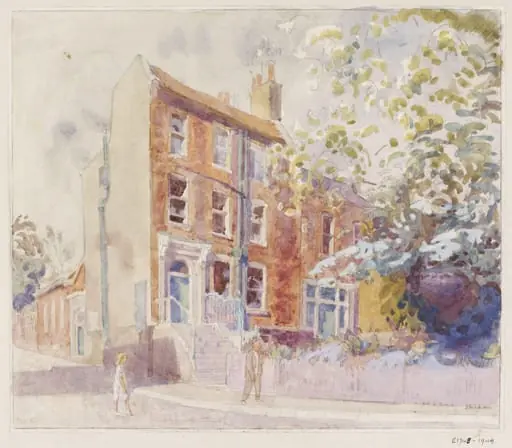 Stanfield House, Hampstead
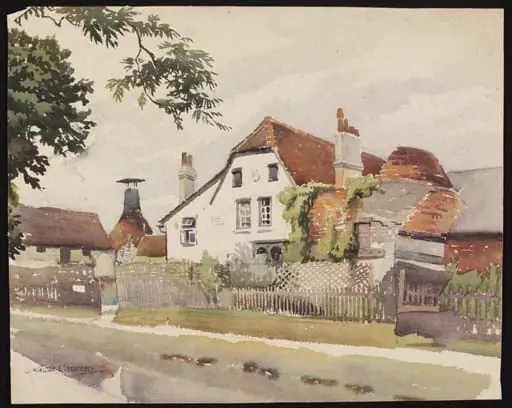 Kilns and Maltings on the Canal Bank, Bishop's Stortford
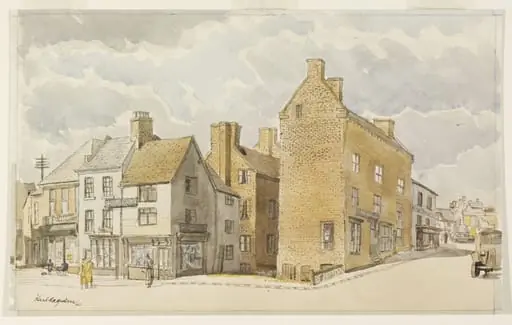 Ashbourne
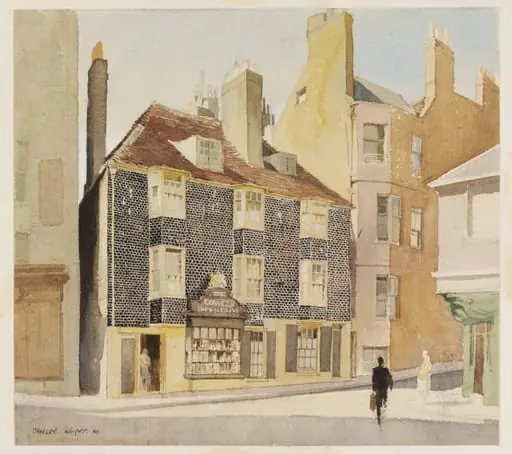 House and Shop in Pool Valley, Brighton
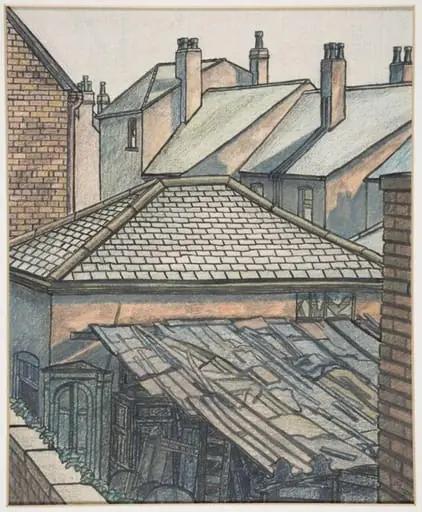 Cottages, Leeds
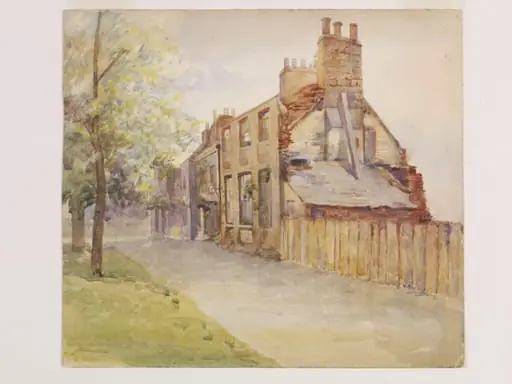 Old brick residences in the grounds of the South Kensington Museum (now the Victoria and Albert Museum)