Artwork
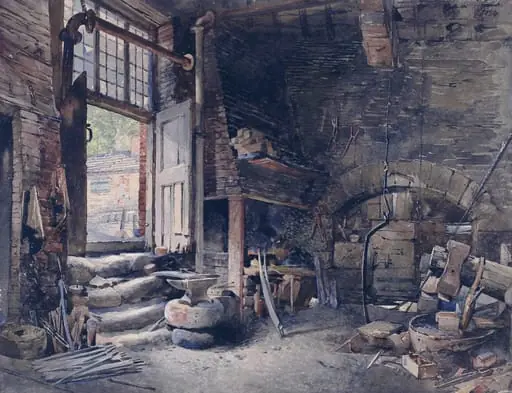
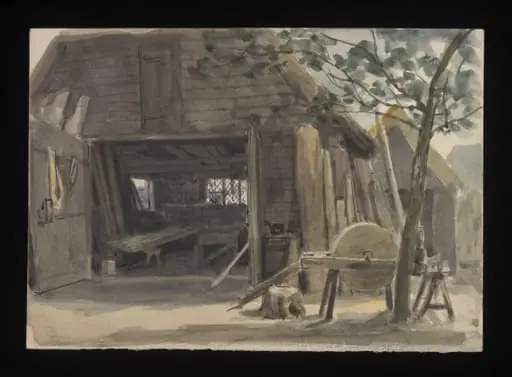
Interior of a Mill
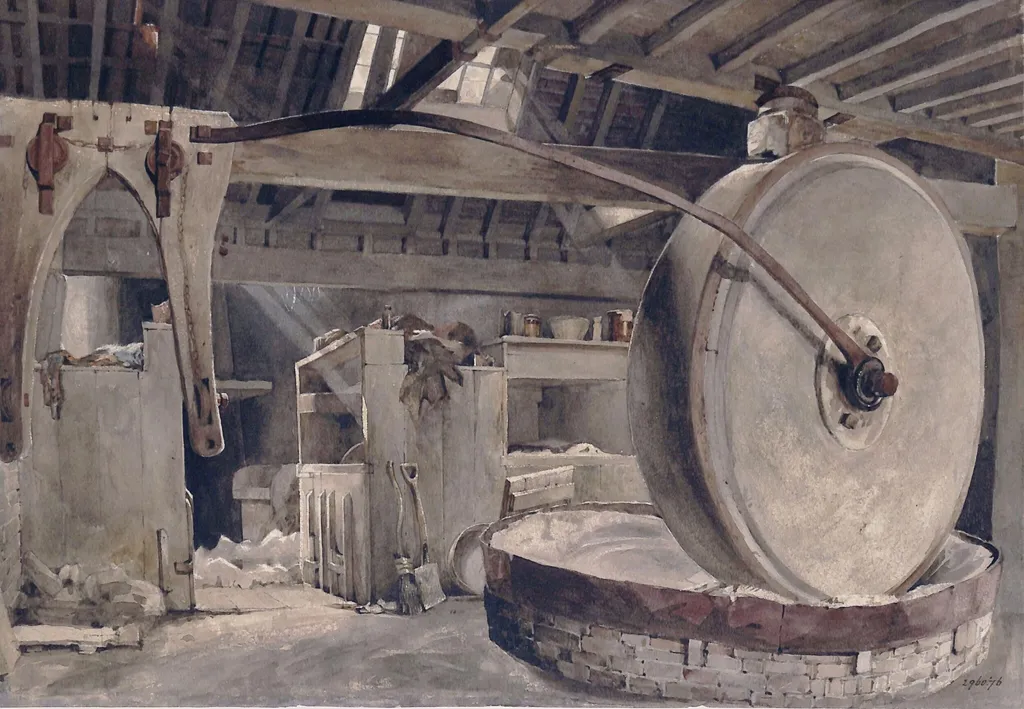
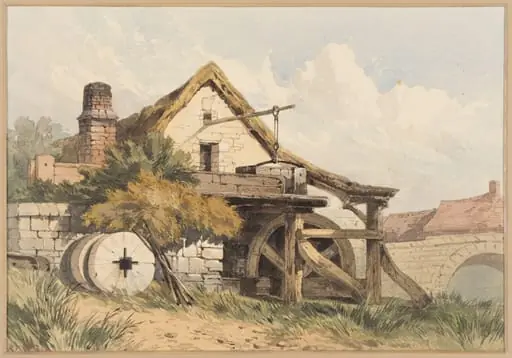
Interior of a Mill is a watercolor work on paper by the British Romanticist artist George Pyne. It dates from 1820 and is held in the collection of the Victoria and Albert Museum.
About this work
Overview
Interior of a Mill is a watercolour work by George Pyne, dated to around 1820. It depicts the interior of a functioning industrial space, capturing the quiet decay and accumulated use of machinery. The piece is part of the Victoria and Albert Museum’s collection, where it is held as an example of early 19th-century British topographical and industrial observation in watercolour.
Subject & Meaning
The painting presents a mill’s interior as a lived-in, working environment rather than a grand monument. Wooden gears, worn tools, and stacked barrels suggest daily labor and mechanical endurance. The absence of human figures emphasizes the machinery’s silent persistence, conveying a sense of time passed and use endured without romanticization.
Technique & Style
Pyne employed loose, textured brushwork and a restrained palette of browns, greys, and muted ochres to evoke the atmosphere of a dusty, dim space. Light enters through narrow windows, creating soft contrasts that highlight the grain of wood and the grit of accumulated powder. The watercolour medium’s transparency enhances the sense of age and atmospheric haze.
History & Provenance
The painting entered the Victoria and Albert Museum’s collection as part of its broader effort to document industrial and domestic life in Britain. Its provenance before acquisition is not well documented, but its detailed observation aligns with contemporary interest in recording the material conditions of working spaces during the early Industrial Revolution.
Context
In the 1820s, Britain saw rapid industrial expansion, yet few artists focused on the interiors of mills as subjects. Pyne’s work stands apart by treating industrial spaces with quiet realism, reflecting a growing cultural attention to the physical environments of labor, distinct from the prevailing landscape or portrait traditions.
Legacy
Interior of a Mill contributes to a modest but significant body of early industrial documentation in British watercolour. While not widely exhibited, it remains a reference for studies of 19th-century working environments, offering a restrained yet precise visual record of machinery and space before photography became commonplace.
Artist & collection

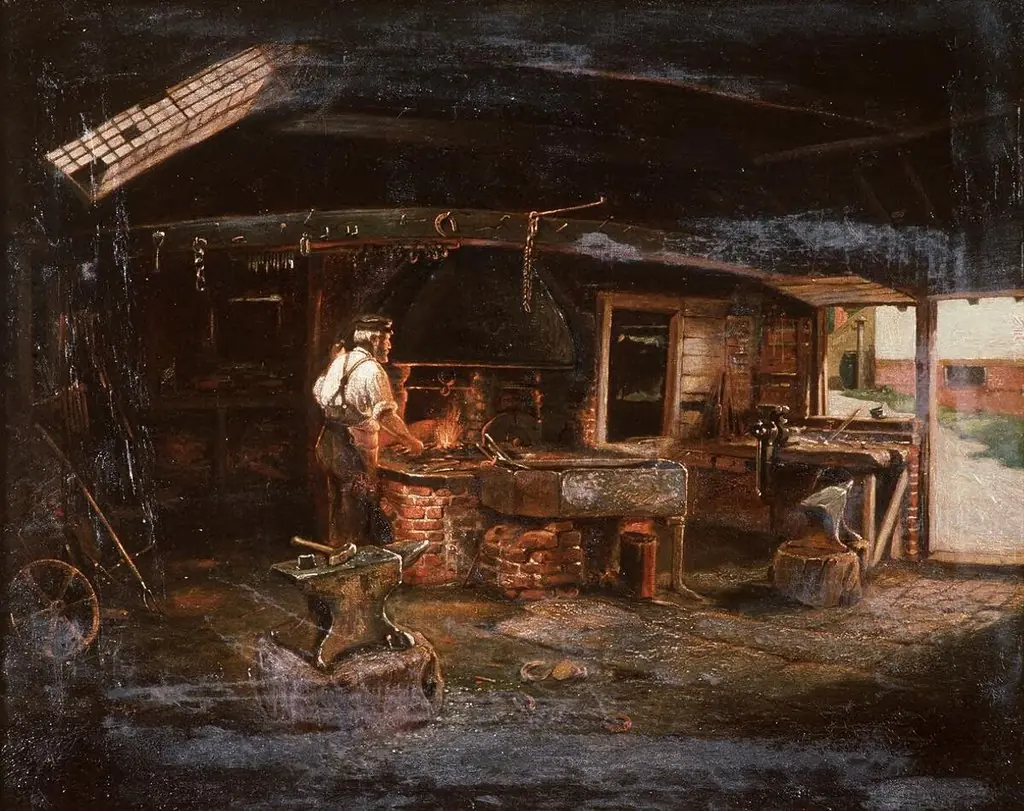
 A Smith's Shop
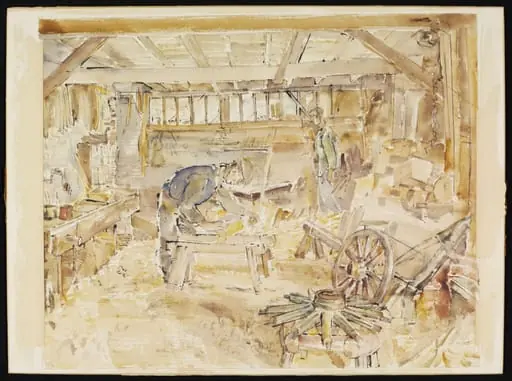 Wheelwrights at work in Mr. J. W. Brunt's Shop, Newington
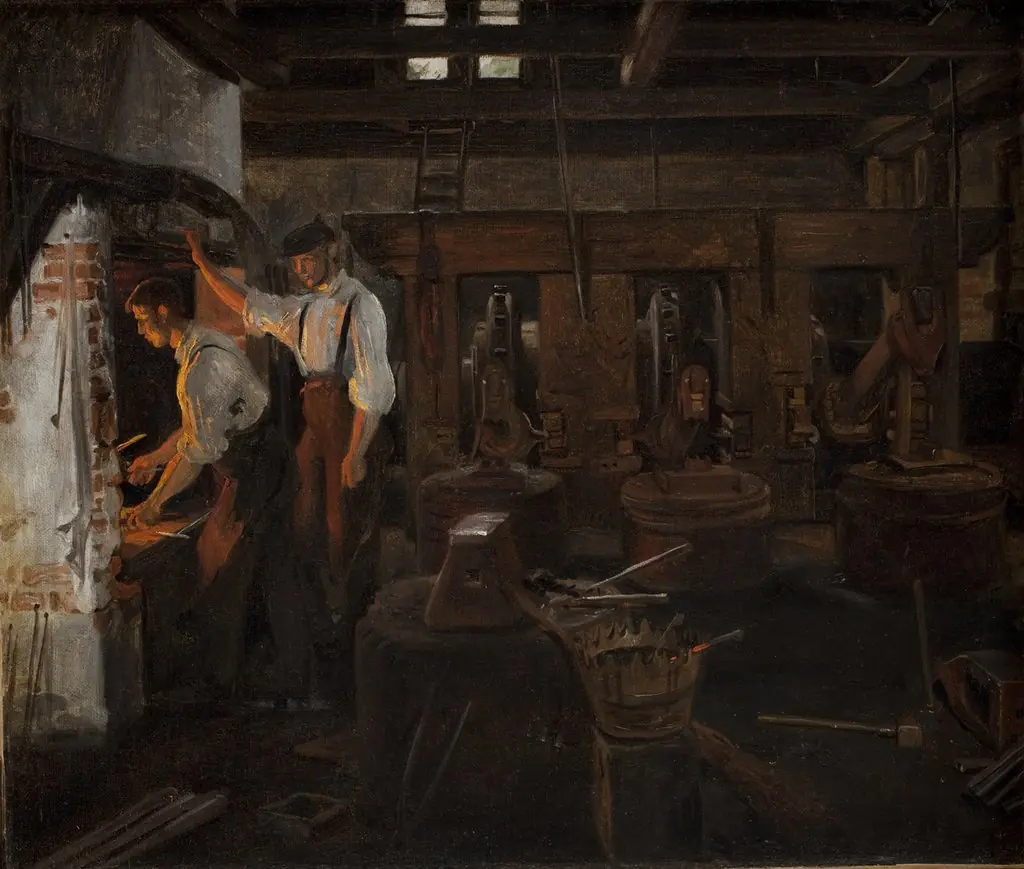 Det indvendige af den gamle hammermølle ved Hellebæk
 Det indvendige af den gamle hammermølle ved Hellebæk
 Watercolour drawing by the Grieve family, showing a workman's hut at Garlinge, Kent
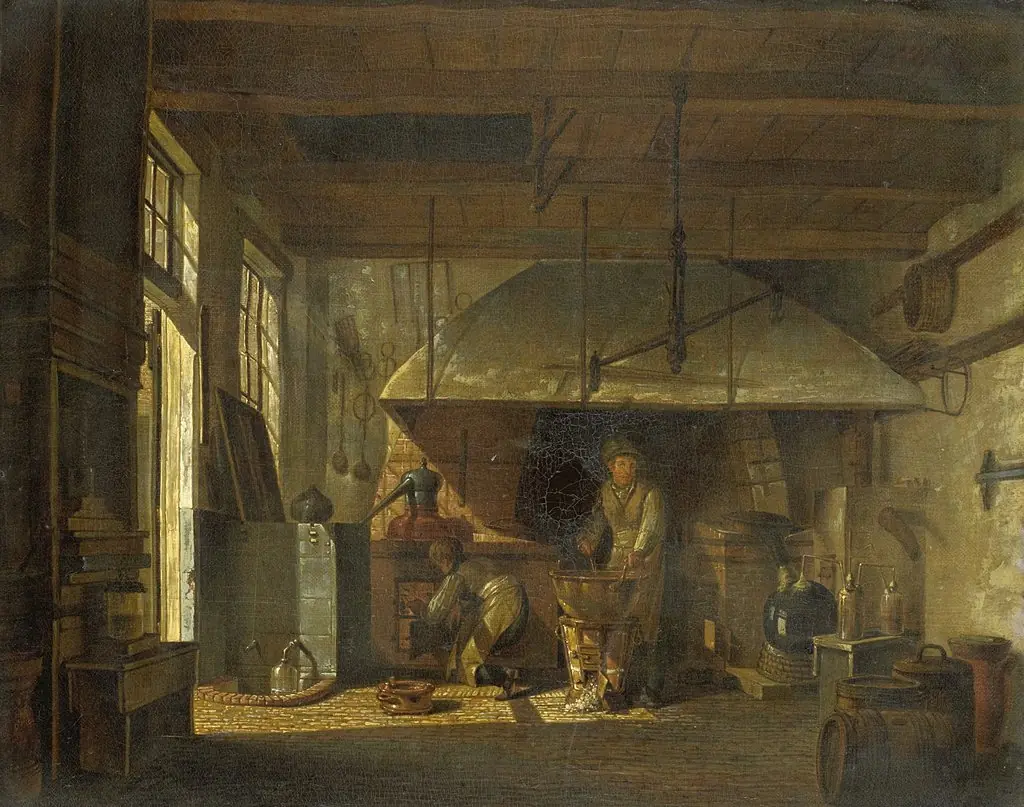 The Laboratory of A. d'Ailly near the Bulwark on the Zaagmolenpoort in Amsterdam
 smithy
 Farm in Rahier
 Untitled
 Weaver, Interior with Three Small Windows