Artwork
Lady Ban's Round Fan
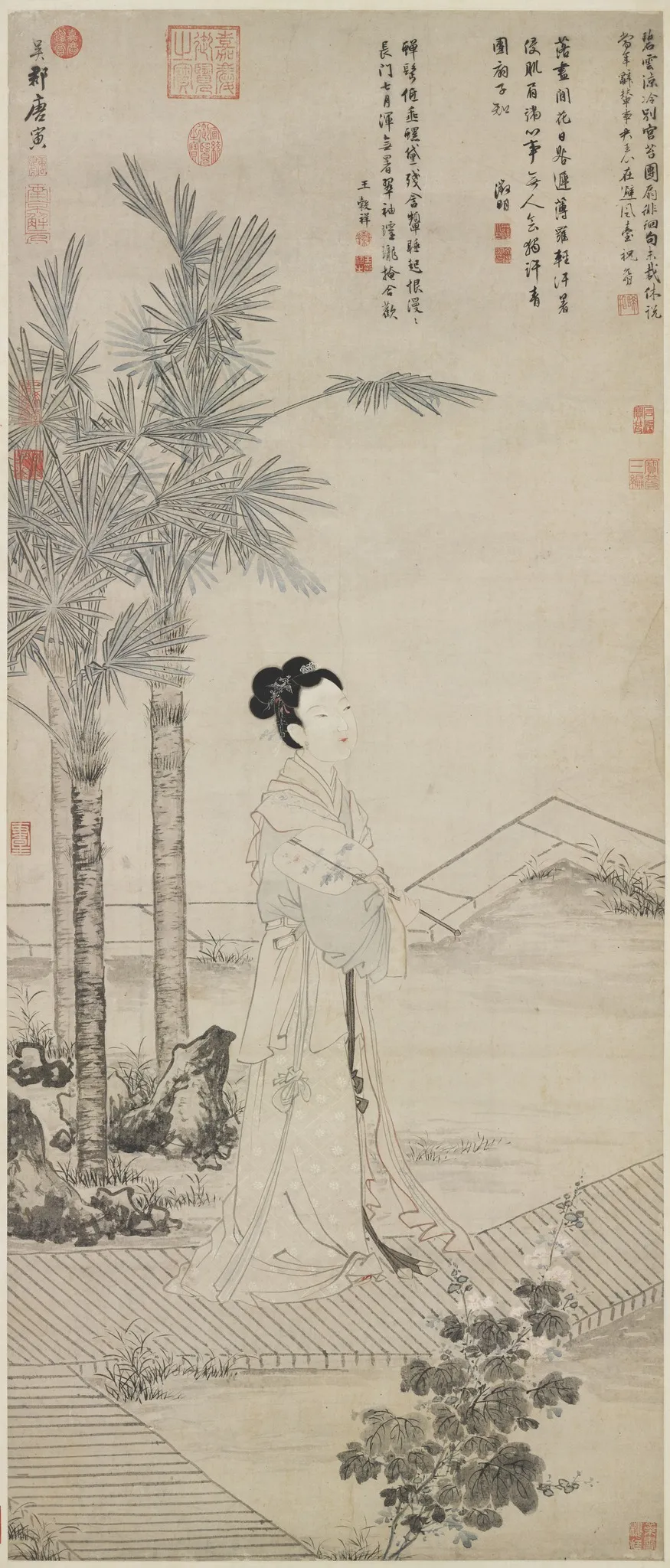
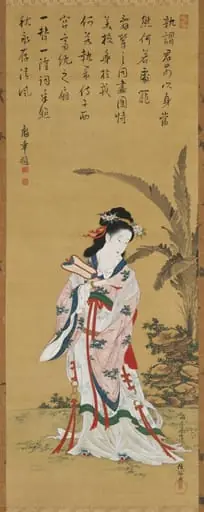
Lady Ban's Round Fan is an unspecified painting by Tang Yin. It is held in the collection of the National Palace Museum. This ink-and-color painting on silk depicts a noblewoman holding a round fan, set against a quiet landscape.
About this work
Overview
The composition emphasizes stillness and grace, with the figure centered and the background rendered in soft washes of muted tones.
This ink-and-color painting on silk depicts a noblewoman holding a round fan, set against a quiet landscape. The composition emphasizes stillness and grace, with the figure centered and the background rendered in soft washes of muted tones. The scene avoids dramatic elements, instead conveying composure through subtle details of posture and environment. The work is attributed to the Ming dynasty artist Tang Yin, known for blending literati ideals with refined portraiture.
Subject & Meaning
The woman, likely representing Lady Ban, a historical figure celebrated for her virtue and restraint, embodies Confucian ideals of feminine dignity. Her poised stance and gentle expression suggest inner calm rather than outward display. The fan, a symbol of seasonal change and self-control, reinforces themes of moderation. The secluded setting, distant mountains, and sparse vegetation frame her as a figure of quiet moral authority, removed from worldly turbulence.
Technique & Style
Tang Yin employed fine brushwork to render the intricate patterns of her robe and the delicate folds of silk, using layered washes to suggest texture without heavy outlines. The background employs a light ink gradient, with faint green strokes hinting at foliage and distant peaks rendered in minimal strokes. Hair and accessories are detailed with precision, yet remain restrained, aligning with the literati preference for understated elegance over ornamental excess.
History & Provenance
The painting originates from the mid-15th to early 16th century, during Tang Yin’s active period in Suzhou. It was likely created for private collection, reflecting the tastes of scholar-officials who valued poetic imagery and moral allegory. While its early ownership is undocumented, it entered institutional collections in the 20th century, where it is now preserved as an example of Ming dynasty secular portraiture.
Context
Tang Yin worked at the intersection of courtly refinement and literati aesthetics, often depicting literary or historical women as vehicles for moral reflection. During the Ming dynasty, such images were not merely decorative but served as visual essays on virtue, especially in a cultural climate that prized restraint and scholarly introspection. This painting aligns with a broader trend of using female figures to express philosophical ideals through quiet, contemplative scenes.
Legacy
The work contributes to a tradition of Chinese painting that associates femininity with moral clarity and natural harmony. Though not widely reproduced, it remains a reference point for studies of Ming portraiture and the use of symbolic objects like the fan. Its enduring presence in museum collections underscores its role in illustrating how art conveyed ethical values through understated visual language.
Artist & collection

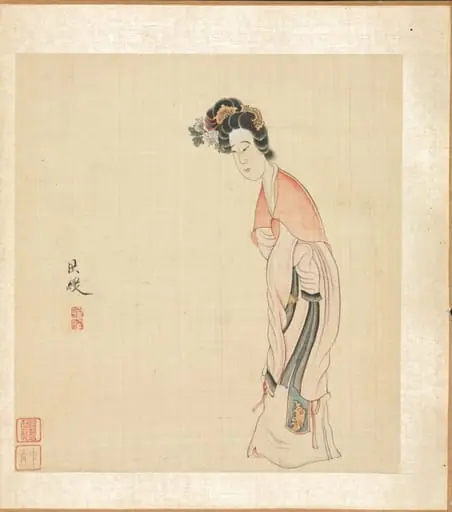 Paintings after Ancient Masters: A Lady
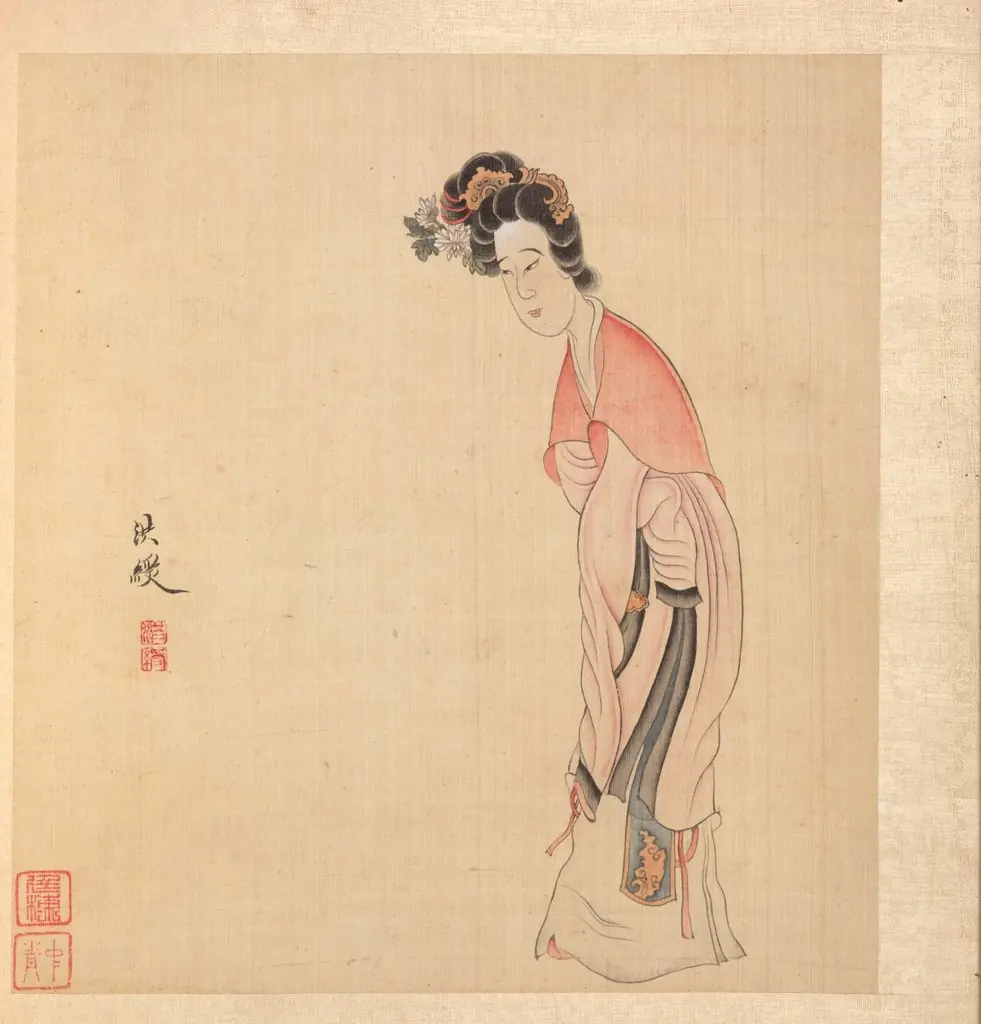 Paintings after Ancient Masters: A Lady
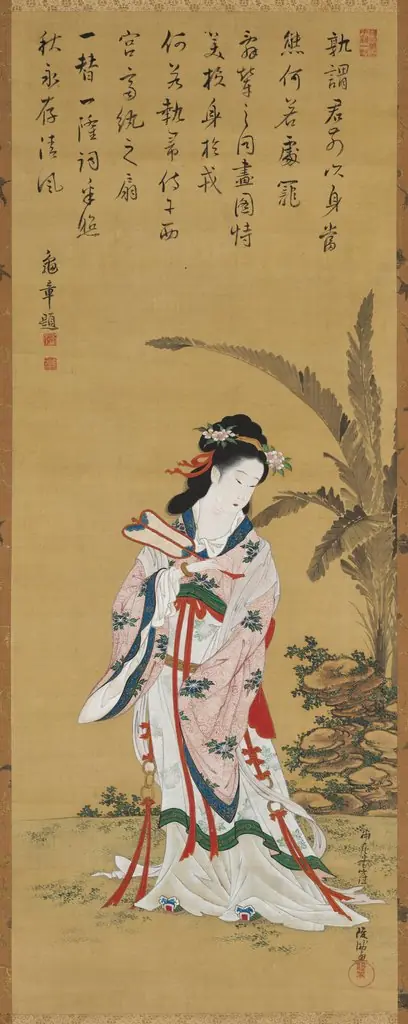 Chinese Beauty
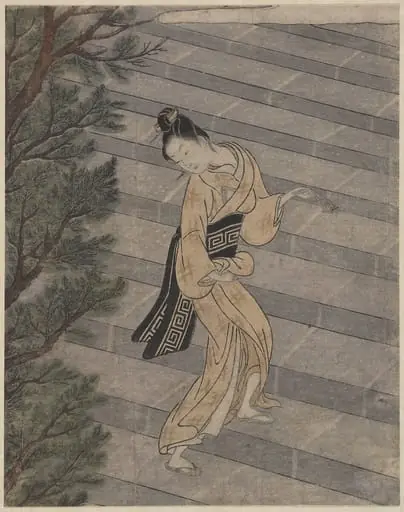 Untitled
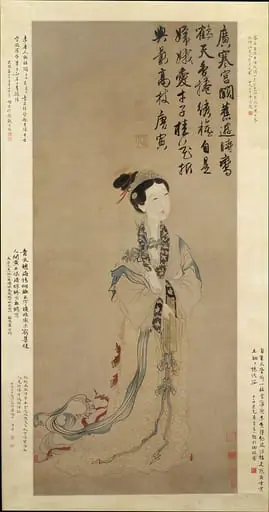 Untitled
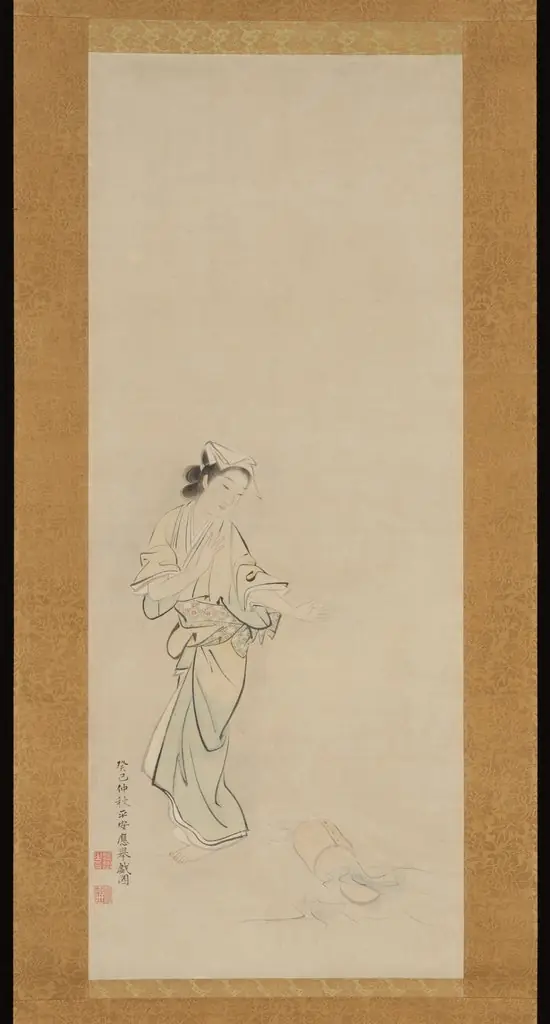 Lady Chiyono
 Chinese Beauty
 The Salt Maidens, Murasame with Yukihira's Hat
 Act VII from the series The Storehouse of Loyal Retainers As Portrayed by Famous Beauties in Twelve Leaves
 Untitled
 Beauty (Bijin) in the Snow
 A Courtesan Reading a Letter