Artwork
Chinese Beauty
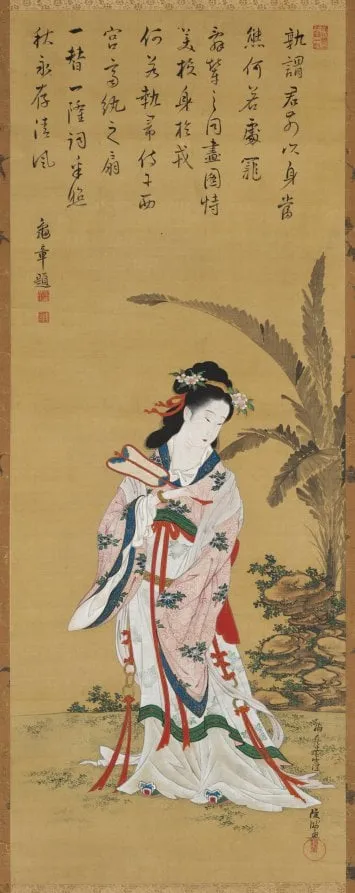
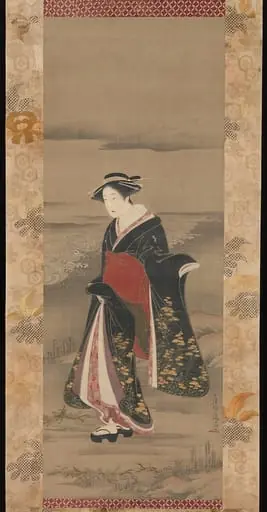
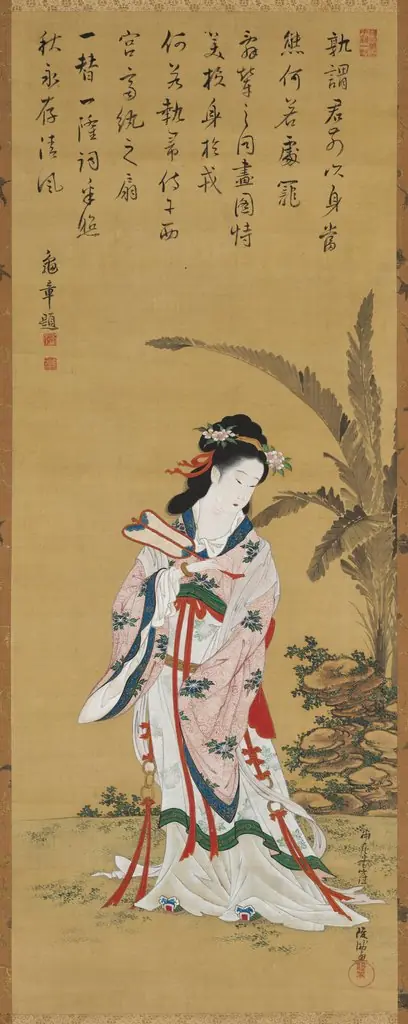
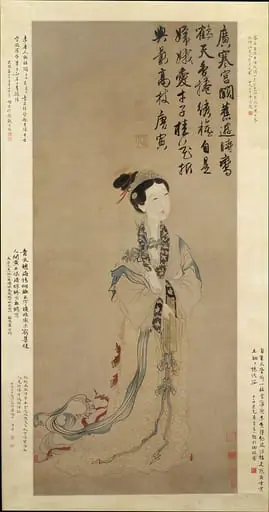
Chinese Beauty is an unspecified painting by the Romanticist artist Kubo Shunman. It dates from 1800 and is held in the collection of the Cleveland Museum of Art. The work depicts a refined lady from a Chinese imperial setting, poised with a fan before a lush banana plant.
About this work
Overview
The work depicts a refined lady from a Chinese imperial setting, poised with a fan before a lush banana plant. Rendered in the ukiyo-e tradition, the composition balances elegance and tranquility, while a brief poem inscribed at the top adds a literary dimension. The piece exemplifies the genre’s fascination with exotic beauty and cross‑cultural motifs.
Subject & Meaning
The central figure is a palace attendant, identified through her attire and accessories as a Chinese court lady.
The central figure is a palace attendant, identified through her attire and accessories as a Chinese court lady. Holding a silk fan, she evokes the legend of Lady Ban, a scholarly woman of the early Han period who, after falling out of imperial favor, likened herself to a discarded fan in autumn. The poem above, written in kanbun, alludes to this narrative, suggesting themes of loss and fading grace.
Technique & Style
Executed in the woodblock print technique typical of Edo‑period ukiyo-e, the image employs delicate line work and subtle color washes to render the fabrics and foliage. The stylized rendering of the banana plant and the crisp outlines of the fan demonstrate the artist’s skill in integrating foreign botanical elements within a Japanese aesthetic framework.
History & Provenance
The print belongs to a series in which Japanese artists explored the beauty of foreign figures, extending the genre’s focus beyond domestic courtesans. Though the exact date of production is not recorded, its stylistic traits align with late 18th‑century ukiyo-e practices. The work entered the Cleveland Museum of Art’s collection through a mid‑20th‑century acquisition of Japanese prints.
Context
During the Edo period, Japanese intellectuals and artists often adopted Chinese literary forms, such as kanbun, to convey sophisticated subjects. This piece reflects that cultural exchange, merging a Chinese historical anecdote with Japanese visual conventions. The inclusion of a banana plant, a tropical element, further underscores the era’s curiosity about distant lands and their exotic flora.
Artist & collection