Artwork
Lady Ise by the Riverbank
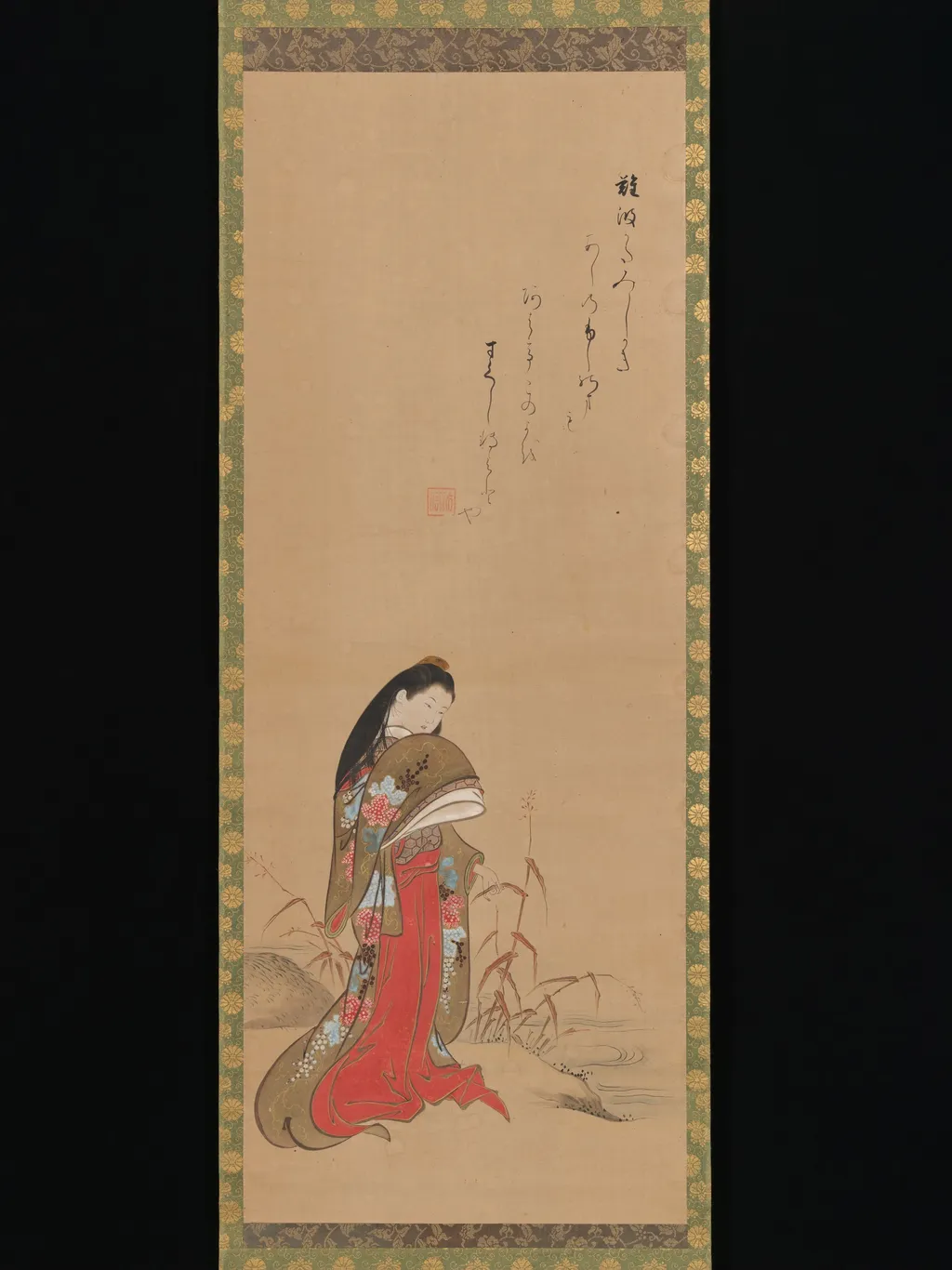
Lady Ise by the Riverbank is an unspecified painting by the Ukiyo-e artist Nishikawa Sukenobu. It is held in the collection of the Metropolitan Museum of Art.
About this work
Overview
Lady Ise by the Riverbank, painted by Nishikawa Sukenobu in 1792, is an ink and color work on paper now in the collection of the Metropolitan Museum of Art. The composition presents a solitary female figure kneeling beside a river, her posture suggesting a moment of pause or contemplation.
Subject & Meaning
The central figure is a woman dressed in a long, flowing robe adorned with red and blue motifs. She holds a fan and wears a modest headpiece, while her dark hair is neatly arranged. The inscription above her head resembles a line of Japanese poetry, reinforcing the theme of quiet reflection.
Technique & Style
Sukenobu employs delicate brushwork to render the folds of the garment and the surrounding reeds, combining subtle washes of color with fine ink lines. The palette of muted blues and reds creates a harmonious balance, characteristic of late‑eighteenth‑century ukiyo‑e portraiture.
History & Provenance
Created toward the end of the Edo period, the painting entered the Metropolitan Museum of Art’s collection through a 20th‑century acquisition, though earlier ownership records are not documented. Its presence in the museum situates it among other Japanese works that illustrate the era’s domestic genre scenes.
Context
Nishikawa Sukenobu was known for his depictions of everyday life and literary subjects. This work reflects the period’s interest in portraying refined, introspective moments drawn from classical poetry, aligning with the broader cultural practice of integrating text and image in Japanese visual art.
Artist & collection

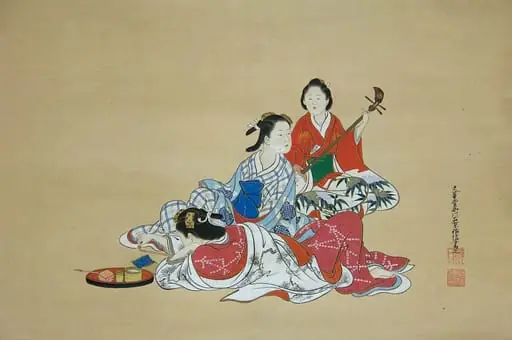
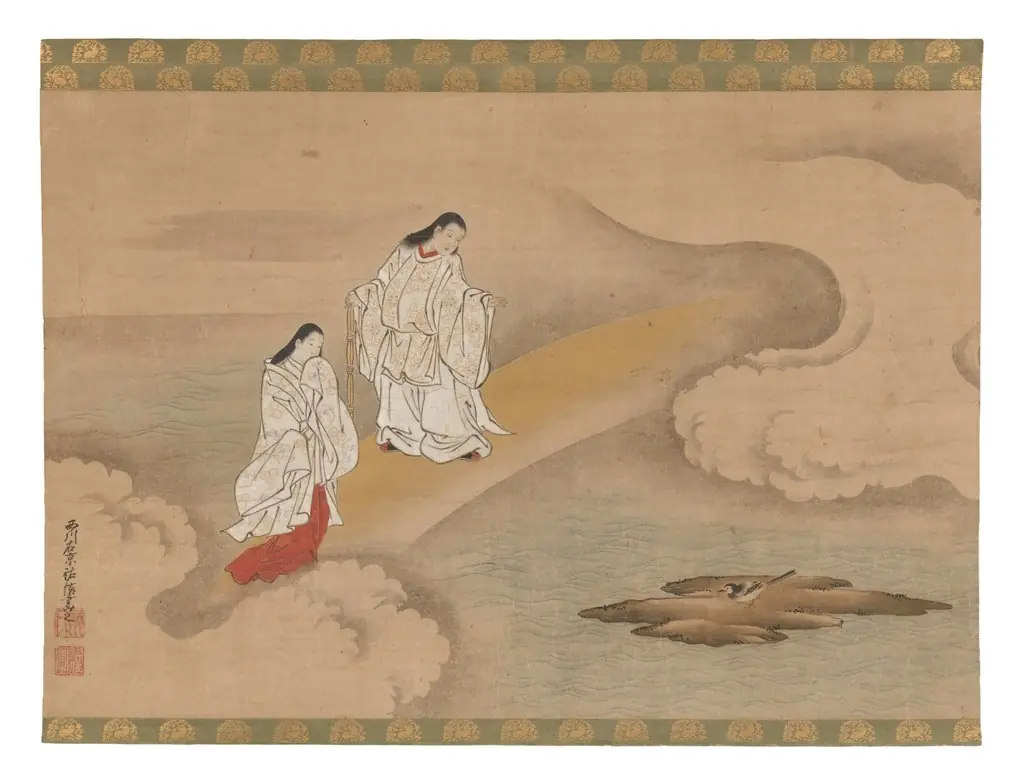
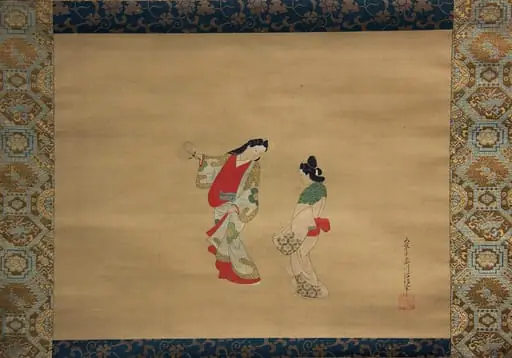
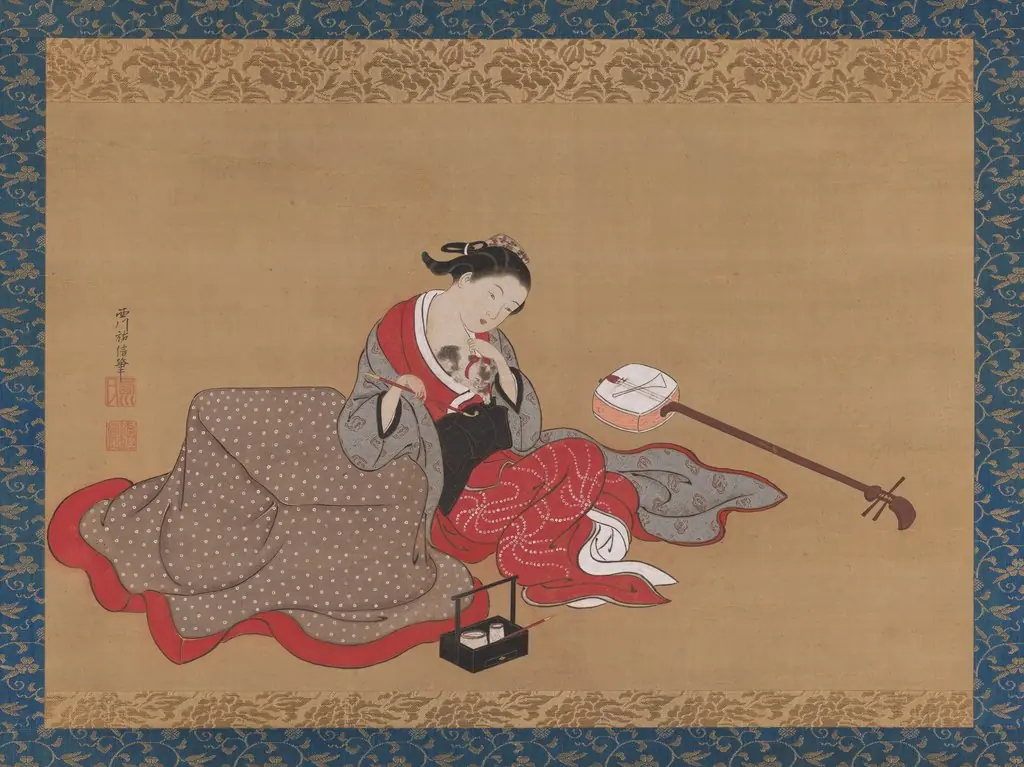
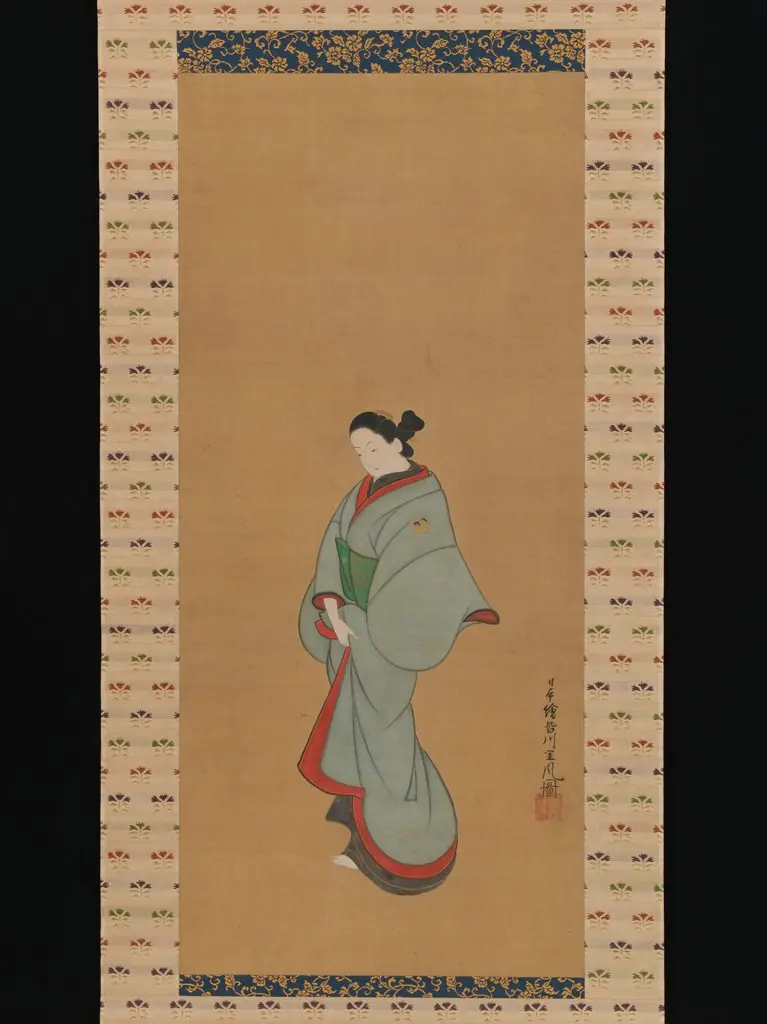 Standing Woman
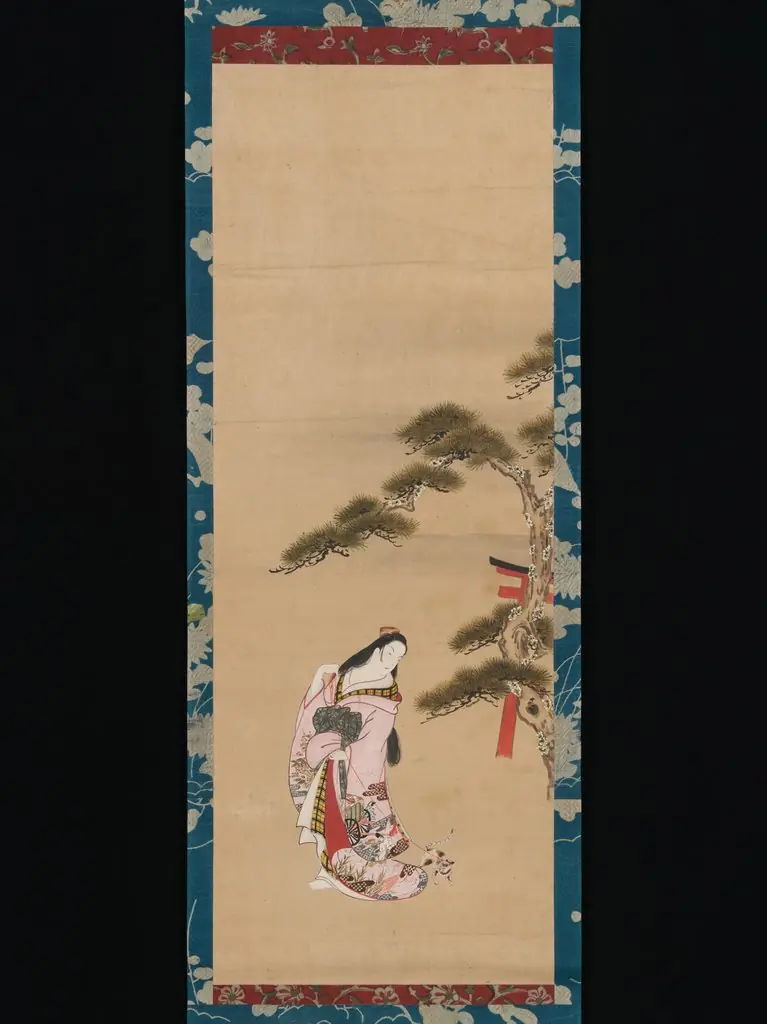 The Third Princess and a Cat, from the "New Herbs I" (Wakana I) chapter The Tale of Genji (Genji monogatari}
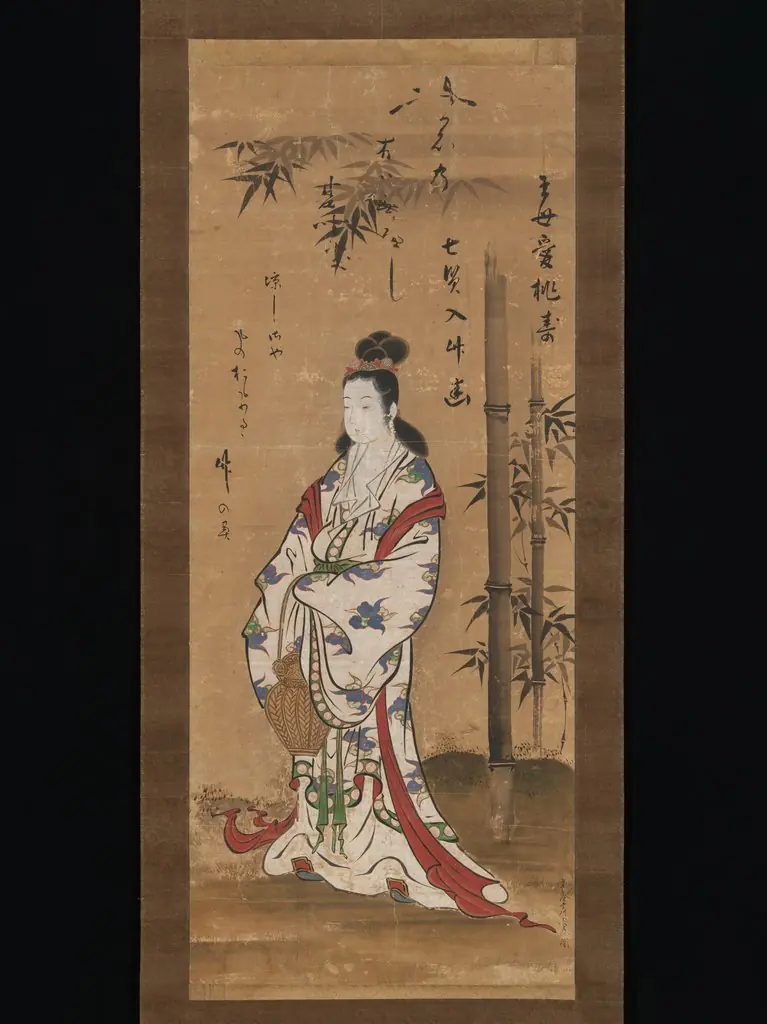 Gyoran Kannon
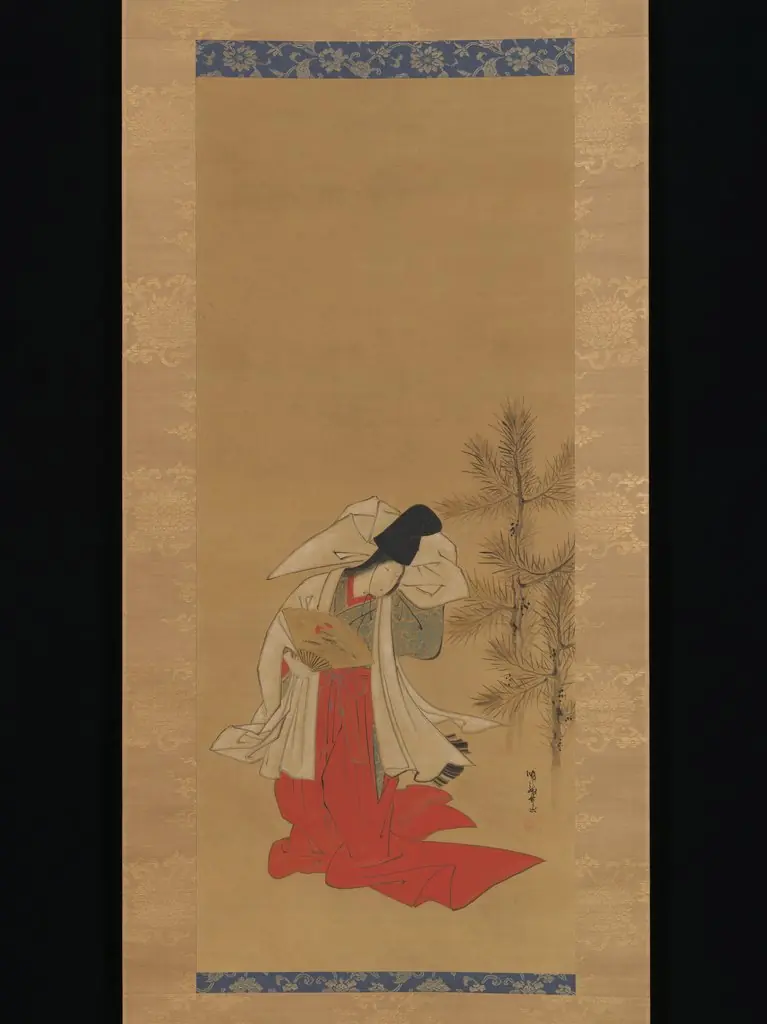 Courtesan-Dancer (Shirabyōshi) for the New Year
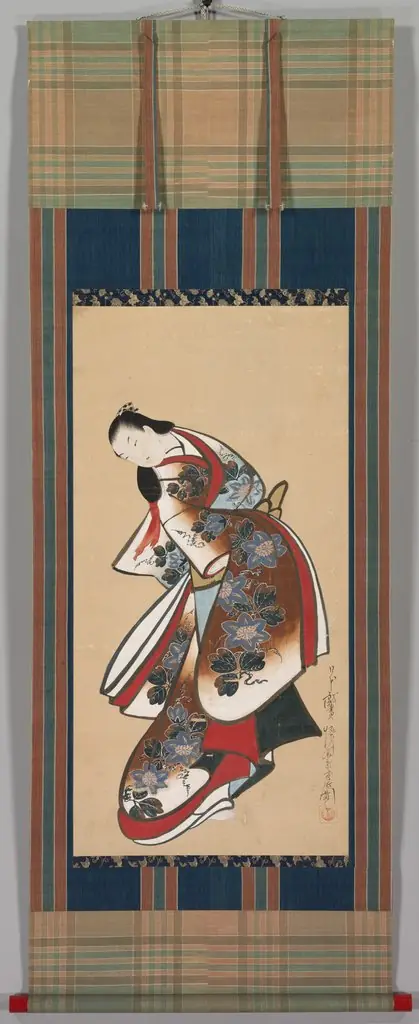 Courtesan
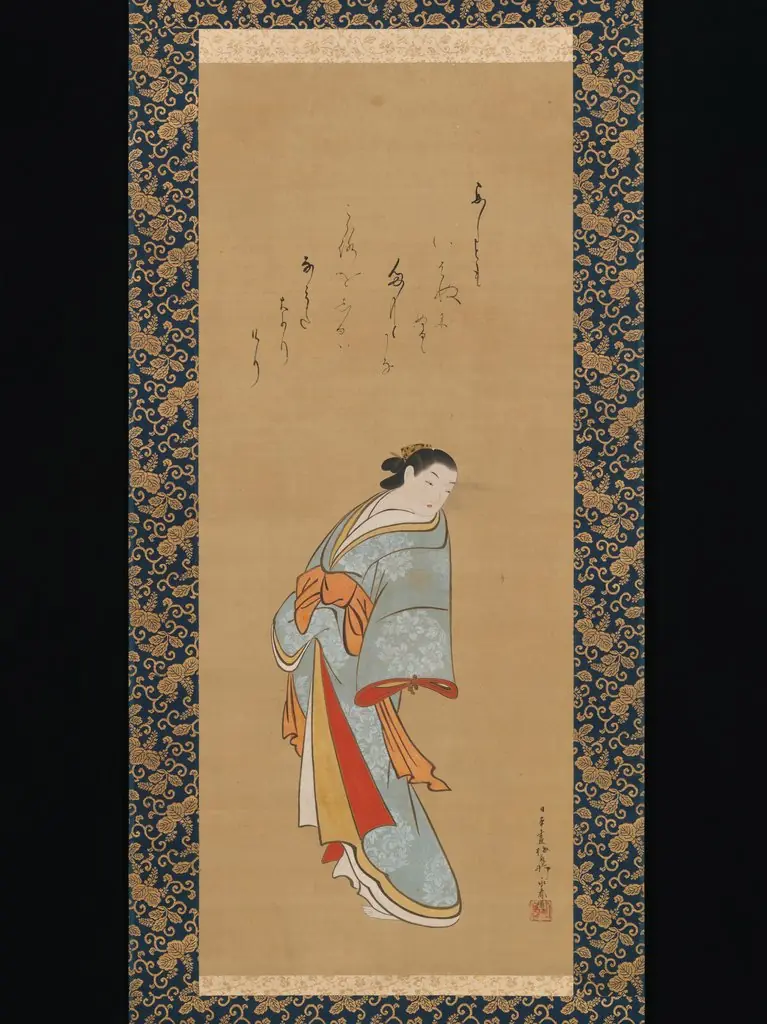 Standing Courtesan
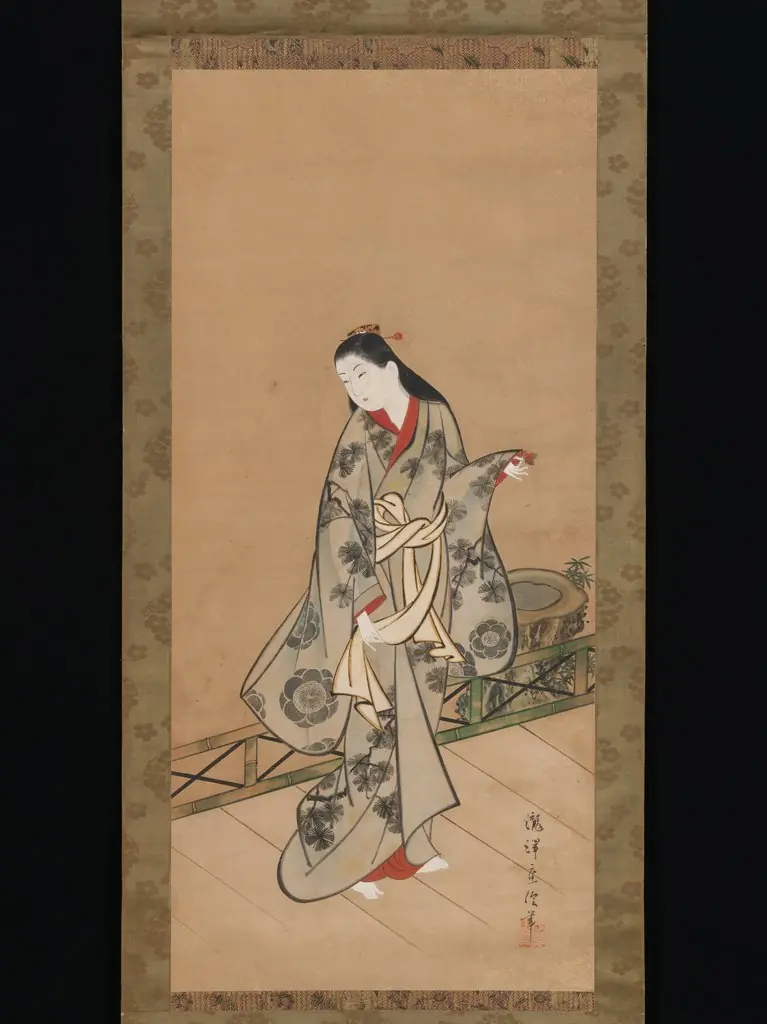 Woman on Veranda
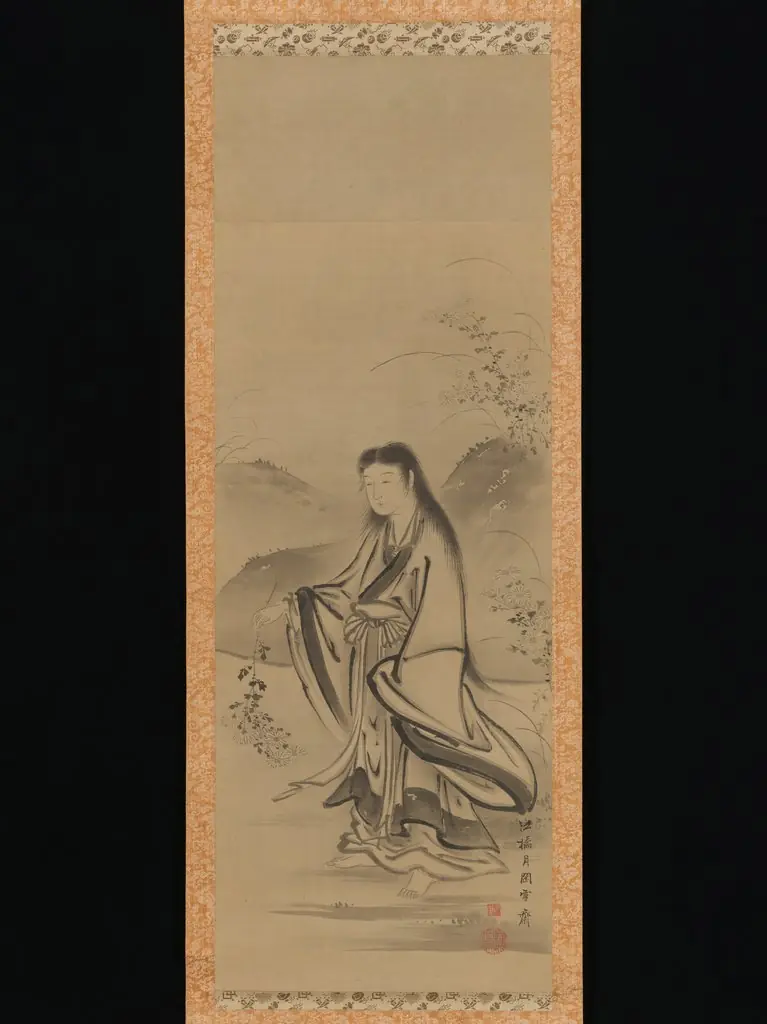 Kiku Jidō (Chrysanthemum Boy)
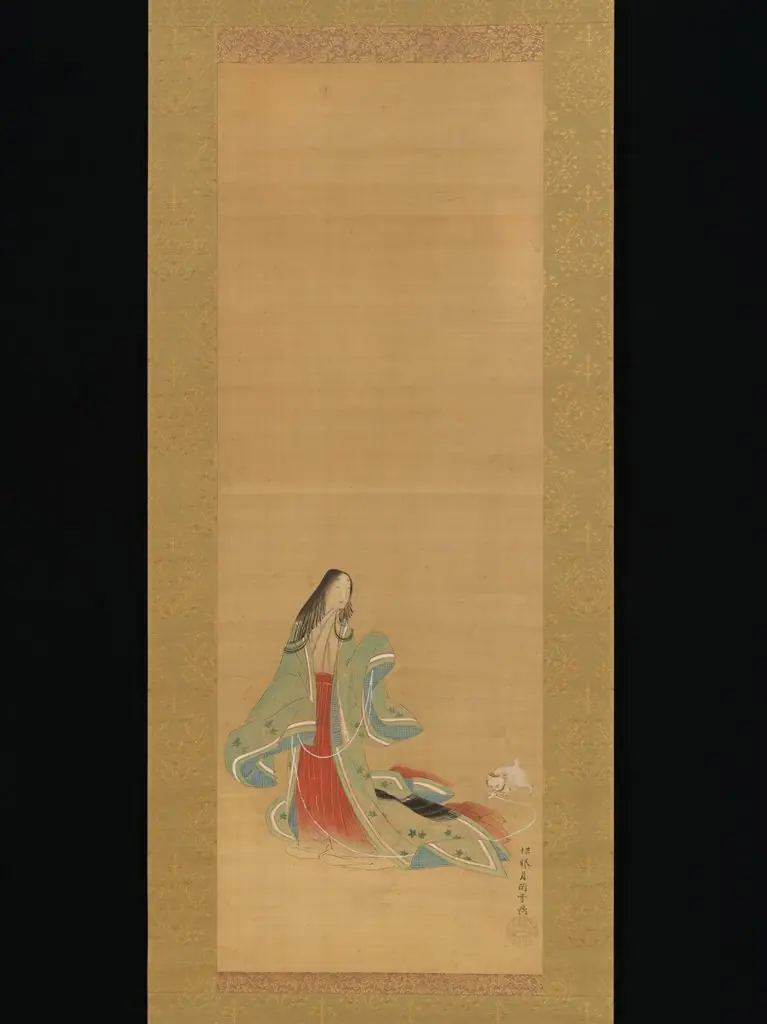 The Third Princess with her Cat, from the "New Herbs I" (Wakana I) chapter The Tale of Genji (Genji monogatari}
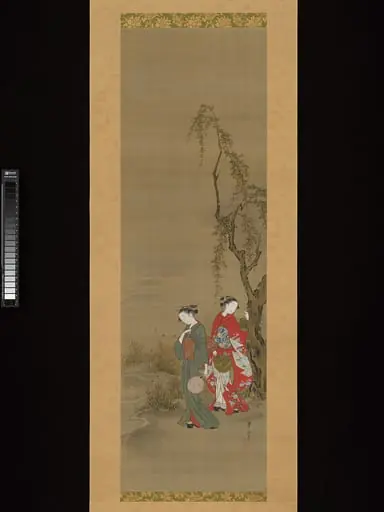 Untitled