Artwork
The God Izanagi and Goddess Izanami
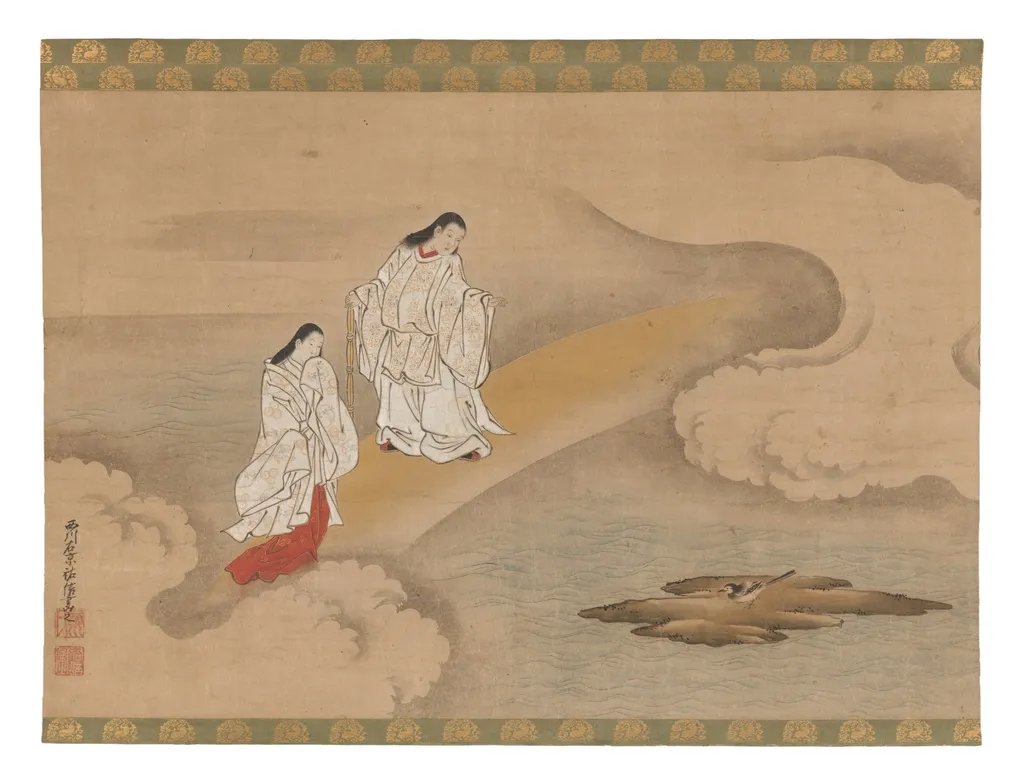
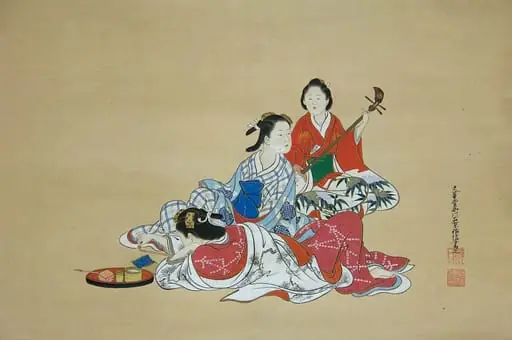
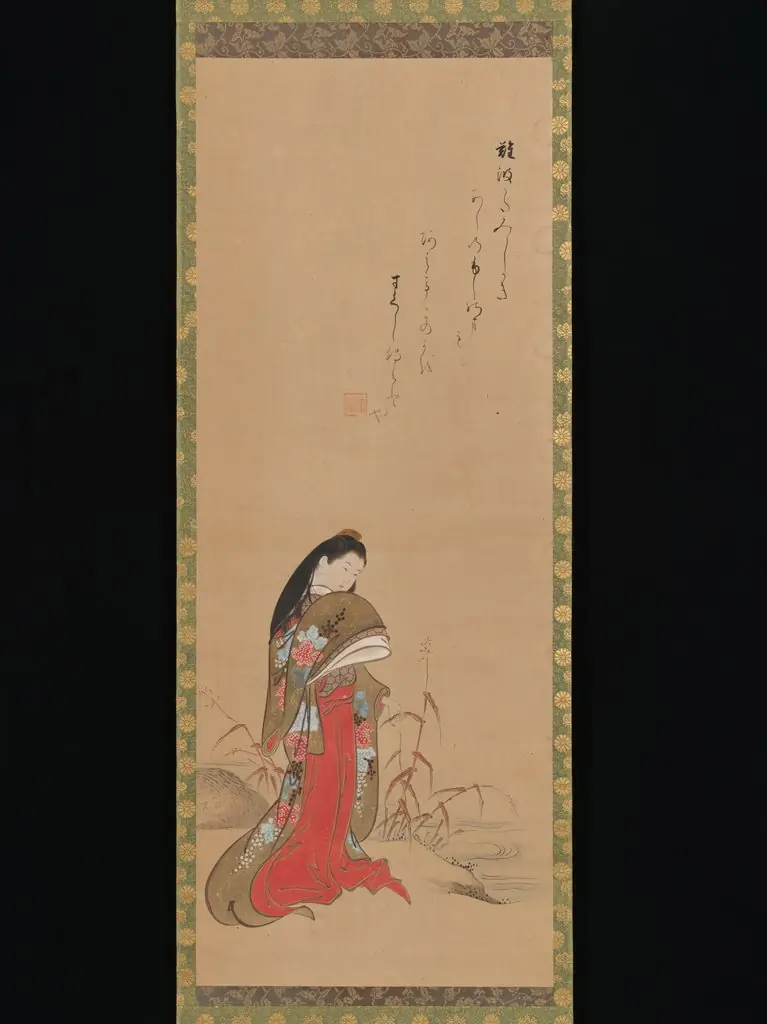
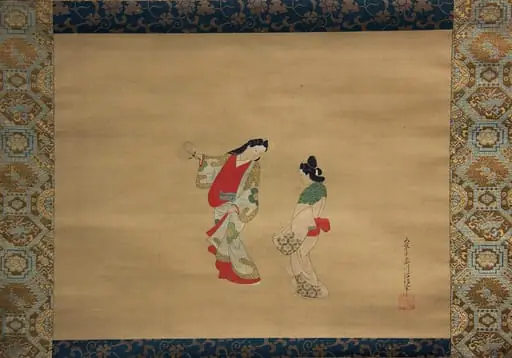
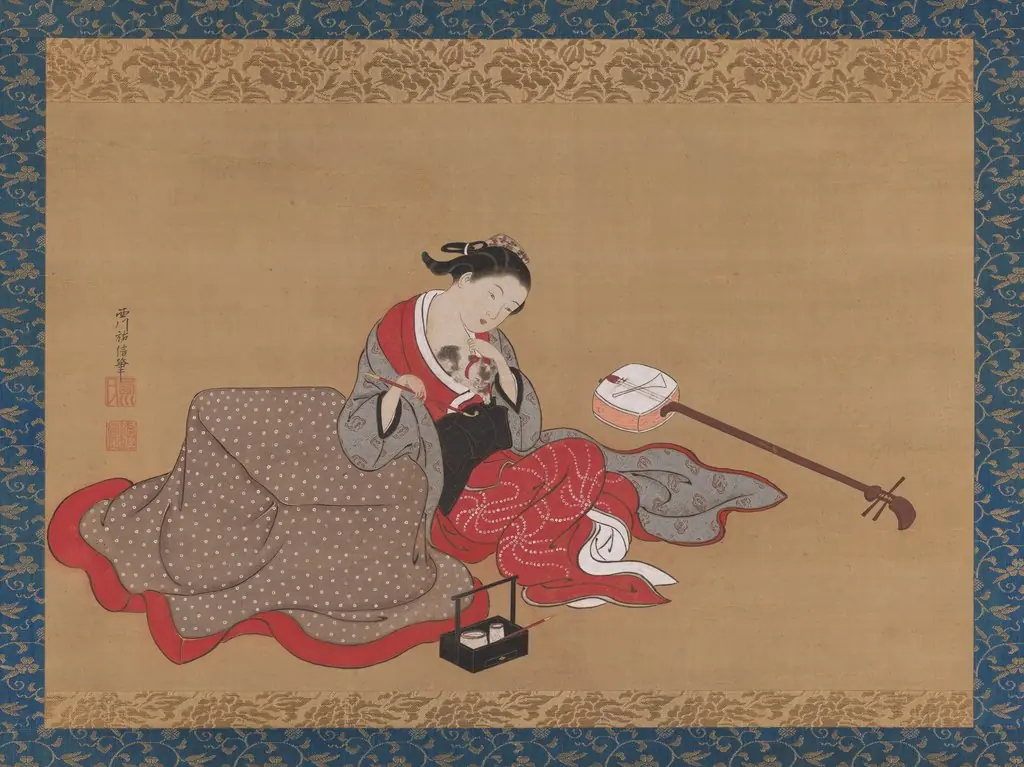
The God Izanagi and Goddess Izanami is an unspecified painting by the Rococo painting artist Nishikawa Sukenobu. It dates from 1725 and is held in the collection of the Metropolitan Museum of Art.
About this work
Overview
Created in 1725 by the Edo‑period painter Nishikawa Sukenobu, this work portrays the mythic pair Izanagi and Izanami. Executed on paper with ink and subtle pigments, the image is part of the Metropolitan Museum of Art’s collection. The composition places the two deities on a gently curving path, set against a tranquil sky and water backdrop that lends depth to the scene.
Subject & Meaning
The figures represent the Shinto creator deities Izanagi and Izanami, who, according to legend, descended from heaven to shape the Japanese islands. Their attire—white robes with red accents—signals purity and ceremonial importance. The staff held by the male figure underscores his role as a divine initiator, while the serene setting suggests the harmonious balance of creation.
Technique & Style
Sukenobu employs a restrained palette of muted tones, allowing delicate brushwork to convey the softness of clouds and rippling water. The line work is fine and precise, characteristic of ukiyo‑e painting, while the balanced arrangement of the figures reflects the aesthetic of harmony prevalent in early 18th‑century Japanese art.
History & Provenance
The painting entered the Metropolitan Museum of Art’s holdings in the 20th century, joining a broader collection of Japanese works acquired to illustrate the cultural and artistic developments of the Edo period. Its attribution to Nishikawa Sukenobu is based on stylistic analysis and documented signatures linking it to his prolific output of narrative scenes.
Own this work as a print
Artist & collection

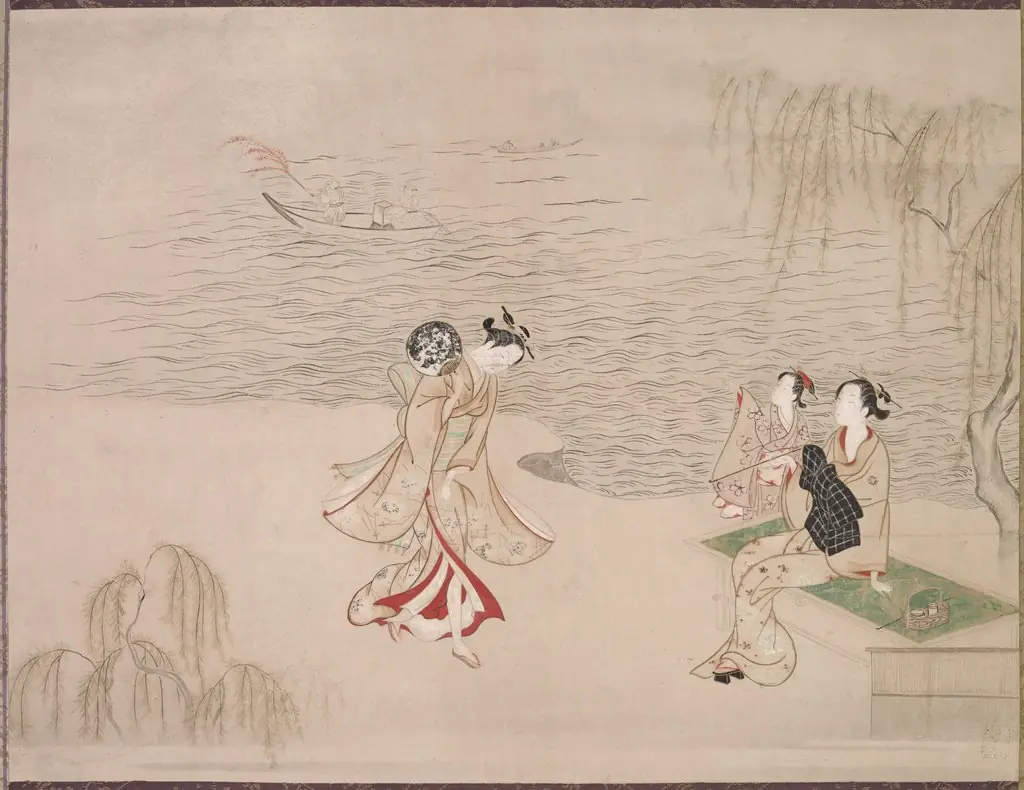 Beauties at the Seashore
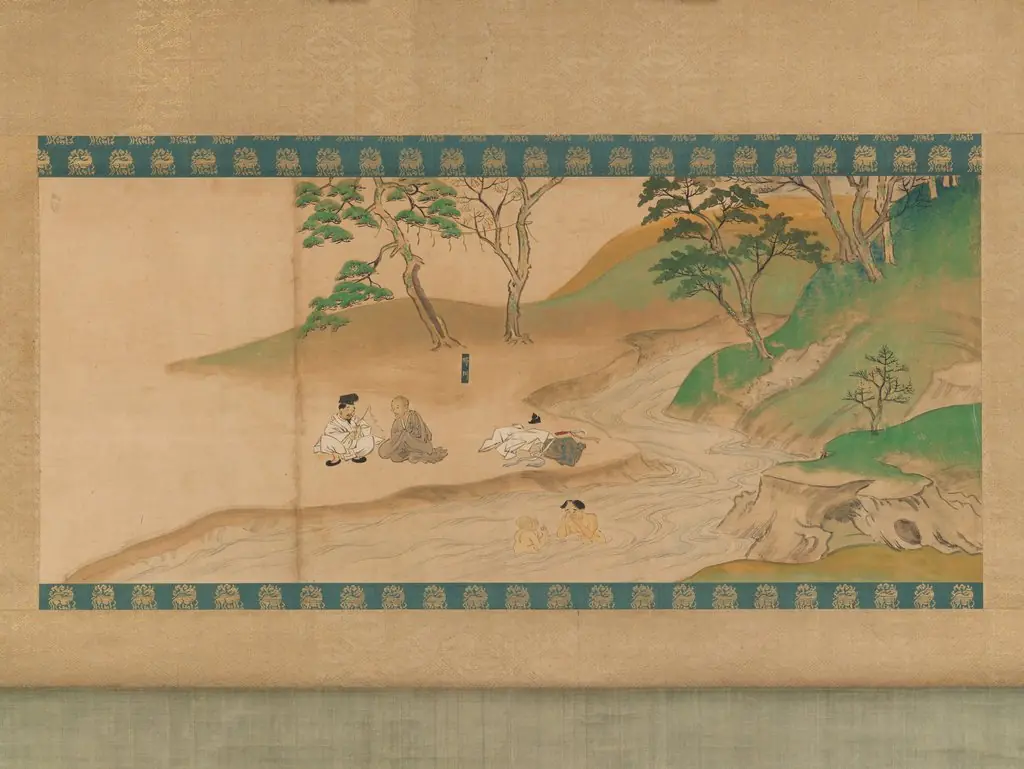 Section of Jin'o-ji Engi Emaki (Konin Shonin E-den)
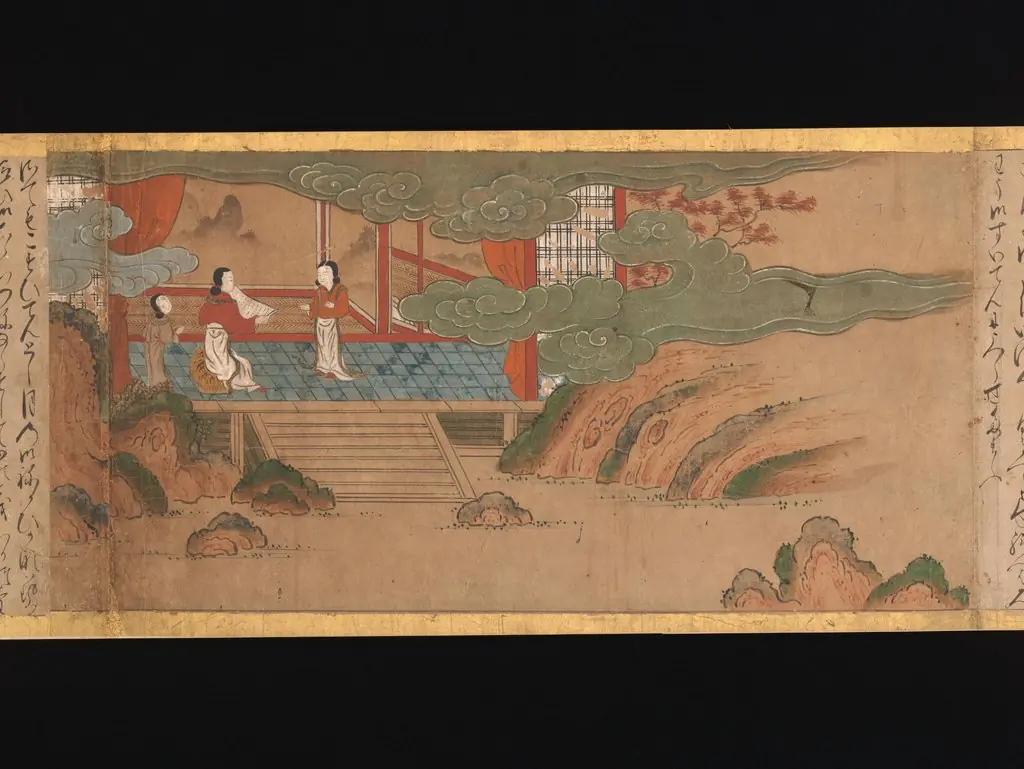 Illustrated Legends of the Origins of the Kumano Shrines (Kumano engi emaki)
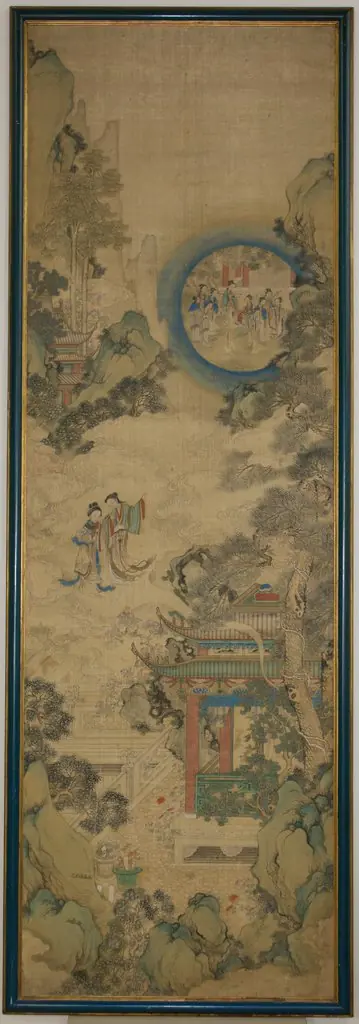 Three scenes from festivals of the twelve months
 Untitled
 秋夜長物語絵巻断簡|The Final Scene from A Long Tale for an Autumn Night (Aki no yonaga monogatari)
 Untitled