Artwork
Hymenaios disguised
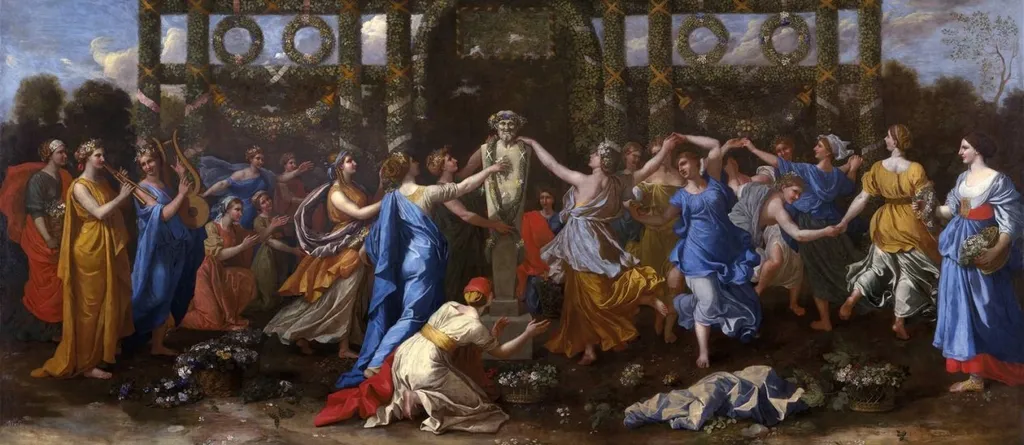
Hymenaios disguised is an oil painting by the Early Baroque Italian artist Nicolas Poussin. It dates from 1634 and is held in the collection of the São Paulo Museum of Art.
About this work
Overview
Hymenaios disguised is a 1634 oil painting by Nicolas Poussin, now part of the São Paulo Museum of Art's collection. The work depicts a lively gathering in a classical setting.
Subject & Meaning
The painting shows a group in classical attire celebrating around a central statue in a lush garden. The statue, adorned with floral garlands, appears to be the celebration's focal point, suggesting a scene of ritual or festive reverence.
Technique & Style
While specific technical details are not highlighted, the painting's style is consistent with Poussin's known oeuvre, characterized by classical influences and meticulous composition, as inferred from the balanced depiction of figures, instruments, and natural elements.
History & Provenance
Created in 1634, the painting's history prior to its current residence at the São Paulo Museum of Art is not detailed in available information.
Context
The work reflects Poussin's affinity for classical themes and settings, common in 17th-century European art, particularly among artists influenced by ancient Greek and Roman cultures.
Legacy
As part of Poussin's body of work, 'Hymenaios disguised' contributes to the artist's reputation for blending classical motifs with dynamic, celebratory scenes, though its individual impact on the broader art historical narrative is not specifically outlined.
Artist & collection
Artist
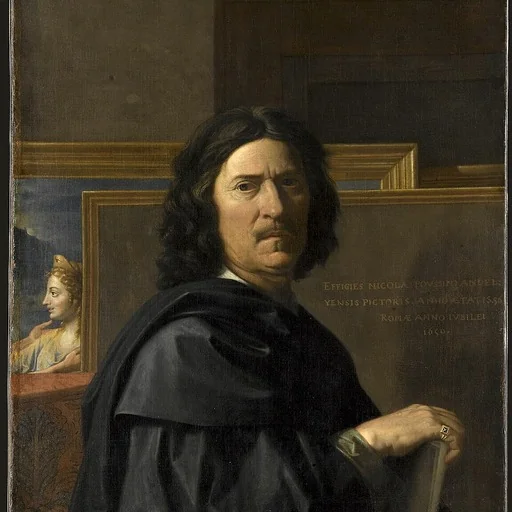
Nicolas Poussin (UK: , US: , French: ; June 1594 – 19 November 1665) was a leading painter of the classical French Baroque style, although he spent most of his working life in Rome.

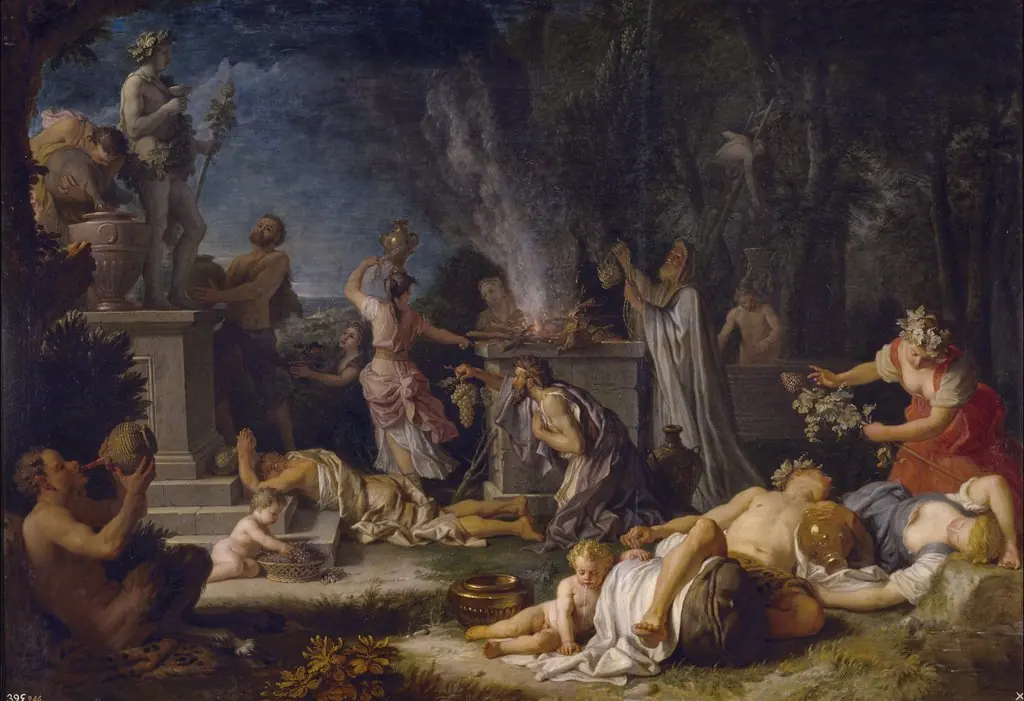 Offering to Bacchus
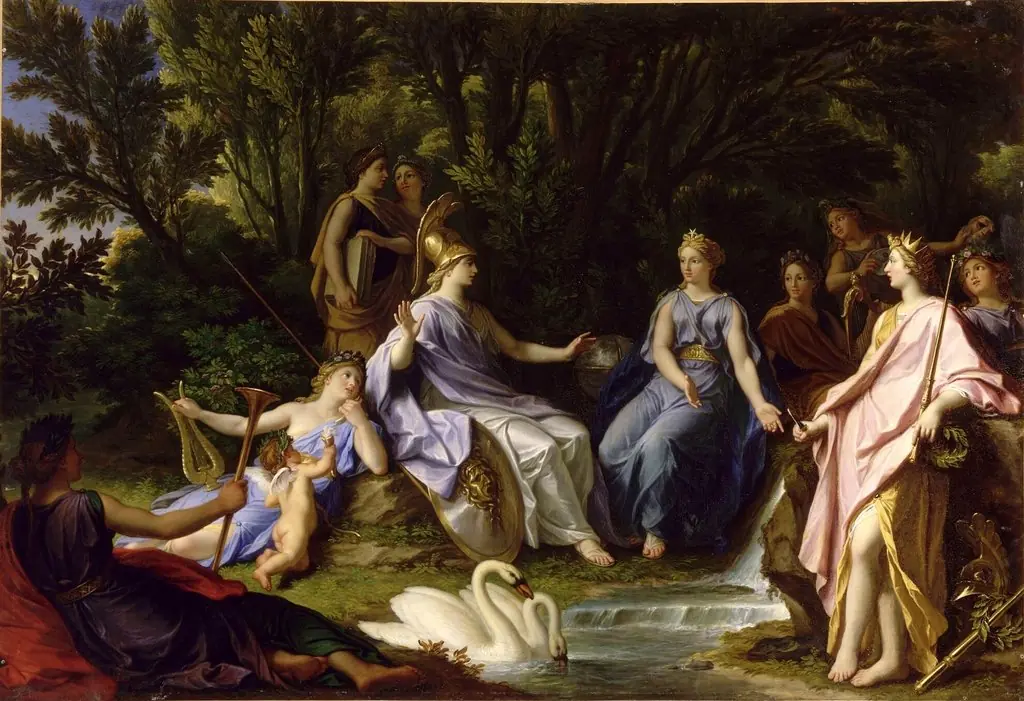 Story of Minerva - The Muses Showing Minerva Hippocrene Waters of the River that Brings Out Pegasus
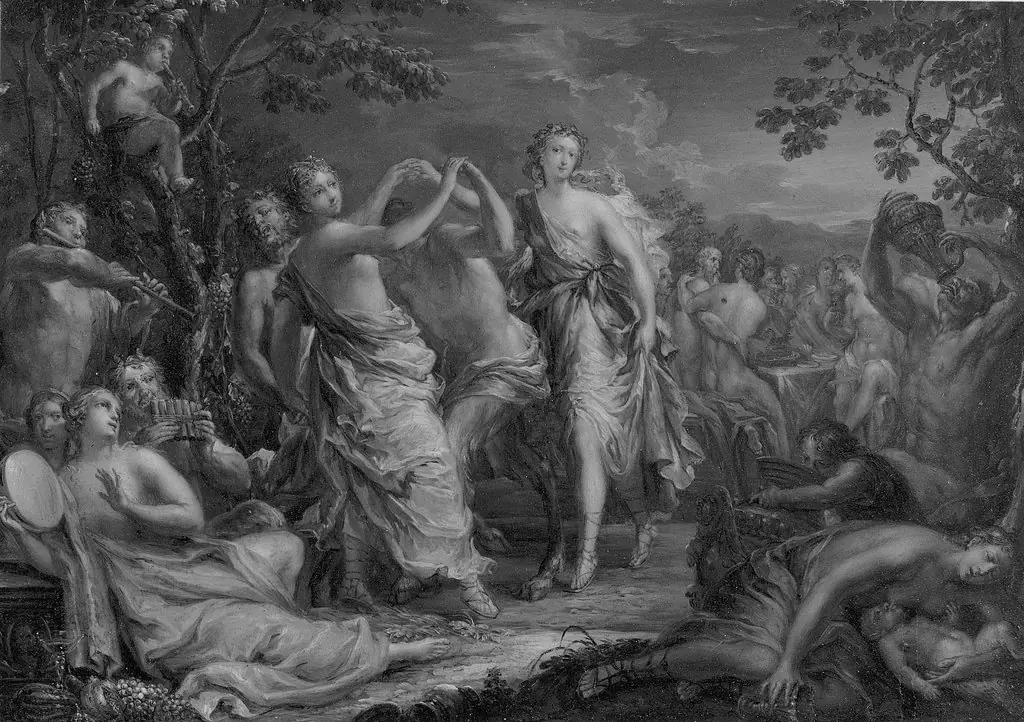 Bacchic Revels
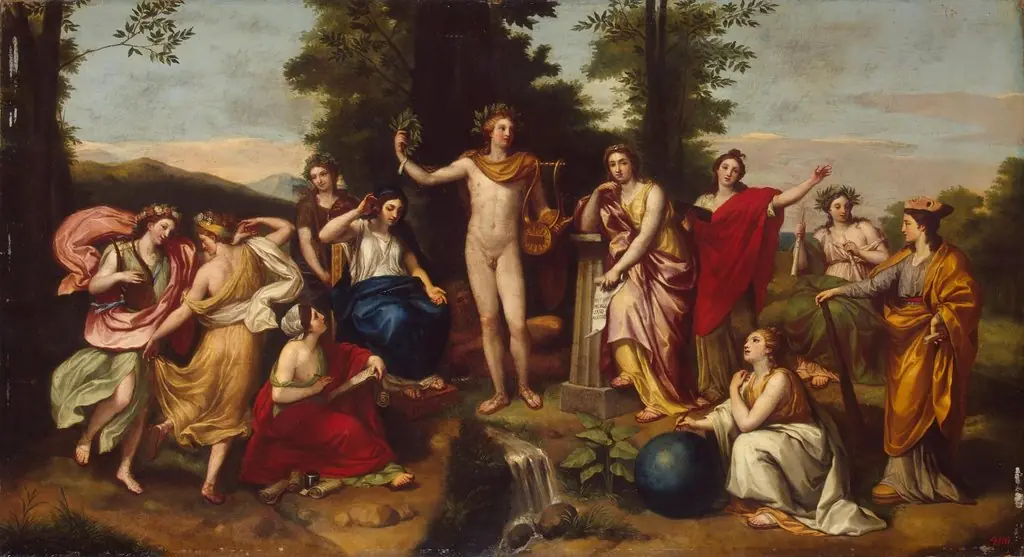 Parnassus
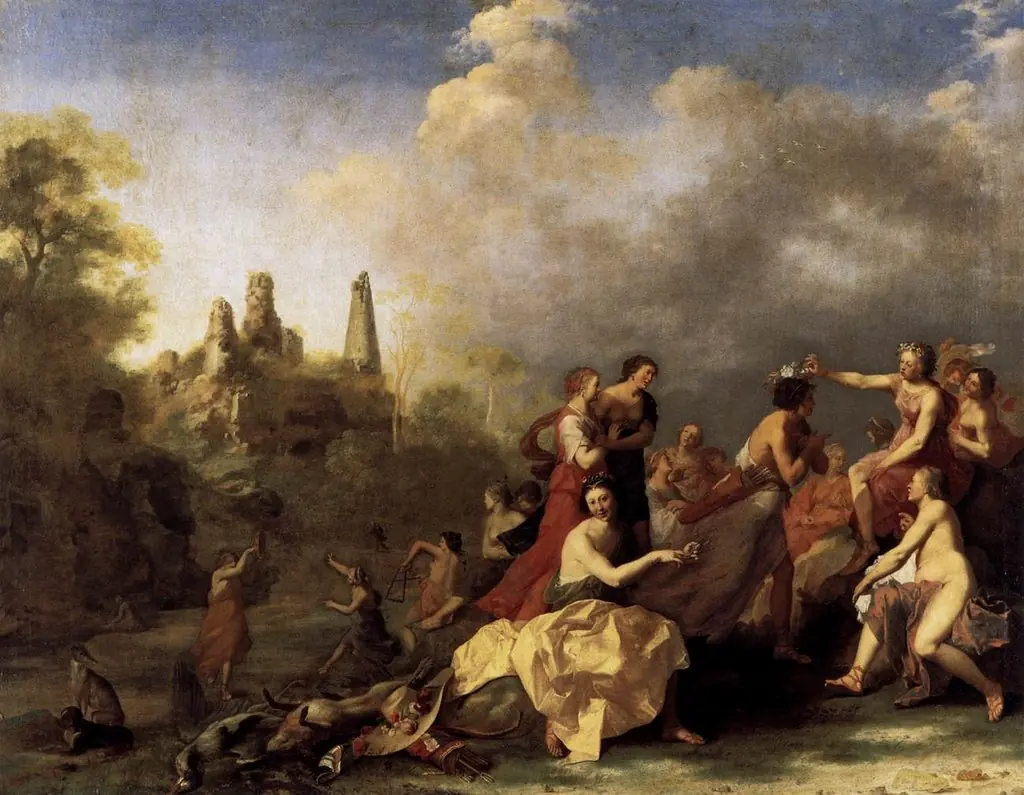 The coronation of Mirtillo after the kissing contest (Guarini, Il Pastor Fido)
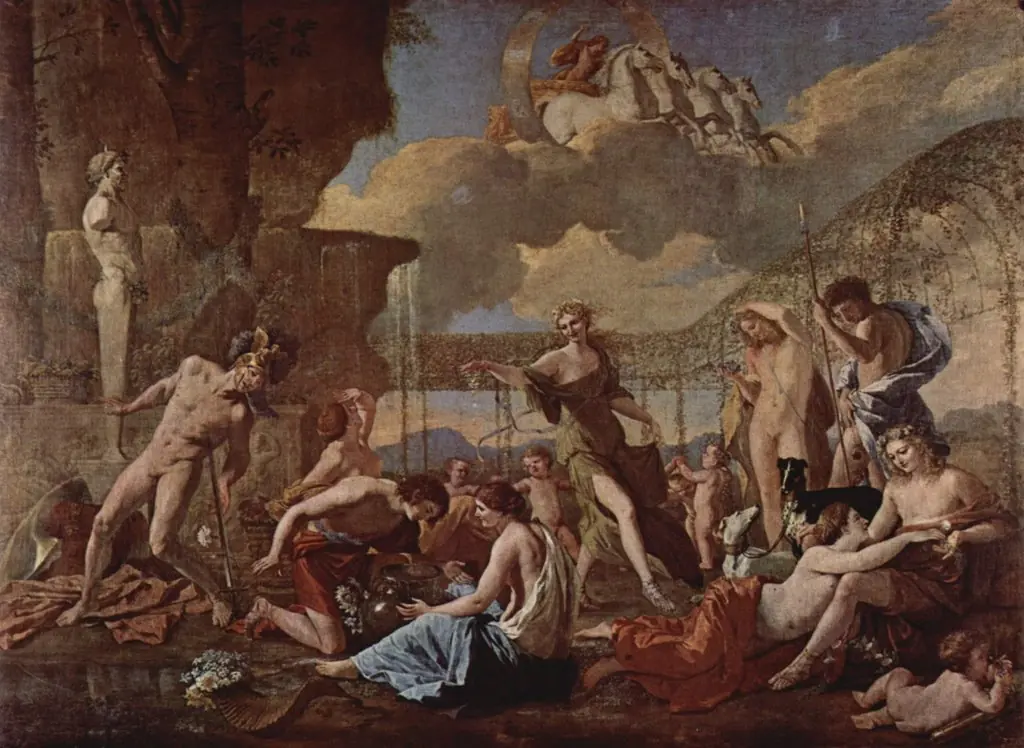 The Empire of Flora
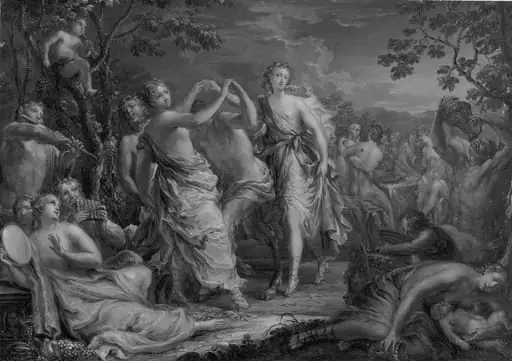 Bacchic Revels
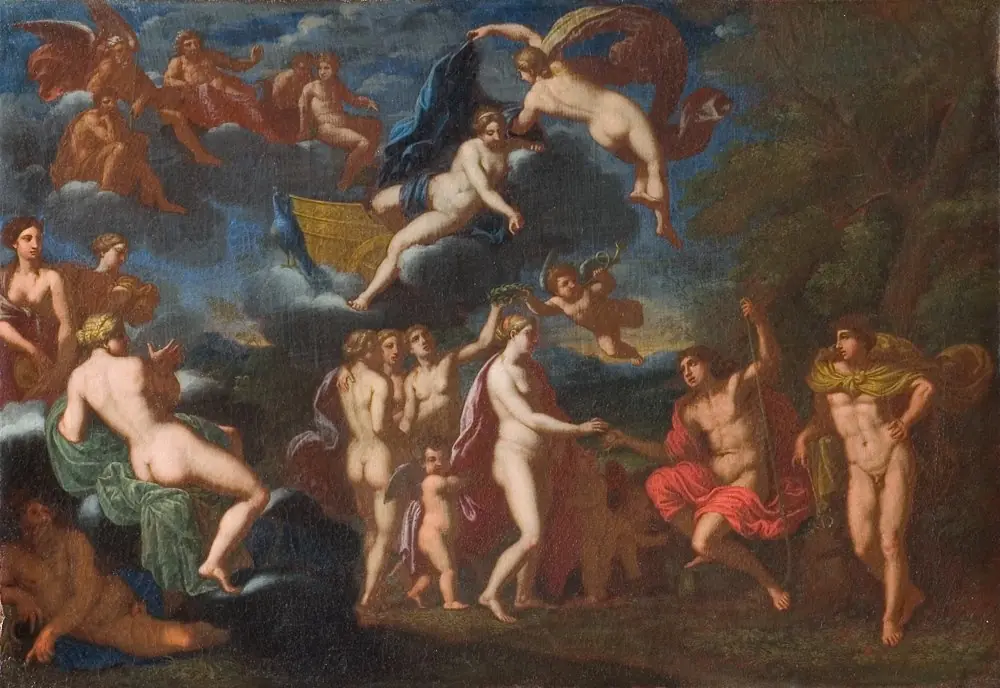 Paris Giving Venus the Apple
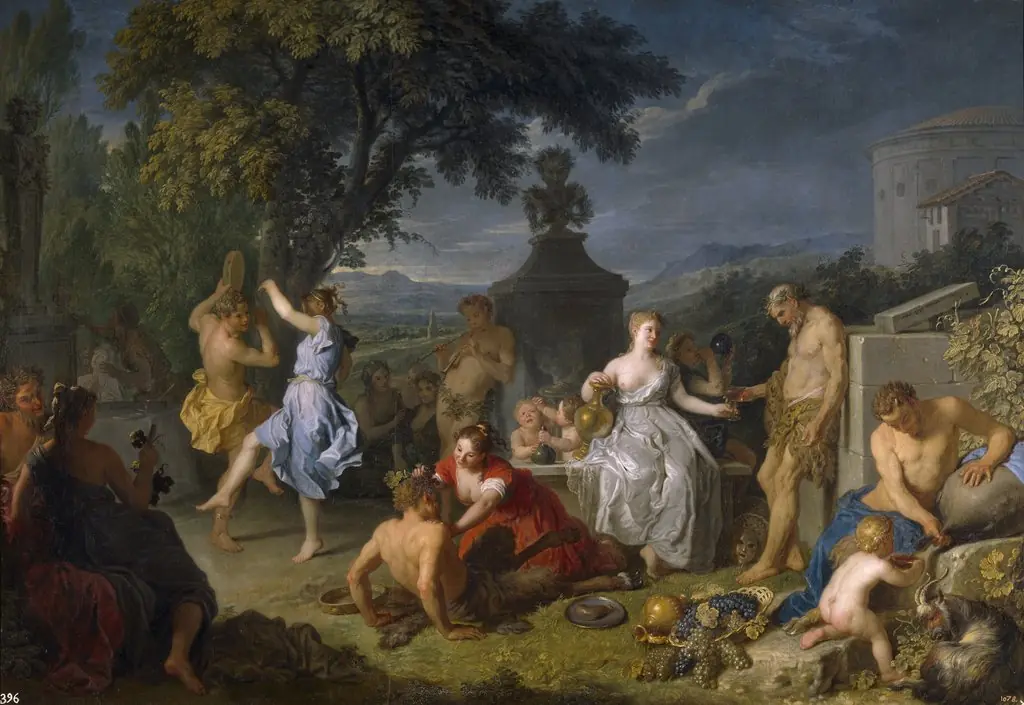 Bacchanal
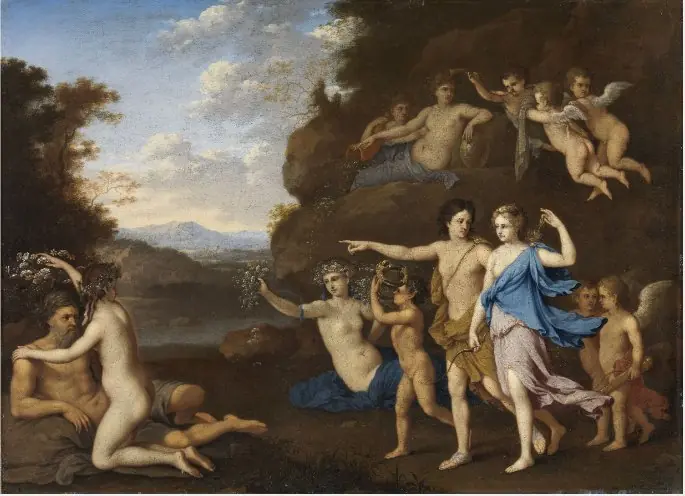 A Classical Landscape
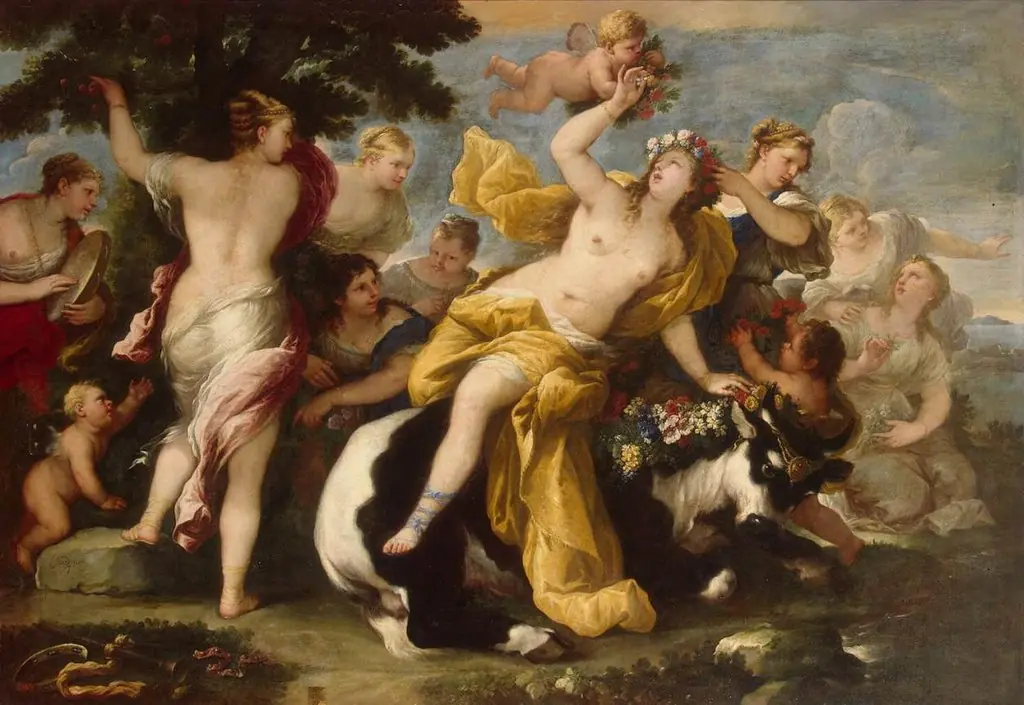 Rape of Europa
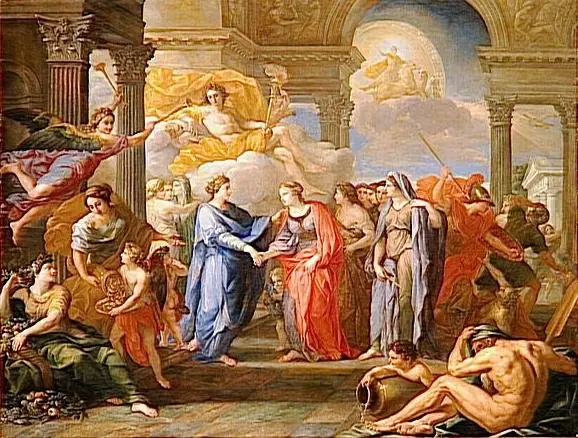 Allégorie de l'alliance du dauphin de France avec Marie-Anne-Victoire de Bavière