Artwork
Rape of Europa
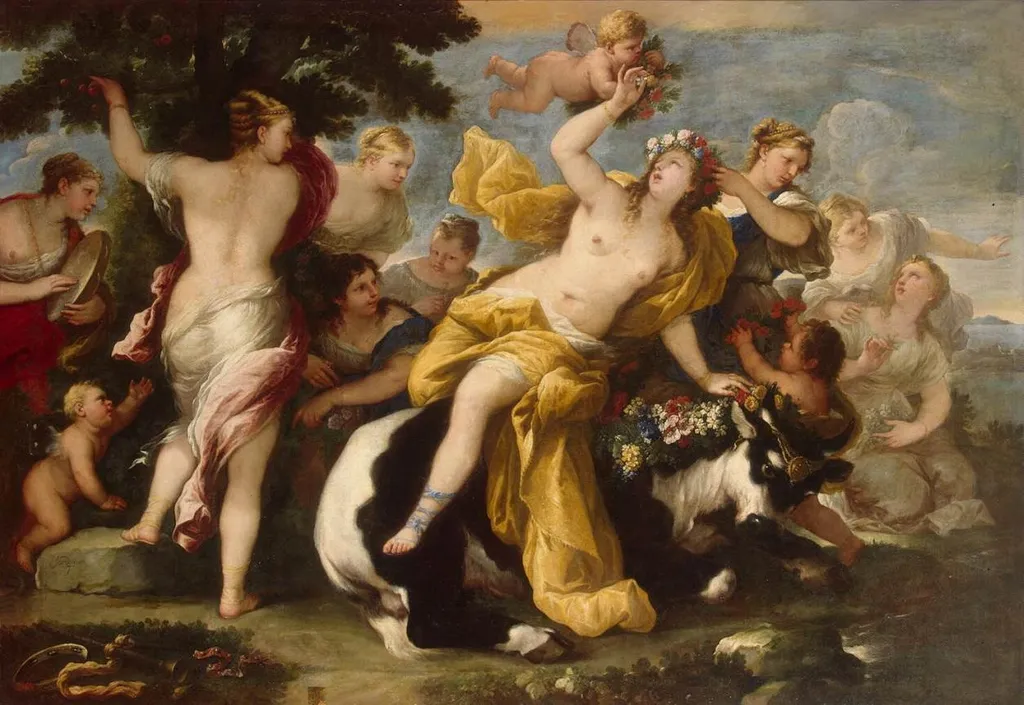
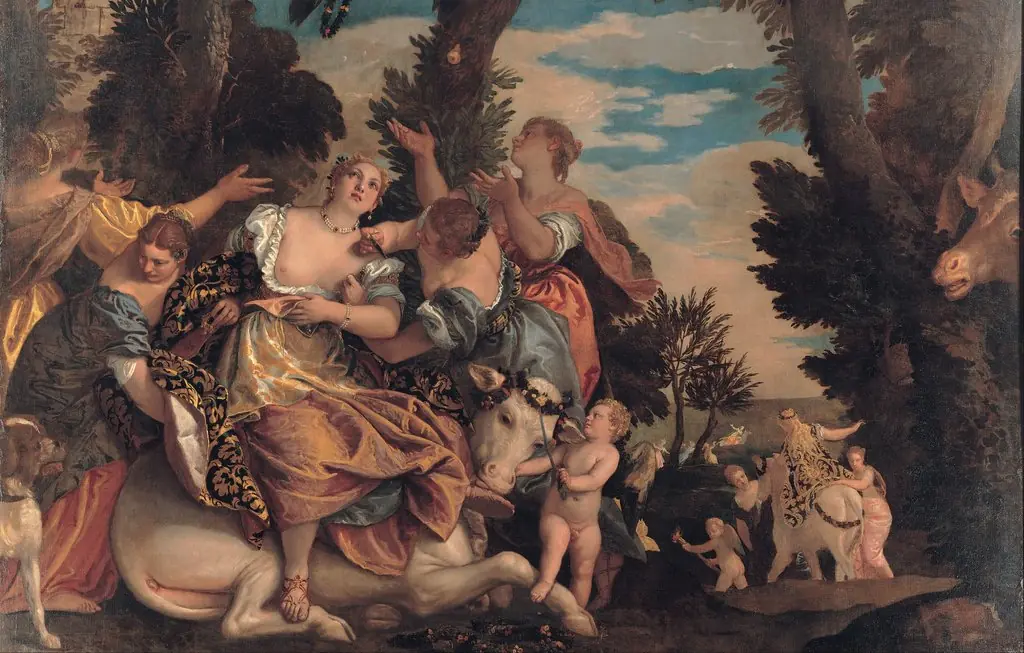
Rape of Europa is an oil painting by the Early Baroque Italian artist Luca Giordano. It dates from 1675 and is held in the collection of the Hermitage Museum.
About this work
Overview
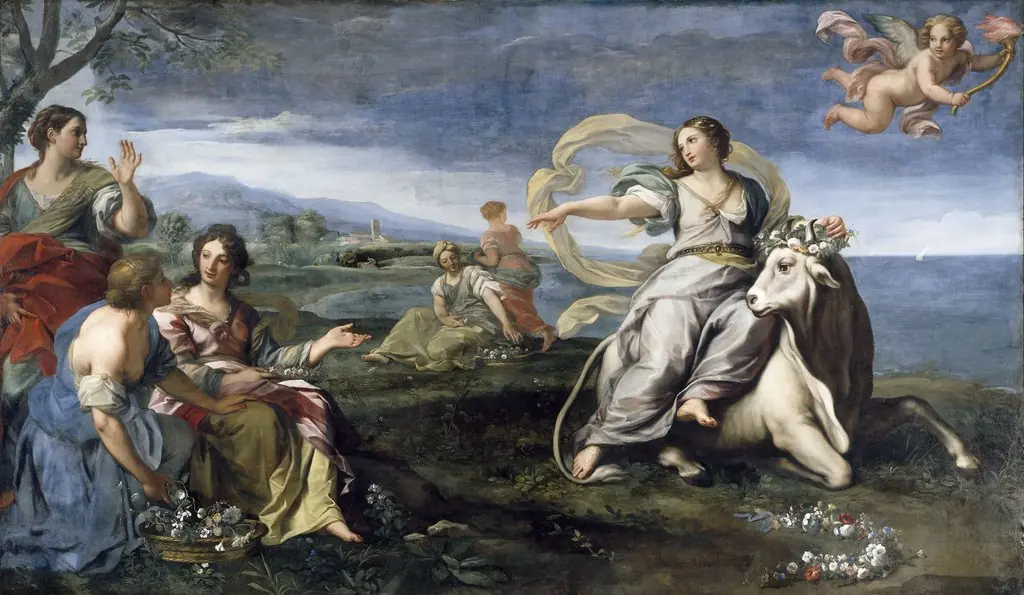
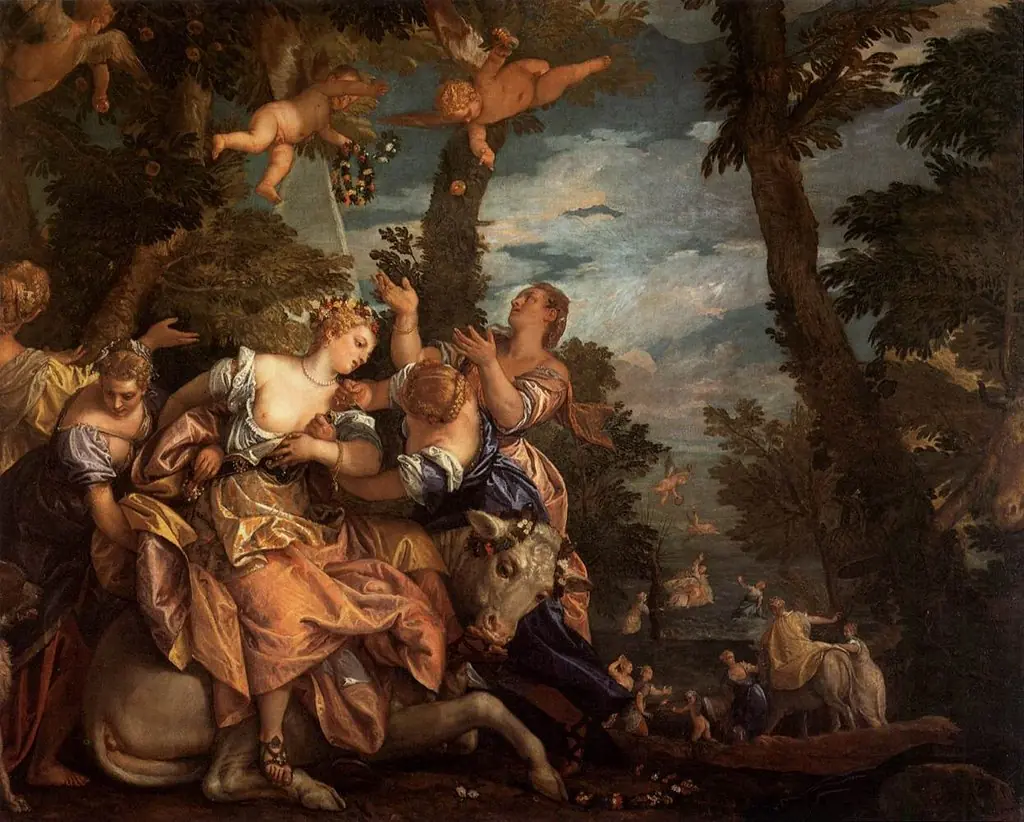
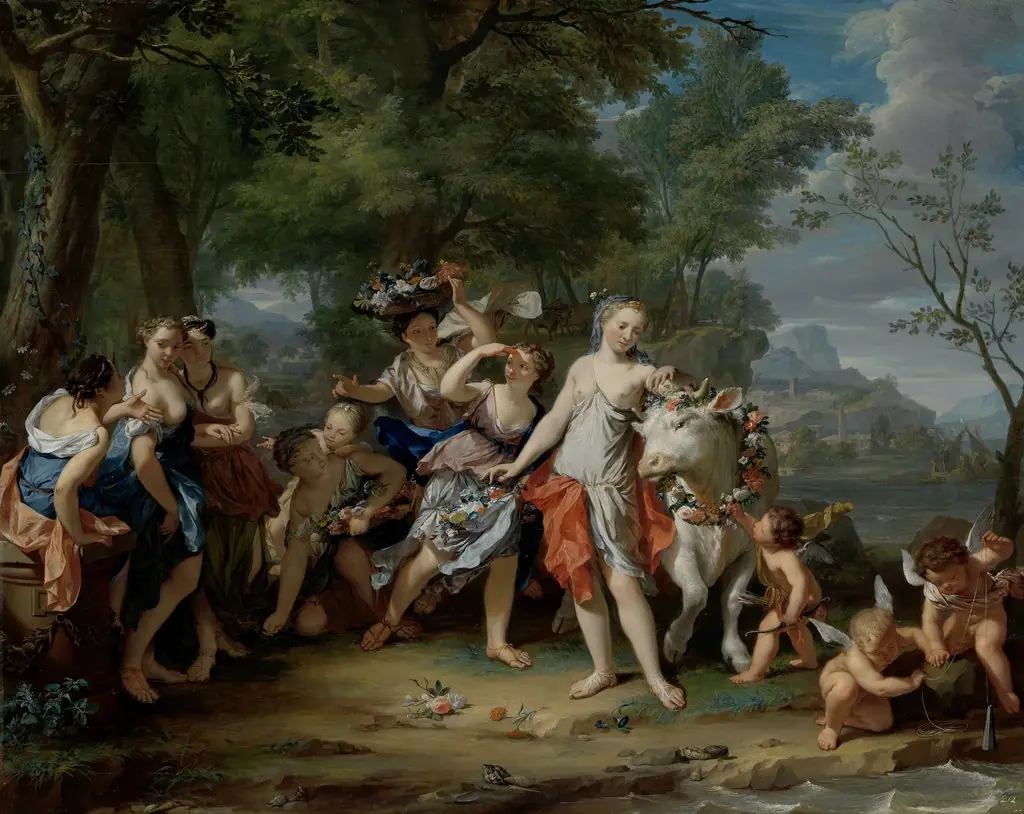
Luca Giordano’s 1675 oil canvas, titled Rape of Europa, presents the classical myth of Europa’s abduction by Zeus in the form of a bull. The composition centers on a woman astride the animal, surrounded by a dynamic crowd of figures and cherubic infants, set against a landscape of sea, trees, and clouds. The work is part of the State Hermitage Museum’s collection in St. Petersburg.
Subject & Meaning
The scene illustrates the moment Zeus, disguised as a white‑and‑dark bull, carries the Phoenician princess Europa across the sea. Europa, clothed in a golden robe and crowned with flowers, clutches a wreath, while onlookers display a range of emotions—from alarm to curiosity—reflecting the tension between divine intervention and human vulnerability inherent in the myth.
Technique & Style
Giordano employs a luminous palette, juxtaposing soft flesh tones with vivid reds and blues that heighten the drama.
Giordano employs a luminous palette, juxtaposing soft flesh tones with vivid reds and blues that heighten the drama. The brushwork combines fluid, almost painterly gestures for the swirling crowd with more precise modeling of the central figures, creating a dreamlike yet kinetic atmosphere. Light filters through clouds, illuminating Europa’s robe and the bull’s contrasting patches of white and dark.
History & Provenance
Executed in the late Baroque period, the painting entered the Russian imperial collection in the 18th century and has remained in the State Hermitage Museum since. Its acquisition reflects the era’s fascination with classical subjects and the popularity of Giordano’s prolific output among European courts.
Artist & collection

Artist
Luca Giordano was an Italian late-Baroque painter and printmaker in etching. Giordano was one of the most celebrated artists of the Neapolitan Baroque, whose vast output included altarpieces, mythological paintings and…