Artwork
The Sacrament of Confirmation
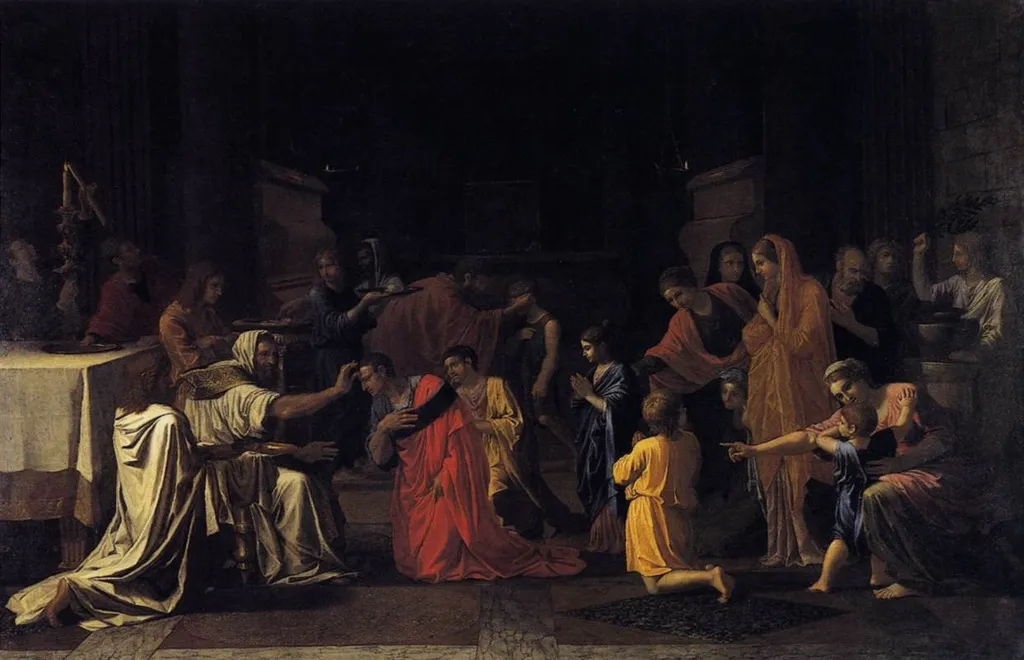
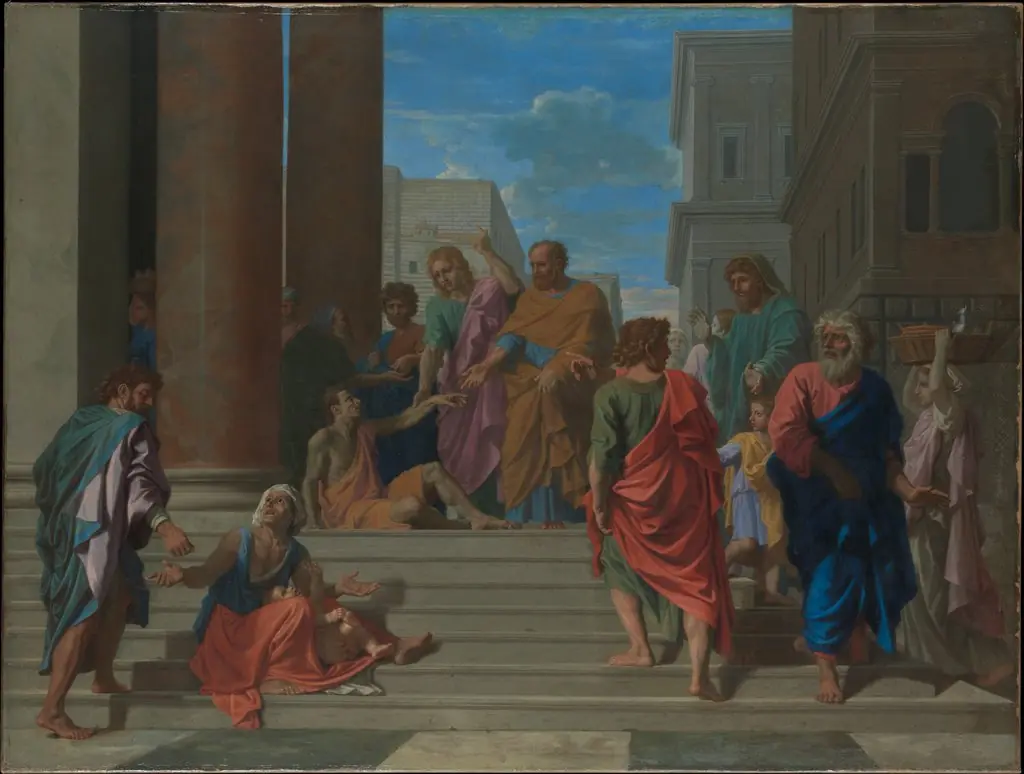
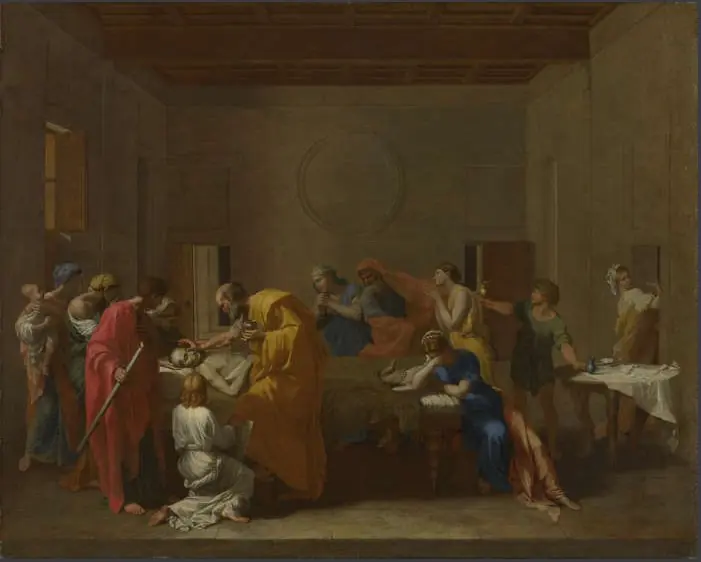
The Sacrament of Confirmation is an oil painting by the Early Baroque Italian artist Nicolas Poussin. It dates from 1645 and is held in the collection of the National Galleries Scotland.
About this work
Overview
Painted in 1645, The Sacrament of Confirmation is an oil work by Nicolas Poussin, depicting a religious rite within a modest interior. It resides in the Scottish National Gallery, where it stands as a quiet yet precise expression of spiritual ceremony. The composition centers on a single moment of ritual, rendered with restrained elegance and careful attention to spatial harmony.
Subject & Meaning
The scene illustrates the sacrament of confirmation, in which a bishop lays hands on a kneeling individual to confer the Holy Spirit.
The scene illustrates the sacrament of confirmation, in which a bishop lays hands on a kneeling individual to confer the Holy Spirit. The figures, dressed in simple liturgical robes, convey solemnity rather than spectacle. The act is intimate and focused, emphasizing spiritual transmission over ceremonial grandeur. The setting, stripped of ornament, directs attention to the gesture and its theological weight.
Technique & Style
Poussin employs chiaroscuro to model forms with subtle gradations of light and shadow, enhancing the three-dimensionality of the figures and architecture. The single light source, likely from an unseen window, casts sharp contrasts across stone surfaces and fabric folds. His brushwork is controlled, avoiding theatricality; the clarity of form and balanced composition reflect classical ideals of order and restraint.
History & Provenance
Commissioned during Poussin’s mature period in Rome, the painting entered the Scottish National Gallery’s collection in the 19th century. Its journey from a private ecclesiastical context to a public museum reflects broader shifts in the reception of religious art. No major alterations or restorations are recorded, preserving its original tonal integrity and compositional clarity.
Context
Created in the mid-17th century, the work aligns with Counter-Reformation efforts to clarify sacramental theology through visual means. Unlike Baroque exuberance, Poussin’s approach favors intellectual calm, resonating with contemporary theological writings that emphasized inner devotion. The painting’s austerity reflects a preference for doctrinal precision over emotional display in certain Catholic circles.
Legacy
Though less widely known than Poussin’s mythological scenes, this painting exemplifies his ability to elevate religious narrative through compositional discipline and psychological subtlety. It influenced later artists seeking to balance spiritual gravity with formal clarity. Its presence in a national collection underscores its role as a model of restrained, intellectually grounded sacred art.
Artist & collection
Artist
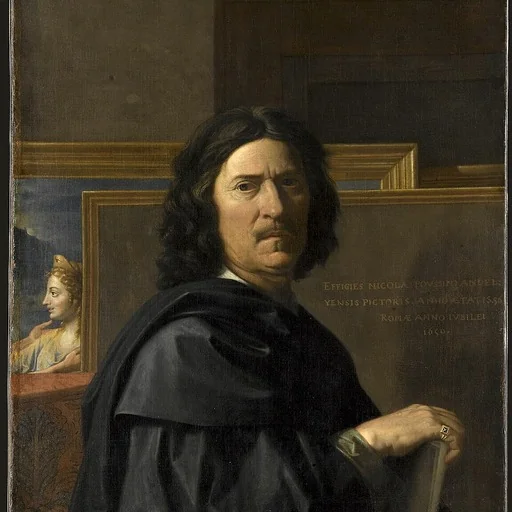
Nicolas Poussin (UK: , US: , French: ; June 1594 – 19 November 1665) was a leading painter of the classical French Baroque style, although he spent most of his working life in Rome.

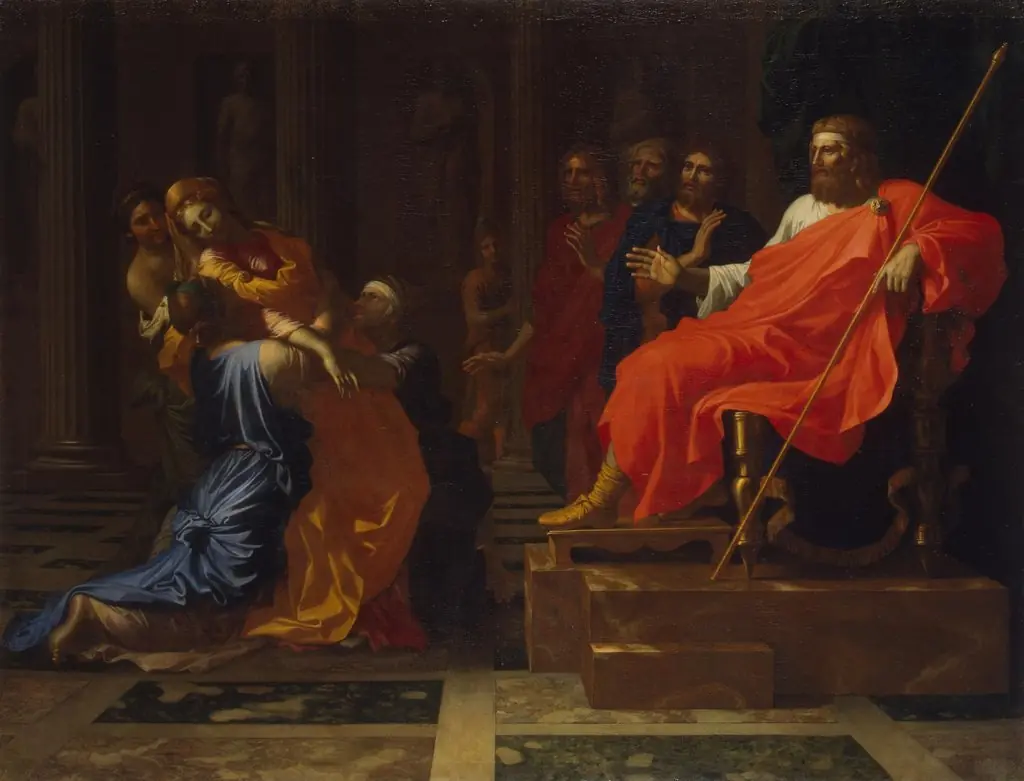 Esther before Ahasuerus
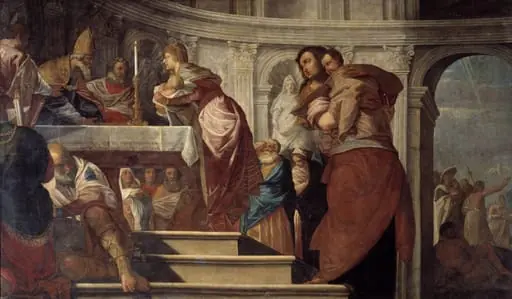 The Presentation of Christ in the Temple, and the Baptism of Christ
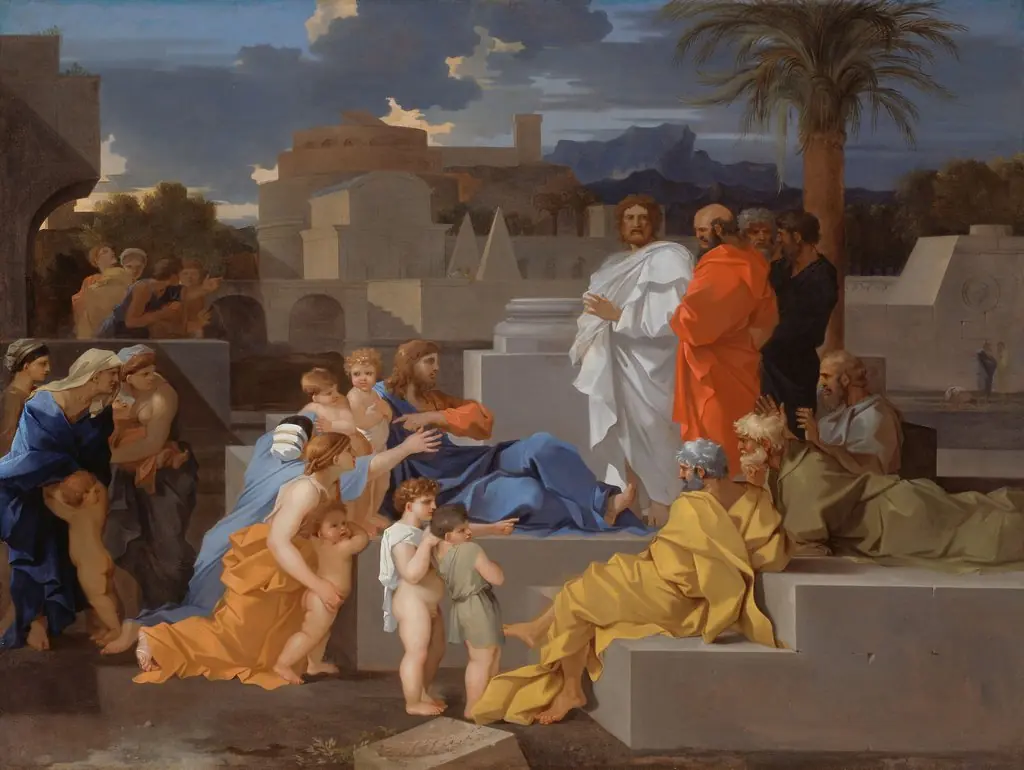 Christ Receiving the Children
 Christ Receiving the Children
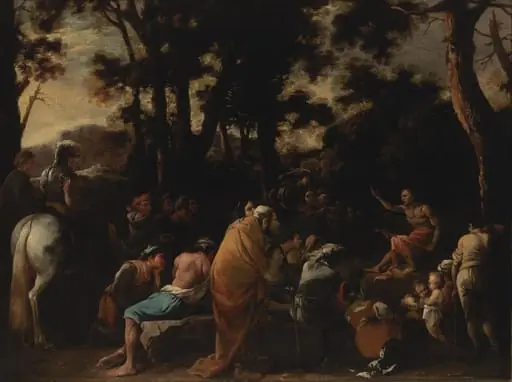 Johannes Kastaja saarnaa
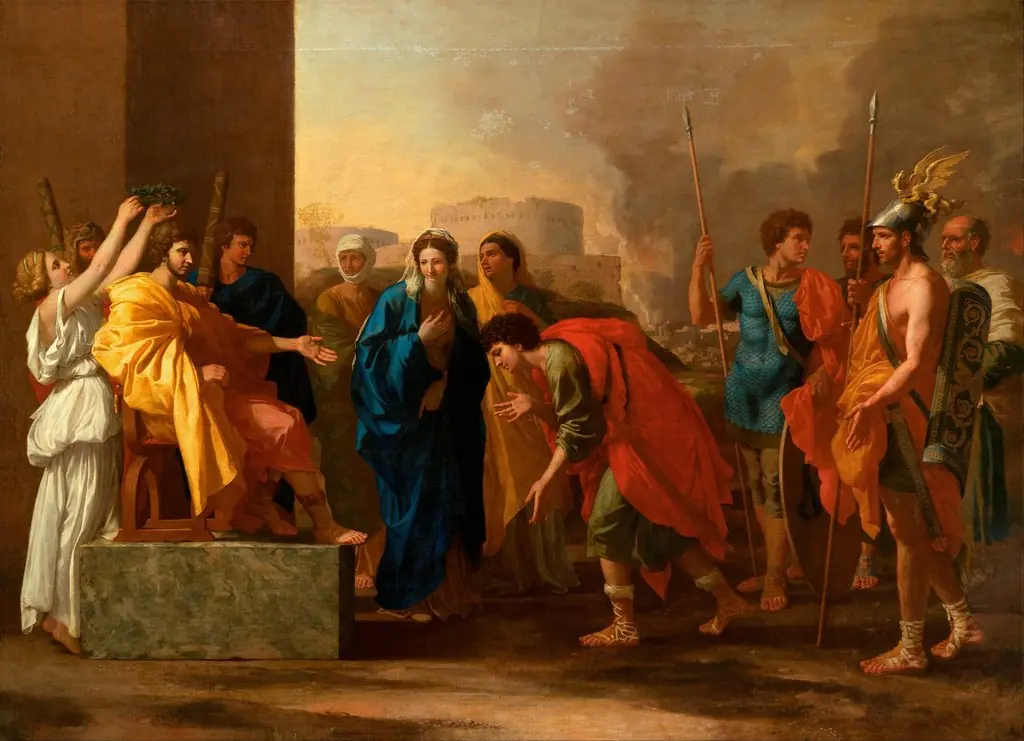 The Continence of Scipio
 Extreme Unction
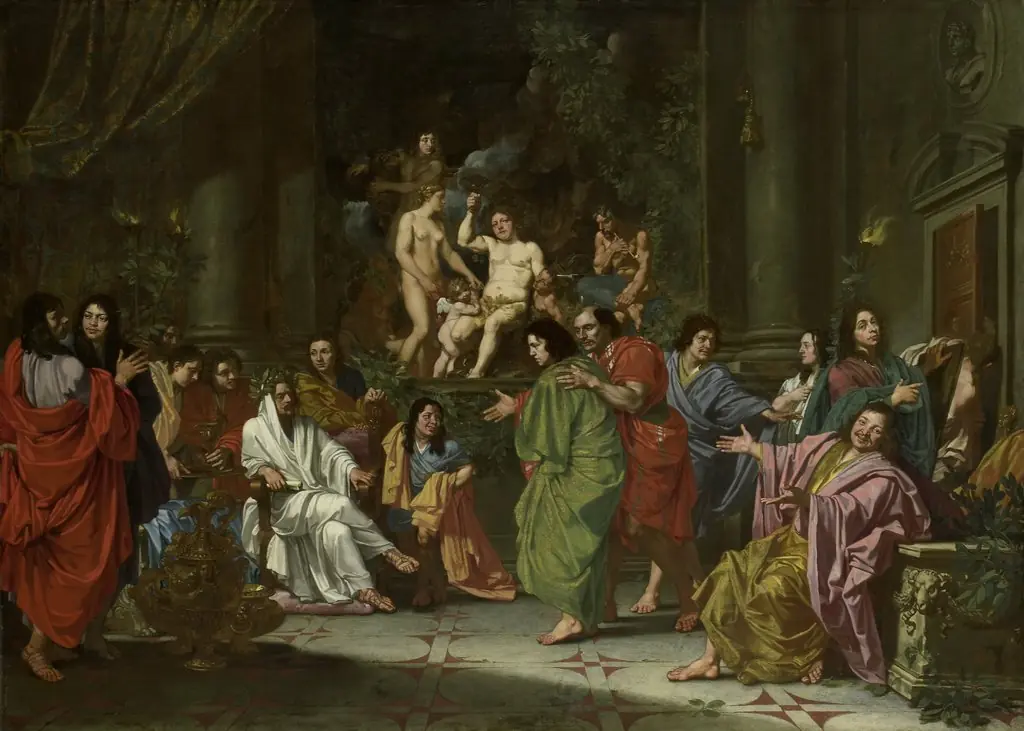 Initiation of a new Member of the Bentvueghels in Rome (Schildersbent)
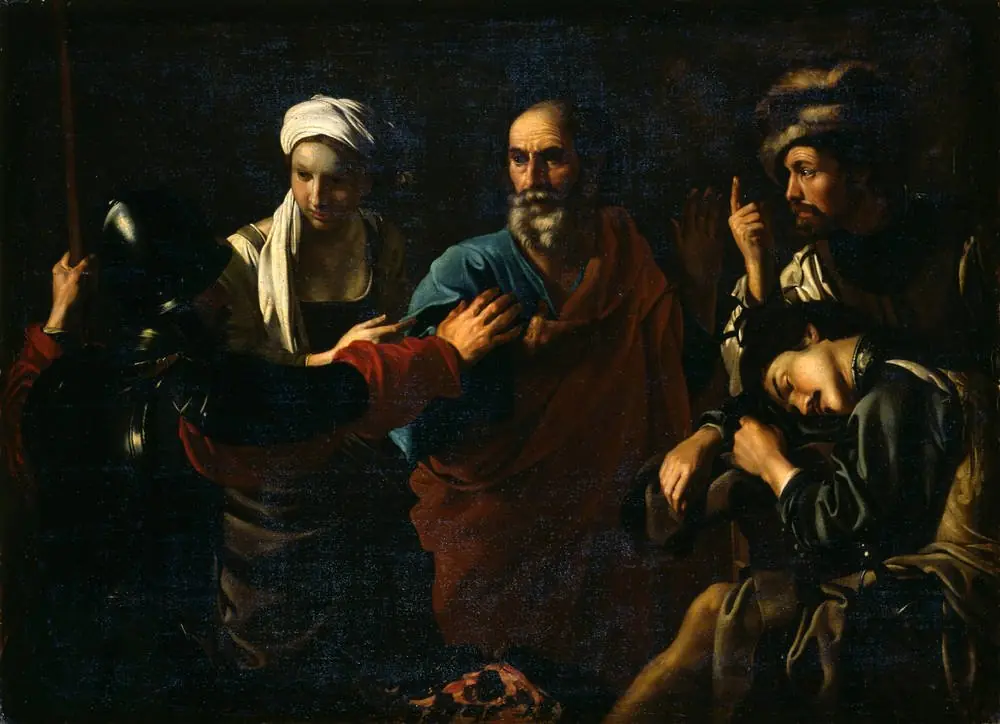 Die Verleugnung Petri
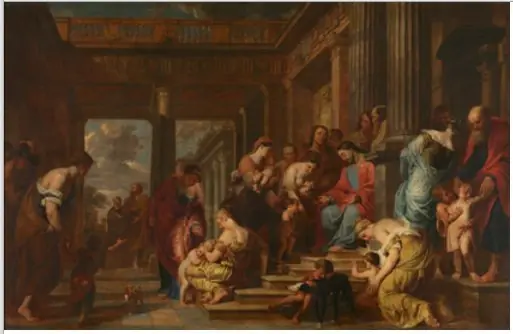 Let the Children Come to Me