Artwork
Absalom
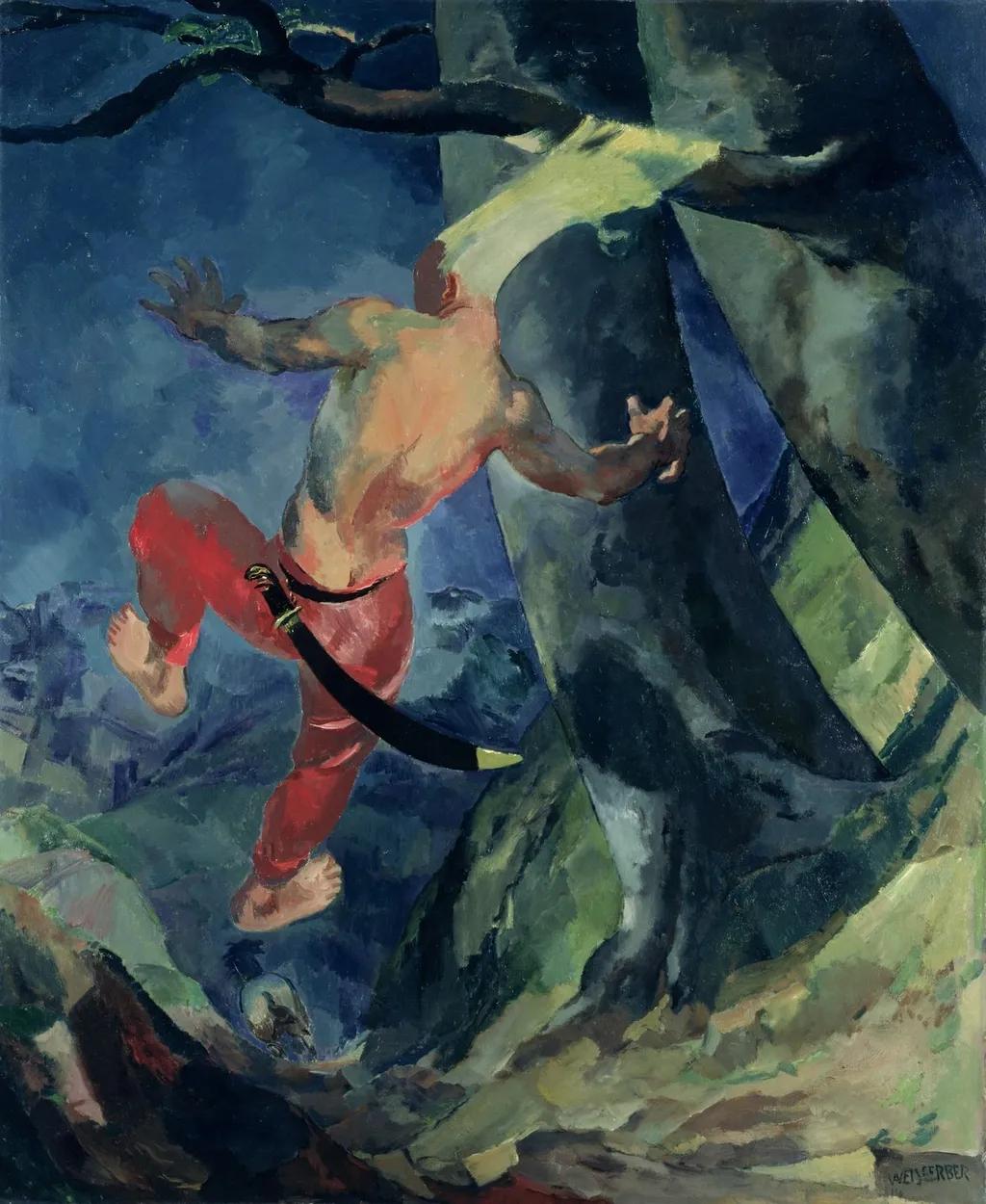
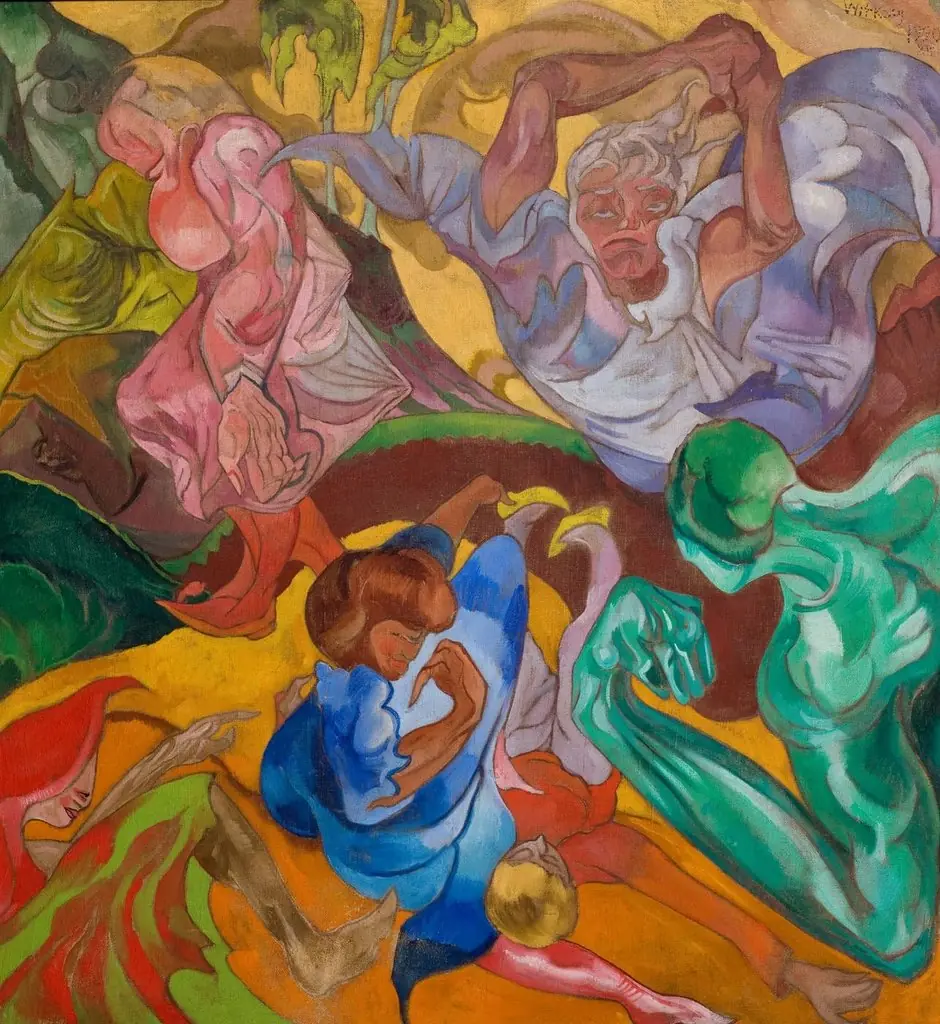
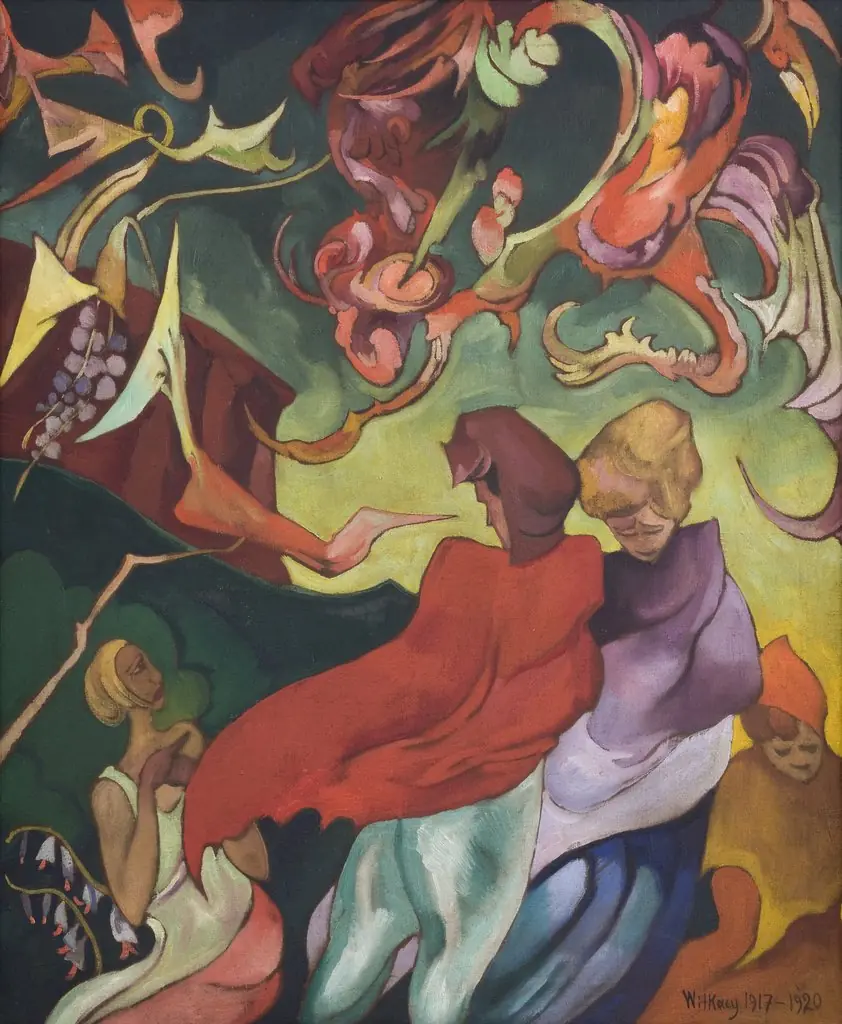
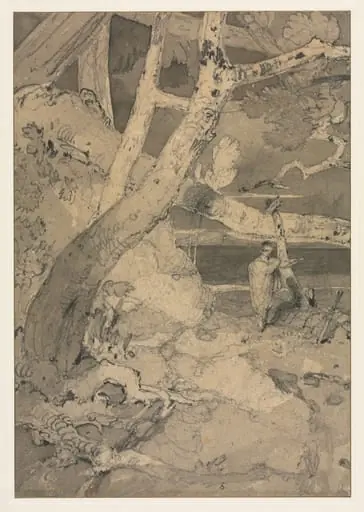
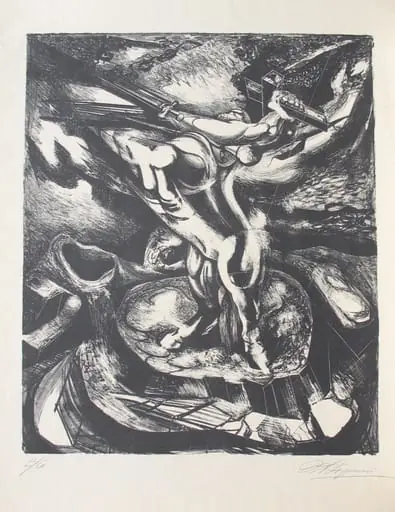
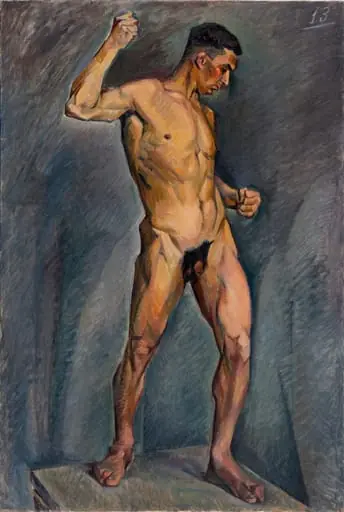
Absalom is an oil painting by Albert Weisgerber. It dates from 1914 and is held in the collection of the Hamburger Kunsthalle.
About this work
Overview
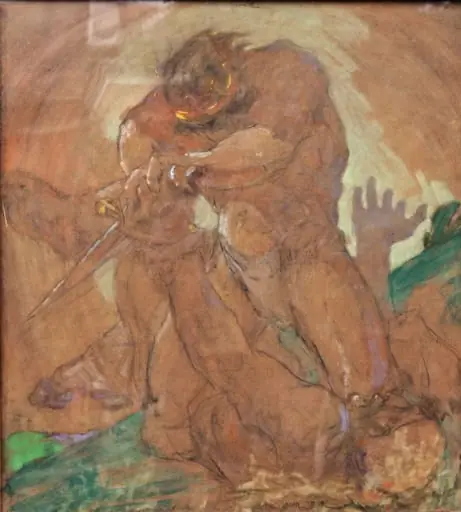
It presents a solitary male figure suspended in motion against a stark sky, capturing a moment of abrupt transition.
Albert Weisgerber painted Absalom in 1914 using oil on canvas. The work is part of the collection at the Hamburger Kunsthalle in Hamburg, Germany. It presents a solitary male figure suspended in motion against a stark sky, capturing a moment of abrupt transition. The composition emphasizes physical tension and spatial isolation, with minimal contextual detail to focus attention on the figure’s posture and emotional weight.
Subject & Meaning
The figure is interpreted as Absalom, the biblical son of King David, known for his rebellion and tragic death. His arched form, bare torso, and dangling sword suggest a fall from grace or a violent end. The lack of narrative context—no trees, soldiers, or palace—distills the moment to its essence: a solitary plunge into fate. The painting evokes inevitability rather than action, emphasizing inner turmoil over external drama.
Technique & Style
Weisgerber employed bold, expressive brushwork and saturated color to heighten emotional intensity. The figure’s red trousers contrast sharply with the deep blue sky and muted rock face, creating visual tension. The limbs are rendered with fluid, almost sculptural lines, while the background remains loosely defined. This stylistic choice prioritizes psychological impact over realism, aligning with early 20th-century Expressionist tendencies.
History & Provenance
Created in 1914, the painting entered the Hamburger Kunsthalle’s collection shortly after its completion. It was acquired during a period when the museum actively expanded its holdings of contemporary German art. There is no record of public exhibition prior to its inclusion in the collection, suggesting it was likely purchased directly from the artist or through a trusted dealer.
Context
Absalom was painted during a time of rising artistic experimentation in Germany, as Expressionist groups like Die Brücke challenged academic norms. Weisgerber, though not formally affiliated with these circles, shared their interest in emotional authenticity and symbolic form. The painting reflects broader cultural anxieties preceding World War I—individual vulnerability, impending doom, and the collapse of traditional order.
Legacy
Absalom remains one of Weisgerber’s most recognized works, often cited in studies of German Expressionism’s early phase. While not widely reproduced, its concentrated emotional force has influenced later interpretations of mythic figures in modern painting. Its enduring presence in the Hamburger Kunsthalle underscores its role as a quiet but potent example of psychological realism in early modern art.
Artist & collection

Artist
Albert Weisgerber (21 April 1878 – 10 May 1915) was a German painter whose work forms a bridge between Impressionism and early Expressionism.