Artwork
Gladiatorii
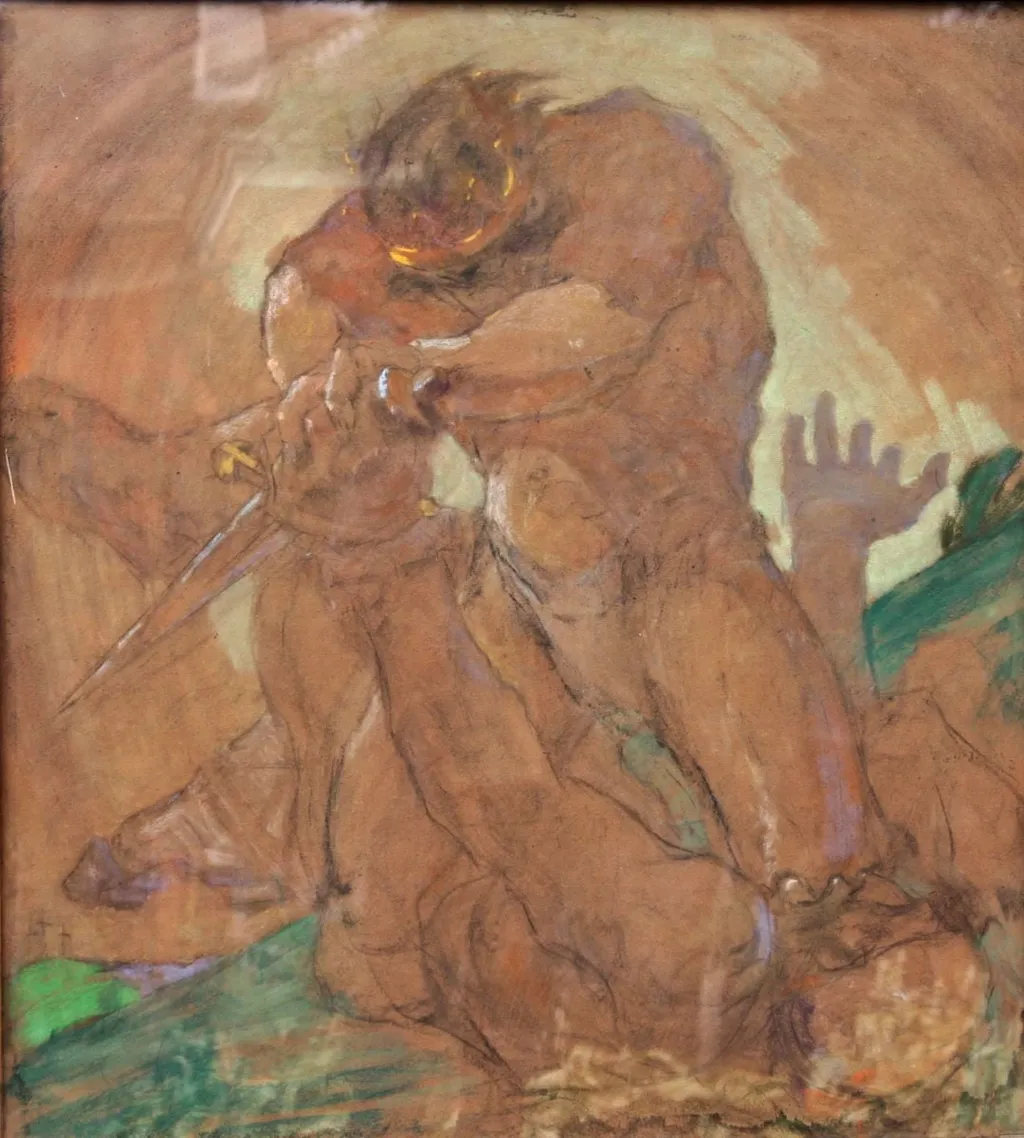
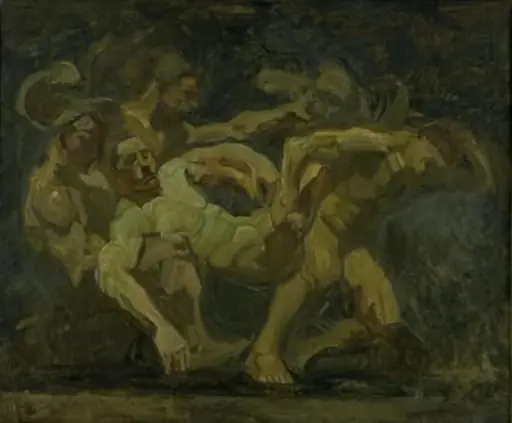
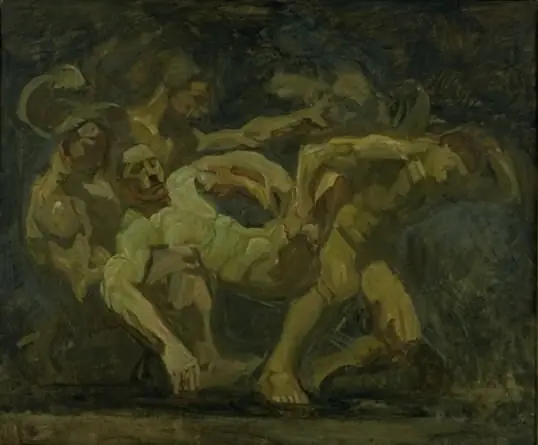
Gladiatorii is an unspecified painting by Aurel Popp. It dates from 1929 and is held in the collection of the Satu Mare County Museum.
About this work
Overview
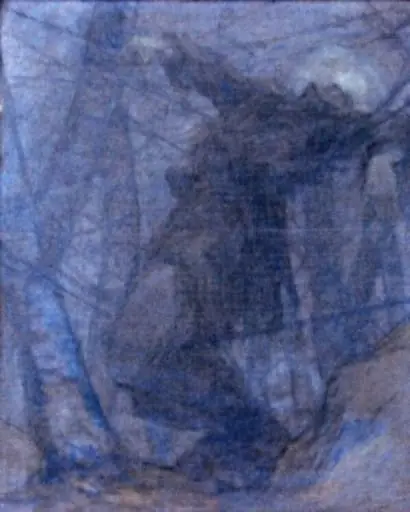
Painted around 1929 by Romanian artist Aurel Popp, Gladiatorii depicts a pair of nude male figures engaged in physical struggle. Executed in a raw, gestural manner, the work is part of the collection at the Museum of Ethnography. Its subdued palette of earth tones and dynamic composition reflect an interest in primal human movement rather than idealized form.
Subject & Meaning
The scene portrays two men locked in a wrestling hold, one dominating the other on the ground. No narrative context is provided—no crowd, arena, or weapons—suggesting the focus is on raw physicality rather than historical reenactment. The title evokes ancient combat, yet the treatment is abstracted, emphasizing tension and bodily exertion over cultural specificity.
Technique & Style
Popp employs thick, uneven brushwork and strong outlines to convey motion and weight. The figures are rendered with minimal detail, their forms simplified into angular shapes. Colors are restrained: muted browns and greens dominate, creating a somber, earthbound atmosphere. The lack of refined modeling reinforces the work’s expressive, almost primitive character.
History & Provenance
The painting entered the Museum of Ethnography’s collection following its creation in the late 1920s. Its acquisition aligns with the institution’s interest in visual representations of human behavior across cultures and eras. No record of prior ownership or exhibition history is widely documented, suggesting it was likely acquired directly from the artist.
Context
Created during a period of renewed interest in primitivism and expressionism across Europe, Gladiatorii reflects broader artistic trends that valued emotional intensity over classical harmony. Popp’s approach diverges from academic traditions, instead drawing from folk motifs and modernist experimentation to explore the body as a site of instinctual force.
Legacy
Gladiatorii remains a singular example of Popp’s engagement with physical struggle as a thematic focus. While not widely reproduced, it contributes to understanding how Romanian modernists interpreted the human form outside conventional narratives. Its presence in an ethnographic museum underscores its role as a study of bodily expression rather than a historical document.
Artist & collection