Artwork
Me and my Wife (Self-portrait)
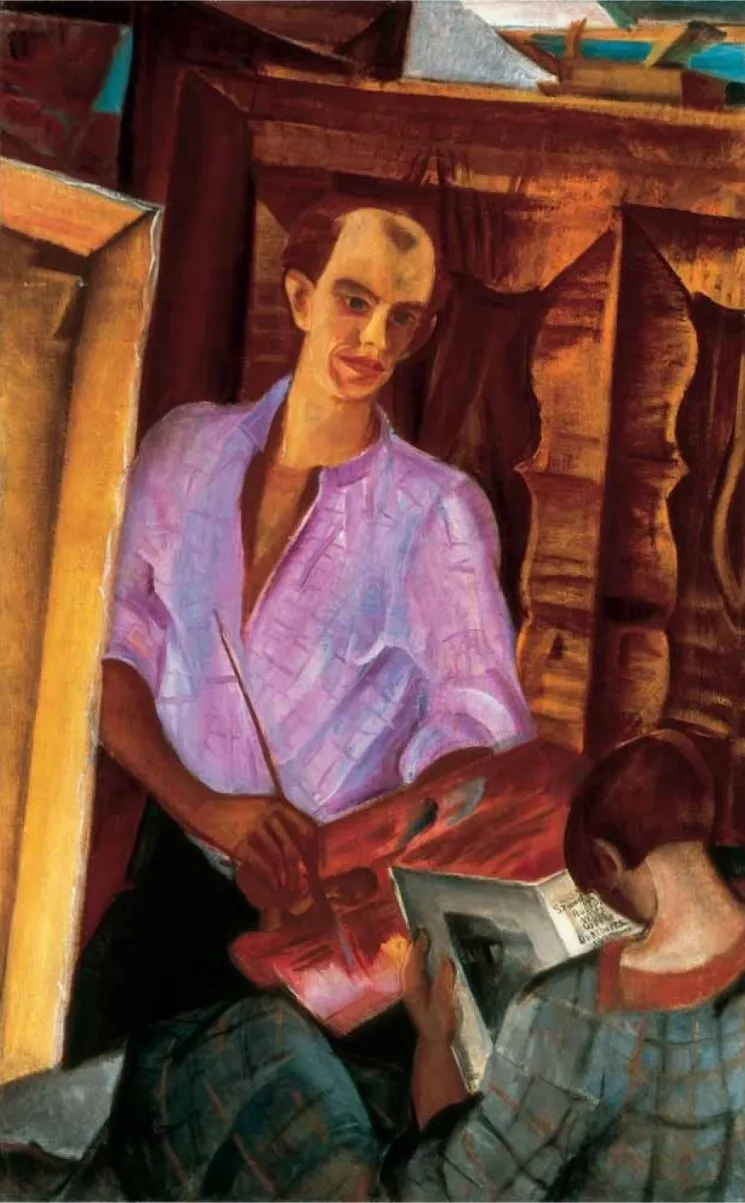
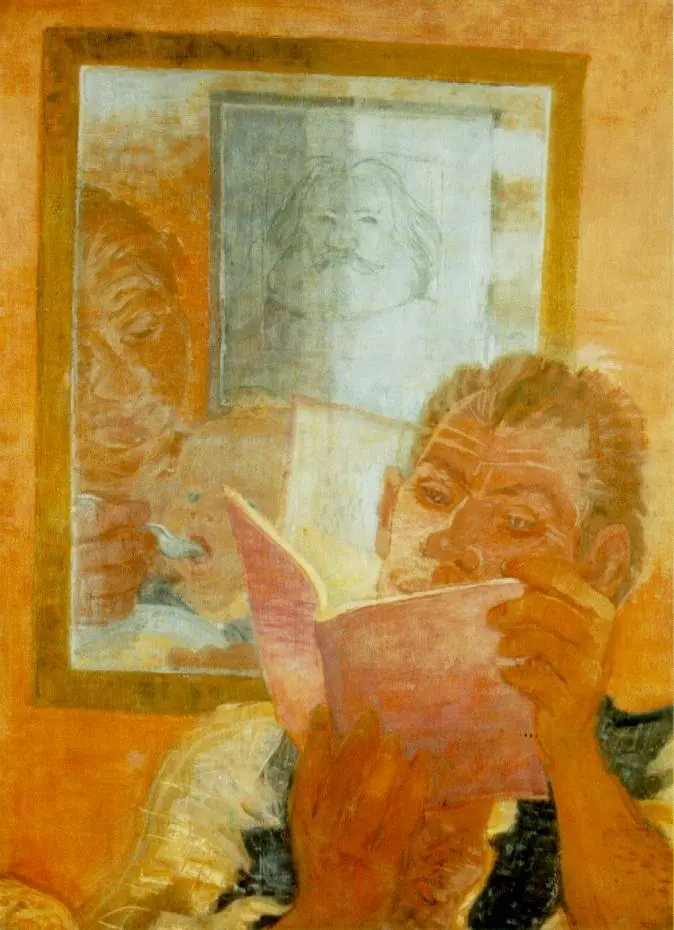
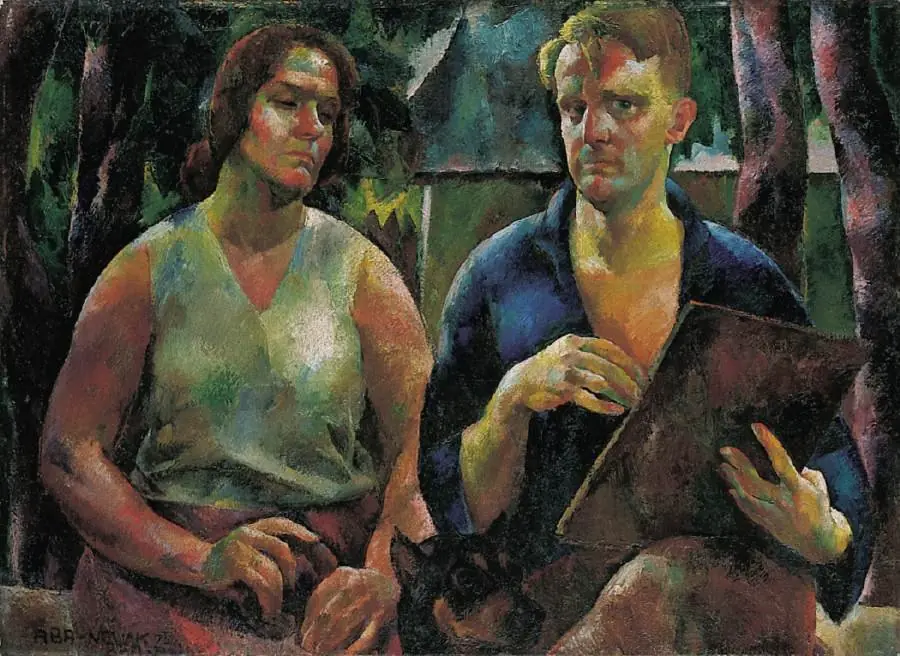
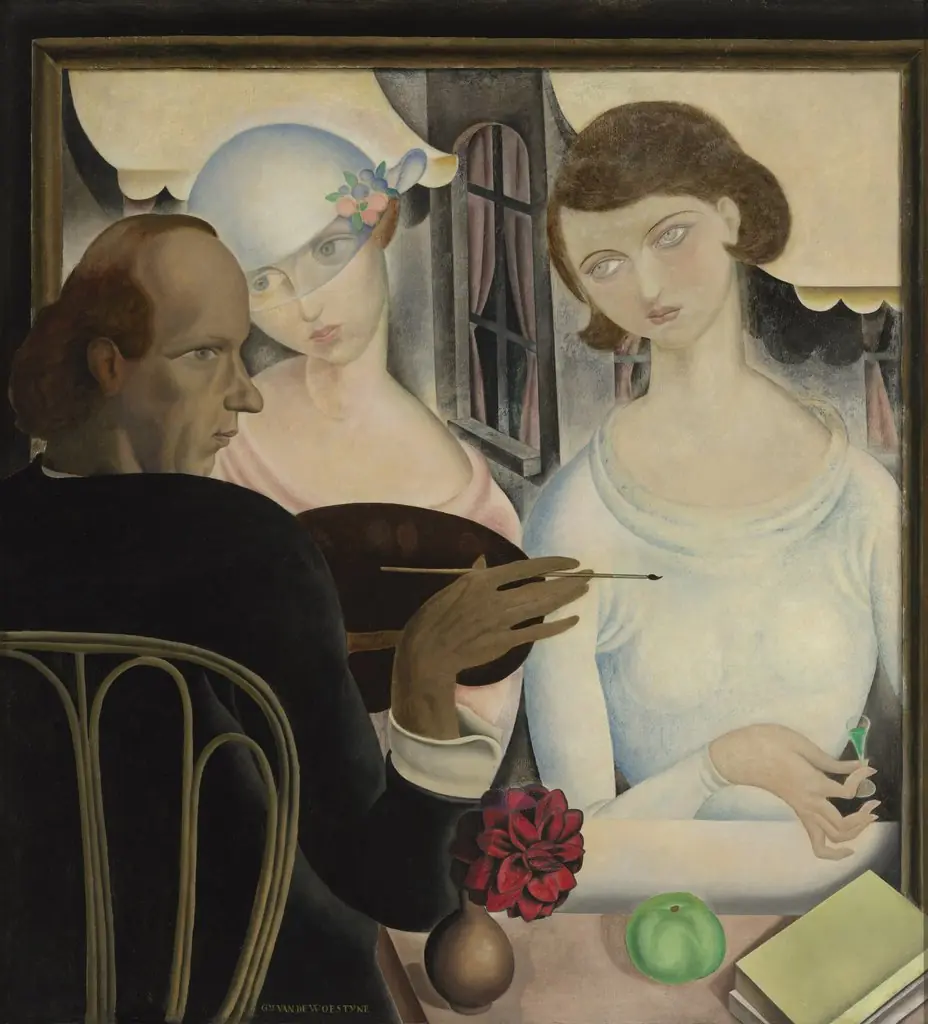
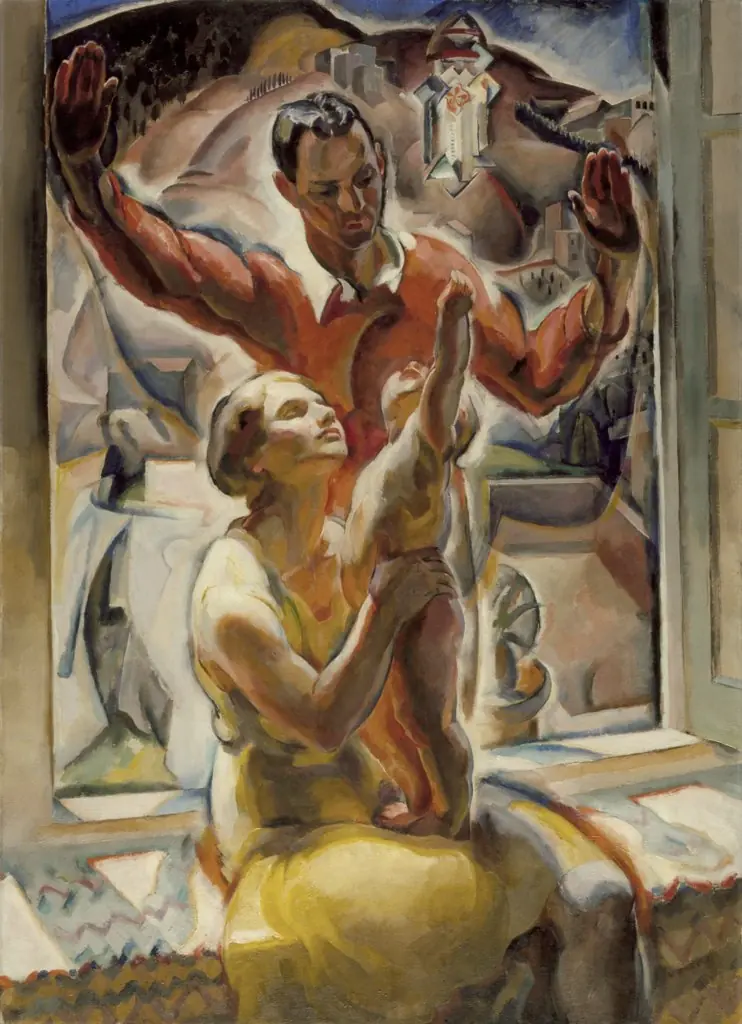
Me and my Wife (Self-portrait) is an oil painting by Gyula Derkovits. It dates from 1927 and is held in the collection of the Hungarian National Gallery.
About this work
The artist is depicted in a relaxed pose, wearing a white shirt and dark pants, while his wife sits beside him, wearing a blue dress with red trim.
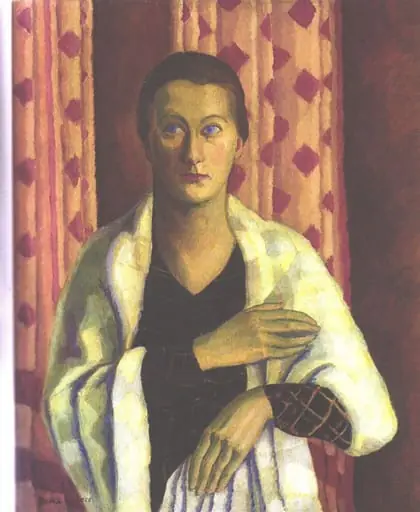
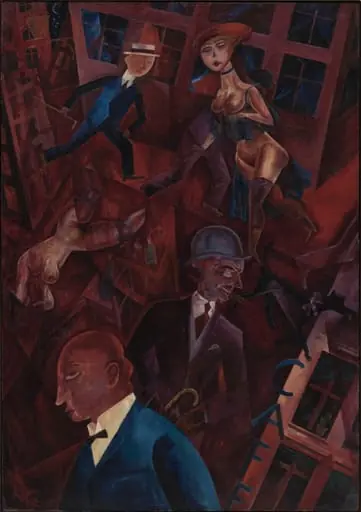
This painting, "Me and my Wife (Self-portrait)," is an oil-on-canvas work by Gyula Derkovits, created in 1927. The artist is depicted in a relaxed pose, wearing a white shirt and dark pants, while his wife sits beside him, wearing a blue dress with red trim. The background is a warm, earthy tone, with hints of green and brown. The overall mood is one of quiet intimacy, capturing a moment of everyday life.
The painting's use of color and composition creates a sense of depth and texture, drawing the viewer's eye to the central figures. The artist's use of chiaroscuro, a technique that uses strong contrasts between light and dark, adds to the overall effect.
For more works by Gyula Derkovits, explore the Hungarian National Gallery.
Overview
Me and my Wife (Self-portrait) is an oil-on-canvas painting by Hungarian artist Gyula Derkovits, executed in 1927. The work is part of the collection at the Hungarian National Gallery.
Subject & Meaning
The painting captures a serene domestic scene featuring the artist in a casual pose alongside his wife. He wears a white shirt and dark trousers, while she is depicted in a blue dress with red accents. The quiet intimacy of the moment conveys a sense of everyday life.
Technique & Style
Derkovits employs a warm, earthy-toned background with subtle green and brown undertones. The composition utilizes chiaroscuro, emphasizing contrasts between light and dark to create depth. The interplay of colors and careful arrangement draws the viewer’s focus to the central figures.
History & Provenance
Created in 1927, the painting has been part of the Hungarian National Gallery’s collection. Specific details about its acquisition or earlier ownership are not provided.
Context
While specific contextual influences on the work are not detailed, its creation in 1927 situates it within the broader European modernist movement, though Derkovits’s approach here leans towards a more subdued, intimate realism.
Legacy
The painting’s legacy is intertwined with its presence in the Hungarian National Gallery, contributing to the institution’s showcase of 20th-century Hungarian art. Its impact or influence on subsequent artists is not explicitly documented in available information.
Artist & collection
Artist
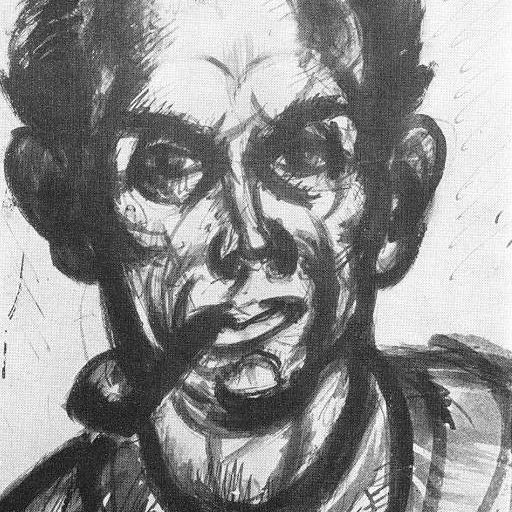
Gyula Derkovits (13 April 1894, Szombathely, 18 June 1934, Budapest) was a Hungarian painter and graphic artist whose work shows elements of Expressionism, Cubism and Constructivism.