Artwork
Autumn Melons
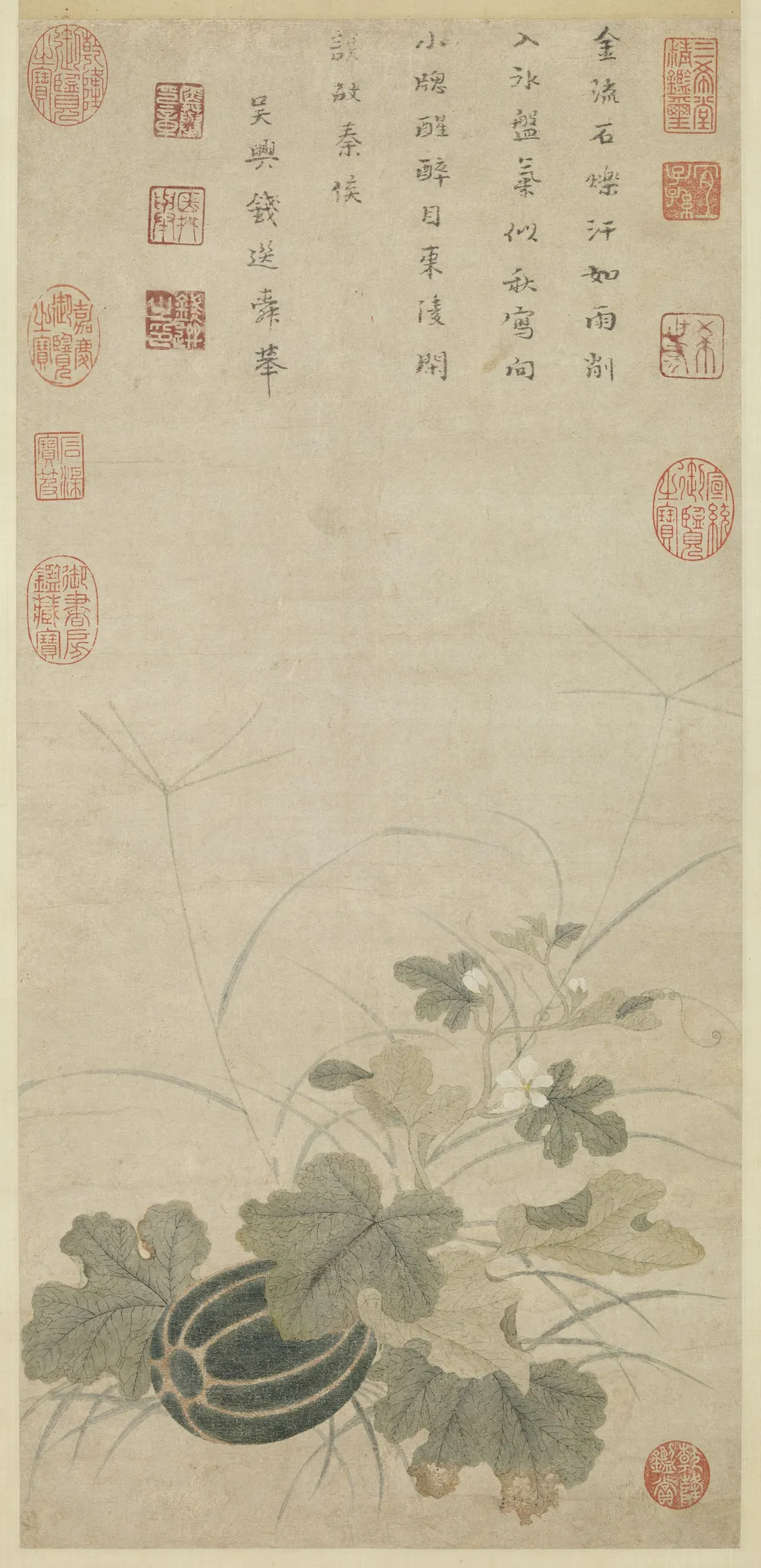
Autumn Melons is an unspecified painting by Qian Xuan. It dates from 1280 and is held in the collection of the National Palace Museum.
About this work
Overview
Created circa 1280 by Qian Xuan, a painter from Huzhou in present‑day Zhejiang, *Autumn Melons* is a small hanging scroll now conserved in the National Palace Museum. The work belongs to the period bridging the Song and Yuan dynasties and presents a quiet still‑life of seasonal fruit.
Subject & Meaning
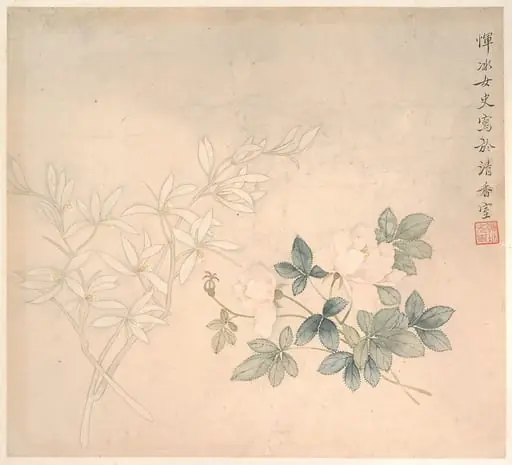
The composition centers on a single melon plant, its broad green leaves and a few white blossoms partially concealing the fruit. The muted, warm background highlights the natural forms, suggesting an appreciation of the fleeting autumn harvest and the calm of rural life.
Technique & Style
Qian Xuan employs restrained brushwork and subtle tonal shifts, rendering foliage with fine, layered strokes that convey texture without overt detail. The limited palette of greens, whites, and beige creates a harmonious visual rhythm, emphasizing the painting’s tranquil atmosphere.
History & Provenance
The scroll entered the collection of the National Palace Museum, where it remains a representative example of late‑Song/Yuan brush painting. Its attribution to Qian Xuan is supported by stylistic analysis and historical records linking the artist to works of similar subject matter.
Context
During the transition from the Song to the Yuan, literati painters often turned to modest, everyday subjects as a means of personal expression. *Autumn Melons* reflects this trend, focusing on a single, unadorned fruit plant rather than grand historical narratives.
Artist & collection

Artist
Qian Xuan (simplified Chinese: 钱选; traditional Chinese: 錢選; pinyin: Qián Xuǎn; Wade–Giles: Ch'ien Hsüan; 1235–1305), courtesy name Shun Ju (舜举), pseudonyms Yu Tan (玉潭, "Jade Pool"), Xi Lanweng (习嬾翁), and Zha Chuanweng…